

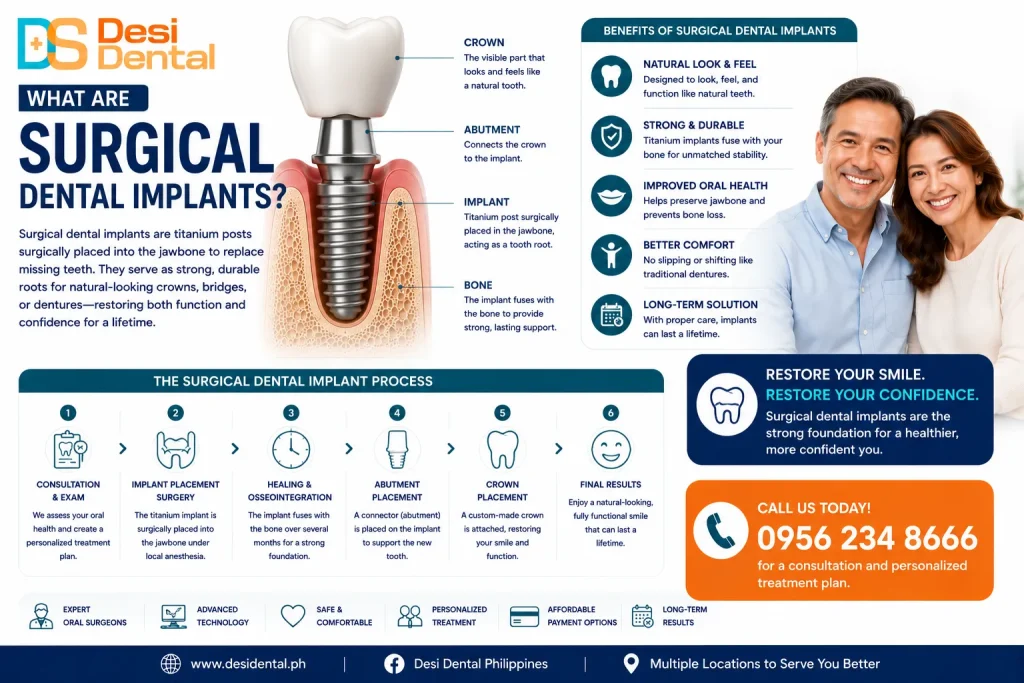
What Are Surgical Dental Implants?
Surgical dental implants are advanced, biocompatible titanium (or zirconia) posts that are surgically inserted into the jawbone to replace the roots of missing teeth. Once healed, they provide a rock-solid foundation for replacement teeth — including individual crowns, multi-tooth bridges, or even full-arch dentures.
Unlike removable dentures or traditional bridges, dental implants integrate directly with your living bone through a biological process called osseointegration. This fusion creates stability that closely mimics natural teeth in function, feel, and appearance.
Today, surgical dental implants are considered the gold standard in restorative dentistry, with success rates typically ranging from 95% to 98% when performed by experienced professionals. They not only restore your smile but also help preserve facial structure and prevent the bone loss that commonly follows tooth extraction.
Types of Surgical Dental Implants
Not every patient has the same bone structure or needs. Here are the main types:
- Endosteal Implants: The most common type (over 90% of cases). These screw-like titanium posts are placed directly into the jawbone. Ideal for patients with sufficient bone density.
- Subperiosteal Implants: Placed on top of the jawbone but beneath the gum tissue. A metal framework supports the prosthetic teeth. Used when jawbone height is insufficient and bone grafting is not preferred.
- Zygomatic Implants: Longer implants anchored in the cheekbone (zygoma) rather than the jaw. Reserved for patients with severe upper jaw bone loss, often eliminating the need for bone grafts.
- Mini Dental Implants: Smaller in diameter, often used for stabilizing lower dentures or in cases with limited bone space. They can sometimes allow for immediate loading.
Your oral surgeon will recommend the best option based on 3D imaging and your specific anatomy.
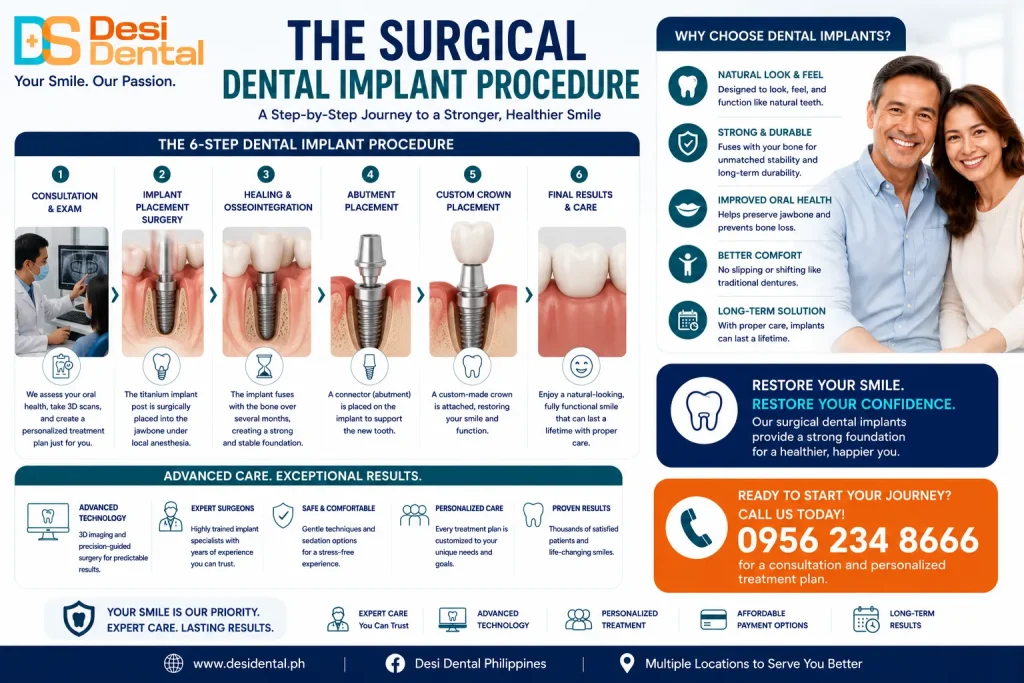
The Surgical Dental Implant Procedure
Dental implant surgery is highly personalized and often completed in several stages over 3–9 months.
- Comprehensive Consultation & Planning This includes a full oral examination, medical history review, digital X-rays, and 3D CBCT scans. Digital treatment planning software allows precise virtual placement of implants to avoid nerves, sinuses, and other structures. Bone quality and quantity are assessed — bone grafting may be recommended if needed.
- Tooth Extraction (if necessary) and Bone Grafting Damaged teeth are removed. If bone volume is inadequate, grafting (using your own bone, donor bone, or synthetic materials) builds up the foundation. Healing here can take several months.
- Implant Placement Surgery Performed under local anesthesia, sedation, or general anesthesia. The surgeon makes a small incision in the gum, prepares the bone site, and inserts the implant. In guided implant surgery, a custom 3D-printed surgical guide ensures exceptional precision and often allows for flapless (minimally invasive) techniques.
- Osseointegration (Healing Phase) The implant fuses with the jawbone over 3–6 months (sometimes longer for upper jaw). A temporary restoration may be provided. Patients follow a soft diet and maintain excellent hygiene.
- Abutment Placement Once integration is confirmed, a small connector (abutment) is attached to the implant.
- Final Prosthetic Restoration Custom crowns, bridges, or dentures are fabricated and attached. Modern materials like zirconia provide exceptional aesthetics and durability.
Key Benefits of Surgical Dental Implants
- Superior Function: Eat any food with confidence — no slipping or discomfort like dentures.
- Jawbone Preservation: Stimulates bone like natural roots, preventing shrinkage and facial sagging.
- Natural Aesthetics: Teeth look, feel, and function like your own.
- Longevity: With proper care, many implants last 15–25+ years or a lifetime.
- Improved Oral Health: No grinding down adjacent teeth (unlike bridges).
- Better Speech and Self-Confidence: Eliminates gaps and instability.
- High Success Rate: 90–98% long-term survival in healthy patients.
Potential Risks and Complications
While generally safe, risks include:
- Infection at the implant site
- Nerve damage or numbness (rare with proper planning)
- Sinus problems (upper jaw)
- Implant failure (usually due to poor osseointegration)
- Peri-implantitis (inflammation around the implant, similar to gum disease)
Risk factors: smoking, uncontrolled diabetes, osteoporosis, and poor oral hygiene. Choosing a qualified oral surgeon or periodontist dramatically reduces complications.
Recovery and Aftercare
Immediate Post-Surgery (First 48–72 hours): Swelling, bruising, mild bleeding, and discomfort managed with ice packs, prescribed pain medication, and antibiotics.
First Week: Soft food diet, avoid strenuous activity, and keep the area clean with saltwater rinses or prescribed mouthwash.
Longer Term: Stitches dissolve or are removed in 7–14 days. Full osseointegration takes months. Regular follow-ups monitor healing.
Tips for Success:
- Maintain impeccable oral hygiene (brushing, flossing, interdental brushes).
- Attend all follow-up appointments.
- Quit smoking.
- Wear night guards if you grind teeth.
Most patients return to normal activities within a few days to a week.
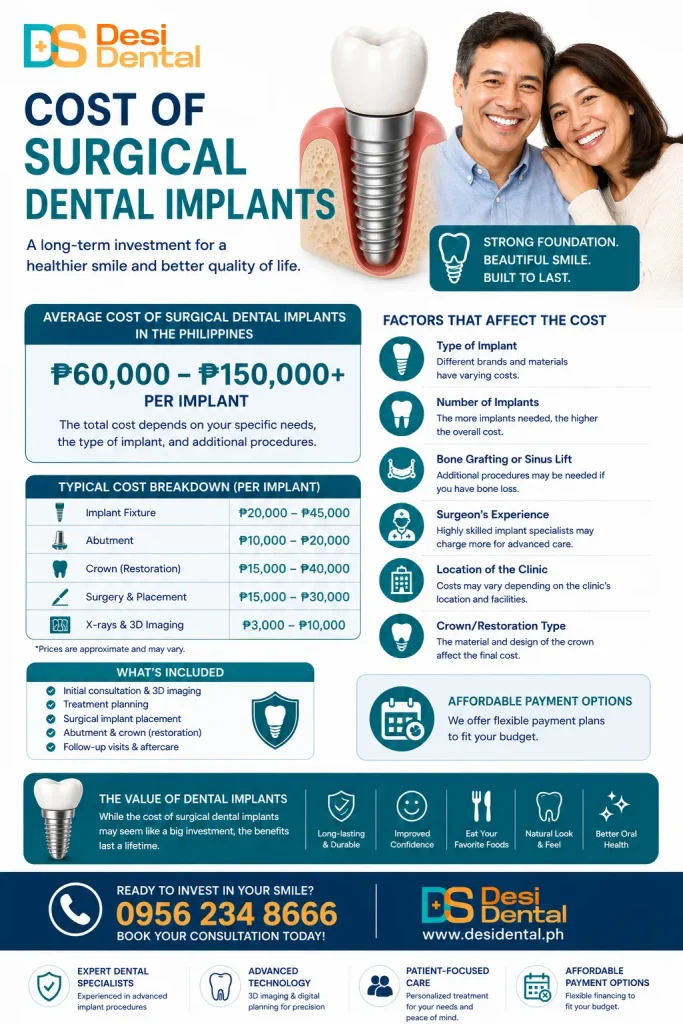
Cost of Surgical Dental Implants
Costs vary widely by location, number of implants, and additional procedures:
- Single implant (including crown): $3,000–$7,000+ USD.
- Full-mouth options like All-on-4 can range significantly higher.
- Bone grafting, sedation, and advanced imaging add to the total.
Many dental insurance plans now offer partial coverage. Financing options and dental tourism are common considerations. Always request a detailed treatment plan and compare qualified providers.
Frequently Asked Questions
How painful is dental implant surgery? Most patients report discomfort similar to a tooth extraction, well-controlled with medication.
Can I get implants if I have gum disease? Yes, after successful periodontal treatment.
How long do implants last? Many last decades with good care; regular maintenance is key.
Surgical dental implants offer one of the most reliable, long-lasting solutions for missing teeth available in modern dentistry. They restore not just your smile, but your ability to eat, speak, and live confidently.
The best next step is a consultation with a qualified implant dentist or oral surgeon. They will use advanced imaging to create a personalized plan tailored to your needs and goals.


