

A normal socket after tooth extraction follows a clear, step-by-step healing process that most people can recognize once they know what to expect. The site starts as an open space filled with a protective blood clot, gradually develops new tissue, and slowly closes while the underlying bone rebuilds. Understanding these changes helps reduce anxiety and makes it easier to spot when something needs professional attention.
What Exactly Is a Tooth Socket?
When a dentist removes a tooth, an empty space remains in the jawbone where the roots used to sit. This space is called the socket. Right after the extraction, your body immediately begins protecting and repairing it. The first and most important step is the formation of a blood clot. This clot acts like a natural bandage: it seals the area, shields the bone and nerves underneath, and creates a foundation for new tissue to grow.
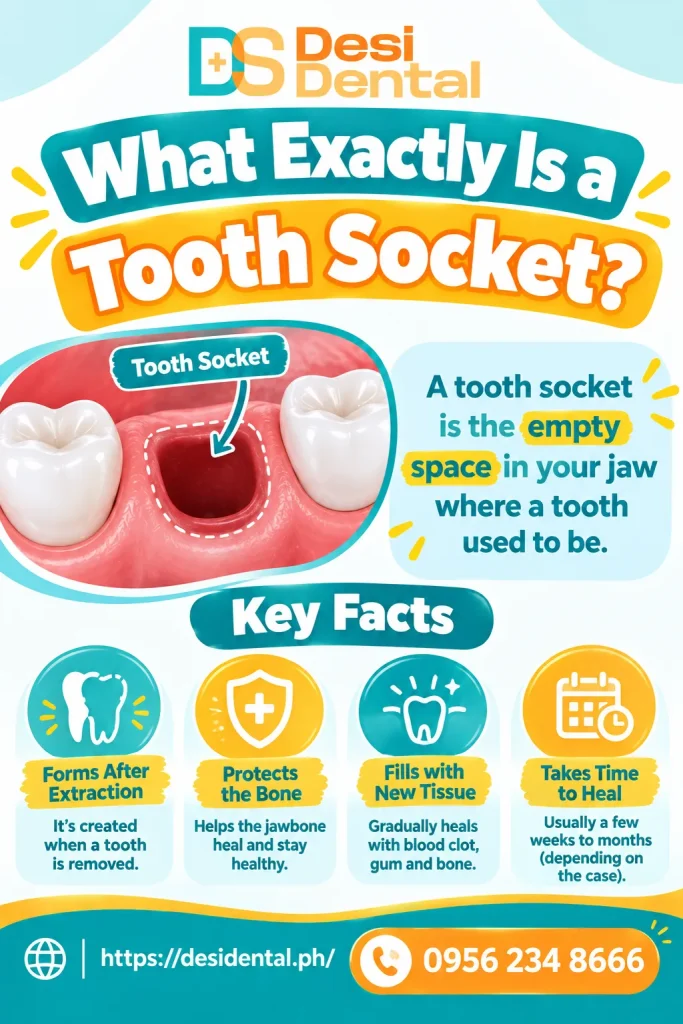
A healthy, normal socket after tooth extraction keeps this clot in place long enough for the next stages of healing to begin. If the clot stays protected and the healing progresses without interruption, the socket will change appearance over days and weeks in a predictable way.
Day-by-Day Look at a Normal Socket After Tooth Extraction
First 24 Hours
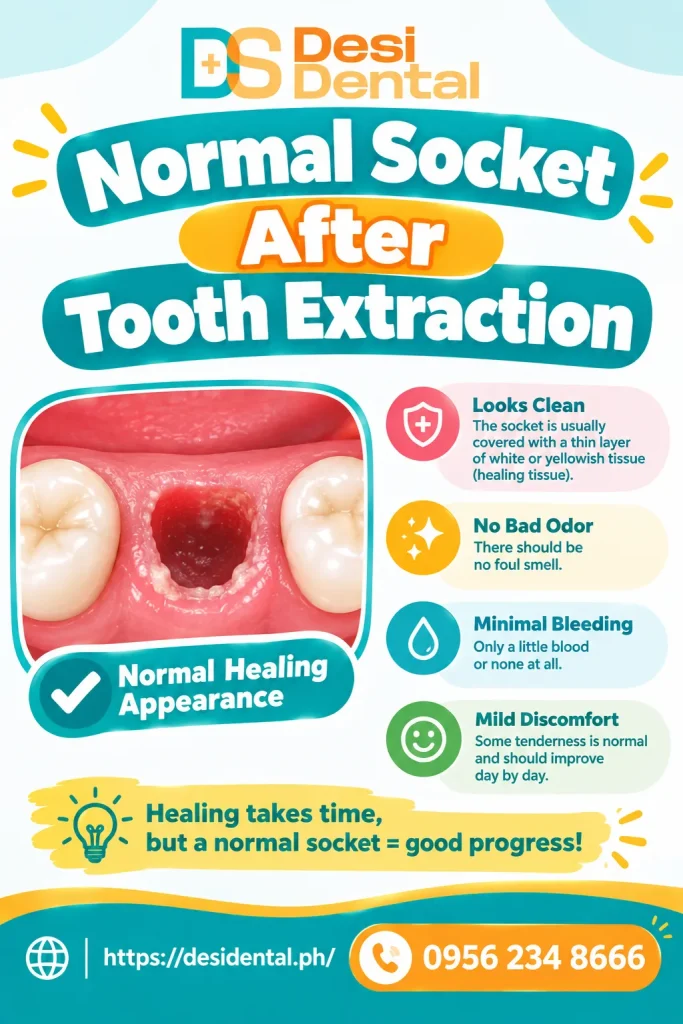
Within a few hours of the extraction, a dark red or maroon blood clot fills most of the socket. It often looks slightly raised or jelly-like and may sit level with the surrounding gum. Light bleeding or oozing is common and usually stops with gentle pressure from gauze. The gum around the edges can appear pink and mildly swollen. Mild to moderate soreness begins as the numbing wears off. This dark clot is the clearest early sign of a normal socket after tooth extraction.
Days 2 to 3
The clot typically darkens further, sometimes becoming deep red, brownish, or almost black. This color change is normal and happens as the blood oxidizes. Swelling and tenderness often peak during this window, and some people notice mild bruising on the face or jaw stiffness. The area still feels protected and moist. Pain should remain manageable with recommended pain relief and begin leveling off rather than increasing.
Days 4 to 7
A white, cream, or pale yellowish layer often appears over or around the clot. This is granulation tissue—new living tissue made of tiny blood vessels, collagen, and healing cells. Many people worry this white material is pus or infection, but in a normal socket it is a positive sign of active repair. The socket starts looking a little shallower. Pain and swelling continue to improve day by day. Mild residual tenderness is still expected, especially if the extraction was surgical or involved a wisdom tooth.
Days 8 to 14
Pink gum tissue begins growing inward from the edges of the socket. The opening becomes noticeably smaller. The white granulation tissue gradually gives way to healthier-looking pink tissue. Most of the surface discomfort has faded by this point. You may still notice a shallow dip where the tooth used to be, and small bits of food can occasionally settle there. Gentle cleaning as directed by your dentist keeps the area comfortable.
Weeks 3 to 4 and Beyond
The surface of the socket continues to close. By the end of the first month, many people see only a slight indentation or a smooth area of pink gum. Soft-tissue healing is largely complete, but deeper bone remodeling continues for several months. The bone slowly fills the space and reshapes itself. Full bone maturity can take three to six months or longer, depending on the size of the original socket, your age, overall health, and whether the extraction was simple or more complex.
How a Normal Socket Feels During Healing
Appearance is only part of the picture. In a normal socket after tooth extraction, symptoms follow a clear pattern:
- Pain starts moderate and steadily decreases after the first two or three days.
- Swelling peaks early and then reduces.
- There is no strong foul odor or lasting bad taste once the initial clot settles.
- The site feels progressively calmer rather than more irritated.
- You can resume normal activities gradually without sharp setbacks in comfort.
Mild sensitivity when eating or brushing nearby is common for a couple of weeks and usually fades as the gum closes.
Normal Socket vs. Dry Socket
The most common concern after extraction is dry socket (alveolar osteitis). Knowing the contrast helps you stay calm when healing is on track:
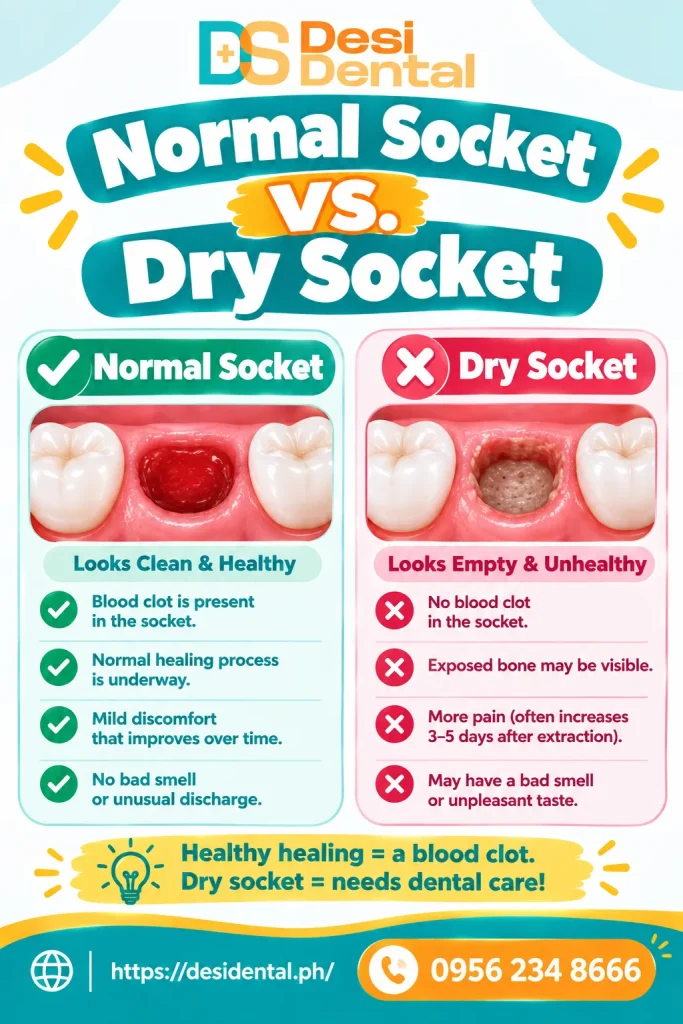
- Normal socket: Dark clot stays in place, later covered by white or cream granulation tissue. Pain improves steadily. Socket remains moist and protected.
- Dry socket: Clot is lost or dissolves too early. The socket looks empty or shows pale, grayish, or yellowish bone. Pain becomes severe, throbbing, and often radiates to the ear, temple, or neck around days 3–5. A persistent foul taste or odor is common.
Most cases of dry socket appear between days 3 and 5. After that window, the risk drops significantly if the clot has remained stable.
Factors That Influence How Fast a Socket Heals
Not every normal socket after tooth extraction follows the exact same timeline. Several factors can speed up or slow the process:
- Simple extractions usually heal faster than surgical ones (especially lower wisdom teeth).
- Younger people and non-smokers tend to recover more quickly.
- Good overall health, balanced nutrition, and careful aftercare support smoother healing.
- Smoking, vaping, using straws, or vigorous rinsing in the early days can disrupt the clot.
- Certain medications or medical conditions may also affect the speed of recovery.
Your dentist’s specific instructions take these factors into account, so following them closely is the best way to keep the socket on a normal path.
Practical Aftercare to Protect a Normal Socket
Supporting healthy healing is straightforward once you know the priorities:
- Protect the clot for the first 24–48 hours. Avoid sucking motions, smoking, and poking the area with your tongue or fingers.
- Use gauze as directed and apply gentle pressure if light bleeding continues.
- Stick to soft, cool foods for the first few days. Avoid hot liquids, spicy foods, and anything crunchy that could lodge in the socket.
- Begin gentle saltwater rinses only when your dentist says it is safe (usually after 24 hours). Do not swish forcefully.
- Keep the rest of your mouth clean by carefully brushing other teeth and avoiding the extraction site at first.
- Take pain relief and any prescribed medication exactly as recommended.
- Rest and keep your head elevated when lying down to reduce swelling.
These simple steps help maintain the conditions needed for a normal socket after tooth extraction to progress smoothly.
When to Call Your Dentist
Even when healing looks mostly normal, certain signs mean you should seek advice promptly:
- Pain that improves at first and then becomes much worse after day 3
- Visible empty socket or exposed bone
- Persistent bad taste or foul odor that does not improve with gentle rinsing
- Heavy bleeding that restarts after it had stopped
- Increasing swelling, fever, or difficulty swallowing
- Any symptom that feels significantly different from the gradual improvement described above
Early evaluation often resolves issues quickly and keeps recovery on track.
A normal socket after tooth extraction is not supposed to look perfect right away. It starts dark and raw, develops a temporary white layer, then slowly becomes pink and closed. When pain steadily improves and the site stays protected, you are almost always on the right path. Knowing these stages turns uncertainty into clear expectations and helps most people recover with greater peace of mind. If anything about your own healing raises questions, a short conversation with your dentist provides the most reliable reassurance.


