

If you just had a tooth pulled—or you are scheduled for one—you are probably searching for a clear answer to one main question: how long is the tooth extraction healing time, and what will each day actually feel like? This guide walks you through the full process in plain language so you know exactly what to expect, how to support your recovery, and when something needs a professional check.
Tooth extraction healing time is not a single number. Soft tissue (the gum) usually closes enough for daily comfort in 1–2 weeks. The deeper bone continues rebuilding for 3–6 months. Most people feel significantly better within the first week, but the socket keeps changing long after the surface looks closed. Understanding the stages removes a lot of the anxiety that comes with recovery.
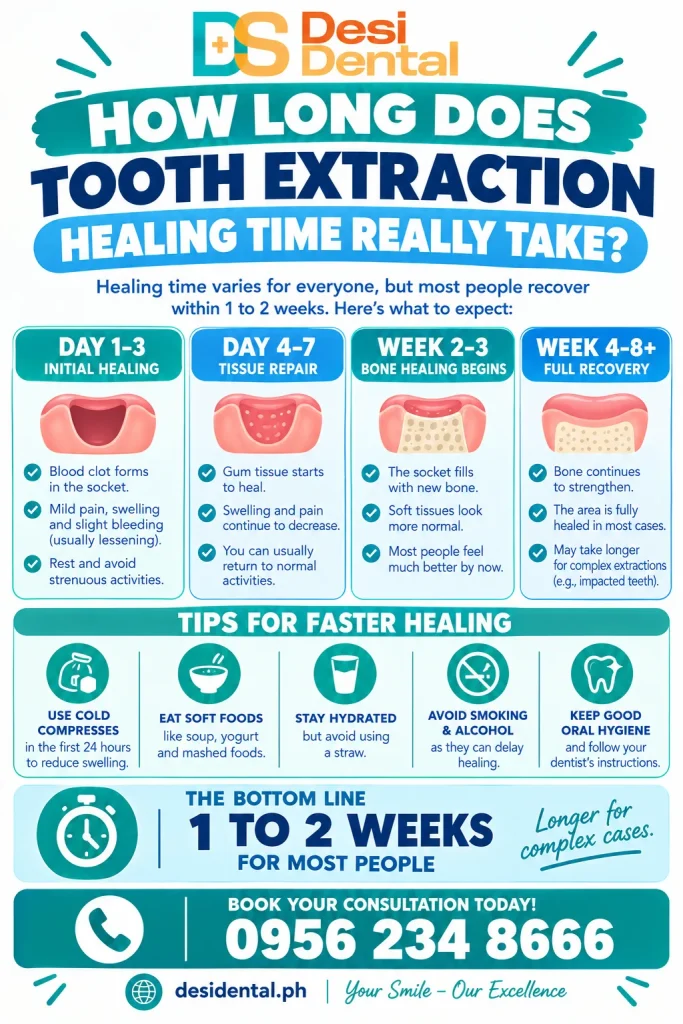
How Long Does Tooth Extraction Healing Time Really Take?
The overall tooth extraction healing time depends on several factors, but here are the realistic averages based on common clinical experience:
- Simple extraction (a visible tooth removed with forceps, no incision or bone removal): Most people notice major improvement in 3–7 days. Gum tissue typically closes over the socket in 7–14 days. Full bone fill takes about 3 months.
- Surgical extraction (impacted tooth, broken root, or wisdom tooth that needs bone removal or sectioning): Soft-tissue recovery often stretches to 2–4 weeks. Bone remodeling can take 4–6 months.
- Front teeth versus molars: Smaller single-rooted front teeth heal faster on the surface. Multi-rooted molars leave larger sockets and generally need more time.
These ranges assume good overall health and careful aftercare. Smoking, certain medical conditions, or dislodging the blood clot can push the tooth extraction healing time longer.
Stage-by-Stage Breakdown of Tooth Extraction Healing Time
Healing follows a biological sequence. Knowing each phase helps you interpret what you see and feel.
Hours 0–24: The Critical Blood Clot Forms
Immediately after the tooth is removed, blood fills the empty socket and begins to clot. This dark-red clot is the foundation of the entire healing process. It protects the exposed bone and nerves and signals the body to start repair.
What you may notice: mild oozing or pink saliva, a metallic taste, gradual return of feeling as the anesthetic wears off, and a dull ache once numbness fades.
Your main job: protect the clot. Bite firmly on the gauze as directed (usually 30–45 minutes at a time), rest with your head elevated, and avoid rinsing, spitting, using straws, smoking, or any vigorous activity. Ice packs on the cheek (20 minutes on, 20 minutes off) help control early swelling.
Days 2–3: Inflammation Peaks
This is often the most uncomfortable stretch of the tooth extraction healing time. Swelling, mild-to-moderate pain, possible bruising on the cheek or jaw, and stiffness when opening the mouth commonly reach their highest point around 48–72 hours. Many people wake up looking more swollen on day 2 than they did the evening of the extraction—this is normal, not a sign of trouble.
The clot is stabilizing and early repair cells are moving in. Keep taking pain medication as recommended (often a combination of ibuprofen and acetaminophen works well), stick to soft cool or lukewarm foods, and continue gentle rest.
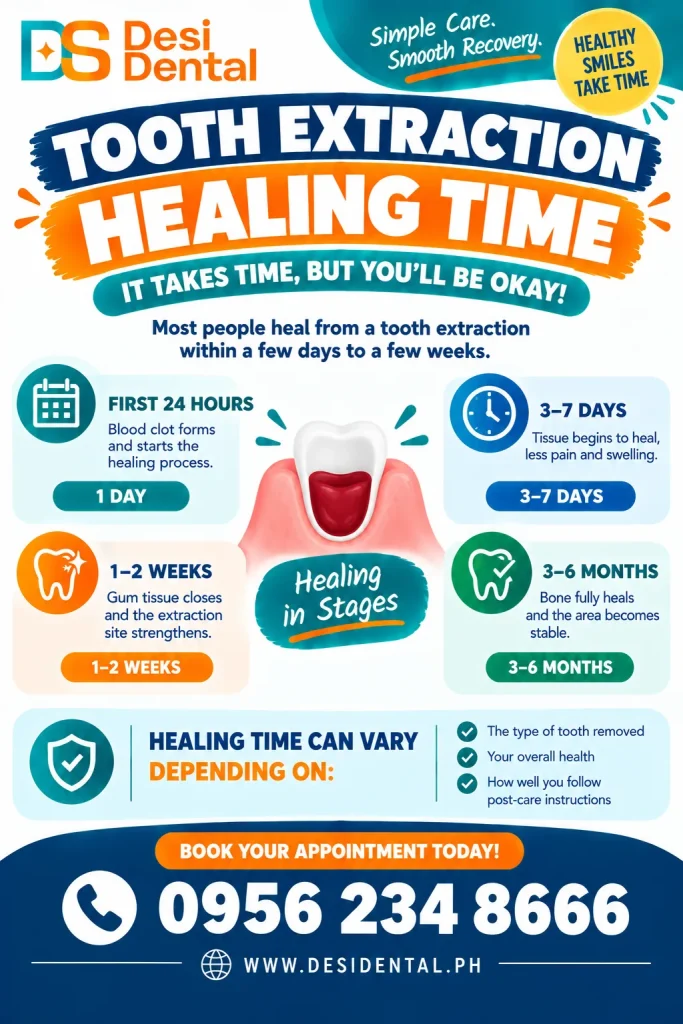
Days 4–7: New Tissue Appears and Improvement Begins
Pain and swelling should start trending downward each day. A whitish, yellowish, or grayish layer often becomes visible inside the socket. This is granulation tissue—healthy new tissue full of blood vessels and collagen—not infection or leftover food. Gum edges begin growing inward from the sides.
By the end of the first week most people can reduce or stop stronger pain medicine, return to light daily activities, and carefully introduce slightly firmer soft foods (scrambled eggs, soft pasta, well-cooked vegetables). The risk of dry socket remains highest in this window if the clot is disturbed, so continue avoiding straws and forceful rinsing.
Week 2: Soft Tissue Closes Over
For many routine extractions the gum surface has largely or completely covered the socket by day 10–14. Any remaining tenderness is usually mild. Dissolvable stitches often disappear around this time. Most people feel comfortable enough to resume a more normal diet (still chewing on the opposite side at first) and regular work or school routines.
A small indentation or dimple may still be visible or feelable with the tongue—this is expected and continues to fill in over the following weeks.
Weeks 3–4 and Beyond: Bone Remodeling Continues Quietly
The surface looks and feels close to normal. Underneath, new bone is forming from the bottom of the socket upward. This deeper phase of tooth extraction healing time produces little or no discomfort. Full bone density and shape usually stabilize between 3 and 6 months. Dentists typically wait until this stage is well underway before placing a dental implant.
What Affects Your Personal Tooth Extraction Healing Time?
Several variables influence how quickly you move through the stages:
- Type and difficulty of the extraction
- Size and location of the tooth (molars and lower jaw sites often take longer)
- Age and overall health (younger patients and non-smokers generally heal faster)
- Medications or conditions that affect clotting or immune response
- How carefully the blood clot is protected in the first 72 hours
- Nutrition, hydration, and oral hygiene after the initial rest period
Smoking or vaping is one of the strongest factors that slows healing and raises the chance of complications.
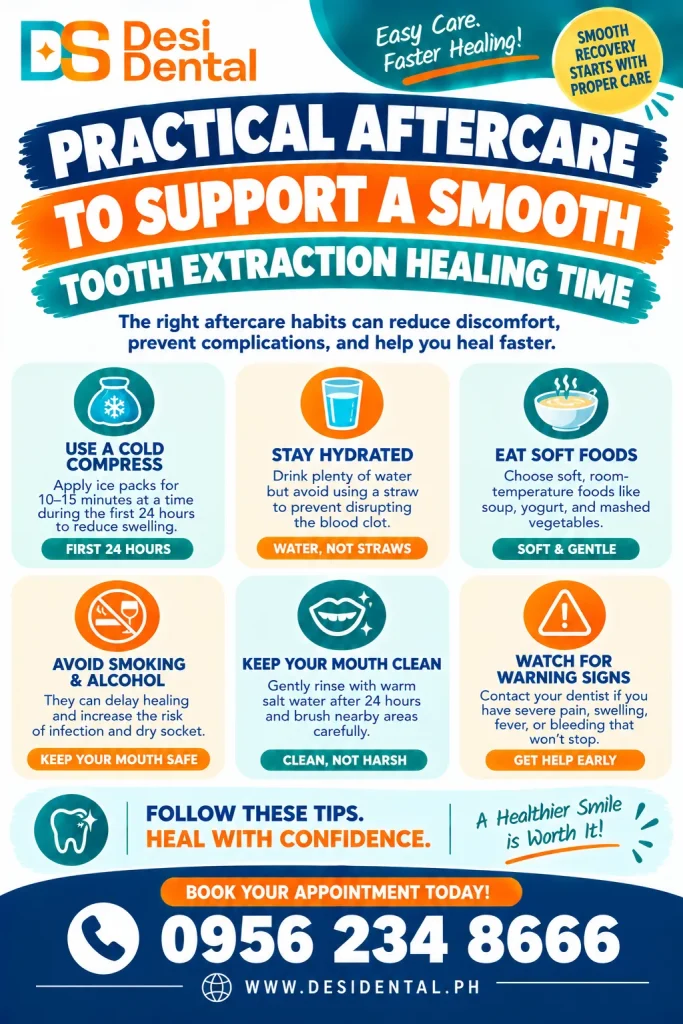
Practical Aftercare to Support a Smooth Tooth Extraction Healing Time
Follow the written instructions from your dentist first—they are tailored to your specific case. In general:
- Days 1–2: rest, elevate your head, use ice, eat only soft cool foods, and take medications on schedule.
- After 24 hours: begin gentle warm salt-water rinses (½ teaspoon salt in a cup of warm water) several times a day, especially after meals. Let the water fall out of your mouth rather than spit forcefully.
- Brush carefully around the site with a soft toothbrush; avoid the socket itself until it is more closed.
- Stay hydrated and choose nutrient-rich soft foods to support tissue repair.
- Avoid alcohol, hot liquids, hard or crunchy items, and strenuous exercise until your dentist gives the all-clear (often 5–7 days or longer for surgical cases).
Warning Signs That Need Prompt Attention
Most recoveries stay within the expected ranges. Contact your dental office if you notice:
- Severe or increasing pain after day 3 (possible dry socket)
- Heavy bleeding that continues despite firm pressure
- Fever, pus, or a persistent bad taste or odor
- Swelling that keeps growing after the first few days
- Difficulty swallowing or breathing
Dry socket occurs when the blood clot is lost, exposing bone. It typically appears 2–4 days after extraction and causes intense throbbing pain. It is treatable once diagnosed.
Frequently Asked Questions About Tooth Extraction Healing Time
When can I return to work or school?
Many people with simple extractions go back within 1–2 days if the job is not physically demanding. Surgical cases often need 3–7 days.
How long should I avoid straws and smoking?
At least 72 hours, and longer if possible. Both create suction or toxins that can dislodge the clot.
Is the white stuff in the socket normal?
Yes—granulation tissue frequently looks white or creamy and is a positive sign when pain is improving.
When is the site ready for an implant?
Most dentists wait 3–6 months so the bone has adequately filled and stabilized. Imaging confirms readiness.
Does wisdom tooth extraction take longer?
Often yes, especially if the teeth were impacted. Soft-tissue recovery can extend to 2–4 weeks and overall comfort may take a bit longer than a routine front-tooth extraction.
Tooth extraction healing time follows a predictable path for the majority of people: protect the clot in the first day, ride out the peak swelling around days 2–3, watch improvement accelerate through the first week, and allow the deeper bone work to continue quietly for months. By understanding each stage and supporting your body with careful aftercare, you give yourself the best chance of a comfortable, uncomplicated recovery.


