

Having a tooth pulled is a common procedure, but the days that follow matter just as much as the extraction itself. The most important goal is protecting the blood clot that forms in the empty socket. This soft, jelly-like plug stops bleeding, shields the bone and nerves underneath, and creates the foundation for new tissue to grow. When the clot is disturbed or dissolves too early, a painful condition called dry socket can develop. Understanding the key things to avoid after tooth extraction helps most people recover comfortably and reduces the chance of setbacks.
Things to Avoid After Tooth Extraction
Right after the tooth is removed, your body starts forming a blood clot in the socket. Think of it as a natural bandage. Anything that creates suction, pressure, heat, or irritation can loosen or dissolve that clot. Once it is gone, the bone and nerve endings become exposed, leading to sharp pain that often starts a few days after the procedure and can last longer than normal healing. Most of the things to avoid after tooth extraction focus on keeping this clot safe during the first 24–72 hours, when it is most fragile.
1. Smoking, Vaping, or Any Tobacco Products
Smoking or vaping is one of the biggest risk factors for complications. The act of inhaling creates suction that can pull the clot out. Nicotine also narrows blood vessels, reducing the flow of oxygen and nutrients needed for healing, while other chemicals irritate the delicate tissue.
Most dentists recommend staying completely smoke-free for at least 48–72 hours. Longer is better—ideally a full week or more. If quitting is hard, talk to your dentist about nicotine patches as a temporary bridge (patches avoid the suction problem). Chewing tobacco and other oral nicotine products should also be avoided because they place chemicals directly near the wound.
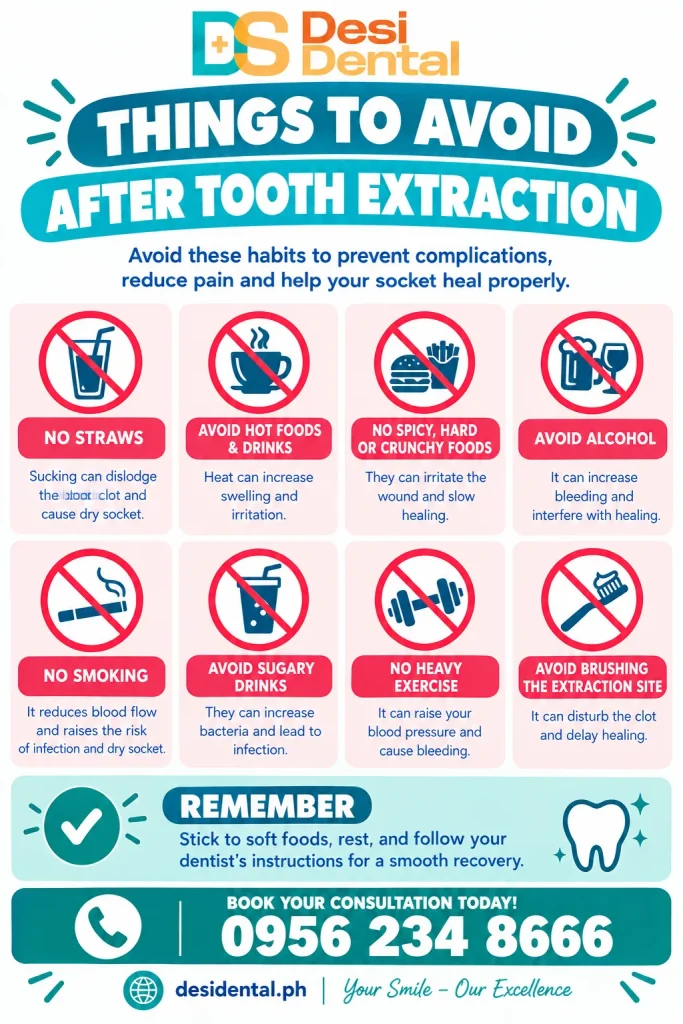
2. Using Straws or Creating Any Suction in the Mouth
Drinking through a straw produces strong negative pressure inside the mouth. That pressure can easily dislodge the blood clot, especially in the first few days. The same rule applies to sucking on ice, hard candy, or anything else that creates a vacuum effect.
Skip straws for a minimum of 24–48 hours. Many oral surgeons advise waiting a full week, particularly after more involved extractions. Simply sip drinks from a cup or glass. If you want a smoothie or milkshake, eat it with a spoon instead of drinking it through a straw.
3. Forceful Rinsing, Spitting, or Swishing
In the first 24 hours, any strong movement of liquid in the mouth can loosen the clot. Vigorous rinsing, forceful spitting, or even aggressive swishing with mouthwash creates the same kind of pressure problem as a straw.
For the first day, leave the area alone. After 24 hours, most people can begin gentle rinsing with warm salt water (about half a teaspoon of salt dissolved in a cup of warm water). Swish very lightly and let the liquid fall out of your mouth rather than spitting hard. Avoid alcohol-based mouthwashes until your dentist says it is safe.
4. Hard, Crunchy, Sticky, Spicy, Acidic, or Very Hot Foods and Drinks
Food choices play a big role in the list of things to avoid after tooth extraction. Hard or crunchy items (chips, nuts, popcorn, raw vegetables, crusty bread, seeds) can scrape the socket or leave sharp pieces stuck inside. Sticky foods (caramel, chewing gum, taffy) can pull on the clot. Spicy and acidic foods (hot sauce, citrus, tomato-based sauces) irritate the open tissue and cause stinging. Very hot soups, coffee, or tea increase blood flow and may restart bleeding or soften the clot.
Stick to soft, cool, or lukewarm foods for the first 24–48 hours: yogurt, applesauce, mashed potatoes, scrambled eggs, smooth soups (not steaming hot), soft pasta, bananas, and avocado. Gradually add slightly firmer textures as comfort improves, usually over 5–7 days. Chew on the opposite side of the mouth when possible. Carbonated drinks are also best avoided early on because the bubbles and any associated sipping action can disturb the site.
5. Alcohol
Alcohol thins the blood, which can increase bleeding, and it may interfere with pain medications or antibiotics. It also dries out oral tissues and can slow the overall healing process.
Avoid alcoholic beverages for at least 24–72 hours, or longer while you are taking prescribed medication. Water, milk, or non-acidic juices (sipped carefully) are safer choices during this period.
6. Strenuous Exercise and Heavy Lifting
Anything that raises your heart rate and blood pressure—running, weightlifting, intense workouts, or even bending over for long periods—can cause the extraction site to start bleeding again or put extra stress on the clot.
Plan to rest for the first 24–48 hours. Light walking is usually fine after the first day, but delay vigorous activity for several days or until your dentist gives the go-ahead. When resting or sleeping, keep your head elevated with an extra pillow to reduce swelling and bleeding.
7. Touching or Probing the Extraction Site
It is natural to want to check the area with your tongue or finger, but this can introduce bacteria or physically remove the clot. Toothpicks, floss, or any other object should also stay away from the socket.
Leave the site completely alone. Continue brushing and flossing the rest of your teeth gently, simply skipping the extraction area for the first day. After that, clean nearby teeth carefully without brushing directly into the socket.
Helpful Habits That Support Recovery
While avoiding the risks above, a few positive steps make a difference:
- Apply a cold pack (wrapped in a thin cloth) to the outside of the cheek for 10–20 minutes at a time during the first day to control swelling.
- Take any prescribed pain relief or antibiotics exactly as directed.
- Stay hydrated by sipping water regularly.
- Keep follow-up appointments so your dentist can check healing progress.
When to Contact Your Dentist
Most recovery goes smoothly, but call your dental office if you notice:
- Pain that worsens after the second or third day instead of improving
- Heavy bleeding that does not slow with gentle gauze pressure
- Fever, swelling that increases, pus, or a bad taste/smell
- Difficulty swallowing or breathing
- Numbness that lasts much longer than expected
These can be signs of dry socket, infection, or another issue that needs professional attention.
Knowing the important things to avoid after tooth extraction gives you a clear roadmap for the first critical days. Protecting the blood clot, choosing gentle foods, resting, and staying away from smoking and suction are the habits that help most people heal with less pain and fewer complications. This information is general guidance drawn from common dental recommendations and is not a substitute for personalized advice from your own dentist or oral surgeon. If anything feels unclear or concerning during your recovery, reach out to your dental professional—they are the best source for guidance tailored to your situation. With a little care in the early days, most people return to normal activities and comfortable eating within one to two weeks.


