

This guide explains exactly what to eat after tooth extraction, broken down by recovery stage. It covers why certain foods help (or hurt), practical meal ideas, nutrition tips in plain language, and common questions people ask. The advice is general and based on standard dental recommendations.
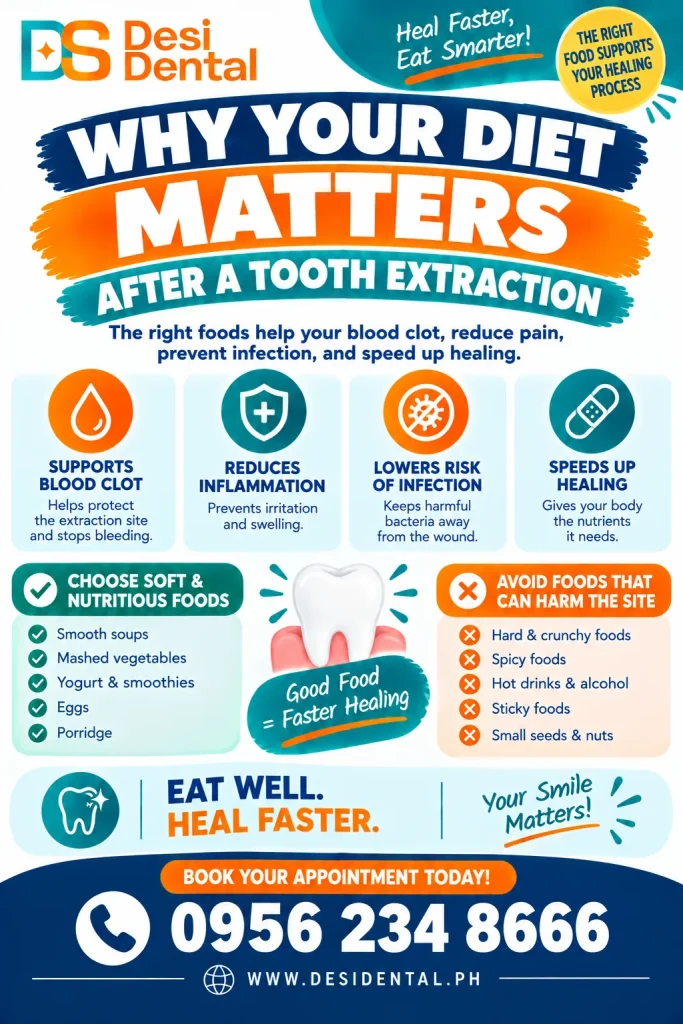
Why Your Diet Matters After a Tooth Extraction
When a tooth is removed, a blood clot forms in the empty socket. This clot acts like a natural bandage. It protects the bone and nerves underneath and allows new tissue to grow. If the clot is dislodged too early, a painful condition called dry socket can develop. Certain foods and eating habits can disturb the clot, leave debris in the socket, irritate the area, or simply leave you under-nourished when your body is trying to repair itself.
Good post-extraction eating does three things:
- Protects the blood clot
- Avoids irritation and infection risk
- Supplies protein, calories, vitamins, and fluids so healing can progress smoothly
Most people can return to a more normal diet within about a week after a simple extraction, though full soft-tissue healing takes longer. Surgical extractions (including many wisdom teeth removals) often need a longer soft-food period.
Understanding the Healing Timeline in Simple Terms
Healing happens in stages:
- First 24 hours: The clot is forming and is most fragile. Bleeding should slow. Swelling may begin.
- Days 2–3: Swelling often peaks. The clot becomes more stable, but the area is still tender.
- Days 4–7: Gum tissue starts closing over. Discomfort usually decreases noticeably.
- Week 2 and beyond: Most people can eat closer to normal, though very hard or crunchy foods may still feel uncomfortable near the site for a while longer.
Your exact timeline depends on the tooth removed, whether bone was removed or grafts placed, your age, overall health, and how carefully you follow aftercare.
What to Eat After Tooth Extraction
Stage 1: The First 24 Hours — Cool, Smooth, Zero Chewing
This is the most careful period. Stick to foods that need almost no chewing and are cool or only lukewarm. Hot temperatures can increase blood flow and risk of bleeding.
Best choices right after the procedure (once numbness wears off):
- Plain yogurt or Greek yogurt (no fruit pieces, seeds, or granola)
- Smooth applesauce
- Pudding, custard, or gelatin (Jell-O)
- Mashed ripe banana
- Mashed avocado
- Cool or room-temperature broths and fully blended soups (no chunks)
- Smooth protein shakes or smoothies — eaten with a spoon, never through a straw
- Ice cream or soft-serve without mix-ins (the cold can feel soothing)
Practical tips for day 1:
- Wait until the local anesthetic has fully worn off before eating so you do not accidentally bite your cheek or tongue.
- Take small spoonfuls and eat slowly.
- Stay upright while eating and for a while afterward.
- Drink water frequently at room temperature. Avoid carbonated drinks, alcohol, and very hot beverages.
- Do not use a straw. The suction can pull the clot out.
Many people feel little appetite the first day because of residual anesthesia, mild nausea from medication, or general discomfort. Focus on fluids and easy calories rather than forcing large meals.
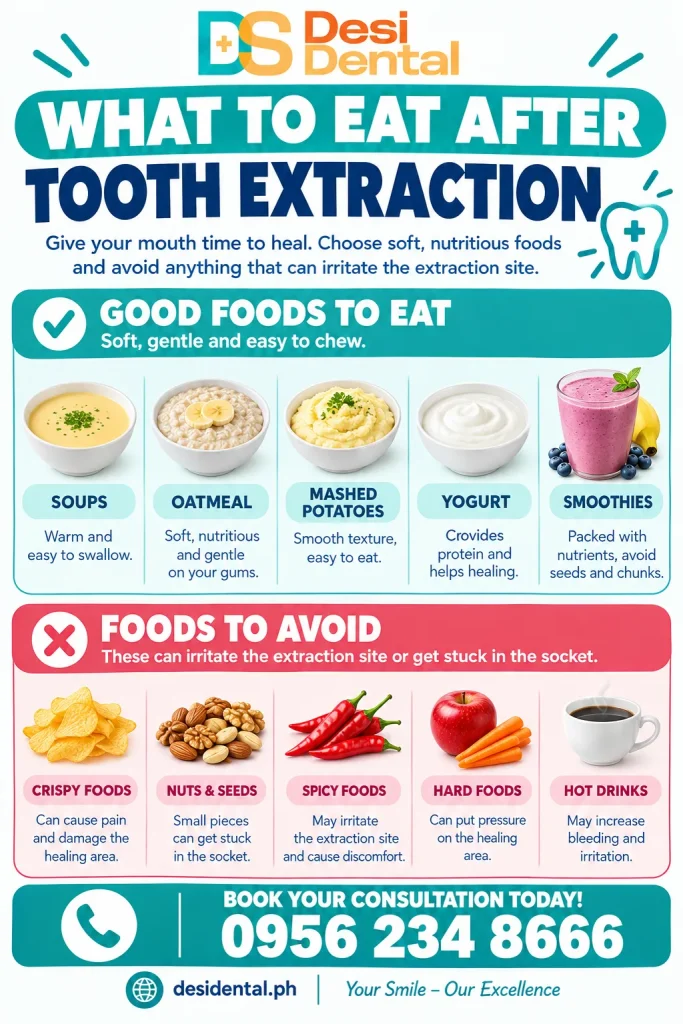
Stage 2: Days 2–3 — Soft Foods That Still Require Almost No Chewing
Swelling is often at its highest. You can add soft textures that mash easily, but keep everything lukewarm or cool and continue chewing only on the opposite side of your mouth.
Helpful foods to introduce:
- Soft scrambled or poached eggs
- Mashed potatoes or mashed sweet potatoes (smooth, no skins or crispy bits)
- Cottage cheese or ricotta cheese
- Oatmeal, cream of wheat, or porridge cooled to a comfortable temperature
- Soft, well-cooked pasta or noodles in a mild, smooth sauce
- Hummus or smooth refried beans
- Soft tofu
- Well-blended vegetable or lentil soups
- Ripe, peeled soft fruit such as very ripe peach or melon (if it mashes easily)
Protein becomes more important now. Your body uses amino acids to rebuild tissue. Greek yogurt, eggs, cottage cheese, and soft tofu are easy, high-protein options that do not require much chewing.
Sample day 2–3 meals:
- Breakfast: Soft scrambled eggs + mashed avocado
- Mid-morning: Greek yogurt mixed with a little mashed banana
- Lunch: Lukewarm pureed soup + soft mashed potatoes
- Snack: Cottage cheese or pudding
- Dinner: Soft pasta with a mild cheese or tomato sauce (smooth) + soft scrambled egg on the side if needed
- Evening: Cool applesauce or gelatin
Eat smaller, more frequent meals if your jaw feels tired or sore.
Stage 3: Days 4–7 — Adding Gentle Texture
Most people notice less pain and swelling by this point. You can carefully introduce foods that need light chewing, always keeping the extraction side protected.
Suitable additions:
- Flaked soft fish (baked or poached salmon, cod, or tilapia)
- Finely shredded or ground tender chicken or turkey mixed into sauces, gravies, or mashed potatoes
- Soft-cooked vegetables that mash easily (carrots, squash, zucchini, spinach, cauliflower)
- Soft bread or soft rolls without hard crusts
- Macaroni and cheese or similar creamy pasta dishes
- Soft pancakes or waffles (no hard edges)
- Ripe, soft fruits that are easy to mash or swallow
- Soft rice cooked until very tender (some dentists prefer you wait a bit longer on loose grains)
Continue avoiding anything that could leave small particles in the socket. Progress only as your comfort allows. If a food causes pain or renewed bleeding, go back to softer options for another day or two.
Complete List of Recommended Soft Foods by Category
- Dairy and protein sources: Greek yogurt, regular yogurt (smooth), cottage cheese, ricotta, soft scrambled or poached eggs, soft tofu, protein shakes (spooned), smooth nut butters in small amounts later in recovery, finely shredded moist chicken, flaked fish.
- Fruits: Applesauce, mashed banana, mashed avocado, pureed or very ripe soft fruits (peach, pear, melon), stewed apples without skin, canned peaches or pears in juice (soft).
- Vegetables and starches: Mashed potatoes, mashed sweet potatoes, pureed squash or pumpkin, well-cooked and mashed carrots or cauliflower, soft-cooked spinach, hummus, smooth refried beans, soft polenta or grits.
- Grains and comfort foods: Oatmeal or porridge (cooled), cream of wheat, soft pasta or noodles, macaroni and cheese, soft pancakes, rice pudding, well-cooked soft risotto or congee-style rice.
- Soups and liquids: Chicken, vegetable, or bone broth (lukewarm), fully blended vegetable soups, creamy tomato or butternut squash soup (strained if needed), miso soup cooled down.
- Treats that can help: Plain ice cream or soft-serve (no nuts or hard pieces), pudding, custard, gelatin, smooth sorbet.
Foods and Habits to Avoid
- Hard, crunchy, or chewy foods (nuts, chips, popcorn, raw vegetables, crusty bread, tough meats) — risk of dislodging the clot or scratching the site.
- Small seeds, grains, or particles (sesame seeds, quinoa, rice early on, berries with seeds) — they easily get trapped in the socket.
- Hot foods and drinks — heat can increase bleeding and soften the clot.
- Spicy, acidic, or highly seasoned foods (hot sauce, citrus, strong tomato sauces early on) — they irritate raw tissue.
- Carbonated beverages and alcohol — can irritate or slow healing.
- Straws, vigorous rinsing, or forceful spitting in the first 24–48 hours (or longer if advised) — suction or pressure can remove the clot.
- Smoking or vaping — significantly raises the risk of dry socket and slows healing.
Nutrition Tips That Actually Help Healing
Healing requires more than just soft texture. Your body needs:
- Protein — the building blocks for new tissue. Aim to include a protein source at most meals (eggs, yogurt, cottage cheese, soft fish, tofu, blended legumes).
- Calories — many people eat less than usual and feel weak. Choose calorie-dense soft options such as full-fat yogurt, avocado, nut butters (later), and smoothies.
- Vitamin C and other micronutrients — support collagen formation and immune function. Soft fruits and pureed vegetables help.
- Hydration — water is essential. Dehydration can make you feel worse and slow recovery. Sip water throughout the day.
- Zinc — found in eggs, dairy, and some soft meats; supports tissue repair.
If you take antibiotics, some people add probiotic yogurt to support gut health, but check with your provider first.
What to Eat After Tooth Extraction? Sample Meal Plans for Different Stages
Day 1 (very soft)
Breakfast: Smooth Greek yogurt
Lunch: Cool blended vegetable soup + applesauce
Dinner: Mashed banana + pudding
Snacks: Gelatin, room-temperature broth
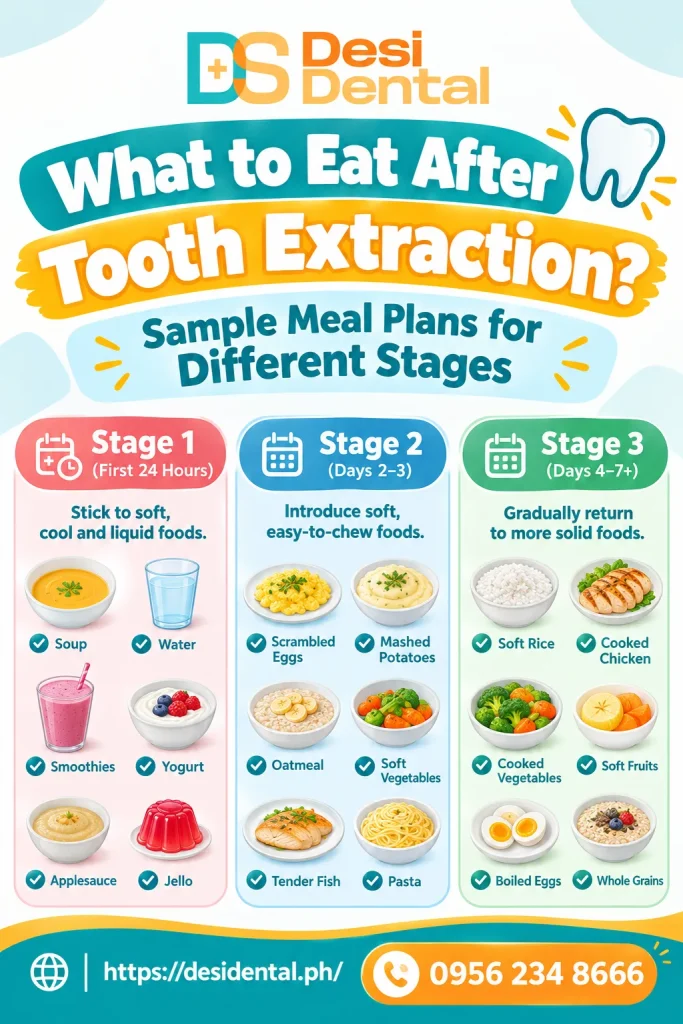
Days 2–3
Breakfast: Soft scrambled eggs with mashed avocado
Lunch: Mashed potatoes with lukewarm gravy or pureed soup
Dinner: Soft pasta with mild sauce + cottage cheese on the side
Snacks: Yogurt, mashed banana, pudding
Days 4–7
Breakfast: Oatmeal with mashed banana or soft scrambled eggs
Lunch: Flaked fish with mashed sweet potato and soft-cooked carrots
Dinner: Soft macaroni and cheese + shredded tender chicken mixed in
Snacks: Cottage cheese, soft fruit, yogurt
Adjust portions and choices to your appetite and any dietary needs (dairy-free, vegetarian, etc.). Plant-based options like silken tofu, blended lentils, hummus, and dairy-free yogurts work well.
Eating after a tooth extraction is temporary inconvenience, not a long-term restriction. By protecting the blood clot in the early days, choosing soft nutrient-dense foods, staying hydrated, and progressing gradually as comfort allows, most people heal well and return to normal eating within one to two weeks.


