

Losing a tooth can affect more than just your smile—it impacts chewing, speech, oral health, and even facial structure over time. Fortunately, modern dentistry offers reliable solutions like dental bridges and dental implants to restore function and aesthetics. Both are effective, but they differ significantly in design, procedure, longevity, cost, and long-term benefits.
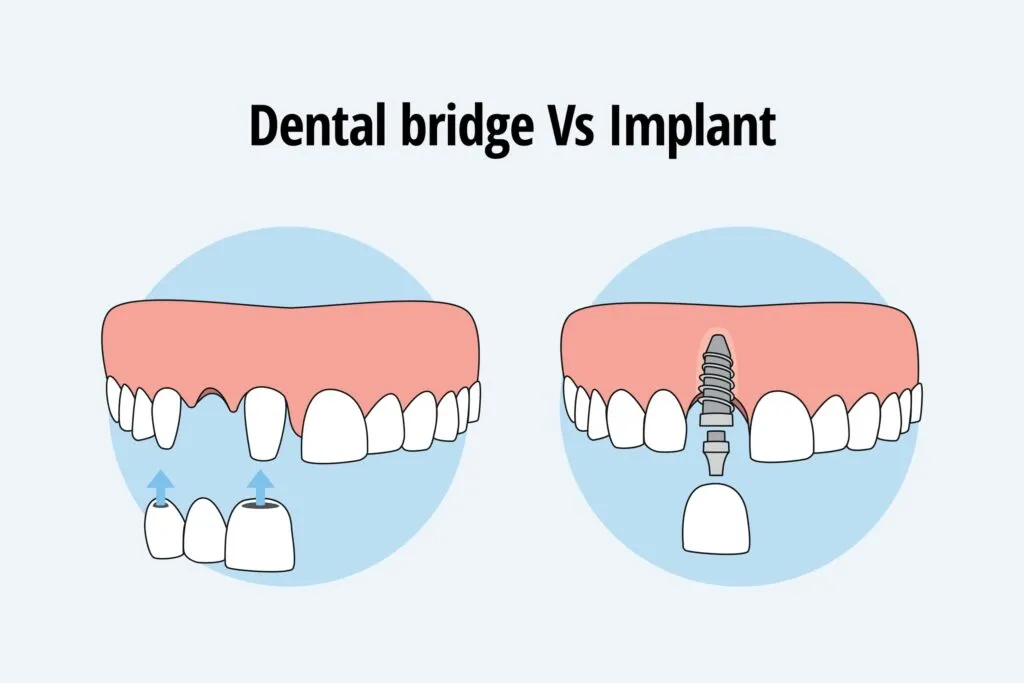
This guide compares dental bridge vs implant based on current dental insights, helping you make an informed decision.
What Is a Dental Bridge?
A dental bridge is a fixed restoration used to replace one or more missing teeth by closing the empty space in your smile. It works by anchoring replacement teeth to the natural teeth located on either side of the gap.
This restoration generally includes:
- Pontics – custom-made artificial teeth designed to restore appearance and chewing function.
- Abutment crowns – protective caps placed over the neighboring teeth to hold the bridge securely in position.
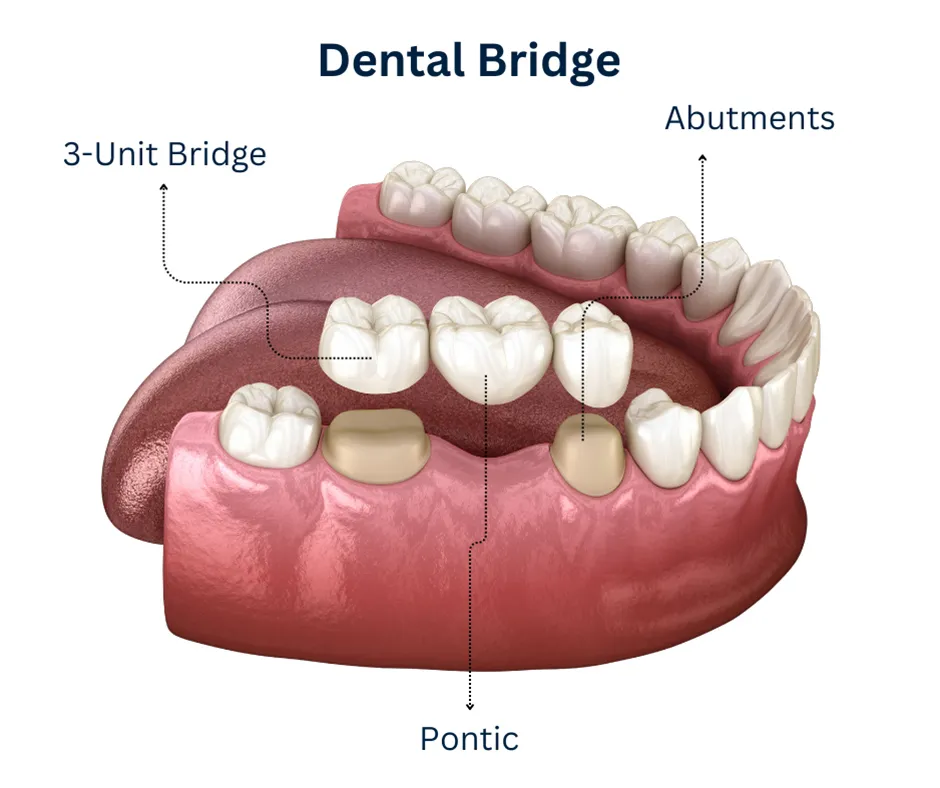
Unlike dental implants, traditional bridges do not require surgical placement in the jawbone. They are commonly recommended for patients who are missing one tooth or several teeth in a row and have healthy adjacent teeth strong enough to provide support.
What Is a Dental Implant?
A dental implant is a long-term tooth replacement solution designed to restore both the visible tooth and its underlying root. Unlike options that sit on the gums or rely on neighboring teeth for support, an implant is anchored directly into the jawbone.
A complete implant restoration typically includes three main parts:
- Implant fixture – a small titanium screw-like post placed into the jawbone to function as an artificial tooth root.
- Abutment – a connector piece that links the implant post to the final restoration.
- Dental crown – a custom-made artificial tooth that is shaped and shaded to blend naturally with your smile.
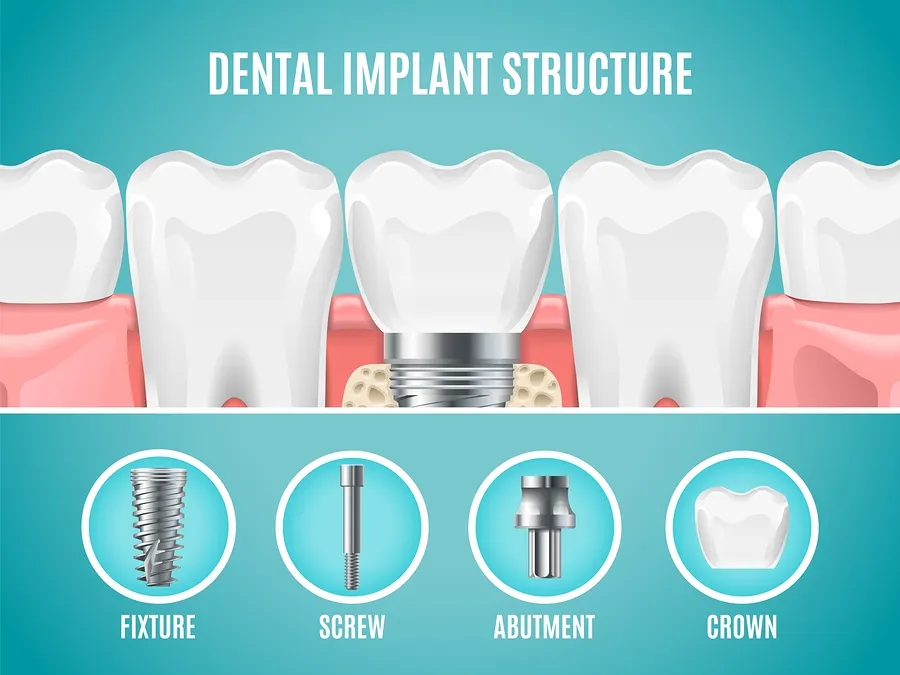
After placement, the implant gradually bonds with the surrounding bone through a biological process known as osseointegration. This integration creates a stable foundation that closely replicates the strength and function of a natural tooth root, allowing for normal biting, chewing, and speaking.
Key Differences Dental Bridge vs Implant
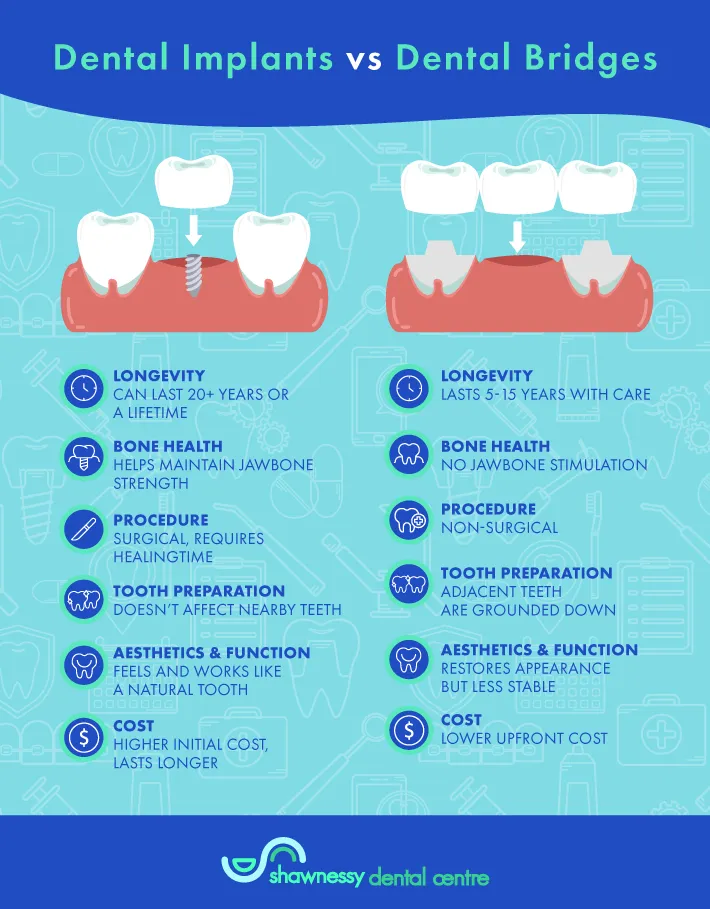
| Aspect | Dental Bridge | Dental Implant |
|---|---|---|
| Procedure | Non-surgical; usually completed in 2–3 visits over 1–2 weeks | Requires surgical placement followed by healing (typically 3–9 months total) |
| Impact on Adjacent Teeth | Nearby healthy teeth must be reshaped to support crowns | Independent restoration; does not affect surrounding teeth |
| Bone Health | Does not replace the root; jawbone may gradually shrink over time | Replaces the root and stimulates bone, helping prevent bone loss |
| Longevity | Commonly lasts around 10–15 years with proper care | Often lasts 15–20+ years; can last decades with good maintenance |
| Upfront Cost (Single Tooth, 2026 est.) | ~$2,000–$4,500; may receive partial insurance coverage | ~$3,000–$6,500+; insurance coverage varies |
| Maintenance | Requires special flossing underneath; supporting teeth may be at risk of decay | Can be brushed and flossed similarly to natural teeth |
| Best For | Replacing multiple adjacent missing teeth, quicker solution, lower initial cost | Single tooth replacement, long-term durability, bone preservation |
Pros and Cons of Dental Bridges
When considering a dental bridge, it’s important to look beyond convenience and evaluate both the short-term benefits and long-term implications.
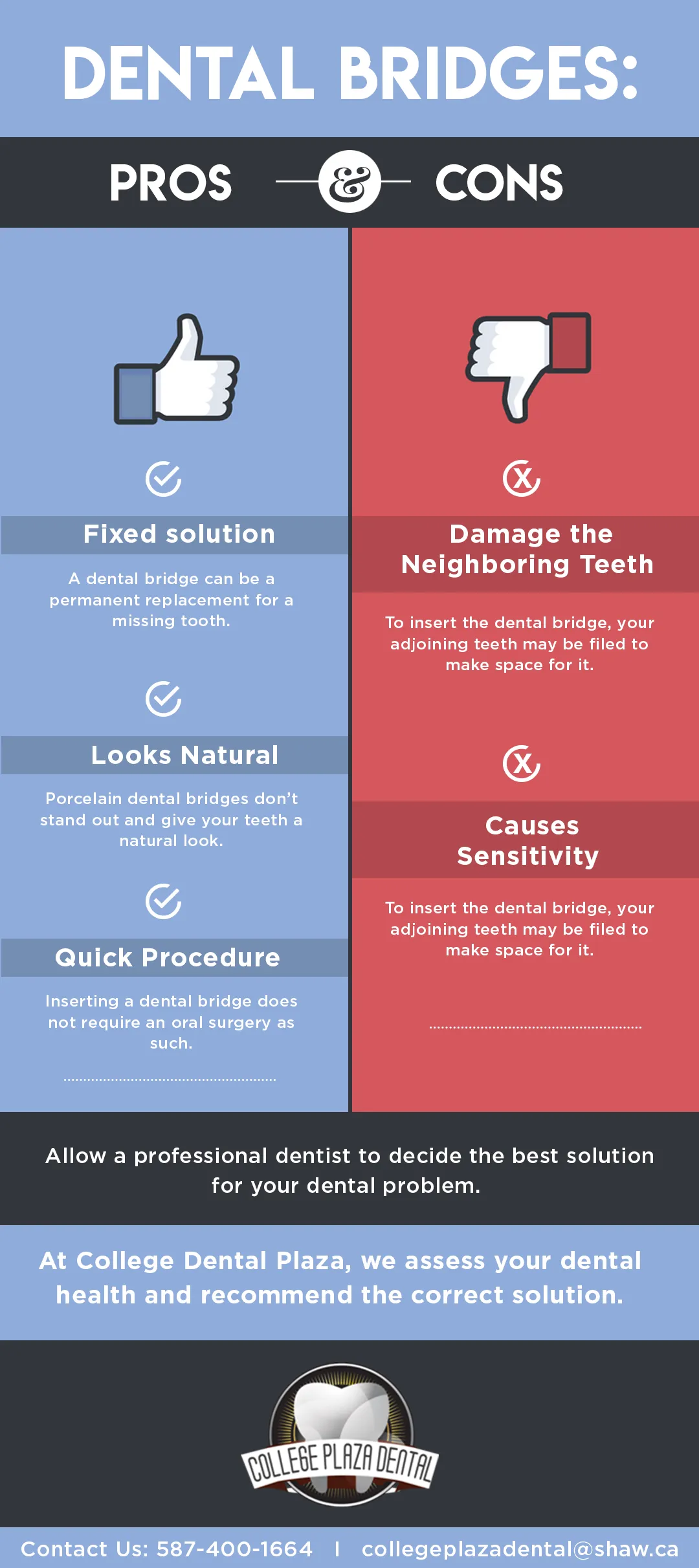
Pros
- No surgical procedure required: Treatment is typically straightforward and completed within a few appointments, making it appealing for patients who prefer to avoid oral surgery.
- More affordable at the start: Compared to implants, bridges usually involve a lower upfront investment and may receive broader insurance support, depending on your policy.
- Cosmetic improvement: In addition to filling a gap, crowns placed on adjacent teeth can enhance their shape, size, or color, contributing to a more balanced smile.
- Suitable for multiple adjacent missing teeth: Bridges can effectively restore function and appearance when several teeth in a row are absent.
Cons
- Requires modification of nearby healthy teeth: Supporting teeth must be reduced in size to hold crowns, which may increase their vulnerability to decay, structural damage, or the need for future treatment.
- Does not protect against bone shrinkage: Because the root is not replaced, the underlying jawbone may gradually lose volume over time, potentially affecting facial contours.
- Finite lifespan: While durable, bridges often need replacement after a decade or more, which can increase overall lifetime costs.
- More complex cleaning routine: Cleaning beneath the artificial tooth requires special flossing tools or techniques, which may become more difficult for some patients as manual dexterity changes with age.
Pros and Cons of Dental Implants
Dental implants are widely regarded as a premium tooth replacement option, but like any treatment, they come with both strengths and considerations. Understanding both sides helps patients make informed, realistic decisions.
Pros
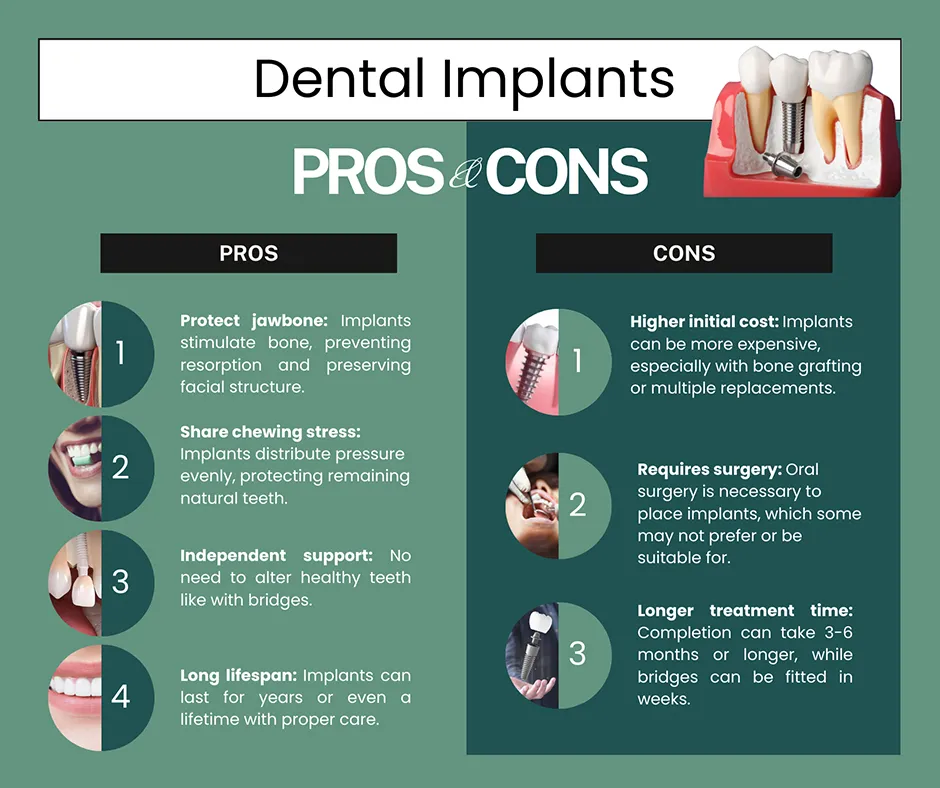
- Closest alternative to a natural tooth: Implants are designed to replicate the structure of a real tooth, from root to crown. Many patients report that they look, feel, and function almost indistinguishably from their natural teeth.
- Supports long-term bone health: Because the implant post integrates with the jawbone, it helps maintain bone density and facial contours that might otherwise diminish after tooth loss.
- Does not rely on neighboring teeth: Unlike bridges, implants stand independently and do not require reshaping or placing stress on adjacent healthy teeth.
- Long-lasting solution: With consistent oral hygiene and routine dental visits, implants can remain functional for decades — and in many cases, for a lifetime.
- Simplified daily care: They can be brushed and flossed similarly to natural teeth, reducing the complexity of long-term maintenance and lowering the risk of damage to surrounding teeth.
Cons
- Greater initial financial investment: The cost of surgery, materials, and multiple treatment stages typically makes implants more expensive upfront, and insurance coverage may be limited.
- Surgical procedure required: Placement involves minor oral surgery, followed by a healing period during which the implant bonds with the bone (a process known as osseointegration).
- Not ideal for every patient: Adequate bone volume and good overall health are important. Some individuals may need additional procedures, such as bone grafting, before implant placement.
- Longer treatment timeline: From consultation to final crown placement, the process can take several months depending on healing and individual circumstances.
Comparing Costs Dental Bridge vs. Dental Implant
When evaluating tooth replacement options, it’s helpful to consider both the immediate expense and the potential long-term value.
- A dental implant generally requires a larger upfront investment — often several thousand dollars more per tooth compared to a traditional bridge. However, implants are designed to be a long-lasting solution. When properly maintained, they can function for decades without needing replacement, which may reduce the likelihood of repeated treatment costs.
- In contrast, dental bridges typically have a lower starting price. That said, they often need to be replaced after 10 to 15 years. Additional expenses may also arise if the supporting teeth develop decay, fractures, or require further dental work. Over time, these factors can increase the total lifetime cost.
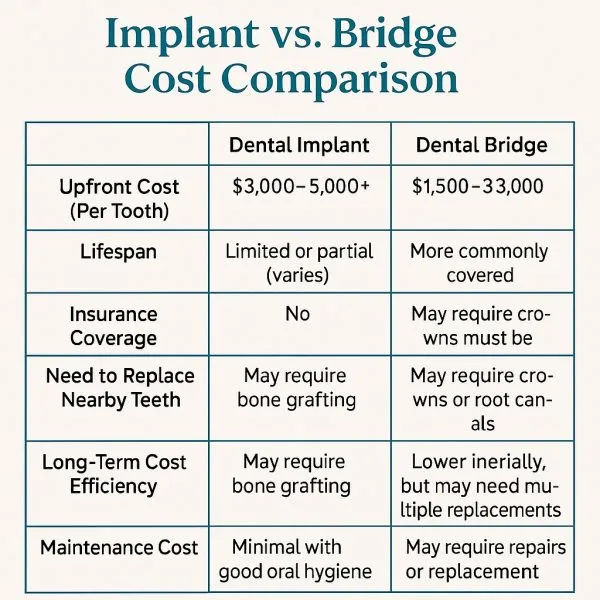
Insurance benefits can also influence the decision. Bridges are more frequently included under standard dental coverage, while implants may receive partial reimbursement depending on whether they are classified as restorative treatment. Because policies differ widely, it’s important to confirm current coverage details with your insurance provider, especially for 2026 plan specifics.
Which Should You Choose: Dental Bridge or Implant?
Selecting the right tooth replacement option depends on your priorities, oral health condition, and long-term expectations.
- A dental bridge may be a suitable choice if you’re looking for a faster treatment process, want to avoid surgery, or need a more budget-conscious solution in the short term. It can also be practical when replacing several teeth that are missing next to each other, especially if the neighboring teeth already require crowns.
- A dental implant, on the other hand, may be the better option if you’re focused on durability and preserving jawbone health. Because implants function independently and do not rely on adjacent teeth for support, they help maintain natural tooth structure. Although they involve a higher initial investment and a longer treatment timeline, many patients value their long-term stability and reduced likelihood of future replacement.
For a single missing tooth, implants are often regarded by dental professionals as the preferred long-term solution due to their strength and bone-preserving benefits. That said, bridges remain a reliable and effective treatment in specific clinical situations.
Both dental bridges and implants can transform your smile and quality of life. The “better” option depends on your unique oral health, budget, timeline, and goals. Schedule a consultation with a dentist experienced in restorative procedures—they can evaluate your jawbone, discuss risks/benefits, and recommend the best path forward.


