

Many people notice that one side of their face looks different from the other. The chin may tilt slightly, the jawline may appear uneven, or the smile may not look centered. When this happens, a common question arises: can braces fix asymmetrical face?
The answer is not a simple yes or no. Braces can improve facial balance in many cases, but the results depend on the exact cause of the asymmetry. This guide explains everything in clear, practical language so you can understand what braces can realistically achieve and when other treatments may be needed.
Understanding Facial Asymmetry
Almost every face has some degree of asymmetry. Perfect left-right balance is rare. Small differences are normal and usually go unnoticed. Problems arise when the imbalance becomes more visible, especially in the lower third of the face (jaw, chin, and lips).
Facial asymmetry can affect appearance and confidence. In some cases it also causes functional issues such as uneven chewing, jaw discomfort, or temporomandibular joint (TMJ) strain.
Main Causes of an Asymmetrical Face
To answer whether can braces fix asymmetrical face, doctors first identify the source of the imbalance. The two primary categories are dental/functional and skeletal.
Dental or functional asymmetry
The jawbones themselves are relatively normal in size and position, but the teeth or bite force the jaw into an uneven position. Common examples include:
- A crossbite on one side that makes the lower jaw slide sideways when closing
- A dental midline that does not match the center of the face
- Crowded, tilted, or missing teeth that change how the lips and soft tissues rest
- Early loss of baby teeth or habits (such as prolonged thumb sucking) that affect development
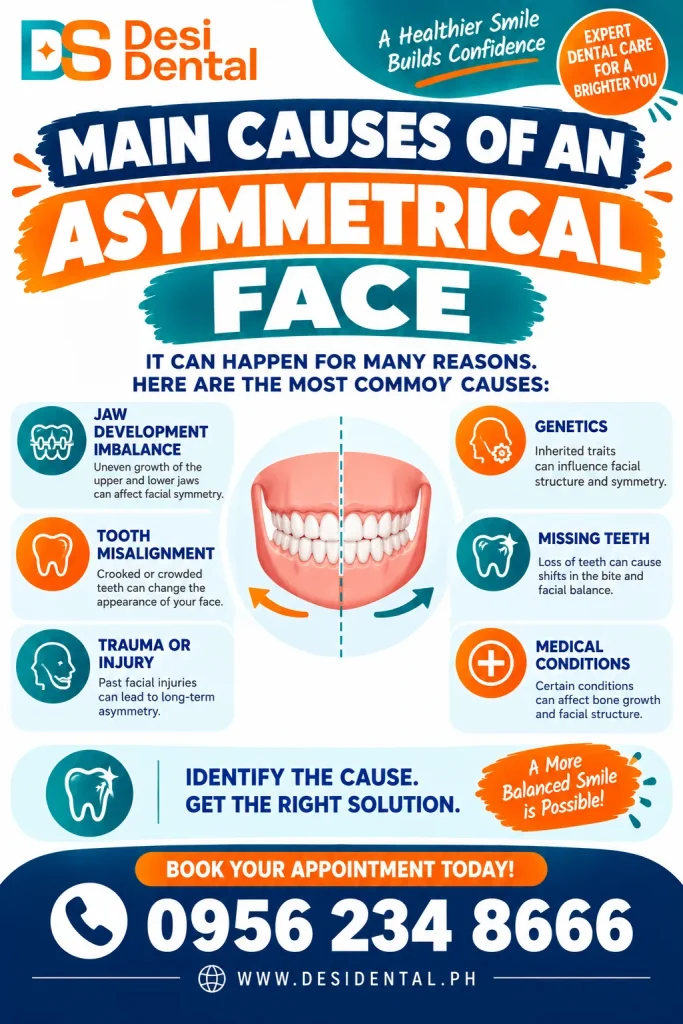
Skeletal asymmetry
The jawbones grew unevenly. One side of the lower jaw may be longer, the chin may deviate to one side, or the upper jaw may be tilted. These differences are structural and cannot be corrected by moving teeth alone.
Other contributing factors can include past injuries, uneven muscle activity, or growth differences during childhood and adolescence.
Can Braces Fix Asymmetrical Face Caused by Dental Issues?
Yes, in many dental and functional cases. Braces (or clear aligners) work by applying gentle, continuous pressure that moves teeth into better positions over time. When the teeth and bite improve, several positive changes often follow:
- The lower jaw no longer needs to shift sideways to find a comfortable bite.
- The dental midlines become more centered, making the smile look balanced.
- Lip support becomes more even on both sides.
- Soft tissues of the lower face drape more symmetrically over the teeth and jaws.
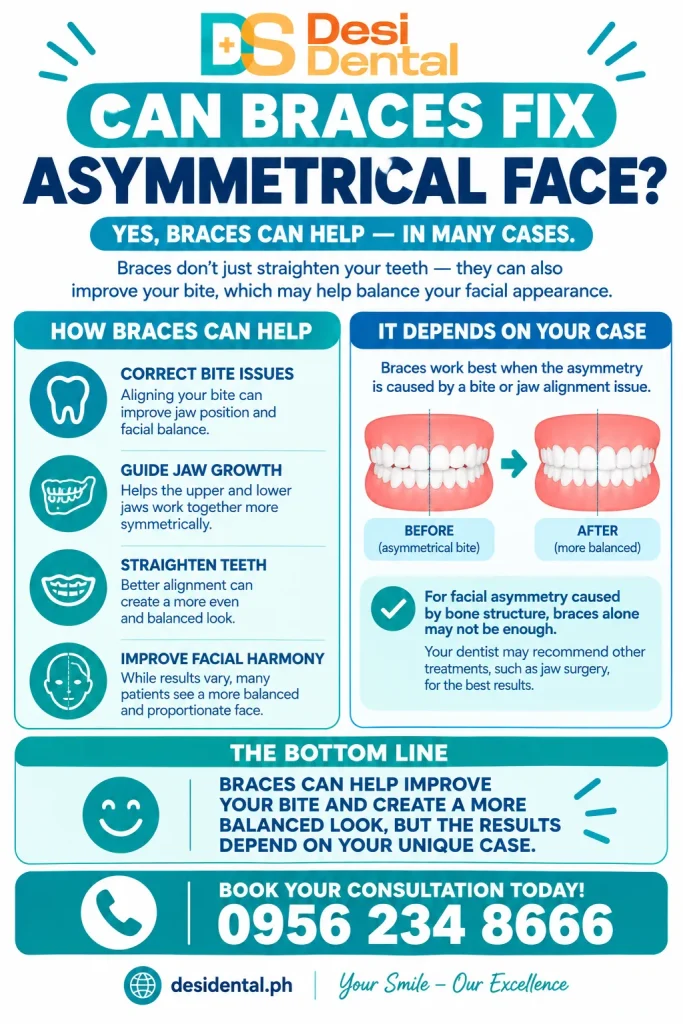
Correcting a unilateral crossbite is one of the clearest examples. Once the interfering teeth are moved, the jaw can rest in its natural, more centered position. The improvement is often visible in the chin and jawline.
In growing children and teenagers, orthodontists can also use additional appliances (such as expanders or functional appliances) to guide jaw growth and reduce the chance of asymmetry becoming worse. Early treatment frequently produces better and more stable results.
When Braces Cannot Fully Fix an Asymmetrical Face
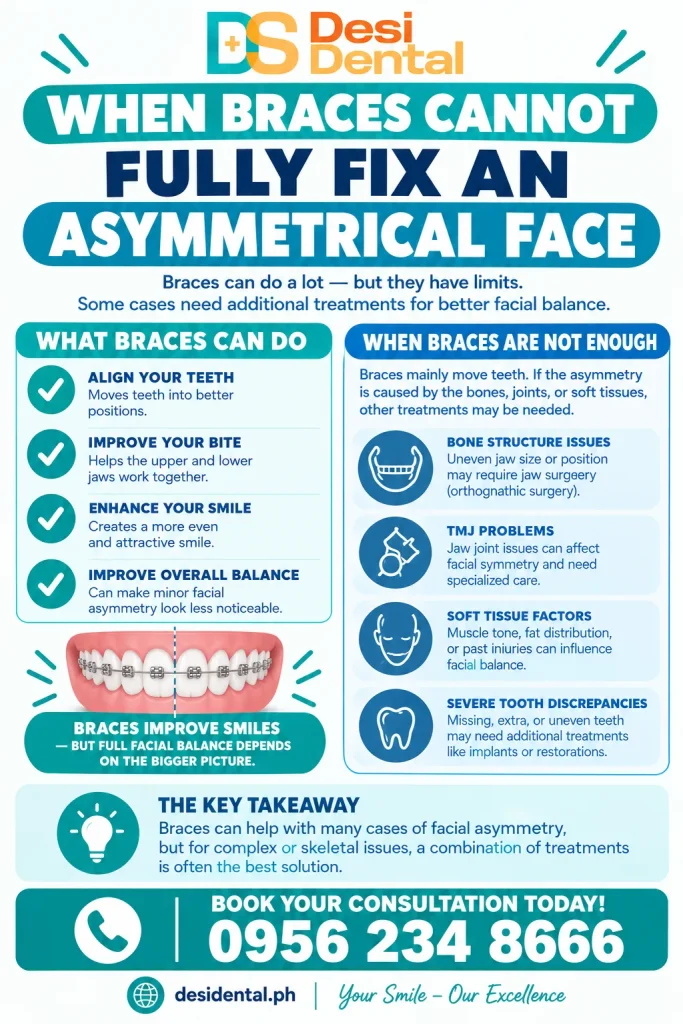
If the asymmetry is primarily skeletal, braces alone have clear limits. Braces move teeth through the supporting bone; they do not change the length, width, or overall position of the jawbones once growth is complete.
In adults with significant skeletal discrepancies, braces may create a limited camouflage effect by tipping teeth. However, the underlying bone imbalance remains, and the face will still look asymmetrical at rest. In these situations, the most effective approach is usually a combination of orthodontics and orthognathic (corrective jaw) surgery.
The typical sequence is:
- Braces align the teeth within each jaw.
- The oral surgeon repositions the jawbones.
- Braces finish the fine details of the bite after surgery.
This combined treatment addresses both the dental and skeletal components and produces the most balanced, long-lasting outcome for severe cases.
How Orthodontists Diagnose the Problem
A professional evaluation is essential. Self-assessment in the mirror or with photos is not reliable. An orthodontist will typically:
- Examine the bite, midlines, and facial proportions
- Take photographs and digital scans or models of the teeth
- Use X-rays or 3D imaging (such as CBCT) to evaluate bone structure and growth patterns
- Assess how the jaws function during chewing and speaking
Only after this thorough assessment can the orthodontist give a realistic answer to the question can braces fix asymmetrical face in your specific situation.
What Results Can You Realistically Expect?
Mild to moderate dental asymmetry
Many patients notice clearer improvements in smile symmetry, jaw posture, and overall lower-face balance. The changes are gradual and natural-looking.
Growing patients
Results are often more significant because growth can still be guided.
Adults with skeletal issues
Braces alone produce more limited change. Combining treatment with surgery, when indicated, delivers greater correction.
Braces do not create mathematically perfect symmetry, nor do they reshape the upper face, cheekbones, or eye area. The goal is better balance, improved function, and a more harmonious appearance of the lower face and smile.
Treatment time typically ranges from 12 to 36 months depending on complexity. After braces are removed, retainers are required to maintain the new tooth positions.
Clear Aligners vs Traditional Braces
Both traditional braces and clear aligners can address dental causes of asymmetry. Traditional braces often provide more precise control for complex movements and significant crossbites. Clear aligners work well for milder cases and offer aesthetic advantages. The choice depends on the specific diagnosis and the orthodontist’s recommendation.
Frequently Asked Questions
Can braces fix asymmetrical face in adults?
Yes, when the cause is dental or functional. Skeletal problems in adults usually require additional treatment.
Will braces change my face shape permanently?
They can improve lower-face proportions and soft-tissue support. Bone structure itself does not change with braces alone.
How long before I see improvement in facial balance?
Some functional shifts improve relatively early once the interfering teeth are corrected. Full results appear toward the end of treatment.
Do I need surgery?
Only if imaging confirms a significant skeletal discrepancy. Many cases respond well to orthodontics alone.
The question can braces fix asymmetrical face has a clear, evidence-based answer: braces can effectively improve facial balance when the asymmetry is caused by tooth position or a functional jaw shift. They cannot correct major skeletal differences on their own.


