

Wisdom tooth extraction recovery is a temporary but important phase that most people complete successfully when they understand what to expect and follow simple, consistent care steps. Whether you are preparing for the procedure or have just returned home from the oral surgeon’s office, this detailed guide walks you through every stage in plain language. It covers the realistic timeline, practical daily actions, food choices, pain management, warning signs, and ways to support healing so you can move through the process with less stress and more confidence.
Why Wisdom Tooth Extraction Recovery Matters
Wisdom teeth (third molars) are the last teeth to develop. When they become impacted, crowded, or cause pain, infection, or damage to neighboring teeth, removal is often recommended. After the teeth are taken out, the body begins a carefully ordered healing process. A blood clot forms in each socket, soft tissue closes over the top, and bone gradually fills in underneath. Protecting that early clot and managing swelling and discomfort are the foundation of smooth wisdom tooth extraction recovery.
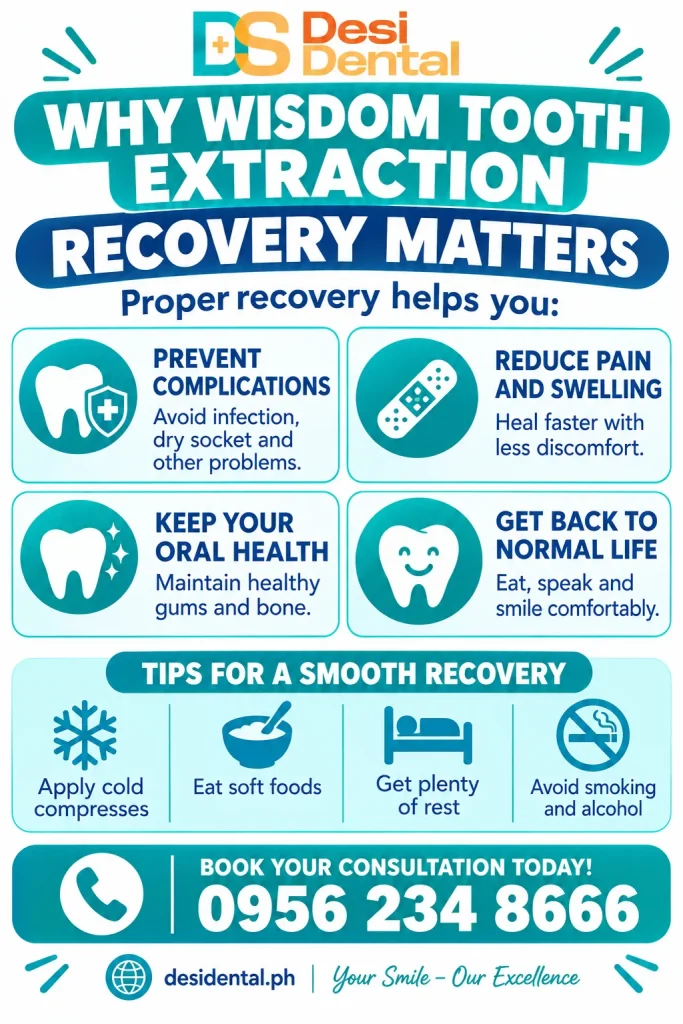
Most people feel significantly better within a week and return to normal routines shortly after. Full soft-tissue healing usually takes one to two weeks, while deeper bone remodeling continues quietly for several weeks to a few months. Knowing this helps set realistic expectations and prevents unnecessary worry when day two or three feels harder than day one.
Factors That Shape Your Wisdom Tooth Extraction Recovery
Several personal factors influence how long and how comfortable the process will be:
- Age – Younger patients often heal faster because bone and tissue regenerate more quickly.
- Number of teeth removed – Extracting all four at once usually produces more swelling than removing one or two.
- Degree of impaction – Fully erupted teeth are simpler; deeply impacted teeth that require bone removal take longer.
- Overall health and habits – Smoking, vaping, diabetes, or certain medications can slow healing.
- How closely you follow aftercare – Protecting the clot and resting properly make the biggest difference.
Understanding these variables lets you plan ahead (for example, scheduling surgery near a weekend if you have a physical job).
Detailed Day-by-Day Wisdom Tooth Extraction Recovery Timeline
Surgery Day and the First 24 Hours – Protecting the Clot
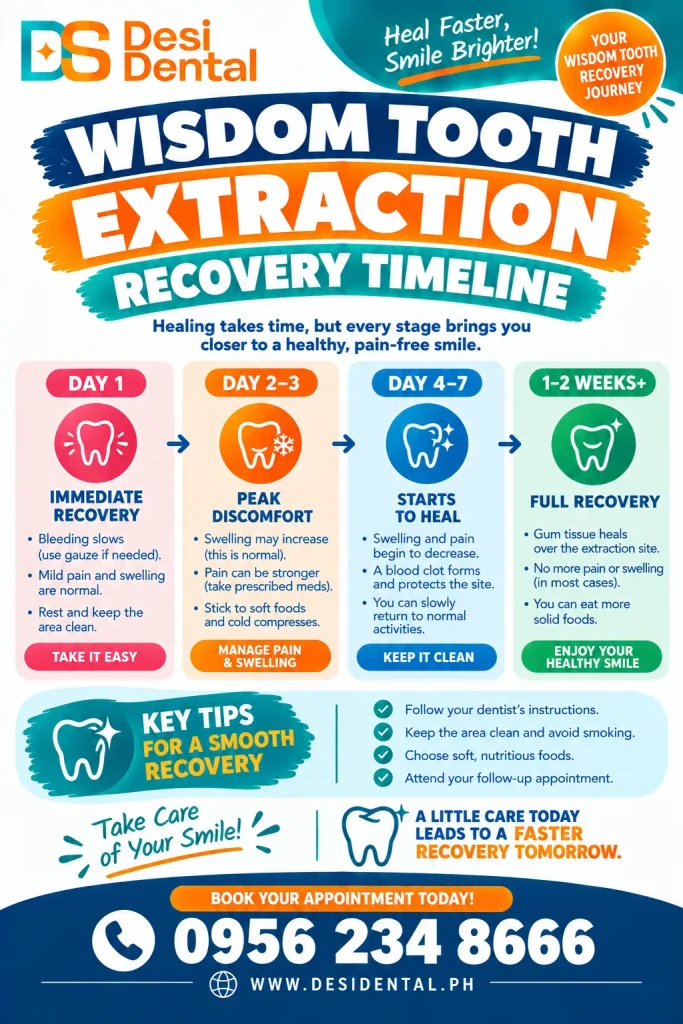
When you leave the office you will still feel numb. The local anesthetic or sedation wears off over the next two to four hours. Light oozing or pink-tinged saliva is completely normal. The single most important job in early wisdom tooth extraction recovery is to let a stable blood clot form and stay in place.
Bite gently but firmly on the gauze pads provided for 30–45 minutes at a time. Change them only when they become saturated. Rest with your head elevated on two or three pillows. Apply a cold pack wrapped in a thin cloth to the outside of your cheek for 20 minutes on, then 20 minutes off. Do not spit, rinse vigorously, use a straw, smoke, vape, or drink alcohol. These actions can dislodge the clot and lead to dry socket. Take the first dose of pain medication while you are still numb so it is working when sensation returns. Stick to cool liquids and very soft foods such as yogurt, applesauce, or lukewarm broth.
Days 2 and 3 – Peak Swelling and the Toughest Stretch
Many people are surprised that they feel worse on day two or three than on the day of surgery. Swelling often reaches its maximum around 48–72 hours. Cheeks can look puffy (“chipmunk face”), the jaw may feel stiff, and mild bruising can appear. This is a normal part of the inflammatory response and does not mean something has gone wrong.
Continue elevating your head when resting. Switch from cold to warm compresses after the first 48 hours if that feels more soothing. After the first full 24 hours, begin gentle warm saltwater rinses (½ teaspoon of salt in a cup of warm water). Tilt your head so the water bathes the area, then let it fall out—do not spit forcefully. Keep eating soft, cool or room-temperature foods and stay well hydrated. Most people still need regular pain relief at this stage. Short walks around the house are fine; avoid anything that raises blood pressure significantly.
Days 4 to 7 – Turning the Corner
This is when most people notice clear improvement in wisdom tooth extraction recovery. Swelling begins to recede, pain becomes milder and more manageable, and jaw opening gradually returns. Many patients feel ready to resume desk work, school, or light daily activities by day 5. Continue saltwater rinses after meals, brush carefully around (not directly over) the sites with a soft toothbrush, and advance your diet as comfort allows. Dissolvable stitches, if used, often start to loosen toward the end of the first week.
Week 2 and Beyond – Soft Tissue Closure and Quiet Bone Healing
By the second week residual soreness and stiffness are usually minimal. Gum tissue continues to close over the sockets. You can typically return to most normal foods, though very hard, crunchy, or seedy items near the back of the mouth may still feel uncomfortable for a little longer. The visible holes fill in with new tissue over the following weeks. Deeper bone remodeling continues for one to three months (sometimes longer) without any symptoms you can feel. Attend any scheduled follow-up visits so your provider can confirm healing is on track.
What to Eat During Wisdom Tooth Extraction Recovery
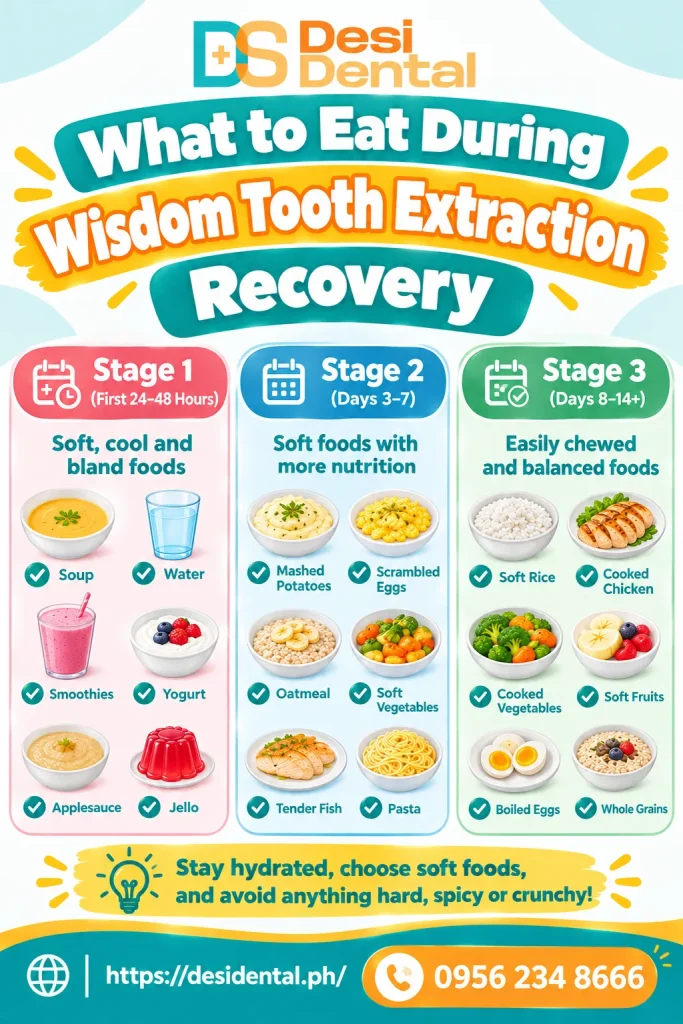
Food choices support healing and protect the sockets. In the first 48–72 hours focus on cool or lukewarm, smooth options that require almost no chewing:
- Yogurt, pudding, applesauce, mashed bananas
- Smoothies or protein shakes (eaten with a spoon, never a straw)
- Lukewarm broth or blended soups
- Mashed potatoes or soft scrambled eggs
From days 3–7 you can gradually add soft pasta, oatmeal, well-cooked soft vegetables, soft fish, and ripe avocado. By week 2 most people return to a near-normal diet while still avoiding very hard or sharp foods directly against the healing sites. Stay hydrated with water. Avoid hot liquids, spicy foods, carbonated drinks, alcohol, and anything with small seeds that could lodge in a socket during the early phase.
Pain, Swelling, and Comfort Management
Pain is usually most noticeable in the first three to four days and then steadily improves. Many clinicians recommend alternating ibuprofen and acetaminophen (if appropriate for your health) on a schedule rather than waiting until pain becomes severe. Always follow the dosing instructions given by your provider. Ice in the first 48 hours reduces swelling; warm compresses afterward can ease residual stiffness. Gentle jaw exercises—slowly opening and closing the mouth a few times a day—help restore mobility once the worst swelling has passed.
Do’s and Don’ts for Successful Wisdom Tooth Extraction Recovery
Do:
- Rest for the first one to three days and keep the head elevated.
- Use cold then warm compresses as described.
- Take all prescribed medications, including antibiotics if given.
- Rinse gently with warm salt water after the first 24 hours.
- Keep the mouth clean without disturbing the sockets.
- Plan for extra rest if your job is physically demanding.
Don’t:
- Use straws, smoke, or vape for at least 72 hours (longer is better).
- Spit forcefully or rinse hard in the first day.
- Probe the sockets with your tongue or fingers.
- Resume heavy exercise, lifting, or contact sports too soon.
- Ignore increasing pain after day 3.
Recognizing Normal Healing Versus Problems
Normal experiences include mild to moderate pain that peaks then improves, swelling that is worst on days 2–3, light oozing on day 1, temporary jaw stiffness, and occasional mild bruising.
Contact your oral surgeon promptly if you notice:
- Pain that suddenly worsens after day 3 (a classic sign of dry socket)
- Heavy or continuous bleeding that does not slow with pressure
- Swelling that keeps increasing after day 3
- Fever, pus, or a foul taste or odor that does not improve
- Numbness in the lip, chin, or tongue that lasts longer than expected
Dry socket occurs when the protective blood clot is lost. It is more common with lower wisdom teeth and is largely preventable by following the early aftercare rules. Treatment is straightforward once diagnosed, so do not hesitate to call if symptoms appear.
Returning to Work, School, and Exercise
Most people with desk jobs or school commitments return within three to five days. Physically demanding work may require a full week or slightly longer. Light walking is fine early on; wait until swelling and pain have clearly improved before resuming more vigorous exercise. Driving is safe once you are no longer taking prescription pain medication that causes drowsiness and feel fully alert.
Once the acute phase is over, continue good oral hygiene and attend any recommended check-ups. The sockets will continue to fill in over the following weeks and months. Maintaining overall health—adequate nutrition, hydration, and avoiding tobacco—supports the deeper bone remodeling that completes the process.


