

Choosing the right braces can feel overwhelming. If you are comparing ceramic braces vs metal braces, you are already asking the right questions. Both options straighten teeth effectively, but they differ in how they look, feel, cost, and hold up in daily life. This guide explains every important difference in plain language so you can decide with confidence.
What Are Metal Braces and Ceramic Braces?
Metal braces and ceramic braces both belong to the “fixed braces” family. They use brackets glued to the front of your teeth and a thin wire (called an archwire) that gently moves the teeth into better positions over time. The main difference is the material of the brackets.
Metal braces use medical-grade stainless steel brackets. These are the classic silver braces most people picture. Modern versions are much smaller and smoother than the bulky braces from decades ago.
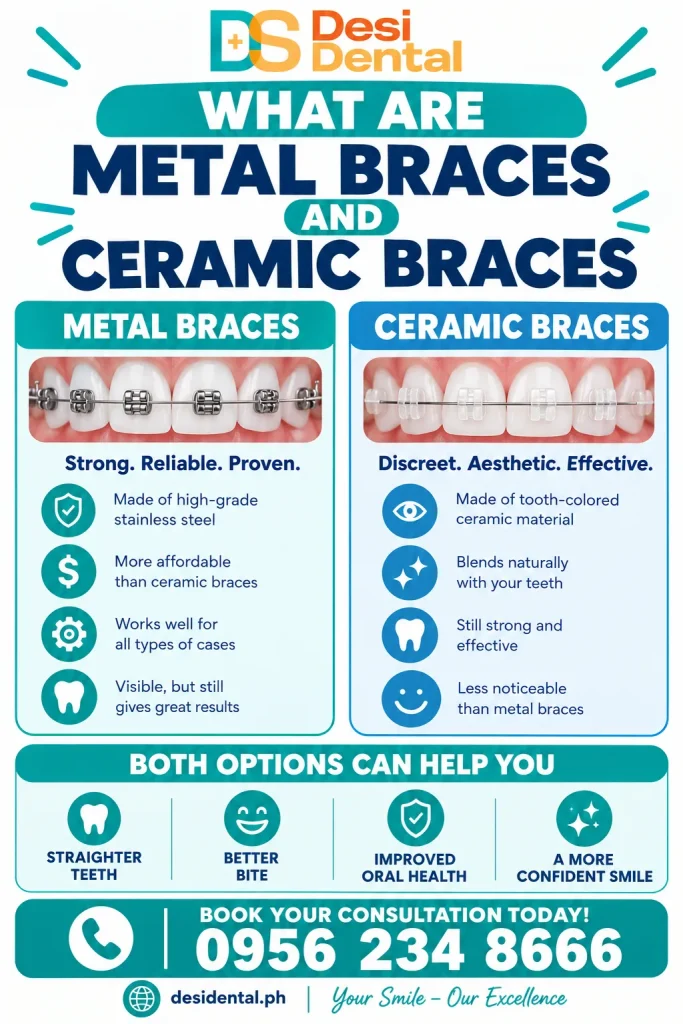
Ceramic braces use tooth-colored or translucent ceramic brackets. The material is designed to blend with the natural shade of your teeth, making them far less noticeable than metal. Some people also call them “clear braces,” although they are not completely invisible.
Both systems work on the same biomechanical principles. The choice is rarely about which one straightens teeth better. It is about appearance, durability, cost, comfort, and how well the material matches your lifestyle.
Ceramic Braces vs Metal Braces
Here is a detailed look at the factors that matter most to patients when comparing ceramic braces vs metal braces.
Appearance
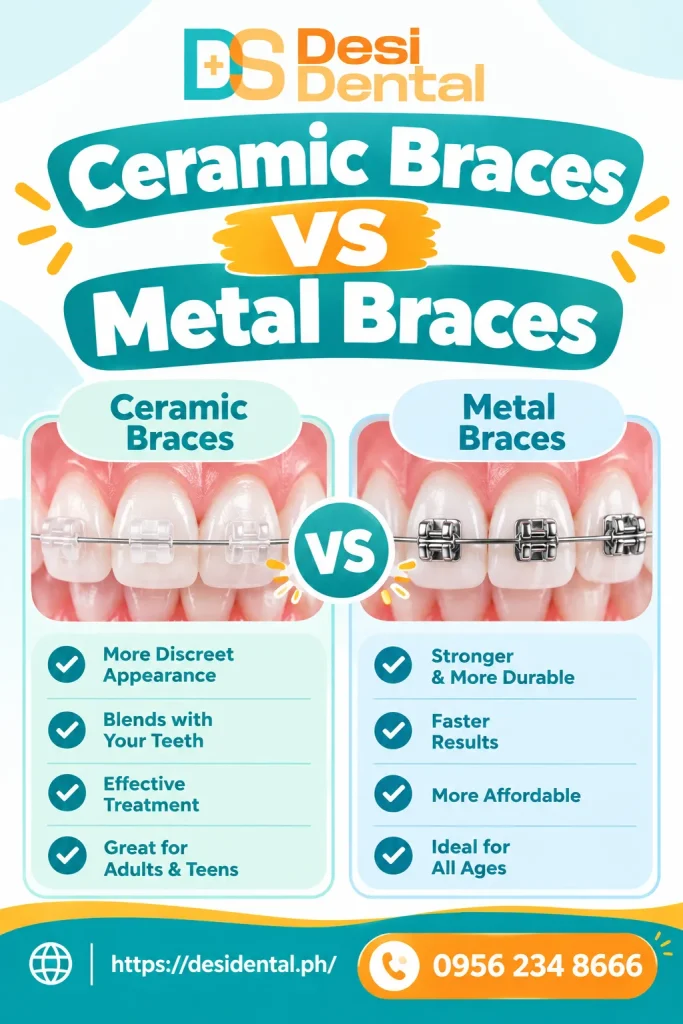
Appearance is the biggest reason people consider ceramic braces. Metal brackets are shiny and silver. They stand out clearly when you smile, talk, or appear in photos. Many adults and older teens find this the most noticeable drawback.
Ceramic brackets are shaded to match natural tooth enamel. From a normal speaking distance, they are much harder to spot. In photos and professional settings, the difference is often significant. The archwire is still visible (usually silver, though tooth-colored or frosted wires are sometimes available), but the overall look is far more discreet.
Important note: Ceramic braces are less visible, not invisible. Close-up or under bright lighting, the brackets can still be seen. If complete discretion is your top priority, clear aligners may be worth discussing as well.
Cost
Metal braces are almost always the more affordable option. Ceramic brackets cost more to manufacture and require extra care during placement and removal. As a result, ceramic braces typically add several hundred to a couple of thousand dollars to the total treatment fee, depending on your location, provider, and case complexity.
Insurance coverage is usually the same for both types. The extra cost of ceramic is often paid out of pocket. Exact prices vary widely, so the only reliable way to know the difference is to get a personalized quote after a full examination and records.
Durability and Strength
Metal braces win clearly on strength. Stainless steel brackets are extremely tough. They rarely chip or break under normal chewing forces or during active sports (when a mouthguard is worn). This makes metal the preferred choice for complex cases that need stronger forces, patients who grind their teeth, or anyone with a higher risk of impact.
Ceramic brackets are strong under normal conditions but more brittle than metal. Biting into very hard foods, accidental trauma, or heavy grinding can cause a ceramic bracket to chip or come loose more easily. A broken bracket usually means an extra appointment and a short pause in treatment progress.
Comfort
Both types feel similar after the first week or two of adjustment. Modern metal brackets are small and smooth. Ceramic brackets are sometimes described as slightly smoother against the lips and cheeks because of the material surface, but they can also feel a bit bulkier because ceramic needs slightly more material for strength.
Most patients adapt well to either option. Temporary soreness after wire changes is normal with both.
Treatment Time and Effectiveness
For the majority of mild to moderate cases, treatment time is very similar with ceramic braces vs metal braces. The average range is often 12–24 months, though individual results vary based on the complexity of the bite, patient age, cooperation with elastics, and oral hygiene.
In some complex cases that require heavy forces or large tooth movements, metal braces can offer a slight advantage because of lower friction between the bracket and wire and greater durability. Your orthodontist will tell you if this applies to your specific situation. Both materials can produce excellent final results when the treatment plan is followed carefully.
Staining and Maintenance
Metal brackets do not stain. The only possible discoloration comes from the elastic ties (the small rubber rings that hold the wire), and those are changed at every adjustment visit.
Ceramic brackets themselves resist staining well. However, the clear elastic ties used with many ceramic systems can pick up color from coffee, tea, red wine, curry, berries, or tobacco between visits. Good oral hygiene and rinsing after staining foods or drinks help a lot. Some practices use self-ligating ceramic brackets that do not need elastic ties, which reduces this concern.
Cleaning around braces of either type requires extra effort. Floss threaders, interdental brushes, or a water flosser make the job easier. Brushing after every meal is ideal.
Pros and Cons of Metal Braces
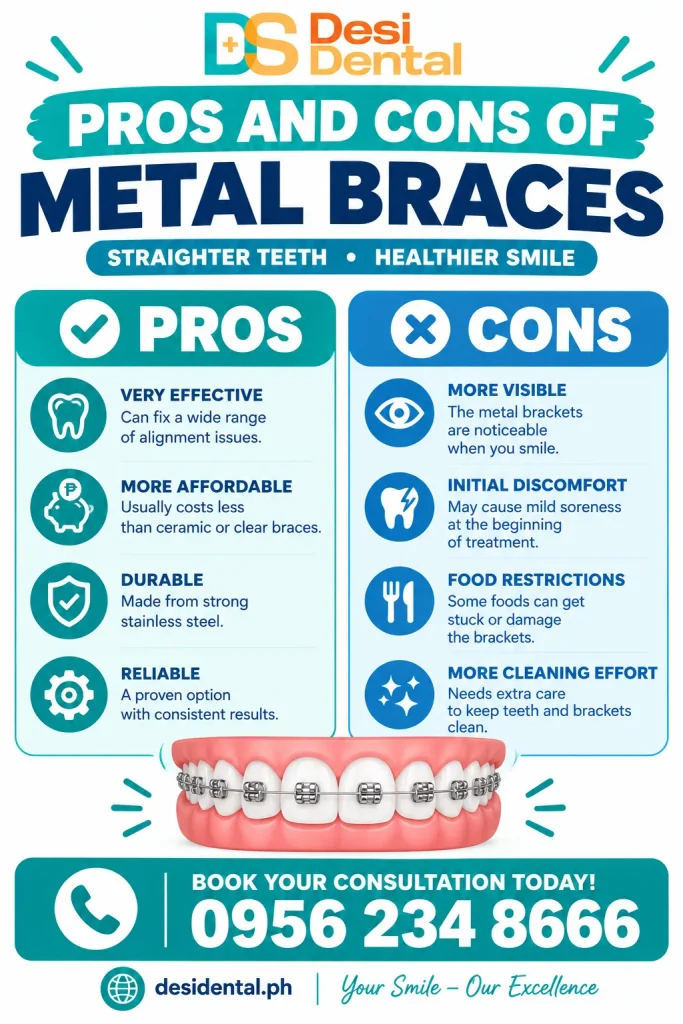
Advantages of metal braces
- Most affordable fixed option in most practices
- Extremely durable and resistant to breakage
- Excellent for complex or severe cases
- Smaller modern design is more comfortable than older styles
- Option to use colorful elastic ties (popular with younger patients)
- No staining of the brackets themselves
Disadvantages of metal braces
- Highly visible silver appearance
- Some adults and image-conscious teens feel self-conscious
- Standard stainless steel contains nickel (nickel-free options exist for allergies)
Pros and Cons of Ceramic Braces
Advantages of ceramic braces
- Significantly less noticeable than metal
- Blend better in photos, meetings, and social situations
- Hypoallergenic for most people
- Can boost confidence during treatment for appearance-focused patients
- Same effective results as metal for most cases
Disadvantages of ceramic braces
- Higher cost
- More brittle and higher chance of chipping or debonding
- Clear elastic ties can discolor between visits
- Slightly bulkier feel for some patients
- May not be ideal for every complex case or deep-bite situation on the lower teeth
Who Should Choose Metal Braces?
Metal braces are often the smarter practical choice if any of these apply to you:
- Budget is a major concern
- Your case involves severe crowding, large rotations, significant bite correction, or surgical orthodontics
- You play contact sports or have an active lifestyle with higher impact risk
- You grind or clench your teeth heavily
- You are treating a younger child who may be rough on appliances
- You like the idea of changing colored elastic ties at each visit
- You drink a lot of staining beverages and prefer zero staining risk on the brackets
Metal braces remain the workhorse of orthodontics for good reason. They deliver reliable results with maximum strength and the lowest typical cost.
Who Should Choose Ceramic Braces?
Ceramic braces tend to suit patients who prioritize appearance during treatment:
- Adults in professional or client-facing roles
- Older teens who feel self-conscious about visible metal
- Anyone who wants fixed braces but prefers a subtler look than traditional metal
- Mild to moderate cases where maximum force is not required
- Patients willing to be careful with hard foods and maintain good hygiene to minimize staining of ties
If looking less “braced” day to day matters enough to accept a higher cost and slightly more careful maintenance, ceramic braces are worth serious consideration.
Daily Care Tips for Both Types
Regardless of whether you choose ceramic braces vs metal braces, good habits make a big difference:
- Brush thoroughly after every meal if possible
- Use interdental brushes or floss threaders daily
- Rinse with water after coffee, tea, wine, or colored foods (especially important with ceramic)
- Avoid very hard, sticky, or chewy foods that can damage brackets
- Wear a mouthguard during sports
- Attend all adjustment appointments on schedule
- Follow any elastic or rubber-band instructions carefully
Broken brackets or poor hygiene can extend treatment time with either system.
Frequently Asked Questions About Ceramic Braces vs Metal Braces
Are ceramic braces as effective as metal braces?
Yes, for the large majority of cases. Both move teeth using the same principles. Complex cases may sometimes progress slightly more efficiently with metal due to strength and lower friction.
Do ceramic braces take longer?
Usually not for average cases. Any difference is typically small and more related to the individual bite and patient cooperation than the bracket material.
Can ceramic braces stain permanently?
The ceramic brackets themselves resist staining well. Temporary discoloration usually comes from the clear elastic ties and is corrected when the ties are changed at your next visit.
Are ceramic braces more uncomfortable?
Most patients report similar comfort levels after the initial adjustment period. Some find ceramic slightly smoother; others notice a bit more bulk.
Can I switch from metal to ceramic later?
It is possible in some cases, but it is generally better to choose the material that fits your priorities from the start. Discuss any concerns with your orthodontist early.
What about allergies?
Standard metal braces contain nickel. Ceramic is a good alternative for patients with metal sensitivities. Nickel-free metal options also exist.
There is no single “best” answer when comparing ceramic braces vs metal braces. Metal braces offer strength, reliability, and lower cost. Ceramic braces offer a more discreet appearance at a higher price and with a bit more care required.


