

Dentures vs Implants are two of the most common solutions for replacing missing teeth, but they differ significantly in design, feel, longevity, and impact on your overall oral health.
Both options restore function, aesthetics, and confidence, but the best choice depends on factors like your jawbone health, number of missing teeth, budget, and long-term goals. Let’s break it down step by step.
What Are Dentures?
Dentures are removable dental appliances designed to replace missing teeth and restore basic chewing and speaking function. They are commonly used when natural teeth are partially or completely lost, helping support facial appearance and everyday oral function.
There are two primary categories of dentures:
- Complete dentures — These are used when all teeth in either the upper jaw, lower jaw, or both are missing. They replace the entire arch of teeth with a full prosthetic set.
- Partial dentures — These are recommended when some natural teeth remain. The appliance fills the gaps and is usually held in place with small attachments or clasps connected to existing teeth.
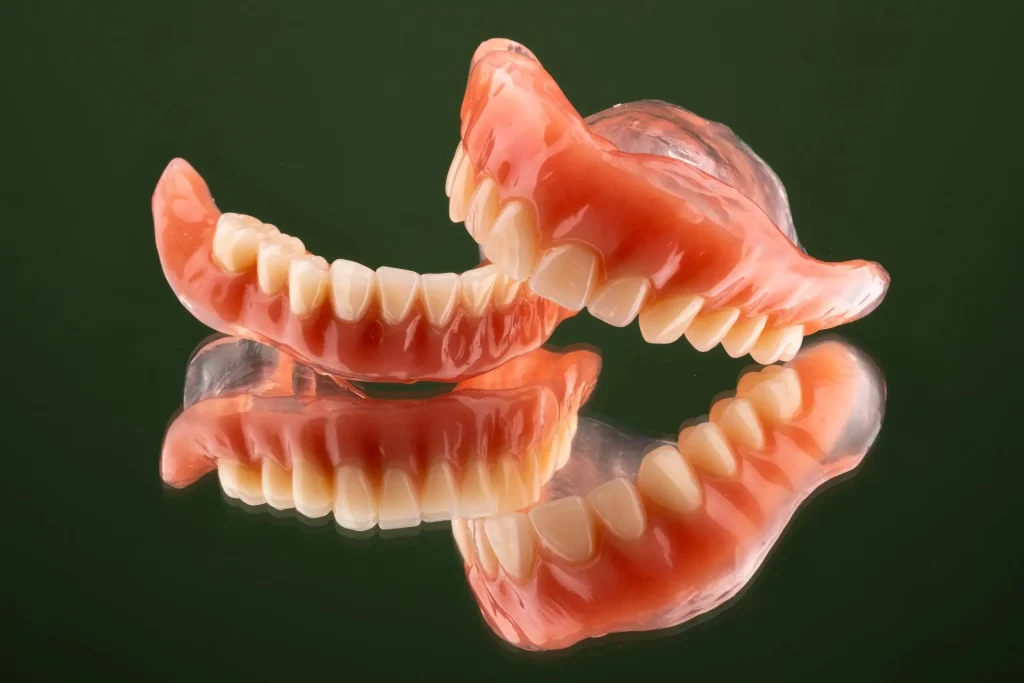
Conventional dentures sit on top of the gum tissue rather than being anchored into the bone. Their stability typically comes from the natural shape of the gums and jaw, along with suction or denture adhesives that help keep them in position during daily use.
What Are Dental Implants?
Dental implants are a modern method for replacing missing teeth by recreating the structure of a natural tooth root. The treatment involves placing a small titanium post into the jawbone through a minor surgical procedure. Over time, the surrounding bone gradually bonds with the implant surface in a biological process known as osseointegration, creating a stable base for a replacement tooth.
Once healing is complete, a connector piece called an abutment is attached to the implant. A custom restoration — such as a crown, bridge, or denture — is then secured on top to restore appearance and function.
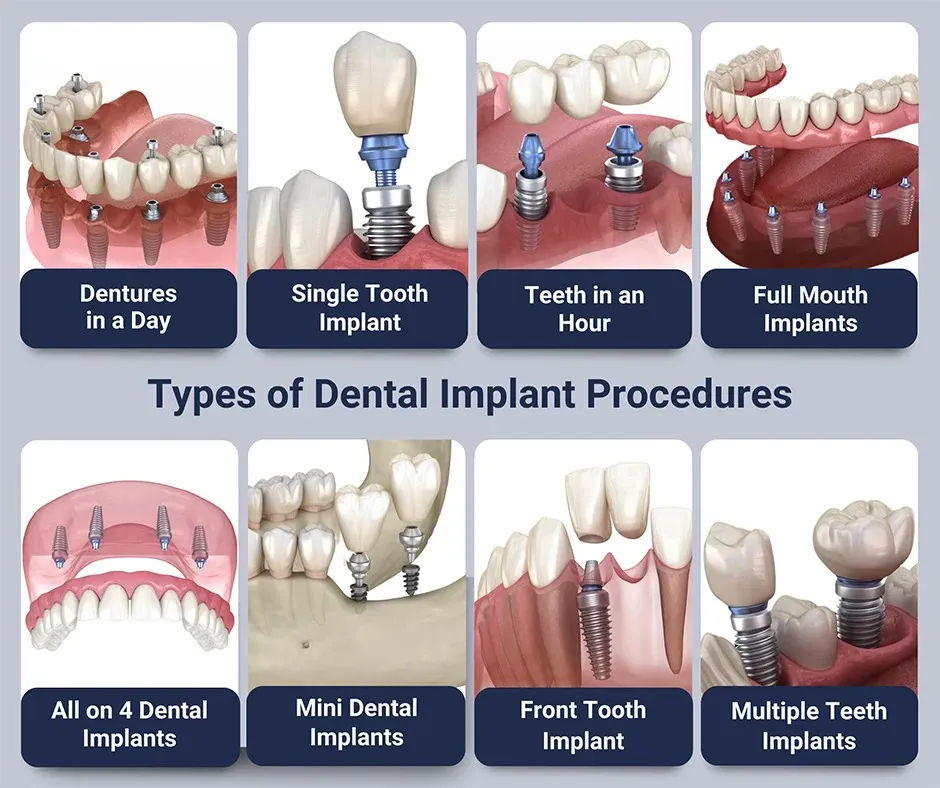
Dental implants can be used in several ways, including:
- Replacing a single missing tooth with an individual crown
- Supporting multiple teeth with an implant-supported bridge
- Restoring a full arch of teeth using systems such as All-on-4 or All-on-6
Because implants integrate directly with the jawbone, they function similarly to natural tooth roots, providing strong support and stability for the replacement teeth.
The difference between Dentures vs Implants
When deciding between dentures and dental implants, several factors can influence which option is more suitable for your needs. The comparison below highlights the most important differences in comfort, function, long-term health, and maintenance.
Stability and Everyday Comfort
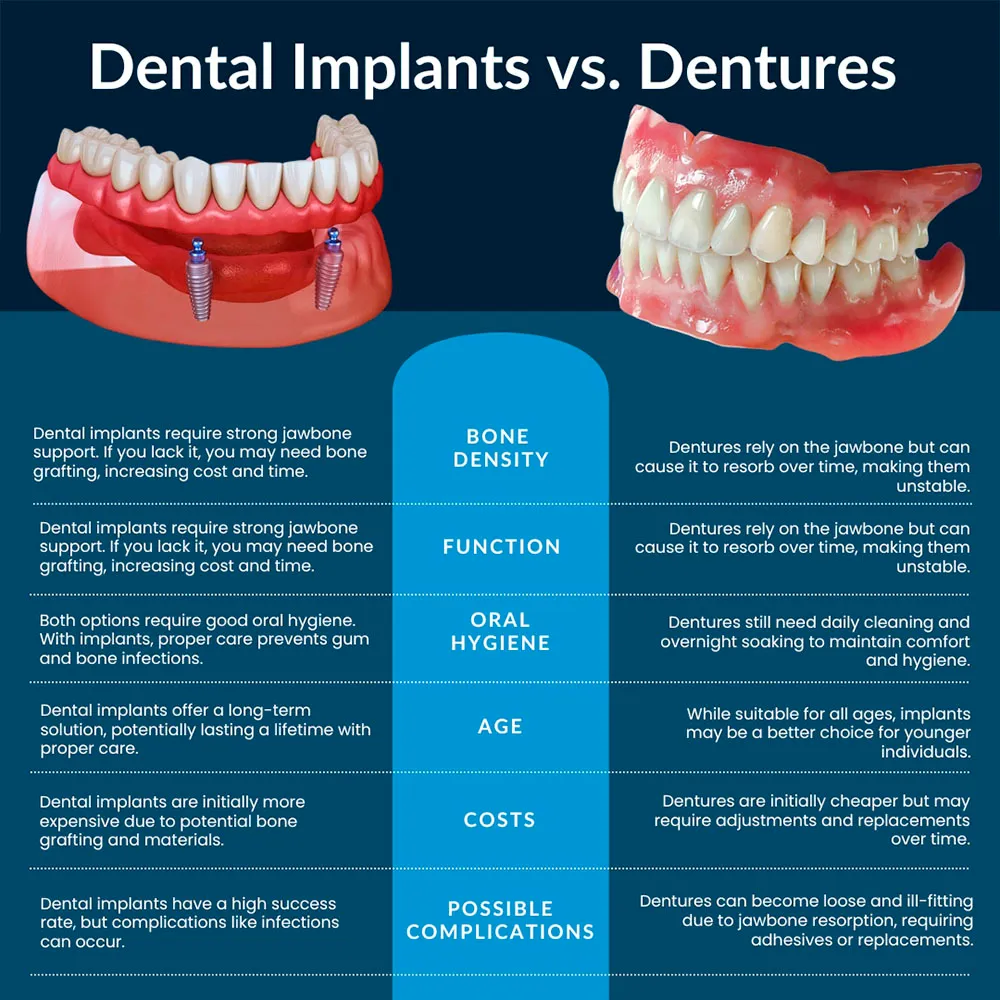
Dentures: Because they rest on the gums, dentures may move slightly while eating or speaking. Some users rely on adhesives to improve their grip and reduce movement.
Implants: Anchored directly into the jawbone, implants remain firmly in place. This stability often makes them feel much closer to natural teeth during daily activities.
Chewing Strength and Food Choices
Dentures: While they restore basic ability to eat, their stability can limit certain foods, especially hard or crunchy items.
Implants: Implant-supported teeth provide significantly stronger biting force, allowing most people to comfortably enjoy a wider range of foods.
Effects on Bone and Facial Appearance
Dentures: Because they do not replace the tooth root, they do not stimulate the jawbone. Over time, bone shrinkage may occur, which can gradually alter facial structure and require denture adjustments.
Implants: Acting like artificial roots, implants stimulate the surrounding bone and help maintain facial support and jawbone density.
Expected Lifespan
Dentures: Conventional dentures often need relining, adjustment, or replacement after several years due to natural changes in the mouth.
Implants: With proper care and routine dental visits, implants can remain functional for decades and are designed as a long-term solution.
Daily Care and Maintenance
Dentures: These appliances must usually be removed each day for cleaning and soaking to prevent odor, staining, or bacterial buildup.
Implants: Maintenance is similar to caring for natural teeth — regular brushing, flossing, and dental checkups help keep them healthy.
Treatment Process and Timeline
Dentures: The process is generally non-surgical. After impressions are taken, the dentures are fabricated and fitted over a period of weeks.
Implants: Implant treatment involves a surgical placement step, sometimes accompanied by additional procedures such as bone grafting. Healing and integration with the bone typically take several months, but the final result is designed for long-term stability.
Understanding these differences can help patients choose the option that best aligns with their health condition, expectations, and lifestyle. A professional consultation is always recommended before making a final decision.
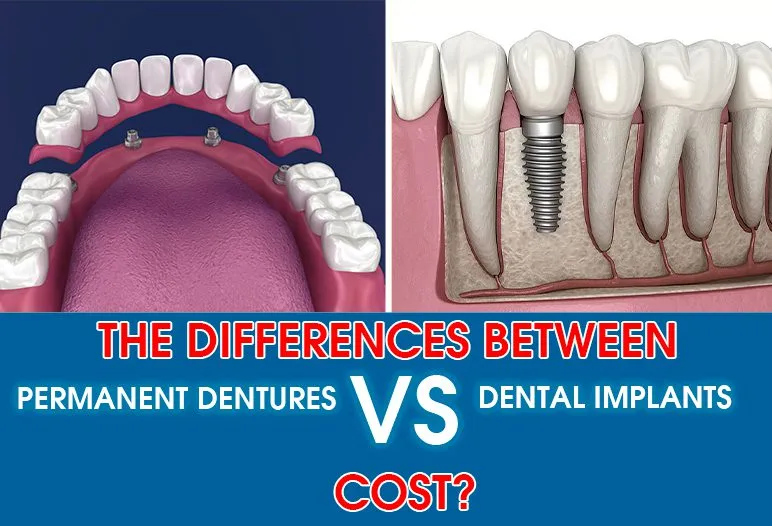
Cost Comparison Dentures vs Implants (Estimated Prices for 2026)
The price of tooth replacement treatments can vary widely depending on factors such as geographic location, the experience of the dental provider, the materials used, and whether additional procedures — like tooth extraction or bone grafting — are required.
Traditional Dentures
Conventional dentures are usually the more budget-friendly option at the beginning.
- Single arch (upper or lower): approximately $1,000–$3,000
- Full set (both arches): roughly $2,000–$6,000
Implant-Based Solutions
Implant treatments generally involve a higher initial investment because they require surgery and custom restorations.
- Single dental implant: about $3,000–$6,000 per tooth
- Implant-retained dentures (such as snap-in or overdenture systems): around $6,000–$15,000 or more per arch
- Full-arch fixed implant restorations (for example, All-on-4 or All-on-6): often $20,000–$50,000+ per arch
Although traditional dentures typically cost less at the start, they may require periodic adjustments, relining, adhesives, or replacement over time. Implant-supported restorations, while more expensive upfront, are often valued for their durability and may reduce long-term maintenance or replacement costs.
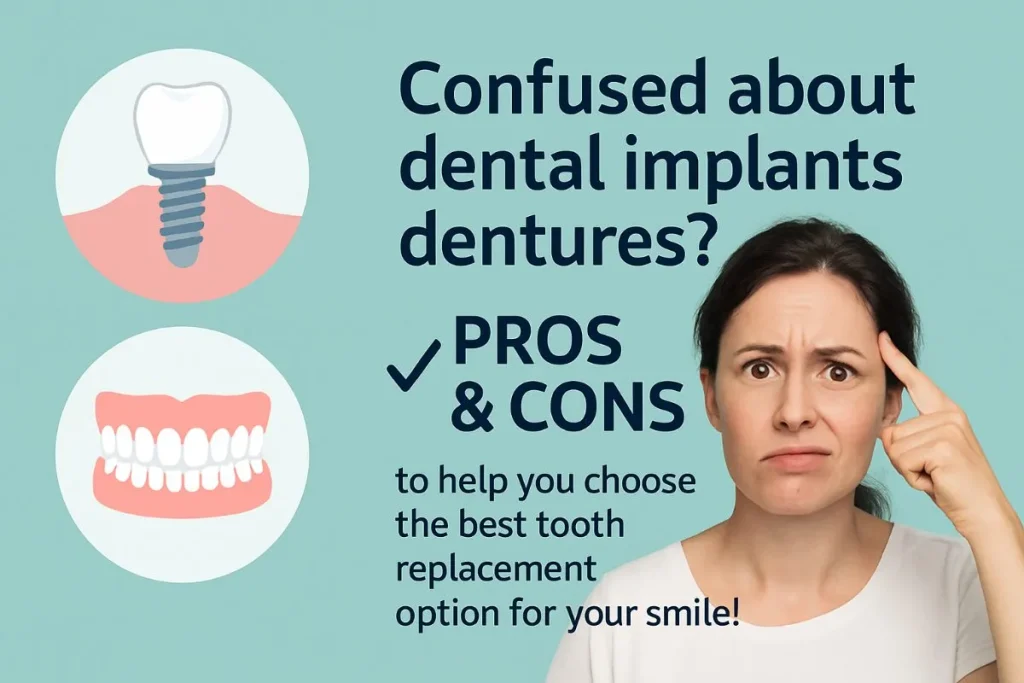
Pros and Cons Dentures vs Implants
When comparing dentures and dental implants, it helps to consider both the benefits and potential drawbacks of each option. The right choice often depends on health factors, budget, and long-term expectations.
Dentures
Dentures Pros:
- Lower initial expense compared with implant treatments.
- No surgical procedure required, making them suitable for patients who prefer or need a non-invasive option.
- Relatively quick treatment process, often completed within a few appointments.
- Appropriate for individuals with limited bone volume or certain medical conditions that may prevent implant placement.
Dentures Cons:
- Possible movement or irritation, especially when eating or speaking.
- Gradual jawbone shrinkage can occur because dentures do not replace tooth roots.
- Dietary restrictions and occasional speech adjustments may be necessary.
- Regular maintenance is required, including cleaning, adjustments, and eventual replacement.
Dental Implants
Implants Pros:
- Designed to look and function similarly to natural teeth, offering strong stability.
- Help maintain jawbone density and facial structure by replacing the missing tooth root.
- Long-term durability, with many implants lasting decades when properly cared for.
- No need for adhesives or nightly removal, improving convenience.
- Supports overall oral health by functioning independently without affecting neighboring teeth.
Implants Cons:
- Greater upfront financial investment compared with traditional dentures.
- Requires a surgical procedure and healing period before the final restoration is placed.
- Not ideal for every patient, particularly those with certain medical conditions, heavy tobacco use, or significant bone loss unless additional procedures are performed.
Discussing these factors with a qualified dental professional can help determine which option best aligns with your health needs and lifestyle.
Which Is Better for You?
The choice between dentures and dental implants depends on your health condition, financial considerations, and long-term goals for comfort and function.
You may prefer dentures if you are looking for a more affordable option with a faster treatment process. They can also be a practical solution for individuals who want to avoid surgery or who may not currently have enough jawbone support for implants. In some cases, dentures are used as a temporary or transitional solution while patients consider more permanent treatments later.
On the other hand, dental implants or implant-supported restorations are often recommended for people who want a long-lasting solution that feels stable and functions similarly to natural teeth. Implants can help maintain jawbone strength and facial structure over time, making them appealing for patients in good overall health who are comfortable with the surgical procedure and the higher initial investment.
Some patients choose a gradual approach — starting with traditional dentures and later upgrading to implants when circumstances allow. There are also intermediate options, such as implant-supported dentures, which combine the affordability of dentures with the added stability of implants.
To determine the most suitable treatment, it’s best to consult with a qualified dentist or oral surgeon. A professional evaluation typically includes dental imaging, an oral health assessment, and a discussion about treatment options, costs, and possible insurance coverage. This personalized approach helps ensure that the chosen solution aligns with both your health needs and your expectations.


