
Zirconia dental implants, often called ceramic or metal-free implants, are crafted from zirconium dioxide (ZrO₂), a high-performance ceramic material. They serve as a popular alternative to traditional titanium implants for patients seeking natural-looking, biocompatible, and holistic tooth replacement options.
This in-depth guide explores everything you need to know about zirconia implants — from their history and science to detailed benefits, potential drawbacks, clinical evidence, the full treatment process, recovery, costs, and direct comparisons with titanium. Whether you’re concerned about metal allergies, aesthetics in the front teeth, or long-term gum health, this article provides clear, evidence-based insights to help you make an informed decision.
History and Evolution of Zirconia Dental Implants
Zirconia has a rich background in medical applications. Zirconium dioxide was first identified as a strong, biocompatible ceramic in the mid-20th century and gained prominence in orthopedic hip replacements. In dentistry, Professor Sami Sandhaus introduced zirconia implants in Europe in the late 1980s. While titanium dominated the field for decades, zirconia implants received FDA approval in the United States around 2007 and have seen rapid advancements since then.
Modern zirconia implants use yttria-stabilized tetragonal zirconia polycrystal (Y-TZP), which offers enhanced strength, fracture resistance, and stability. Early one-piece designs have evolved into more versatile two-piece systems, improving clinical flexibility and success rates. Today, leading manufacturers continue refining surface treatments to optimize osseointegration (the process where bone fuses with the implant).
What Are Zirconia Dental Implants? Types and Materials
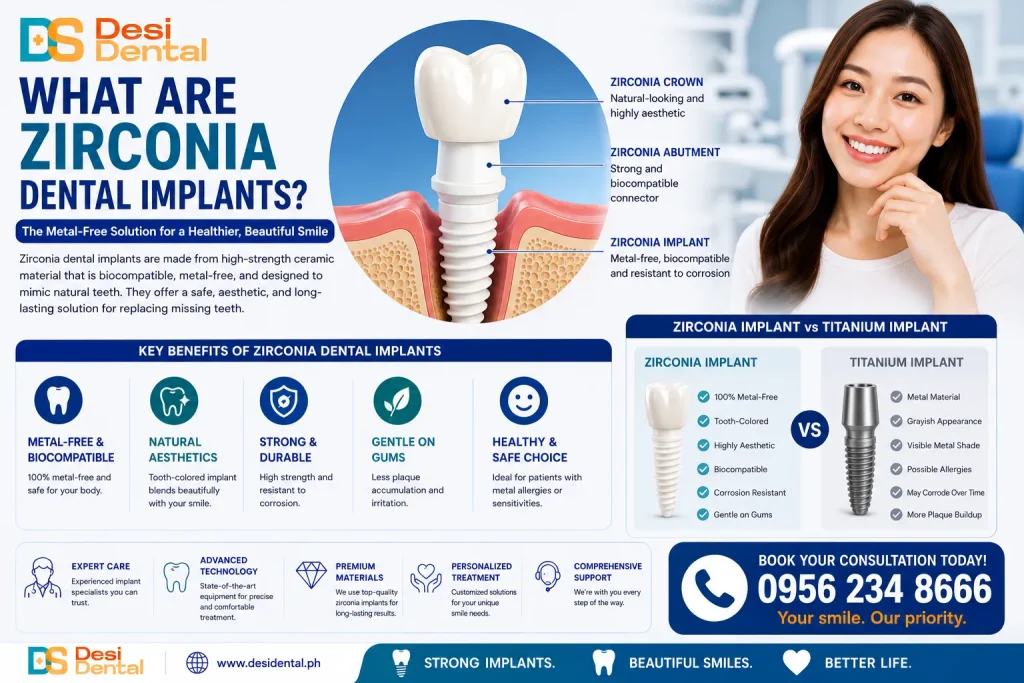
Zirconia implants are made entirely (or primarily) from ceramic zirconium dioxide, giving them a natural white, tooth-like color. Unlike metallic titanium, they are hypoallergenic, non-corrosive, and do not conduct heat or electricity.
Main Types:
- One-Piece Implants: The implant and abutment (connector) are a single unit. Simpler placement but less flexible for angulation adjustments.
- Two-Piece Implants: Separate implant body and abutment, allowing better customization, especially in complex cases or for screw-retained restorations. Some use carbon fiber or specialized screws.
- Tissue-Level vs. Bone-Level: Depending on placement depth relative to the gum line.
High-quality zirconia undergoes rigorous manufacturing to minimize aging (low-temperature degradation) and maximize durability.
Key Benefits of Zirconia Dental Implants
Zirconia offers several distinct advantages:
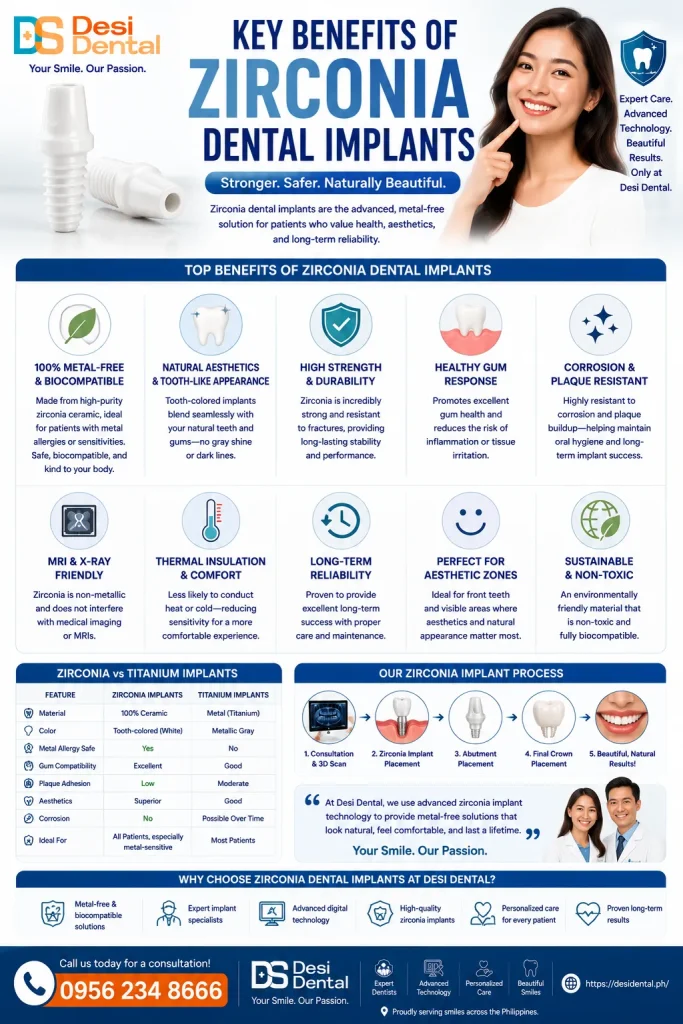
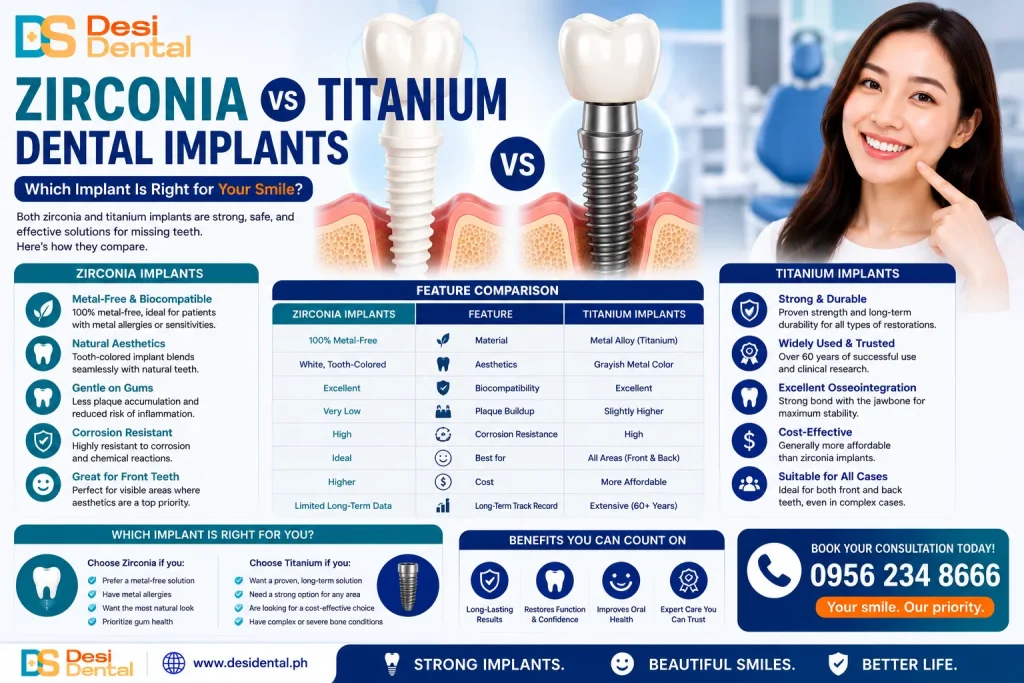
- Exceptional Aesthetics: The white color blends seamlessly with natural teeth and prevents the grayish show-through common with titanium under thin or receding gums. Ideal for anterior (front) teeth.
- Superior Biocompatibility and Hypoallergenic Properties: Perfect for patients with metal sensitivities or allergies (though titanium allergies are rare, <1%). Zirconia is bio-inert and promotes excellent soft tissue integration.
- Reduced Plaque and Bacterial Adhesion: Smoother surface leads to less biofilm accumulation, potentially lowering the risk of peri-implantitis (inflammation around the implant) compared to titanium.
- No Corrosion or Metal Ion Release: Does not corrode in the oral environment or release particles into surrounding tissues.
- Excellent Osseointegration: Achieves strong bone-to-implant contact, comparable to titanium in many studies.
- Holistic and Natural Appeal: Preferred in biological or holistic dentistry for those avoiding metals entirely.
Patient-reported outcomes often highlight high satisfaction with comfort, appearance, and gum health.
Zirconia Dental Implants Risks
While highly effective, zirconia implants have limitations:
- Mechanical Properties: More brittle than titanium; higher risk of fracture under heavy bite forces or in posterior areas if not properly designed. Advances have reduced this, but case selection remains important.
- Limited Long-Term Data: Titanium has 20–30+ years of extensive research. Zirconia shows excellent short- to medium-term results (5–10 years), but fewer ultra-long-term studies exist.
- Technique Sensitivity: Placement requires high precision. One-piece designs limit prosthetic flexibility.
- Higher Cost and Availability: More expensive and not every implant dentist is experienced with them.
- Potential for Aging: Low-temperature degradation in moist environments, though modern formulations mitigate this significantly.
Success heavily depends on the surgeon’s expertise, patient bone quality, oral hygiene, and lifestyle factors like smoking.
Zirconia vs Titanium Dental Implants: Detailed Comparison
| Aspect | Zirconia (Ceramic) | Titanium |
|---|---|---|
| Material | White ceramic, metal-free | Gray metal alloy |
| Aesthetics | Superior, natural tooth color | Good, but possible gray show-through |
| Biocompatibility | Excellent, lower allergy/inflammation risk | Excellent, rare allergies |
| Plaque/Bacteria | Lower adhesion, better gum health | Standard |
| Strength & Durability | Very good, but more brittle | Excellent flexibility and long-term proof |
| Osseointegration | Comparable in studies | Gold standard with decades of data |
| Long-Term Success Rates | 94–98% at 10 years (promising) | 95%+ at 10–20+ years |
| Cost | Higher | More affordable |
| Best Suited For | Front teeth, metal-sensitive patients, aesthetics | Posterior, full-arch, high-load cases |
Recent meta-analyses (2025–2026) show no statistically significant differences in survival rates up to 5+ years in many comparisons, with zirconia often showing advantages in soft tissue health.
The Zirconia Dental Implants Procedure
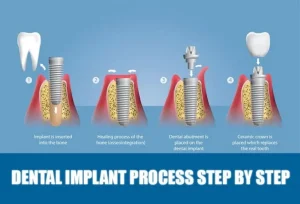
- Initial Consultation: Comprehensive exam, medical history, 3D CBCT scans, and discussion of options.
- Treatment Planning: Digital design for precise placement.
- Surgery: Usually under local anesthesia (sedation options available). Implant placement, sometimes with bone grafting.
- Healing Phase (Osseointegration): 3–6 months for bone fusion. Temporary restorations may be used.
- Abutment and Crown Placement: Final prosthetic attachment.
- Follow-Up: Regular check-ups for long-term monitoring.
Same-day or immediate loading is possible in ideal cases but more conservative timelines are common with zirconia.
Zirconia Dental Implants Recovery and Aftercare
Most patients experience mild swelling, bruising, and discomfort for 3–7 days, managed with prescribed or over-the-counter pain relief. Soft diet for several weeks. Full integration takes months.
Long-Term Maintenance:
- Excellent oral hygiene (brushing, flossing, antimicrobial rinses).
- Regular dental visits (every 3–6 months initially).
- Avoid excessive forces (bruxism guards if needed).
- No smoking, controlled diabetes, etc.
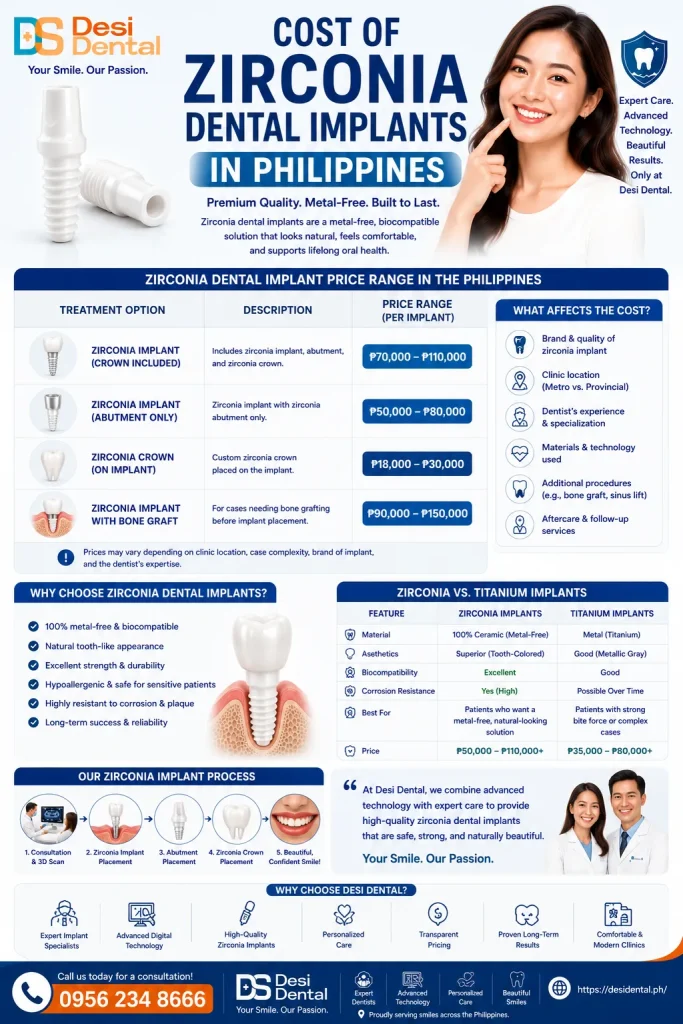
Cost of Zirconia Dental Implants in Philippines
Single zirconia implant (including abutment and crown) typically ranges $4,500–$8,500 for posterior teeth and $9,500–$12,000+ for high-aesthetic front teeth. Factors include location, bone grafting needs, dentist expertise, and full-arch solutions (often $20,000–$50,000 per arch).
Titanium options are generally 20–40% less expensive. Insurance coverage varies; many plans offer partial benefits. Financing and payment plans are widely available.
Who Is an Ideal Candidate?
- Patients with metal allergies or sensitivities.
- Those prioritizing natural aesthetics (especially anterior zone).
- Individuals seeking holistic/metal-free dentistry.
- Good overall health with sufficient bone density.
A thorough evaluation by an experienced implant specialist is essential.
Frequently Asked Questions (FAQs)
Are zirconia implants safe? Yes, with high biocompatibility and strong clinical data.
How long do they last? With proper care, 10–15+ years or longer, similar to titanium in many cases.
Can they be used for full-mouth restoration? Yes, though titanium may be preferred for maximum load-bearing in some full-arch cases.
Is the procedure painful? Most report minimal discomfort, comparable to other dental surgeries.
Zirconia dental implants represent a sophisticated, patient-friendly advancement in modern dentistry. They excel in aesthetics, gum health, and biocompatibility while offering success rates that rival titanium in appropriate scenarios. While titanium remains the versatile gold standard with the longest track record, zirconia is an outstanding choice for many patients seeking a natural, metal-free solution.