

Wisdom tooth pain is one of the most common dental complaints, especially for people in their late teens through early 30s. If you’re searching “how many days wisdom tooth pain,” you’re likely dealing with throbbing discomfort, swollen gums, or jaw soreness right now. The good news? In most straightforward cases, the pain doesn’t last forever. However, the exact duration depends heavily on the cause—whether your wisdom teeth are erupting normally, impacted, or infected.
This comprehensive guide breaks down typical timelines, what influences pain duration, day-by-day expectations, home remedies, when to see a dentist, and prevention tips. All information draws from dental best practices to help you understand and manage your situation effectively.
Understanding Wisdom Tooth Pain
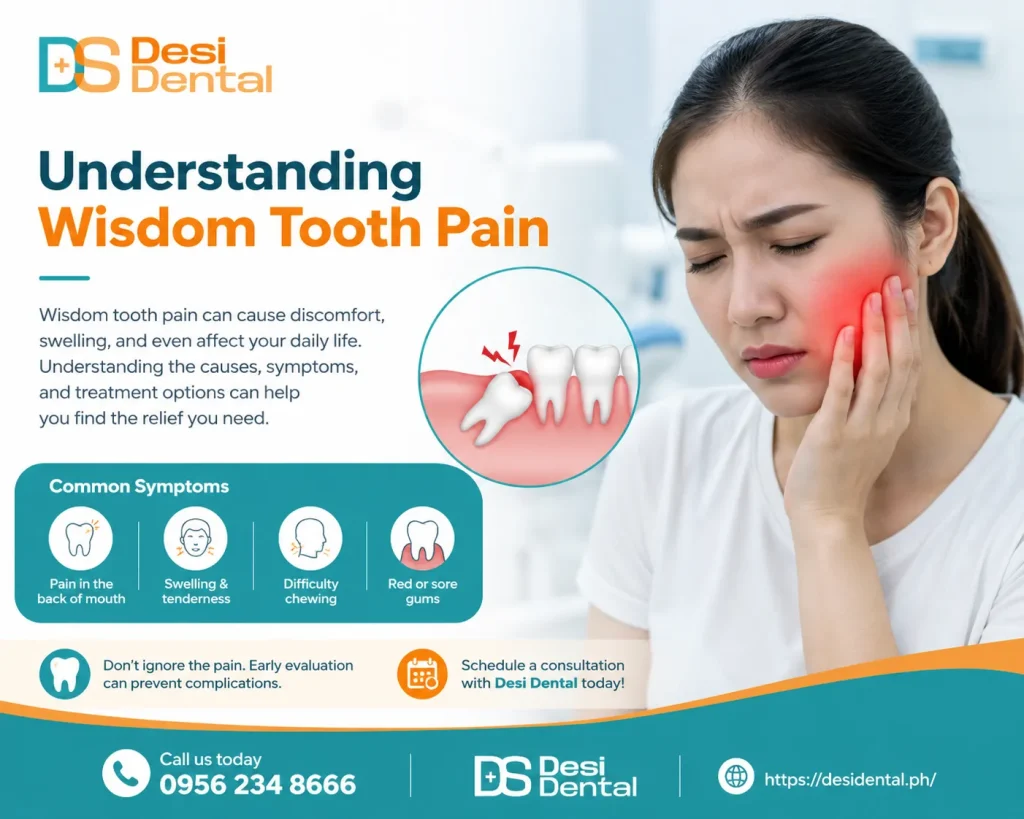
Wisdom teeth (third molars) are the last teeth to emerge, usually between ages 17-25. Modern jaws are often smaller due to evolutionary changes and softer diets, leaving little room for these teeth. This leads to:
- Normal eruption: The tooth pushes through the gums, causing pressure and mild inflammation.
- Impaction: The tooth grows at an angle, stays partially or fully trapped in the jawbone or gums.
- Pericoronitis: Infection or inflammation of the gum flap (operculum) over a partially erupted tooth.
- Crowding or damage: Pressure on nearby teeth, cysts, or decay.
Pain arises from tissue stretching, pressure on nerves, inflammation, or secondary infection. Individual factors like pain tolerance, overall health, and oral hygiene play big roles in how long it lasts.
How Many Days Does Wisdom Tooth Pain Last?
There is no single answer, but here’s a breakdown based on common scenarios:
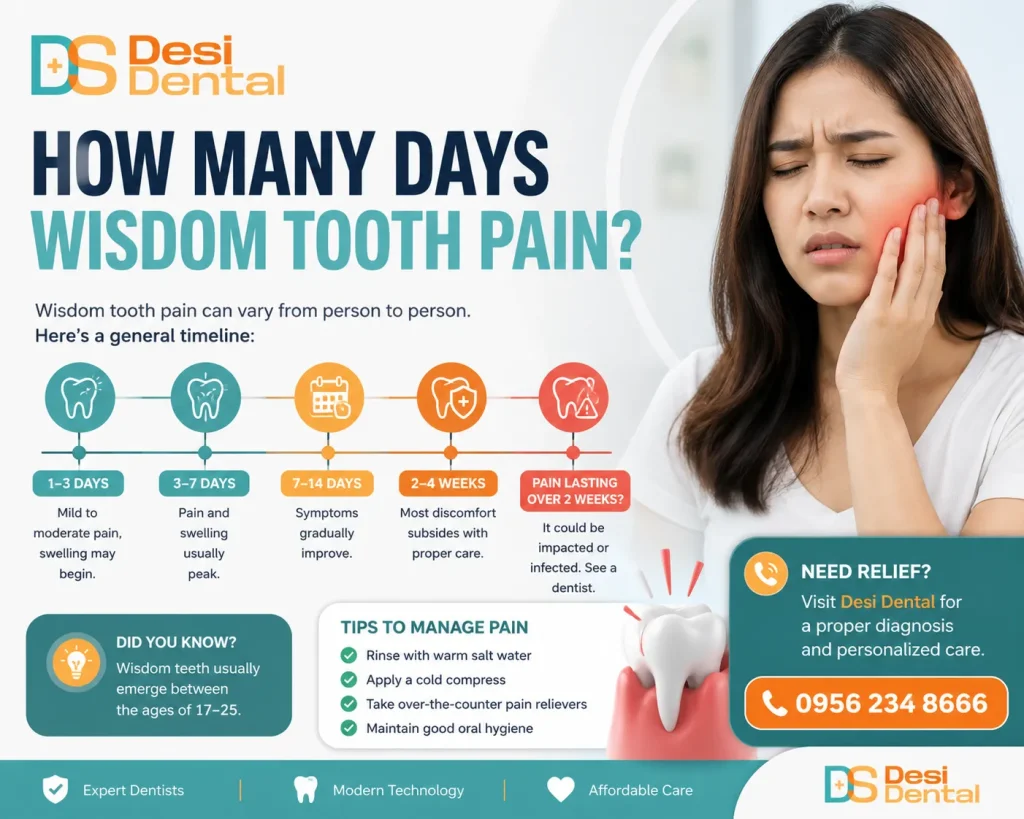
- Mild, normal eruption: 3–7 days of noticeable discomfort. Pain often peaks early and fades as the tooth breaks through.
- Moderate cases with minor impaction or inflammation: 7–14 days, with on-and-off soreness.
- Impacted or infected teeth: Pain can persist for weeks to months until professionally treated (often via extraction). It rarely resolves fully on its own.
- After wisdom tooth extraction: Post-surgical pain typically lasts 3–7 days, peaking on days 2–3, with full soft tissue healing in 1–2 weeks and bone healing up to 6 months.
Many people experience intermittent pain over months if teeth erupt slowly. If pain exceeds 7–10 days without improvement, or worsens, it signals a need for dental evaluation.
Day-by-Day Pain Timeline for Erupting Wisdom Teeth
Days 1–3: Initial breakthrough. Gums feel tender, swollen, or bruised. Pain is often sharp or throbbing, especially when chewing or opening the mouth wide. Swelling and mild fever possible.
Days 4–7: Peak for many, then gradual improvement. Discomfort shifts to a dull ache. Food particles may trap under gum flaps, increasing irritation.
Week 2+: Pain should subside significantly if uncomplicated. Residual tenderness might linger, with flare-ups during eating hard foods or poor hygiene.
For post-extraction recovery (common solution for problematic teeth):
- Day 1: Numbness fades into moderate-severe pain. Use ice, rest, and prescribed meds.
- Days 2–3: Often the worst—maximum swelling and discomfort.
- Days 4–7: Noticeable improvement. Switch to warm rinses.
- Week 2: Most resume normal activities with minimal pain.
Factors That Influence How Long Pain Lasts
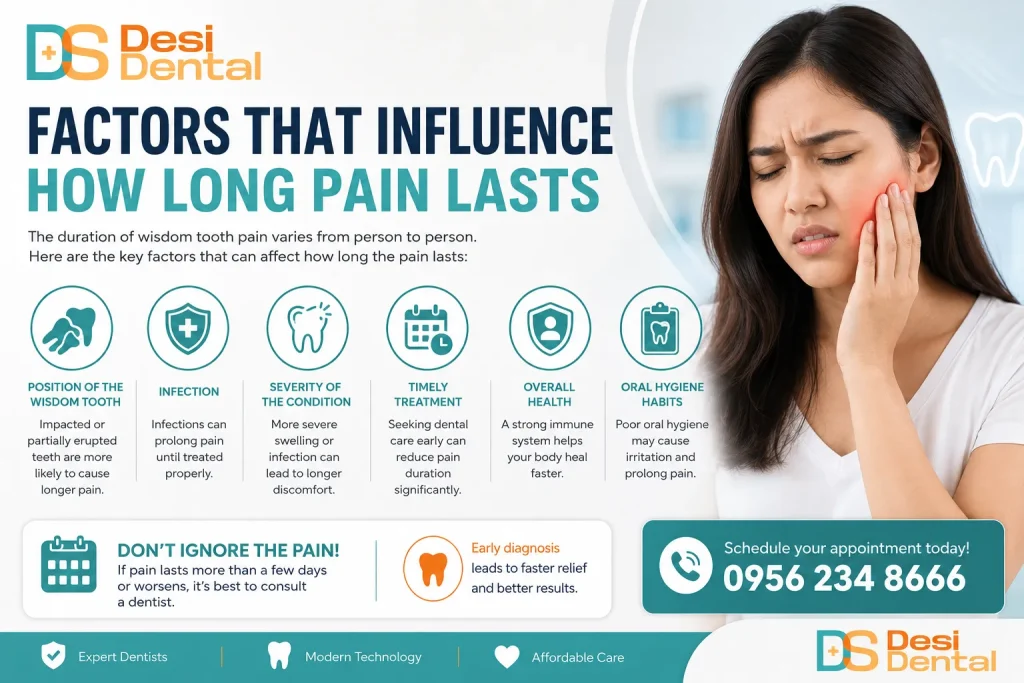
Several variables affect duration:
- Tooth Position — Straight, fully erupting teeth cause shorter pain (days). Horizontal or vertical impactions prolong it.
- Infection or Inflammation — Bacteria under gum flaps can cause pericoronitis, extending pain until antibiotics or removal.
- Age and Jaw Space — Younger people (under 25) often heal faster with better bone recovery.
- Oral Hygiene — Poor cleaning leads to trapped debris and prolonged issues.
- Lifestyle — Smoking, alcohol, or hard/spicy foods delay healing. Stress or illness can amplify pain perception.
- Genetics and Health — Conditions like diabetes or autoimmune issues slow recovery.
Effective Home Remedies and Pain Management
While waiting for resolution or a dental appointment, try these evidence-based strategies:
- Over-the-counter pain relief: Ibuprofen (Advil) or acetaminophen (Tylenol) for pain and swelling. Alternate if needed, following dosage guidelines.
- Saltwater rinses: Mix 1/2 tsp salt in warm water; rinse gently 4–6 times daily to reduce bacteria.
- Cold/heat therapy: Ice packs (15 min on/off) for first 48 hours. Warm compresses later for jaw stiffness.
- Soft diet: Yogurt, soups, mashed potatoes, smoothies. Avoid seeds, nuts, straws (risk of dry socket post-extraction).
- Oral gels: Benzocaine-based numbing gels for temporary relief on gums.
- Elevate head: Sleep with extra pillows to minimize swelling.
- Clove oil or tea bags: Natural anti-inflammatories (use cautiously).
These provide relief but do not cure underlying problems like impaction.
When to See a Dentist or Oral Surgeon Immediately
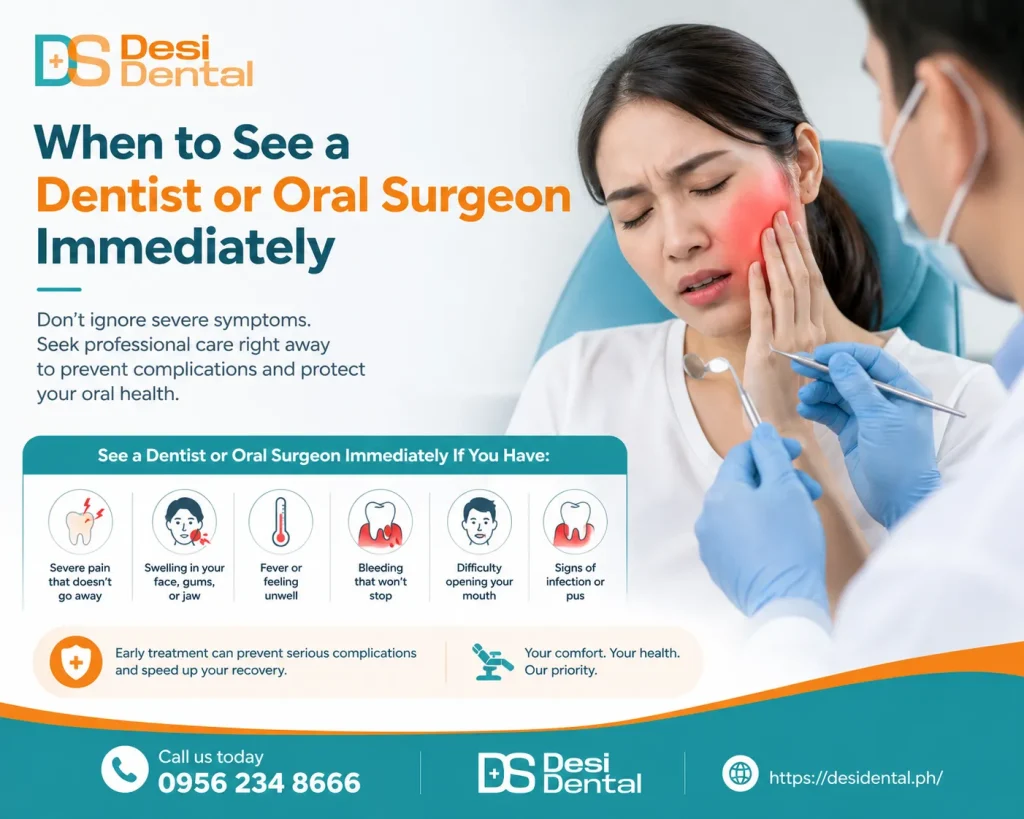
Don’t wait if you experience:
- Pain lasting longer than 7–10 days or worsening after initial improvement.
- Severe swelling, difficulty swallowing/breathing, or fever.
- Pus, bad taste/odor, or swollen lymph nodes (infection signs).
- Numbness, severe headache, or pain spreading to ears/neck.
- Visible decay or damage to adjacent teeth.
Early intervention prevents complications like cysts, abscesses, or shifting teeth. X-rays diagnose impaction accurately. Many dentists recommend proactive removal in late teens/early 20s for better outcomes and faster healing.
Prevention and Long-Term Outlook
You can’t stop wisdom teeth from forming, but you can minimize issues:
- Maintain excellent oral hygiene: Brush twice daily, floss, and use antibacterial mouthwash.
- Regular dental check-ups: Monitor development with X-rays starting in mid-teens.
- Healthy diet: Limit sugars to reduce decay risk.
- Quit smoking: Dramatically improves healing.
Most people find complete relief once the tooth fully erupts or is removed. Post-extraction, the vast majority report the short-term discomfort was worth avoiding chronic problems.
Real Experiences and Expert Advice
Patients often describe initial panic from intense pain that resolves quicker than expected with proper care. Dentists emphasize: Wisdom tooth pain is your body’s signal—listen to it. Ignoring prolonged symptoms rarely leads to spontaneous full resolution.
This guide aims to empower you with clear, actionable knowledge. Everyone’s experience varies slightly, so personalized advice from a qualified dental professional is essential. If your pain is disrupting sleep, eating, or daily life, schedule an appointment today for peace of mind and faster relief.
Disclaimer: This article is for informational purposes only and not a substitute for professional medical or dental advice.
By understanding the timeline and taking proactive steps, you can turn “how many days wisdom tooth pain” from a stressful question into a manageable situation with a clear path forward. Stay consistent with care, and relief is typically just around the corner.


