

Dental implants are widely regarded as the gold standard for replacing missing teeth in modern dentistry. Whether you’ve lost a tooth due to injury, decay, gum disease, or aging, implants offer a durable, natural-looking solution that can restore both function and confidence. However, they aren’t perfect for everyone. Understanding the full pros and cons of dental implants is essential before committing to treatment.
This comprehensive guide draws from clinical insights, patient experiences, and reliable dental sources to provide balanced, up-to-date information. We’ll cover the procedure, benefits, drawbacks, comparisons with alternatives, candidacy factors, aftercare, and key questions to help you decide if implants are right for you.
What Are Dental Implants and How Do They Work?
A dental implant is a small titanium or titanium-alloy post that is surgically inserted into the jawbone beneath the gum line. Over time, the implant fuses with the bone through a biological process called osseointegration, creating a stable foundation. An abutment is then attached to the implant, and a custom-made crown, bridge, or full denture is secured on top.
Typical Procedure Stages:
- Initial Consultation and Planning — Comprehensive exam, X-rays, 3D scans, and medical history review.
- Tooth Extraction (if needed) and possible bone grafting.
- Implant Placement Surgery — Usually performed under local anesthesia or sedation.
- Healing and Osseointegration — 3–6 months (or longer in some cases).
- Abutment Placement and Impressions.
- Final Restoration — Crown or prosthetic attachment.
The entire process can span 3 to 12+ months, depending on individual healing and whether additional procedures are required.
Major Pros of Dental Implants
1. Superior Natural Appearance and Feel Implants are custom-crafted to blend seamlessly with your natural teeth in shape, shade, and translucency. Unlike dentures, they don’t slip or shift, providing a confident smile and natural speech. Patients frequently describe them as feeling “just like my real teeth.”
2. Exceptional Longevity and Durability With proper care, implants have success rates exceeding 95% over 10–15 years, and many last 20–30 years or a lifetime. They resist cavities (as they are not real teeth) and provide reliable chewing strength comparable to natural teeth.
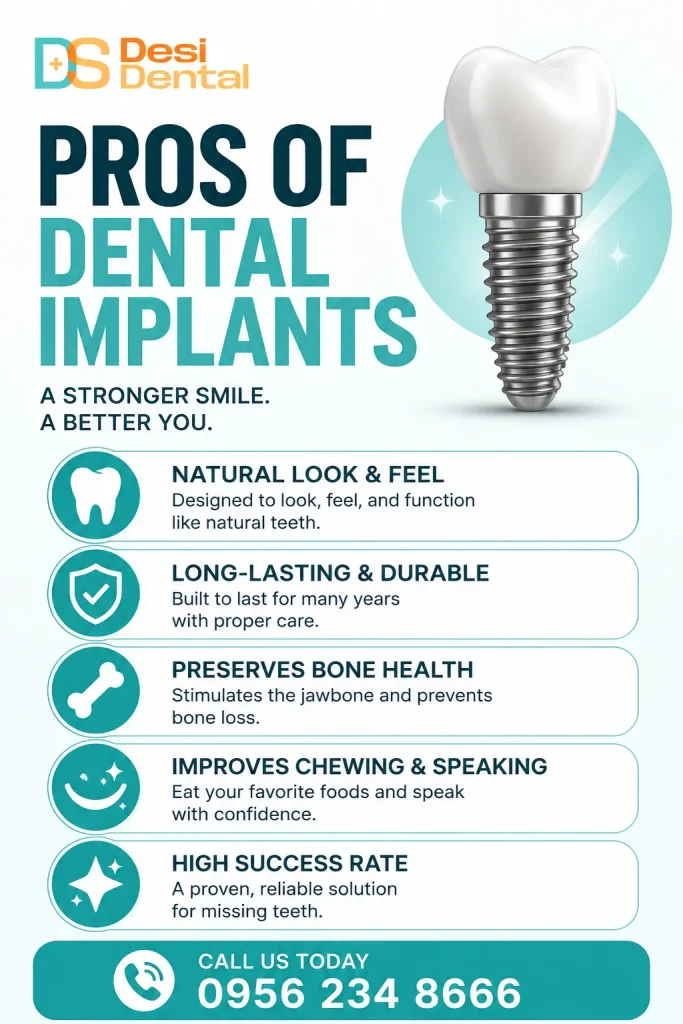
3. Jawbone Preservation and Facial Structure Support When a tooth is lost, the jawbone begins to resorb (shrink). Implants stimulate the bone like natural roots during chewing, helping maintain bone density, preventing facial sagging, and supporting youthful facial contours. This benefit is unique among tooth replacement options.
4. Protection of Adjacent Teeth Traditional bridges require grinding down healthy neighboring teeth to anchor the prosthetic. Implants stand alone, preserving the structure and health of surrounding teeth and reducing future dental issues.
5. Improved Eating, Nutrition, and Quality of Life Implants restore nearly full biting force, allowing you to enjoy a wide variety of foods — including crunchy vegetables, nuts, and steak — without worry. Better chewing supports nutrition, digestion, and overall health. Many patients report boosted self-esteem and social confidence.
6. Easier Long-Term Maintenance You care for implants the same way as natural teeth: brushing, flossing, and regular dental check-ups. No need for adhesives or nightly removal like dentures.
7. Versatility Implants can replace a single tooth, multiple teeth (implant-supported bridges), or even a full arch (All-on-4 or All-on-6 techniques), making them suitable for various levels of tooth loss.
Cons and Potential Drawbacks of Dental Implants
1. Higher Initial Cost The average cost per implant (including crown) ranges from $3,000–$6,000+ in many regions, significantly more than bridges or dentures. Multiple implants or preparatory procedures increase the total. Insurance coverage varies and is often partial or nonexistent.
2. Surgical Risks and Recovery As with any surgery, risks include infection, bleeding, swelling, bruising, pain, and rare complications like nerve damage, sinus perforation (for upper jaw implants), or implant rejection/failure. Smokers and those with certain systemic conditions face higher risks.
Recovery involves some discomfort for days to weeks, dietary restrictions (soft foods), and possible temporary prosthetics.
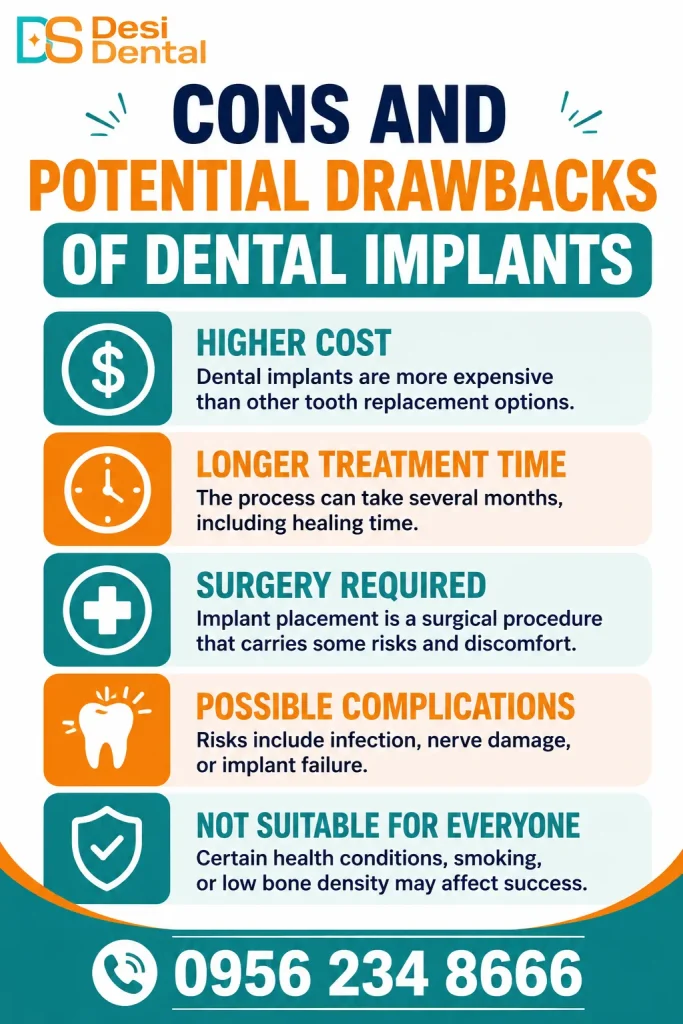
3. Time-Intensive Process Unlike same-day bridges or dentures, implants require patience. Healing delays can extend timelines, especially if bone grafting is needed.
4. Not Ideal for All Patients Insufficient bone volume, active gum disease, uncontrolled diabetes, heavy smoking, autoimmune disorders, or certain medications (e.g., bisphosphonates) can reduce success rates or require additional treatments. Younger patients with growing jaws may need to wait.
5. Potential for Long-Term Complications Though uncommon, peri-implantitis (inflammation and bone loss around the implant) can occur due to poor hygiene or other factors. Mechanical issues like screw loosening or crown fracture may require repair. Regular professional maintenance is crucial.
6. Aesthetic or Functional Adjustments In rare cases, the final restoration may need refinements for bite alignment or gum aesthetics (pink porcelain or grafting).
Dental Implants vs. Alternatives
| Aspect | Dental Implants | Tooth-Supported Bridge | Removable Dentures |
|---|---|---|---|
| Durability | Excellent (20+ years) | 5–15 years | 5–10 years |
| Bone Preservation | Yes | No | No |
| Aesthetics | Superior | Good | Variable |
| Comfort | High | Good | Lower (may slip) |
| Cost (Initial) | High | Moderate | Lower |
| Procedure | Surgery + healing | Non-surgical | Non-surgical |
| Maintenance | Like natural teeth | Flossing under bridge | Daily removal & cleaning |
Implants often win for long-term value despite higher upfront investment.
Frequently Asked Questions (FAQs)
How painful is the procedure? Most patients report discomfort similar to a tooth extraction, well-managed with anesthesia and pain medication.
Do implants look fake? High-quality implants and crowns are virtually indistinguishable from natural teeth.
Can implants fail? Yes, but failure rates are low (under 5% in healthy patients). Early detection improves outcomes.
Are there same-day options? Immediate-load implants exist for suitable candidates but carry slightly higher risks.
How much do they cost in total? Varies widely by location and case complexity. Financing and payment plans are often available.
The pros of dental implants — natural function, bone preservation, longevity, and improved quality of life — make them a transformative choice for many. The cons, primarily cost, surgical commitment, and time, are important considerations but often manageable with proper planning.


