

Endosteal dental implants are the most widely used and clinically proven solution for replacing missing teeth. These titanium fixtures are surgically placed directly into the jawbone, mimicking the natural tooth root to provide unmatched stability, function, and aesthetics for single crowns, bridges, or full-arch restorations. With success rates often exceeding 95% over 10+ years, endosteal implants have revolutionized restorative dentistry.
This comprehensive guide covers everything you need to know about endosteal dental implants — from their design and procedure to benefits, risks, candidacy, costs, recovery, and long-term care — to help you make an informed decision about your oral health.
What Are Endosteal Dental Implants?
The term “endosteal” derives from “endo” (within) and “osteal” (bone), referring to implants embedded directly into the jawbone. Unlike other types, endosteal implants integrate through osseointegration, a biological process where living bone cells grow tightly around the implant surface, creating a bond as strong as a natural tooth root.
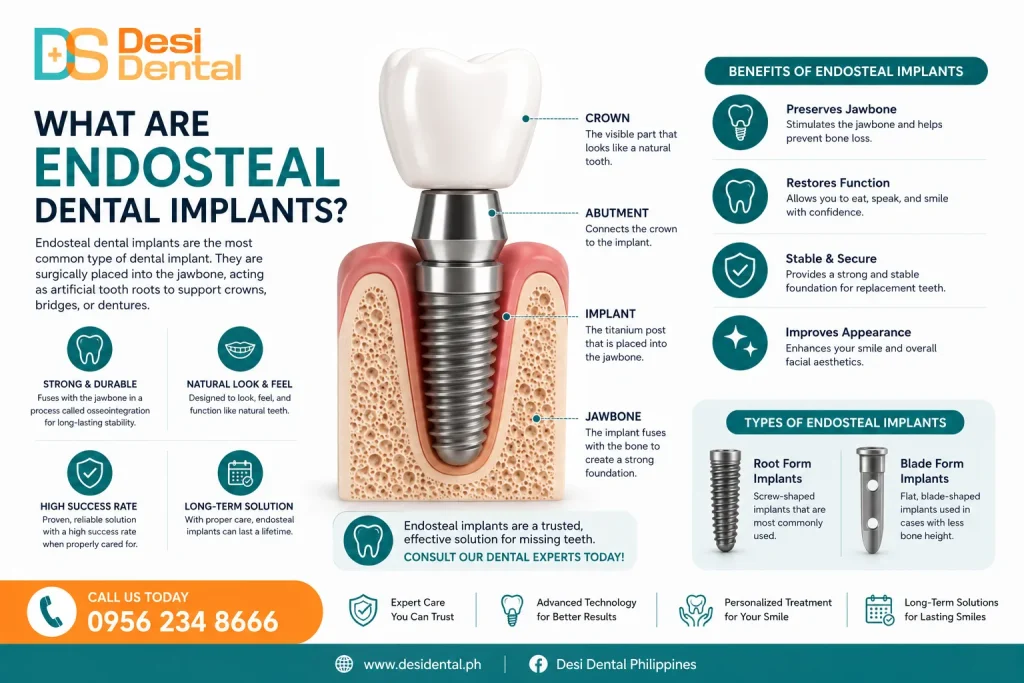
Modern endosteal implants are typically made from high-grade, biocompatible titanium or titanium alloys, sometimes with zirconia options for patients with metal sensitivities. They come in various shapes and surface treatments (roughened or coated) to enhance bone attachment and initial stability.
Types of Endosteal Dental Implants
- Screw-Type (Threaded) Implants: The most popular form. The self-tapping threads provide excellent primary stability right after placement and promote faster osseointegration.
- Cylinder-Type Implants: Smooth or press-fit designs, often used with bioactive coatings or plasma-sprayed surfaces to improve bonding.
- Blade-Type Implants: Flatter, blade-shaped designs historically used in narrow bone ridges, though less common today due to advances in screw designs and bone grafting.
These implants support different restorations: individual crowns for single missing teeth, bridges for multiple teeth, or full-arch fixed prostheses (such as All-on-4 or All-on-6 systems).
The Endosteal Dental Implant Procedure
The process is highly predictable and usually completed in several phases over 3–9 months, depending on individual healing.
- Comprehensive Consultation and Planning Your implant dentist or oral surgeon conducts a thorough evaluation, including medical history, oral examination, and advanced 3D imaging (CBCT cone-beam computed tomography) to assess bone volume, density, nerve locations, and sinus positions. Digital treatment planning software ensures precision.
- Preparatory Procedures (If Needed) Bone grafting, sinus lifts, or ridge augmentation may be required if bone quantity or quality is insufficient. These can be done simultaneously with implant placement or in a staged approach.
- Surgical Placement Performed under local anesthesia, with optional sedation. The dentist makes a small incision in the gum, prepares the osteotomy (precise hole) in the jawbone, and inserts the implant. A healing cap or cover screw is placed, and the site is sutured.
- Osseointegration Healing Phase This critical period lasts 3–6 months (sometimes longer in the upper jaw or with compromised bone). During this time, the implant fuses with the bone. Temporary restorations may be provided.
- Abutment Placement Once integration is confirmed (via imaging or torque testing), a minor procedure exposes the implant and attaches the abutment — the connector between the implant and the final prosthetic.
- Final Restoration Impressions or digital scans create a custom crown, bridge, or denture that matches your natural teeth in color, shape, and bite. The prosthesis is securely attached.
The entire journey is outpatient, with most patients experiencing minimal disruption to daily life.
Key Benefits of Endosteal Dental Implants
- Natural Feel and Function: They restore chewing power close to that of natural teeth, allowing you to enjoy a full diet without restrictions.
- Jawbone Preservation: By stimulating the bone like natural roots, they prevent the progressive bone resorption that occurs after tooth loss, maintaining facial structure and preventing a “sunken” appearance.
- Superior Aesthetics: Custom-designed prosthetics blend seamlessly with your smile.
- Longevity and Durability: With proper care, many last 15–25+ years or a lifetime.
- High Success Rates: Over 95% in healthy patients, supported by decades of clinical data.
- Improved Quality of Life: Better speech, confidence, and oral health compared to dentures or bridges.
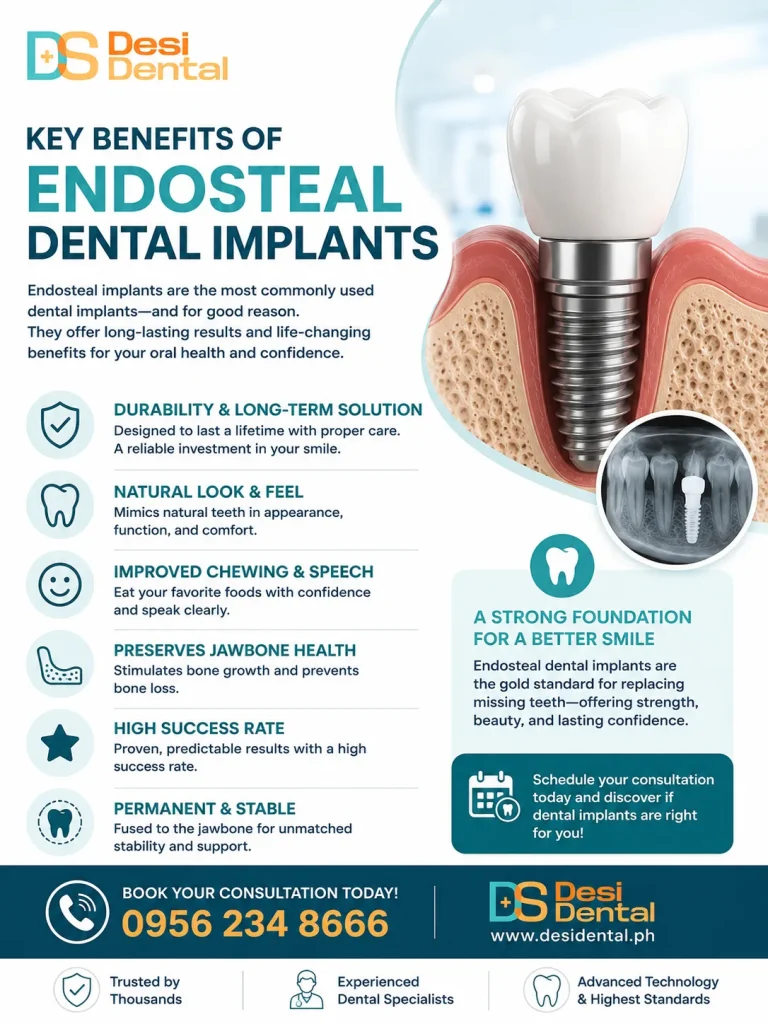
Endosteal implants also support immediate loading protocols in suitable cases, where a temporary crown is placed on the same day as surgery.
Who Is a Good Candidate for Endosteal Implants?
Ideal candidates typically have:
- Adequate jawbone volume and density.
- Good overall health without uncontrolled systemic conditions (e.g., poorly managed diabetes, severe osteoporosis, or active cancer treatment).
- Healthy gums and commitment to excellent oral hygiene.
- Non-smokers or those willing to quit, as smoking significantly impairs healing and integration.
Even patients with moderate bone loss can often become candidates after bone augmentation. A detailed evaluation by a qualified implant specialist is essential.
Endosteal Dental Implants vs. Subperiosteal Implants
Endosteal implants are placed inside the jawbone and are the preferred choice when sufficient bone exists, offering superior long-term stability and success rates (often 92–95%+ at 10 years).
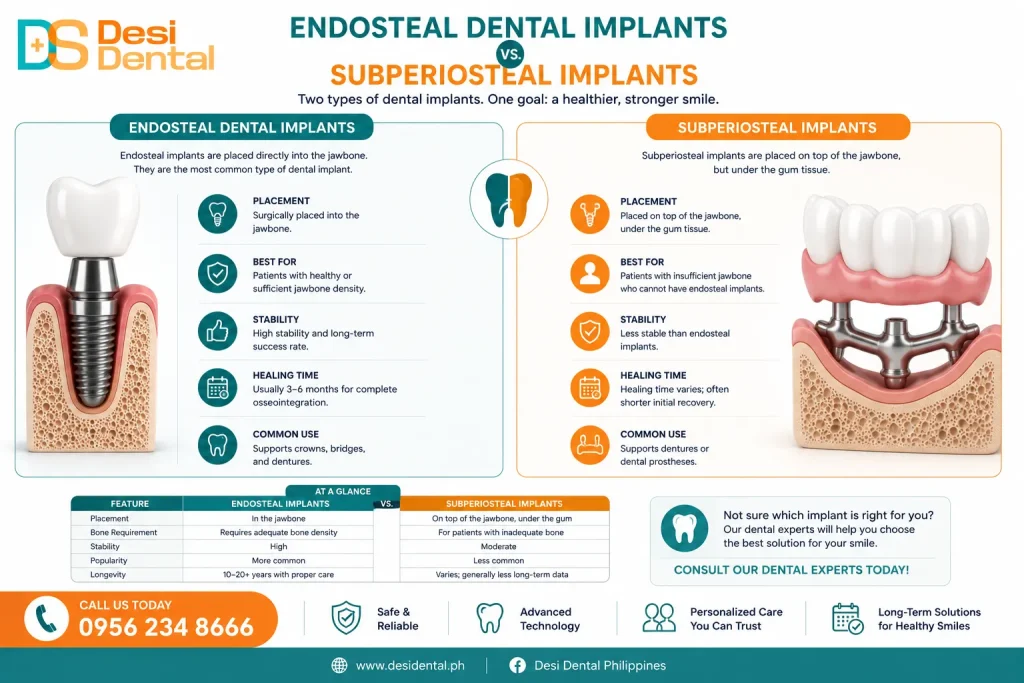
Subperiosteal implants rest on top of the jawbone beneath the gum tissue and are used primarily for patients with severe bone atrophy who cannot or prefer not to undergo bone grafting. They generally have lower long-term success rates and are less commonly used today.
Endosteal remains the gold standard for most patients due to better predictability and outcomes.
Potential Risks and Complications
While highly safe, possible risks include:
- Infection at the surgical site.
- Implant failure or poor osseointegration (rare, <5%).
- Nerve damage or sinus perforation (minimized with 3D planning).
- Peri-implantitis (inflammation around the implant, similar to gum disease).
Factors increasing risk include smoking, uncontrolled diabetes, bruxism (teeth grinding), and poor oral hygiene. Choosing an experienced provider dramatically reduces these risks.
Cost of Endosteal Dental Implants
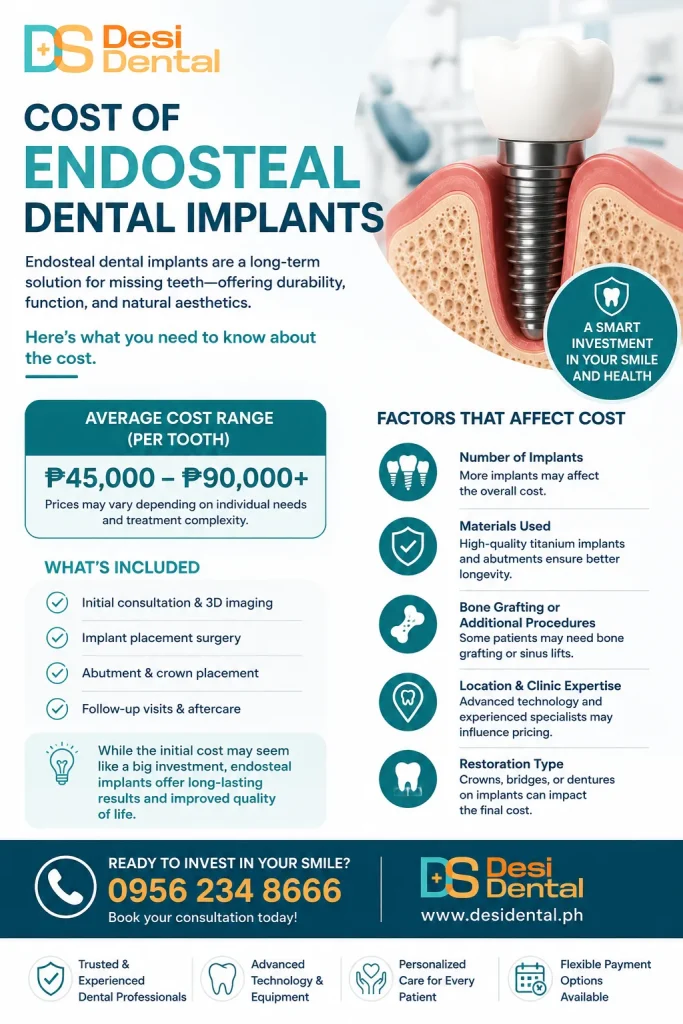
In the United States, the average cost per implant (including surgery and crown) ranges from $3,500 to $6,000+, depending on location, complexity, and any preparatory procedures. Full-arch solutions like All-on-4 are higher but often more cost-effective long-term. Many dental insurance plans offer partial coverage, and financing options are widely available.
Recovery and Aftercare Timeline
- Days 1–3: Swelling, mild discomfort, and minor bleeding are normal. Use ice, prescribed pain medication, and rest. Soft/liquid diet.
- Week 1: Sutures may be removed. Most patients return to work within a few days.
- Weeks 2–6: Soft tissue heals fully. Continue soft foods and gentle hygiene.
- Months 3–6: Osseointegration completes. Final prosthesis is placed.
- Long-Term: Regular dental visits (every 3–6 months) for professional cleanings and monitoring.
Aftercare Tips:
- Brush twice daily with a soft toothbrush.
- Use interdental brushes, water flossers, or floss threaders around implants.
- Avoid hard/chewy foods during early healing.
- Quit smoking and maintain excellent overall health.
- Wear a nightguard if you grind your teeth.
Endosteal dental implants offer one of the most reliable, long-lasting, and life-changing solutions in modern dentistry. They not only replace missing teeth but also help preserve your jawbone and facial structure for years to come.
The best next step is to schedule a consultation with a board-certified implant dentist or oral surgeon who uses advanced technology for precise, predictable results.


