

Dental implants are often praised as the gold standard for tooth replacement due to their natural appearance, functionality, and ability to preserve jawbone. However, like any medical procedure, they come with notable disadvantages of dental implants that potential patients must carefully evaluate. While success rates are high (typically 95% or above over 10 years in healthy candidates), understanding the downsides helps ensure you make a fully informed decision aligned with your health, budget, and lifestyle.
This comprehensive guide explores the main drawbacks in detail, supported by clinical insights, so you can weigh them against the benefits.
7 Disadvantages of Dental Implants
1. High Upfront and Long-Term Costs
One of the most significant disadvantages of dental implants is the expense. A single tooth implant (including the post, abutment, and crown) typically ranges from $3,000 to $6,000 or more in the United States, depending on location, provider expertise, and additional procedures. Full-mouth restorations can easily exceed $20,000–$90,000.
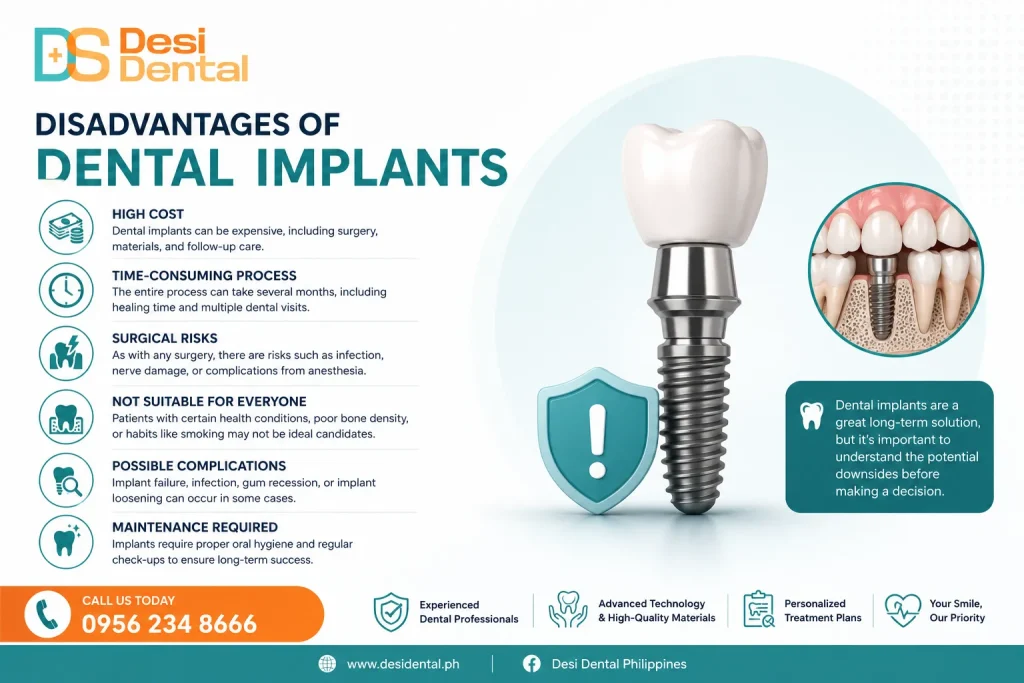
Additional costs often arise from:
- Diagnostic imaging (CBCT scans)
- Tooth extractions
- Bone grafting or sinus lifts
- Multiple surgical stages
Dental insurance frequently provides limited or no coverage for implants, unlike bridges or dentures. Many plans exclude them entirely or cap benefits at a low percentage. While implants can be cost-effective over 15–20+ years due to their durability, the initial financial barrier remains prohibitive for many. Financing options or dental savings plans may help, but they don’t eliminate the burden.
2. Invasive Surgical Procedure and Extended Recovery Timeline
Unlike non-surgical alternatives, dental implants require oral surgery. This involves cutting the gum, drilling into the jawbone, and placing a titanium post. Common short-term side effects include swelling, bruising, pain, and bleeding. Risks, though uncommon, include infection, nerve damage, sinus perforation (especially in the upper jaw), or damage to adjacent teeth.
The full process often spans 3 to 12 months or longer:
- Initial healing: 1–2 weeks
- Osseointegration (bone fusion): 3–6 months
- Abutment and crown placement: Additional visits
Patients needing bone grafts or other preparatory work face even longer timelines. Those seeking immediate results may find this waiting period frustrating.
3. Not Suitable for All Patients (Eligibility Limitations)
Not everyone qualifies as a good candidate, which is a major disadvantage of dental implants. Key disqualifying or complicating factors include:
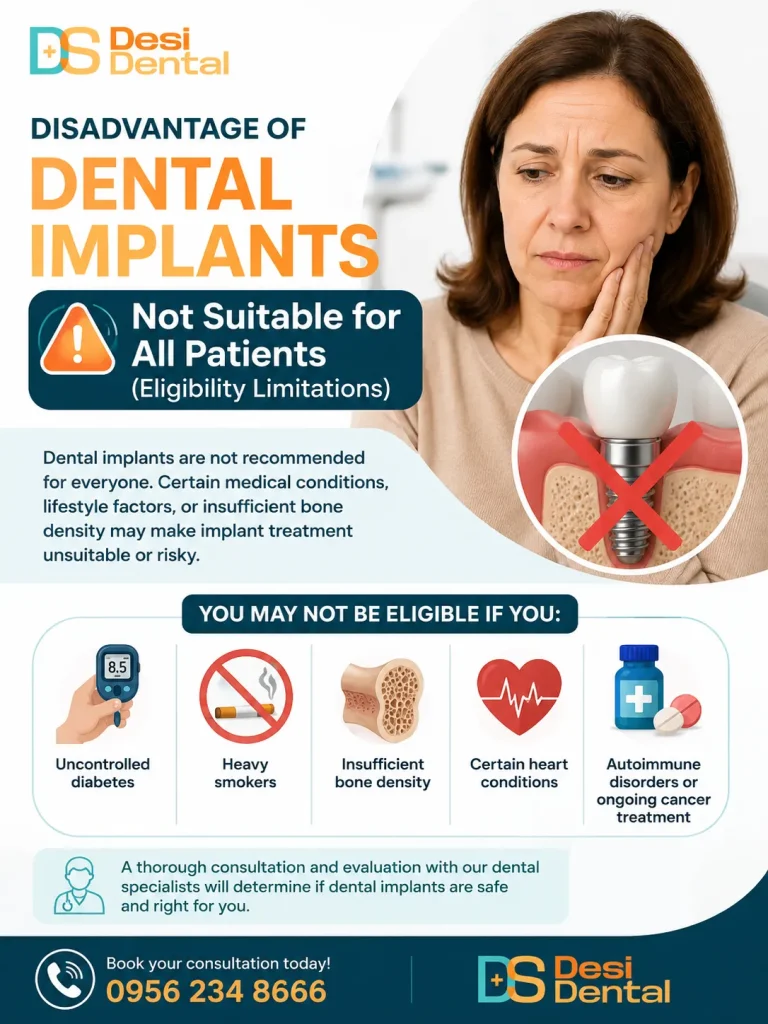
- Insufficient jawbone density: Tooth loss causes bone resorption. Severe cases require grafting, adding cost, time, and risk.
- Uncontrolled medical conditions: Uncontrolled diabetes, autoimmune disorders, osteoporosis, or cancer treatments can impair healing and increase failure risk.
- Smoking and tobacco use: Significantly raises failure rates by restricting blood flow and impairing osseointegration.
- Active gum disease or poor oral hygiene: Must be resolved before placement.
- Age considerations: Generally not recommended for patients under 18 (jaw still growing) or those with certain age-related health issues.
- Medications: Bisphosphonates or other drugs affecting bone metabolism may complicate treatment.
A thorough medical evaluation, including health history and imaging, is essential. Some patients may need to optimize their health first before becoming viable candidates.
4. Risk of Complications and Implant Failure
Although dental implants boast impressive success rates (around 95–98% at 5–10 years), failures do occur. Early failures happen during osseointegration, while late failures can appear years later.
Common complications include:
- Peri-implantitis: An inflammatory condition similar to gum disease that can lead to bone loss around the implant. Poor hygiene and smoking are major contributors.
- Infection: At the surgical site or later.
- Mechanical issues: Loosening of screws, crown fracture, or abutment problems.
- Nerve or tissue damage: Resulting in numbness, pain, or altered sensation.
- Sinus problems: In upper jaw placements.
Overall failure rates range from about 2–6% in studies, but individual risk varies based on health and lifestyle. Failed implants often require removal and additional procedures, increasing costs and delays.
5. Ongoing Maintenance and Potential Future Replacements
The titanium implant post can last a lifetime with proper care, but the prosthetic crown or bridge typically needs replacement every 10–15 years due to wear, chipping, or aesthetic changes. This adds to long-term expenses.
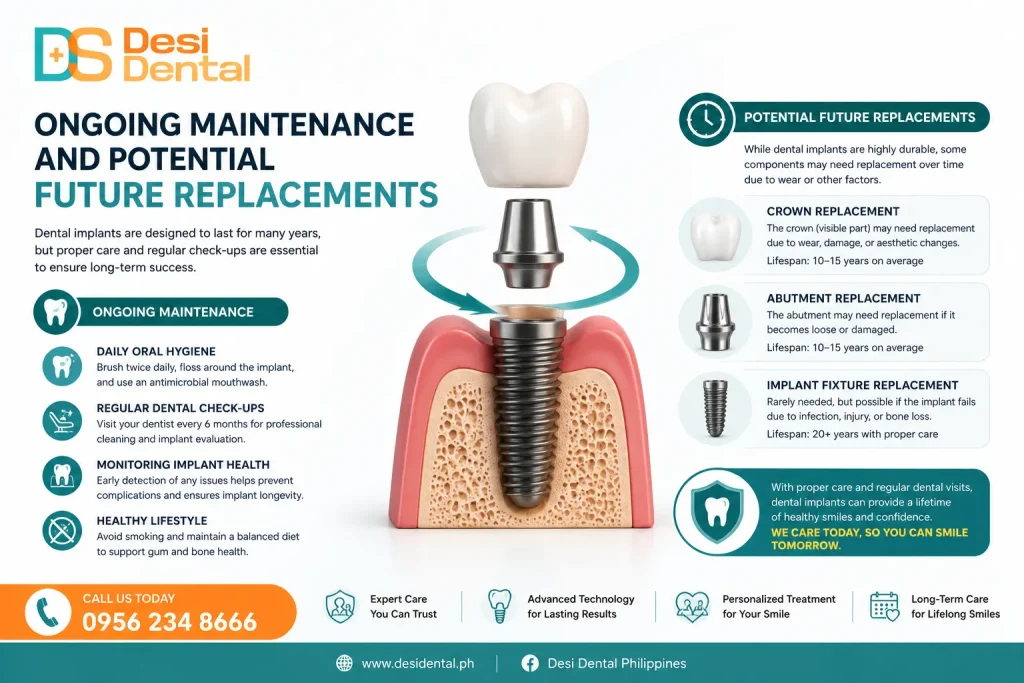
Implants require diligent daily care:
- Brushing with a soft toothbrush
- Flossing or using interdental brushes
- Antimicrobial rinses
- Professional cleanings every 3–6 months (more frequent than for natural teeth in some cases)
Neglect can lead to peri-implant disease. Patients with bruxism (teeth grinding) may need night guards to protect restorations.
6. Potential for Bone Loss and Other Long-Term Changes
Ironically, while implants help preserve bone, issues like improper placement, excessive occlusal forces, or peri-implantitis can cause progressive bone loss. Some patients experience changes in bite alignment or discomfort that require adjustments or revisions. Removing a failed implant can be more complex than initial placement.
7. Psychological and Lifestyle Impact
The extended treatment timeline, multiple appointments, and surgical recovery can cause anxiety or inconvenience. Dietary restrictions during healing (soft foods only) and temporary aesthetics (if using provisional restorations) may affect daily life.
Weighing the Disadvantages Against the Benefits
Despite these challenges, many patients report high satisfaction with dental implants because they restore confidence, chewing efficiency, and facial structure without affecting adjacent teeth. They prevent further bone loss better than most alternatives.
Common alternatives include:
- Dental bridges: Lower cost, faster, but involve grinding healthy teeth.
- Removable dentures: Most affordable, non-surgical, but less stable and can accelerate bone loss.
- Do nothing: Risks shifting teeth, bite issues, and aesthetic decline.
To minimize the disadvantages of dental implants, choose an experienced implant dentist or oral surgeon. Seek multiple consultations, ask about success rates in their practice, review before-and-after cases, and discuss realistic expectations. Consider your overall health, financial readiness, and commitment to maintenance.
If implants aren’t the right fit, explore other restorative options tailored to your needs. Always consult qualified dental professionals for personalized advice—this article is for educational purposes only and not a substitute for clinical evaluation.
By thoroughly researching and preparing, you can decide whether dental implants align with your long-term oral health goals. A beautiful, functional smile is worth the investment when the pros outweigh the cons for your unique situation.


