

After a tooth is removed, some bleeding is completely normal. Your body needs to form a protective blood clot inside the empty socket so healing can begin. Light oozing or saliva that looks slightly pink is expected for several hours and sometimes up to a full day. The key is knowing how to stop bleeding after tooth extraction properly so the clot can form and stay in place.
How to Stop Bleeding After Tooth Extraction
Step 1: Apply Steady Pressure with Gauze — The Most Effective First Action
Learning how to stop bleeding after tooth extraction starts with correct pressure. This single step solves the problem for the majority of people.
- Wash your hands well with soap and water.
- Take a clean piece of sterile gauze (or the pad your dentist sent home with you). Fold it several times until it becomes a thick, firm pad about the size of the extraction site. A thin or loosely folded piece will not create enough pressure.
- Lightly moisten the pad with clean water and gently squeeze out the excess. Damp gauze is less likely to stick to the forming clot and pull it away when you remove it later.
- Place the pad directly on top of the empty socket. It must press on the wound itself, not just sit between other teeth or against the cheek.
- Bite down firmly and steadily. Close your teeth enough so the pad compresses the site. Do not chew on it or move your jaw around.
- Keep your mouth closed and stay still for a full 30 to 45 minutes. Set a timer on your phone. Looking every few minutes is the number-one reason bleeding continues — each time you lift the pad you disturb the new clot and the clock starts over.
- Sit upright in a chair or prop yourself with pillows so your head stays higher than your heart. Lying flat increases blood pressure in the head and can make oozing worse.
After the full time, remove the gauze slowly. A stained pad is normal. If active bright bleeding is still present, put a fresh damp pad in place and repeat the same 30–45 minute period once more. Two properly timed rounds of pressure are usually enough.
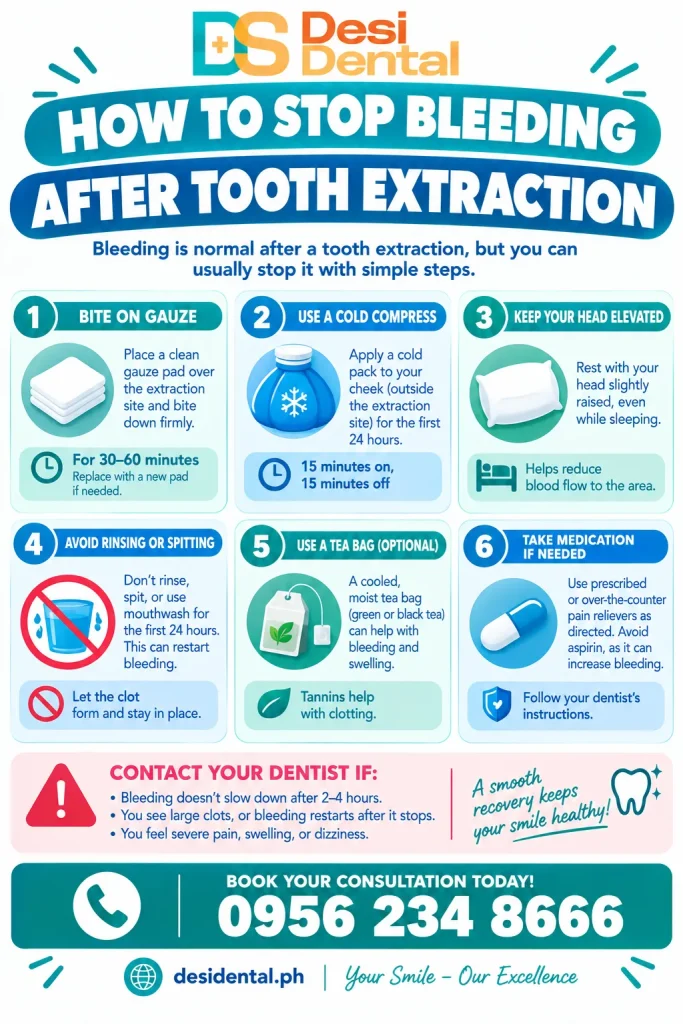
Step 2: Use a Moistened Black Tea Bag When Gauze Needs Extra Help
If bleeding has slowed but a light ooze continues, a black tea bag can give the clot extra support. Black tea contains natural compounds called tannins. These act as a mild astringent — they help small blood vessels tighten and encourage the blood to clot more readily.
- Choose plain black tea only. Green, herbal, or flavored teas do not contain the same useful tannins.
- Steep the bag in hot water for one to two minutes, then let it cool until it is comfortably warm or cool to the touch.
- Squeeze out extra liquid so the bag is damp, not dripping.
- Place it directly over the socket (you can wrap it in a thin layer of gauze if you prefer) and bite down with the same steady pressure for 20 to 30 minutes.
- Stay upright and quiet the whole time.
Many people find this step finishes the job when gauze alone has already reduced most of the flow.
Step 3: Keep Your Head Elevated and Use Cold on the Outside
Two simple supporting measures make a noticeable difference while you are applying pressure or resting afterward.
- Keep your head elevated for at least the first 24 hours. Use two or three pillows when you lie down or sleep. This reduces blood pressure at the extraction site and helps the clot stay stable.
- Apply a cold compress to the outside of your cheek near the extraction area. Use an ice pack or a bag of frozen vegetables wrapped in a thin cloth. Leave it on for 15 minutes, take it off for 15 minutes, and repeat as needed. Cold narrows blood vessels, slows bleeding, reduces swelling, and can ease mild discomfort. You can use cold at the same time as gauze pressure or right after.
What You Must Avoid So the Clot Does Not Get Dislodged
Protecting the new clot is just as important as forming it. For the first 24 to 72 hours, stay away from anything that creates suction, raises blood pressure in the head, or disturbs the socket:
- Do not use straws of any kind.
- Do not spit forcefully or rinse vigorously.
- Do not smoke or vape.
- Avoid alcohol and hot liquids.
- Skip hard, crunchy, or sharp foods that could poke the area.
- Do not exercise hard or lift heavy objects.
- Do not poke the socket with your tongue or fingers.
- Avoid aspirin if your dentist has not specifically approved it, because it can thin the blood.
Gentle salt-water rinses usually begin the day after the extraction (or whenever your dentist tells you). Until then, leave the area alone as much as possible.
Timeline: What to Expect Hour by Hour
- First 30–60 minutes: Active bleeding is common. Focus on firm gauze pressure.
- 1–3 hours: Flow should slow to light oozing or pink saliva.
- Rest of the first day: Occasional pink saliva is normal. Keep your head elevated and rest.
- Next morning: A small amount of blood on the pillow is frequent and usually not a concern.
- Day 2 and beyond: The site should feel quieter. Any new heavy bleeding warrants a call to your dentist.
When You Should Contact Your Dentist or Seek Urgent Care
Most cases of how to stop bleeding after tooth extraction resolve with the steps above. Call your dental office right away (or go to urgent care or the emergency room if it is after hours) if any of these occur:
- Bright red bleeding continues after two full, correctly timed rounds of pressure (about 1–2 hours total).
- Gauze becomes completely soaked in less than 30 minutes and this keeps happening.
- Large clots form, get spit out, and bleeding starts again.
- You feel dizzy, weak, light-headed, unusually tired, or your heart races.
- Heavy bleeding restarts a day or more after it had stopped.
- You notice rapidly increasing swelling, severe pain, fever, or a bad taste or smell from the site.
People who take blood thinners, have bleeding disorders, or underwent a difficult extraction (for example, impacted wisdom teeth) may need closer follow-up. Always tell your dentist about medications and health conditions before the procedure so they can plan accordingly.
Extra Tips That Make Recovery Easier
- Stay calm. Anxiety can raise blood pressure and make bleeding feel worse. Sit quietly, breathe slowly, and give the pressure time to work.
- Soft, cool foods (yogurt, applesauce, mashed banana, lukewarm soup) are easiest for the first day or two. Chew on the opposite side.
- Drink plenty of water, but take small sips without using a straw.
- Follow any prescription pain medication or antibiotic schedule exactly as directed.
- Keep the written after-care sheet your dentist gave you nearby so you can check details specific to your case.
Knowing how to stop bleeding after tooth extraction comes down to three main ideas: apply firm, uninterrupted pressure directly on the socket, protect the new clot from suction and disturbance, and recognize when the situation needs professional help. Most people control the bleeding successfully at home with gauze, an optional tea bag, elevation, and rest.


