

Dental implants have transformed modern dentistry by providing a long-lasting solution for missing teeth. While many patients focus on the final crown, understanding the different dental implant components is essential for making informed decisions about treatment. Each component plays a critical role in ensuring stability, functionality, and aesthetics.
This guide explains the main parts of a dental implant system, how they work together, and why quality components contribute to long-term success.
What Are Dental Implant Components?
Dental implant components are the individual parts that make up a complete dental implant restoration. Together, these elements replace the root and visible portion of a missing tooth while restoring chewing ability and appearance.
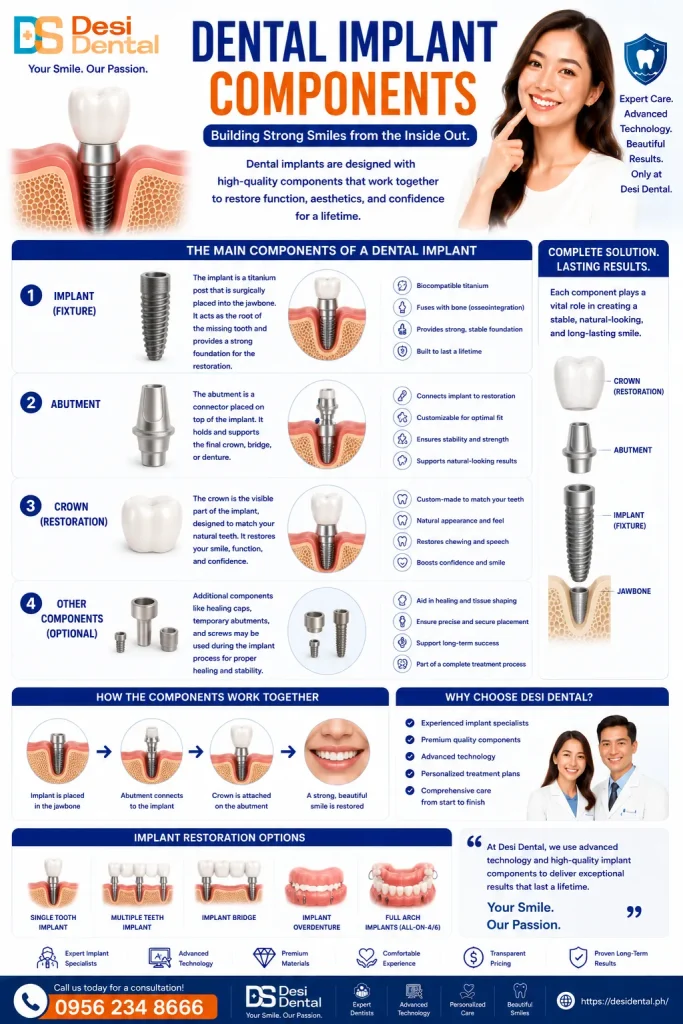
A standard dental implant system consists of three primary components:
- Implant Fixture (Implant Post)
- Abutment
- Dental Crown
Additional components may be used depending on the complexity of the case.
1. Implant Fixture: The Artificial Tooth Root
The implant fixture is the foundation of the entire restoration. It is a small screw-like structure surgically placed into the jawbone.
Key Features
- Usually made from medical-grade titanium or zirconia
- Integrates with the jawbone through osseointegration
- Provides support for the replacement tooth
- Designed to withstand chewing forces
The fixture functions similarly to a natural tooth root, helping preserve bone density and prevent jawbone deterioration after tooth loss.
2. Abutment: The Connector Piece
The abutment is attached to the implant fixture after healing has occurred. It serves as the connection between the implant and the final restoration.
Functions of an Abutment
- Supports the dental crown
- Creates proper alignment
- Transfers biting forces evenly
- Helps achieve a natural gum appearance
Abutments can be prefabricated or custom-designed to fit a patient’s unique anatomy and aesthetic requirements.
3. Dental Crown: The Visible Tooth
The crown is the part that patients see when they smile. It is custom-crafted to match the color, shape, and size of surrounding teeth.
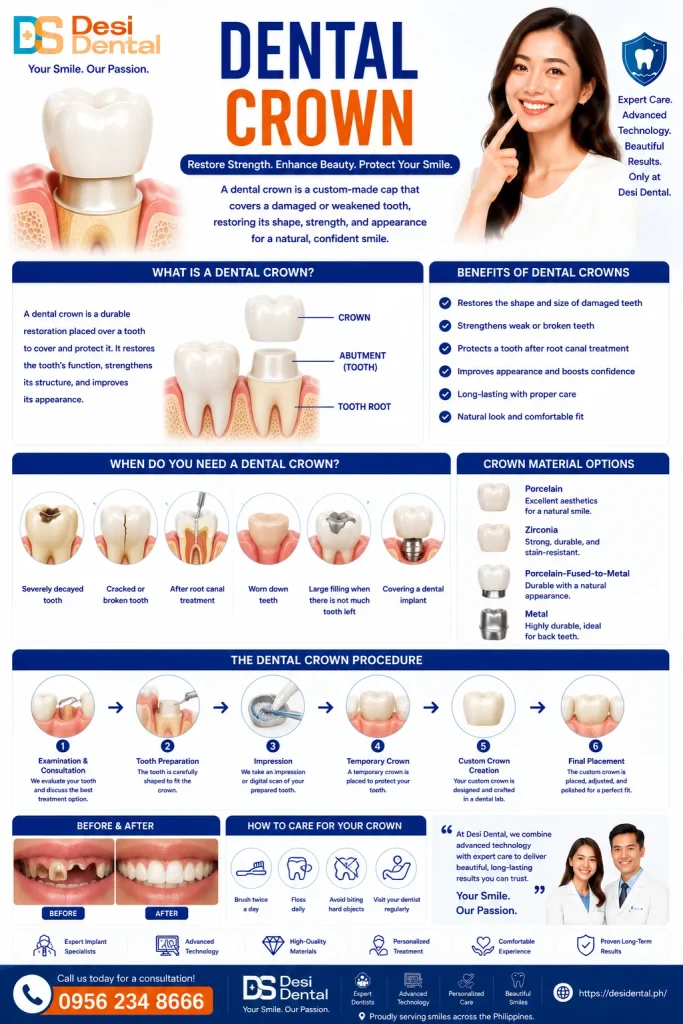
Common Crown Materials
- Porcelain
- Zirconia
- Porcelain-fused-to-metal
- Full ceramic materials
A high-quality crown not only restores appearance but also ensures comfortable and efficient chewing.
Additional Dental Implant Components
Certain implant cases require supplementary parts to enhance stability and function.
Healing Abutment
A healing abutment is temporarily placed after implant surgery to guide gum tissue healing around the implant site.
Benefits include:
- Improved soft tissue shaping
- Better emergence profile
- Easier placement of the final restoration
Implant Screw
The implant screw secures the abutment to the implant fixture.
Characteristics:
- Precision-engineered for stability
- Designed to minimize movement
- Supports long-term durability
Multi-Unit Abutments
Used primarily in full-arch restorations and implant bridges, multi-unit abutments help correct implant angulation and improve prosthetic fit.
Temporary Restoration
Some patients receive a temporary crown or bridge while waiting for complete healing and integration.
Materials Used in Dental Implant Components
Titanium
Titanium remains the most widely used implant material because of its:
- Excellent biocompatibility
- High strength
- Proven clinical success
- Long-term reliability
Zirconia
Zirconia has become increasingly popular due to:
- Metal-free composition
- Natural white color
- Strong aesthetic appeal
- Good tissue compatibility
The choice between titanium and zirconia depends on individual treatment goals, anatomy, and clinical recommendations.
How Dental Implant Components Work Together
A successful implant restoration relies on the precise interaction of all components.
The process typically follows these stages:
- Implant fixture is placed into the jawbone.
- Bone integrates with the implant.
- Healing abutment shapes the gum tissue.
- Abutment is connected to the implant.
- Final crown is attached.
- The completed restoration functions like a natural tooth.
When each component is properly designed and positioned, patients can enjoy improved comfort, appearance, and oral function.
Why Component Quality Matters
Not all implant systems are created equal. High-quality dental implant components offer several advantages:
- Better long-term stability
- Reduced risk of complications
- Improved fit and comfort
- Enhanced aesthetics
- Greater durability under chewing pressure
Experienced implant dentists carefully select components that are compatible, reliable, and supported by clinical research.
Choosing the Right Implant System
Patients considering dental implants should discuss several factors with their dentist:
- Implant brand and manufacturer
- Material options
- Restoration type
- Long-term maintenance requirements
- Expected lifespan of components
Understanding these details can help patients make confident decisions and achieve predictable treatment outcomes.
The success of dental implant treatment depends on more than just the implant itself. The various dental implant components—including the implant fixture, abutment, crown, and supporting parts—work together to create a stable, functional, and natural-looking tooth replacement.
By understanding the role of each component, patients can better appreciate the technology behind modern implant dentistry and make informed choices about their oral health. A well-designed implant system, combined with expert treatment and proper maintenance, can provide reliable results for many years.


