

Many people wonder “can I brush my teeth after tooth extraction” because they worry about pain, bleeding, or complications. The short answer is yes—with careful timing and gentle technique. This guide explains exactly when and how to brush, what to avoid, and how to protect the healing area.
Why Brushing Needs Extra Care After Extraction
When a tooth is removed, the body forms a blood clot in the socket. This clot acts like a natural bandage. It covers the bone and nerves underneath and starts the healing process. If the clot gets dislodged too early, a painful condition called dry socket (alveolar osteitis) can develop. Dry socket leaves the bone exposed and often causes throbbing pain that can radiate to the ear or jaw.
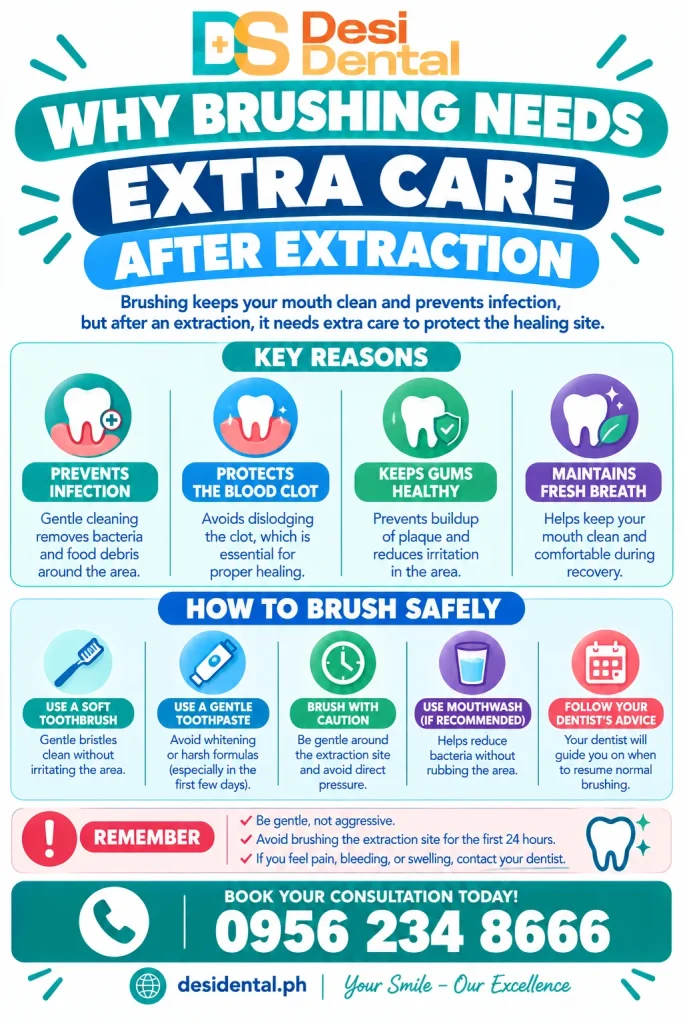
Brushing too hard or too soon near the site is one of the common ways people accidentally disturb the clot. Forceful spitting, vigorous rinsing, using a straw, or smoking can also create suction that pulls the clot loose. That is why dentists give specific instructions about oral hygiene after extraction.
The good news is that you do not need to stop brushing completely. You simply change how and where you brush for a short time.
When Can I Brush My Teeth After Tooth Extraction?
Recovery is different for everyone, but most people follow a similar pattern. Always follow the written instructions from your own dentist or oral surgeon, because they know the details of your procedure (simple extraction, surgical removal, stitches, or wisdom teeth).
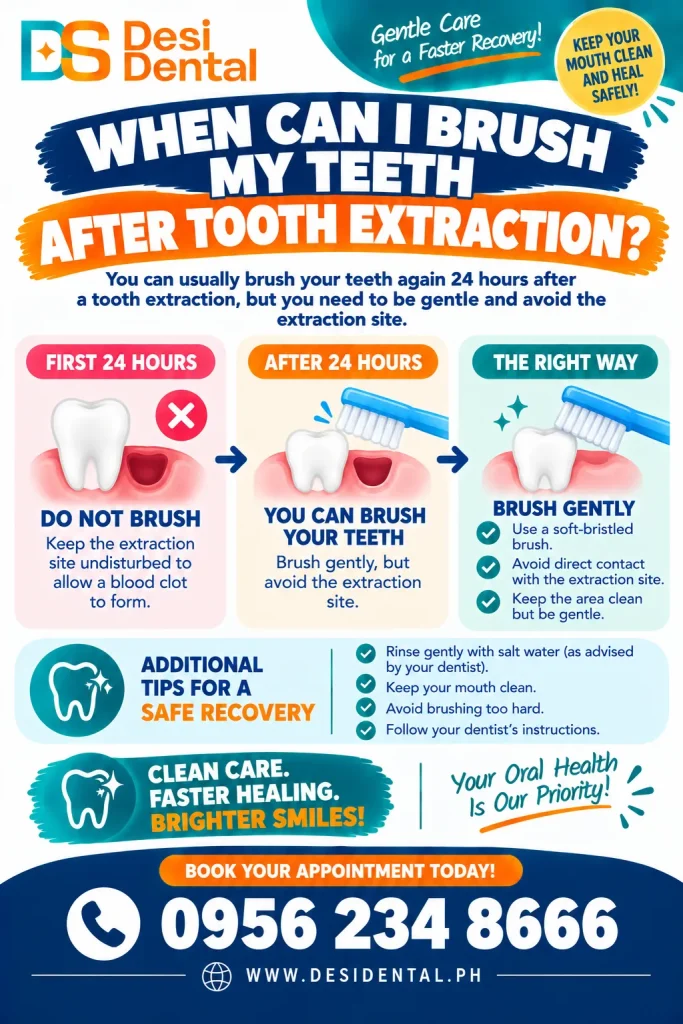
First 24 hours (day of the extraction)
Do not brush directly over or next to the extraction site. If gauze is still in place, leave the area completely alone. You may gently brush the teeth on the opposite side of your mouth using a soft-bristled toothbrush. Use little or no toothpaste to reduce foam. After brushing, lean over the sink and let saliva and any paste drain out naturally—do not spit forcefully. Avoid rinsing, mouthwash, and anything that creates pressure in the mouth.
Days 2–3
You can begin brushing more of your teeth carefully. Continue to stay away from the socket itself. Use a soft or extra-soft toothbrush and light pressure. After 24 hours, start gentle salt-water rinses. Mix half a teaspoon of salt in an 8-ounce glass of warm (not hot) water. Tilt your head so the solution bathes the area, then let it fall out of your mouth. Do this after meals and before bed. These rinses help keep the area clean without scrubbing.
Days 4–7
As swelling and tenderness decrease, you can carefully brush closer to the extraction site. Still avoid pushing the bristles into the open socket. Use small, circular motions and stop if you feel sharp pain or see fresh bleeding. Continue the salt-water rinses. Many people feel noticeably better by the end of the first week.
Week 2 and beyond
Most people can return to a more normal brushing routine once the soft tissue begins to close over the socket. Full healing of the bone underneath takes longer—often several weeks to a few months, especially after molar or wisdom tooth removal. Keep being gentle until your dentist confirms the site is ready for regular pressure.
How to Brush Safely After Tooth Extraction
Follow these practical steps to keep your mouth clean while protecting the healing area:
- Choose the right tools. Use a soft-bristled or extra-soft toothbrush. A smaller brush head gives better control near the back of the mouth. Avoid electric toothbrushes near the site for at least the first week or two—the vibration can be disruptive.
- Start on the opposite side. Begin brushing the teeth farthest from the extraction site. Use short, light strokes.
- Approach the site carefully. When you get near the socket, angle the bristles away from the opening. Clean the neighboring teeth but do not scrub the wound or the gum edge around it.
- Use toothpaste wisely. On the first day, many dentists suggest using no toothpaste or only a tiny amount. After that, a mild fluoride toothpaste is fine. Avoid whitening pastes or products with strong abrasives that can irritate the area.
- Handle the foam and spit gently. Do not rinse hard or spit with force. Let excess paste and saliva drip into the sink.
- Clean the rest of your mouth. Gently brush your tongue and the roof of your mouth. These areas still collect bacteria.
What You Should Avoid
- Brushing directly over the socket for the first several days
- Forceful spitting or vigorous rinsing in the first 24–48 hours
- Straws, smoking, or vaping (suction is risky)
- Alcohol-based mouthwashes until your dentist says it is okay
- Hard, crunchy, or seedy foods that can get stuck in the socket
- Touching the site with your tongue or fingers
Extra Tips for Comfortable Healing
Eat soft foods such as yogurt, mashed potatoes, scrambled eggs, or smoothies (without a straw) for the first few days. Chew on the opposite side. Keep your head elevated when resting to reduce swelling. Take any prescribed pain medication or antibiotics exactly as directed. Stay hydrated, but avoid hot drinks while the area is sensitive.
Good overall hygiene before the extraction also helps. A cleaner mouth at the start means fewer bacteria around the healing site.
Signs You Should Call Your Dentist
Contact your dentist or oral surgeon if you notice any of the following:
- Severe pain that gets worse after a few days instead of improving
- Pain that radiates to the ear or temple
- A bad taste or foul odor coming from the socket
- Visible bone in the socket
- Heavy or continuous bleeding
- Increasing swelling, fever, or difficulty swallowing
These can be signs of dry socket or infection and usually need professional treatment.
Frequently Asked Questions
Can I brush my teeth the same day as the extraction?
Yes, but only the teeth away from the site, and very gently. Many people wait until the next morning for comfort.
Can I use toothpaste after tooth extraction?
Yes after the first day, in small amounts. On day one, water alone is often enough.
When can I floss again?
Wait until the site is more stable—usually several days—and avoid the teeth right next to the socket at first.
How long until I can brush normally?
Most people return to normal pressure around the site after 7–14 days, but full tissue closure can take longer. Your dentist will guide you.
Does the advice change for wisdom teeth?
Wisdom tooth extractions are often surgical and may need a slightly longer period of caution around the back of the mouth. Follow the specific instructions given after your surgery.
The question “can I brush my teeth after tooth extraction” has a clear and reassuring answer: yes, you can and should keep your mouth clean. The key is protecting the blood clot during the early days and using a gentle technique. By following a careful timeline, choosing soft tools, and avoiding suction or pressure, most people heal smoothly without complications.


