

Dental implants are one of the most reliable and long-lasting solutions for replacing missing teeth, offering strength, functionality, and a natural appearance that can last decades with proper care. While the surgery itself is typically straightforward, the after dental implant surgery recovery period plays a vital role in determining the success of your implant. This phase involves managing discomfort, preventing infection, supporting bone integration (osseointegration), and gradually returning to normal activities.
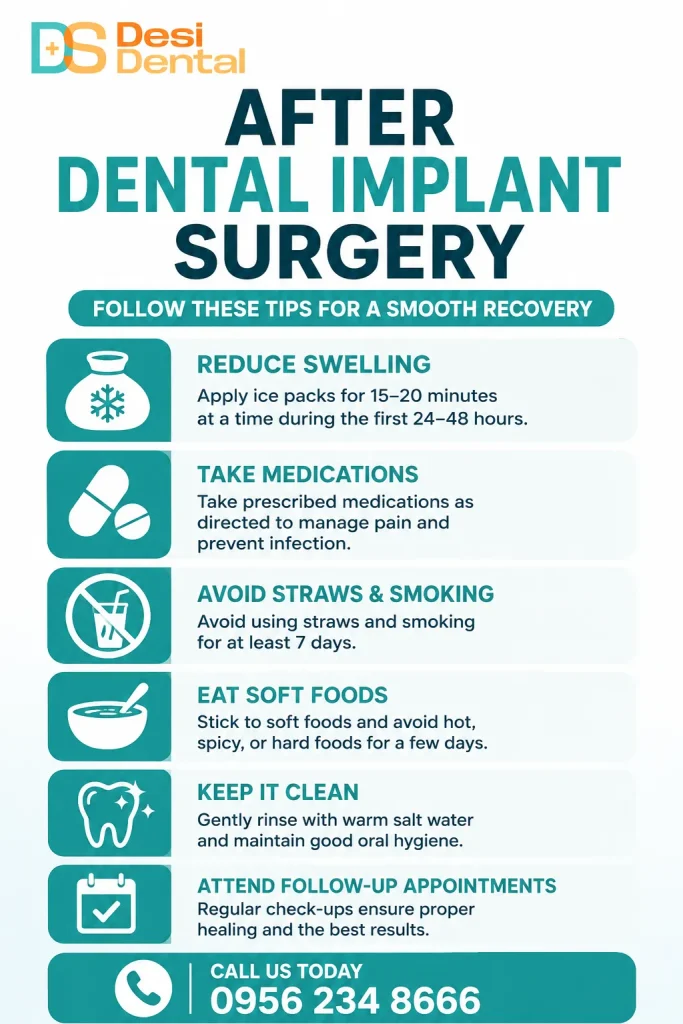
Phase 1: Immediate Post-Op Care (First 24-48 Hours)
This is the most critical window for protecting the surgical site and minimizing complications.
Rest and Positioning Limit physical activity completely for the first 48 hours. Increased blood pressure from exertion can worsen swelling or bleeding. Keep your head elevated while sleeping or resting using 2-3 pillows. This promotes better drainage and reduces facial swelling.
Managing Swelling and Bruising Swelling is a normal inflammatory response. Apply cold compresses (ice packs wrapped in a thin cloth) to the cheek area for 15 minutes on followed by 15 minutes off while awake during the first day. Switch to warm compresses after 48 hours to improve blood flow and reduce residual swelling.
Bleeding Control Some oozing or light bleeding is expected. Bite gently on sterile gauze for 30-60 minutes, replacing as needed. Avoid spitting or rinsing forcefully, as this can dislodge the protective blood clot and lead to a painful dry socket-like condition.
Pain Management Take prescribed medications on schedule. Common options include ibuprofen for its anti-inflammatory properties or stronger prescriptions if needed. Do not combine medications without your dentist’s approval.
Diet Restrictions Consume only cool or room-temperature soft foods: yogurt, applesauce, smoothies (drunk without straws), mashed potatoes, scrambled eggs, oatmeal, and protein shakes. Stay hydrated with water, but avoid very hot or carbonated drinks. Chew on the opposite side of your mouth if possible.
Key Things to Avoid:
- Smoking, vaping, or any nicotine products (increases failure risk dramatically).
- Alcohol, which can interfere with healing and interact with medications.
- Touching the site with tongue, fingers, or objects.
- Straws, as suction can disrupt healing.
- Hard, crunchy, chewy, spicy, or acidic foods.
Phase 2: Early Recovery (Days 3–14)
By day 3, most patients notice swelling starting to decrease and discomfort becoming more manageable.
Oral Hygiene Routine Starting 24 hours after surgery, rinse gently with warm salt water (1/2 to 1 teaspoon salt dissolved in 8 oz warm water) 4-6 times daily, especially after eating. This natural antiseptic helps keep the area clean and promotes healing without irritating tissues.
Use a soft-bristled toothbrush for other teeth. Your dentist may approve gentle brushing near the site after a few days. Avoid commercial mouthwashes containing alcohol during early healing.
Activity and Lifestyle You can usually resume light daily tasks after 2-3 days. Continue avoiding heavy exercise, contact sports, or anything that raises heart rate significantly for at least 7-10 days. Maintain excellent overall health through nutritious soft meals, adequate sleep, and stress management.
Nutrition for Healing Focus on foods rich in vitamins and minerals:
- Protein for tissue repair (eggs, soft fish, Greek yogurt).
- Vitamin C sources (mashed fruits, supplements if approved).
- Calcium and Vitamin D for bone health.
- Anti-inflammatory foods like turmeric or ginger (in soft form).
Phase 3: Intermediate and Long-Term Healing (Weeks 2–Months 6+)
Soft tissue usually heals well by 2 weeks, but bone integration continues for months.
- Diet Progression: Gradually introduce firmer foods (soft pasta, cooked vegetables, tender meats) as comfort allows. Your dentist will advise when you can resume a normal diet.
- Dental Visits: Attend follow-up appointments for monitoring, suture removal (if non-dissolving), and eventual abutment and crown placement.
- Long-Term Implant Care: Once fully restored, treat your implant like natural teeth—brush twice daily, floss or use interdental cleaners daily, and schedule professional cleanings every 3-6 months. Regular check-ups help catch any issues early.
Recognizing Normal vs. Concerning Symptoms
Normal Experiences:
- Mild to moderate swelling and bruising (improves after day 3).
- Minor discomfort or pressure sensation.
- Temporary sensitivity in adjacent teeth.
Warning Signs Requiring Immediate Attention:
- Increasing pain or swelling after the first few days.
- Fever over 100.4°F (38°C).
- Pus, severe bad taste, or unusual discharge.
- Persistent numbness beyond the expected anesthesia period.
- Loose implant or feeling that the site is not healing.
- Difficulty breathing or swallowing.
Prompt communication with your dental team can prevent minor issues from becoming major complications.
Factors That Influence Recovery Success
- Smoking cessation: One of the most important controllable factors.
- Pre-existing conditions: Diabetes, osteoporosis, or autoimmune disorders may require additional monitoring.
- Bone grafting: If performed, healing may take longer.
- Multiple implants or full-arch procedures: Recovery can be more involved but follows similar principles.
- Patient compliance: Following instructions consistently leads to the best outcomes.
Frequently Asked Questions About Dental Implant Recovery
How long does swelling last? Typically peaks at 48-72 hours and resolves significantly within 7-10 days.
When can I return to work? Most patients return within 3-5 days for desk jobs; physically demanding jobs may require more time.
Can I exercise after dental implant surgery? Light walking is usually fine after a few days, but avoid intense workouts for 1-2 weeks.
Is it normal to have bruising? Yes, especially with lower jaw implants. It fades within 1-2 weeks.
How soon until I get my permanent teeth? This varies—temporary restorations may be placed, with finals often added after 3-6 months of healing.
By investing time and care into your after dental implant surgery recovery, you greatly increase the chances of enjoying a strong, beautiful, and functional smile for many years. Dental implants have excellent long-term success rates when patients follow proper protocols.


