

A dental implant abutment is the essential connecting component in a dental implant system. It serves as the bridge between the titanium implant fixture (surgically placed in the jawbone) and the final prosthetic restoration, such as a crown, bridge, or denture. While the implant root replaces the tooth root and the crown mimics the visible tooth, the abutment is the critical middle piece that ensures stability, proper gum contouring, and long-term functionality. Choosing the right abutment significantly impacts the success, aesthetics, and durability of your dental implant treatment.
Understanding dental implant abutments is vital whether you are considering implants or already have them. This comprehensive guide covers everything from types and materials to the placement process, care tips, potential complications, and modern advancements.
Why the Abutment Matters in Dental Implants
The abutment is more than just a connector. It performs several key biological and mechanical functions:
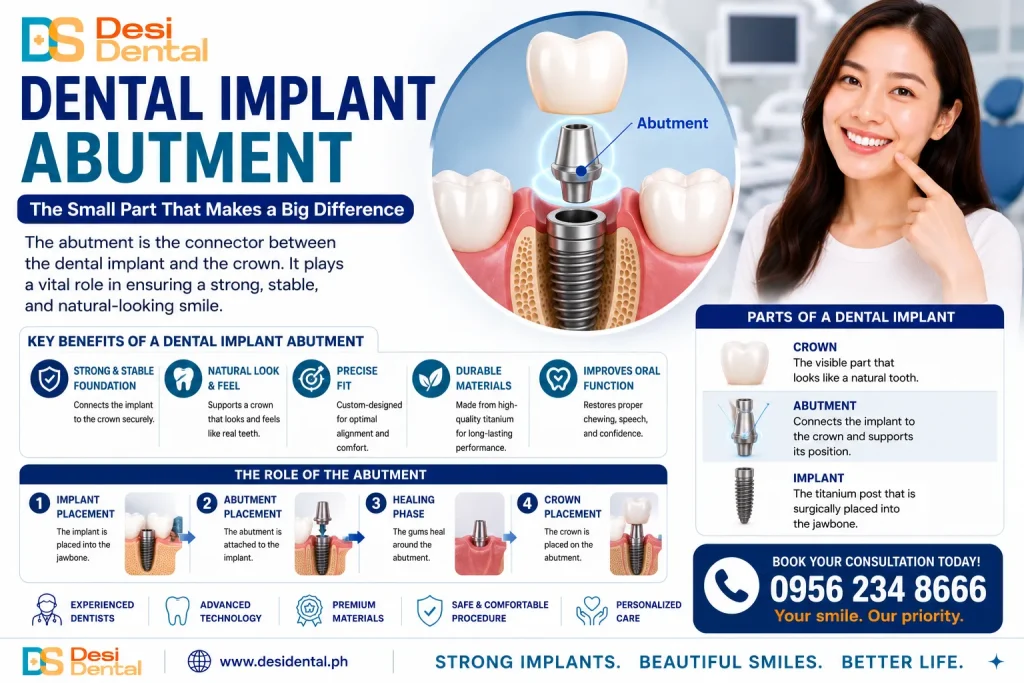
- Force Distribution: It transfers chewing forces from the crown to the implant and surrounding bone, preventing overload or failure.
- Gum Tissue Shaping: The abutment helps create a natural “emergence profile” — the way the gum tissue grows around the restoration for a lifelike appearance.
- Bacterial Seal: A precise fit between the implant and abutment minimizes micro-gaps that could allow bacteria to enter, reducing the risk of peri-implantitis (inflammation around the implant).
- Aesthetic Foundation: Especially in the front teeth (anterior zone), the abutment color and shape directly influence how natural the final smile looks.
Without a high-quality abutment, even the most advanced implant can result in poor aesthetics, discomfort, or premature failure.
Main Types of Dental Implant Abutments
Dentists select abutments based on the patient’s specific needs, including tooth location, bite force, gum thickness, and angulation of the implant.
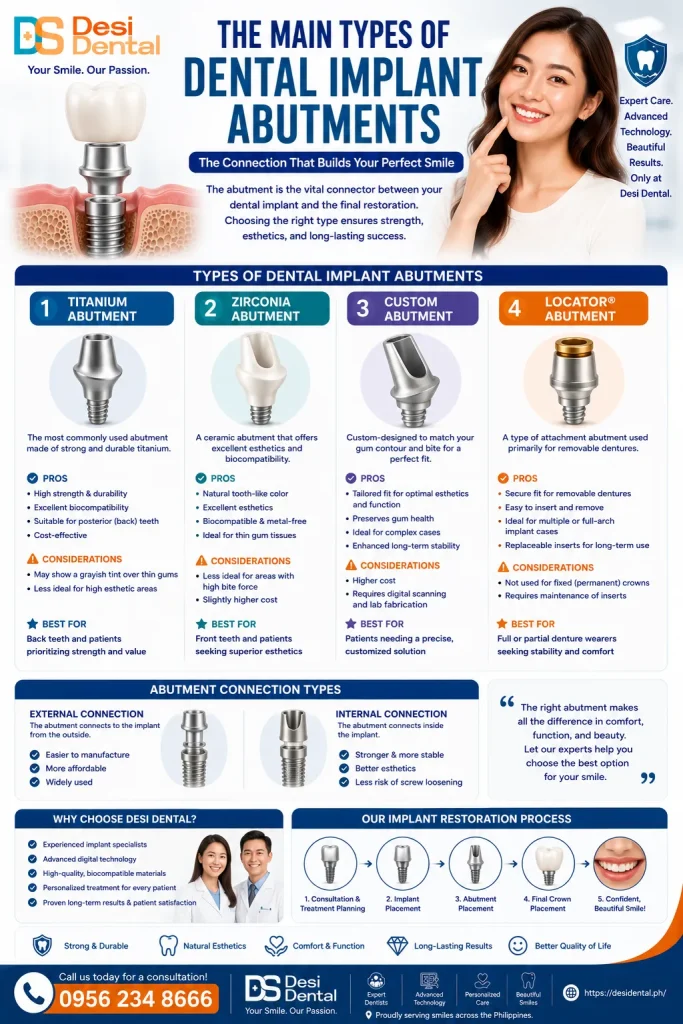
- Stock (Prefabricated) Abutments These are mass-produced in standard shapes and sizes. They are cost-effective and suitable for straightforward cases, particularly molars and premolars where aesthetics are less critical. Advantages include faster treatment time and lower cost. However, they may require chair-side adjustments and offer less customization for optimal gum shaping.
- Custom Abutments Fabricated specifically for each patient using digital impressions, CAD/CAM technology, and 3D printing or milling. Custom abutments provide the best fit, ideal emergence profile, and superior aesthetics — making them the preferred choice for visible front teeth. They correct minor angulation issues and support optimal soft tissue contouring.
- Healing Abutments (Healing Caps) Temporary components placed immediately after implant surgery or during the second-stage surgery. They protect the implant site and shape the gum tissue during the healing phase (usually 2–8 weeks). Once healing is complete, they are replaced with permanent abutments.
- Angled Abutments Used when implants are placed at an angle due to bone anatomy or for better prosthetic alignment. They help correct the emergence angle, especially in the posterior region or full-arch restorations.
- Multi-Unit Abutments (MUA) Designed for full-arch fixed prostheses (All-on-4, All-on-6). They allow multiple implants to support a bridge or denture even when implants are not perfectly parallel.
- Temporary Abutments Used during the provisional phase to test aesthetics, function, and phonetics before the final restoration.
Abutment Materials: Pros, Cons, and Best Uses
Material selection balances strength, biocompatibility, aesthetics, and cost:
- Titanium Abutments The most common and reliable choice. Titanium is extremely strong, biocompatible, and has a long clinical track record (decades of success). Ideal for high-load posterior teeth. Drawback: In patients with thin gums, a grayish tint may show through.
- Zirconia (Ceramic) Abutments Tooth-colored and highly aesthetic. Excellent for the anterior zone as they eliminate the risk of metal show-through and offer excellent soft tissue compatibility. Zirconia is metal-free, reducing allergy concerns. Slightly less resistant to heavy biting forces than titanium, but modern high-strength zirconia performs very well.
- Hybrid Abutments (Titanium Base + Zirconia Crown) Combine the strength of a titanium connection with the aesthetics of zirconia. Popular in modern screw-retained restorations because they provide a reliable implant interface while maintaining a natural look.
- Gold or Castable Abutments Less common today but still used in some complex cases requiring precise customization through traditional lab techniques.
Titanium and zirconia dominate the market due to excellent long-term outcomes.
The Dental Implant Abutment Placement Process (Step-by-Step)
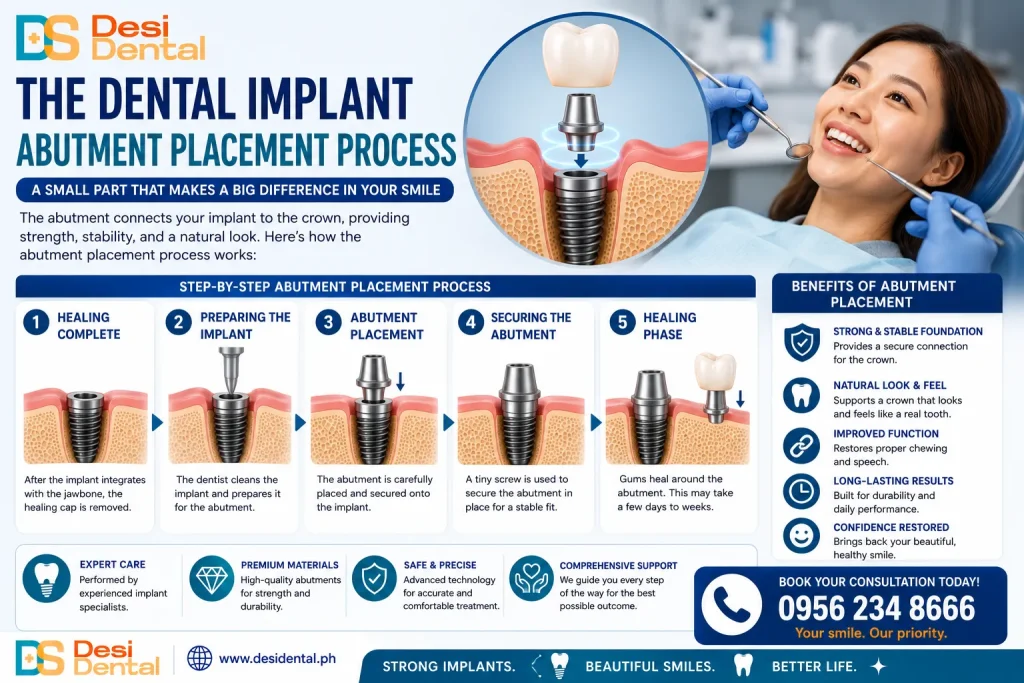
- Osseointegration Phase (3–6 months) The implant fuses with the jawbone.
- Second-Stage Surgery A small incision exposes the implant top. A healing abutment is placed to shape the gums.
- Abutment Selection and Placement After gum healing, the healing abutment is removed. The permanent abutment is screwed onto the implant using a torque wrench to the manufacturer’s recommended torque (usually 20–35 Ncm). This ensures a secure, sealed connection.
- Impressions or Digital Scanning The dentist takes precise records of the abutment position for the dental laboratory or uses intraoral scanners for same-day restorations.
- Final Prosthesis Delivery The crown, bridge, or denture is attached to the abutment — either cemented or screw-retained.
The entire abutment placement appointment is typically quick (30–60 minutes) and performed under local anesthesia with minimal discomfort.
Benefits of Well-Designed Dental Implant Abutments
- Improved long-term implant success rates (often >95% over 10+ years)
- Superior aesthetics and natural smile
- Better hygiene and reduced risk of inflammation
- Enhanced comfort and chewing function
- Ability to correct implant angulation issues
Dental Implant Abutment Complications
Common issues include:
- Abutment loosening (usually due to insufficient torque or parafunctional habits)
- Peri-implantitis from poor oral hygiene
- Gum recession exposing the abutment margin
- Fracture (rare with quality materials)
Prevention tips:
- Choose an experienced implant dentist
- Follow strict oral hygiene protocols
- Wear a night guard if you grind your teeth
- Attend regular maintenance visits (every 3–6 months initially)
Dental Implant Abutment Price in the Philippines
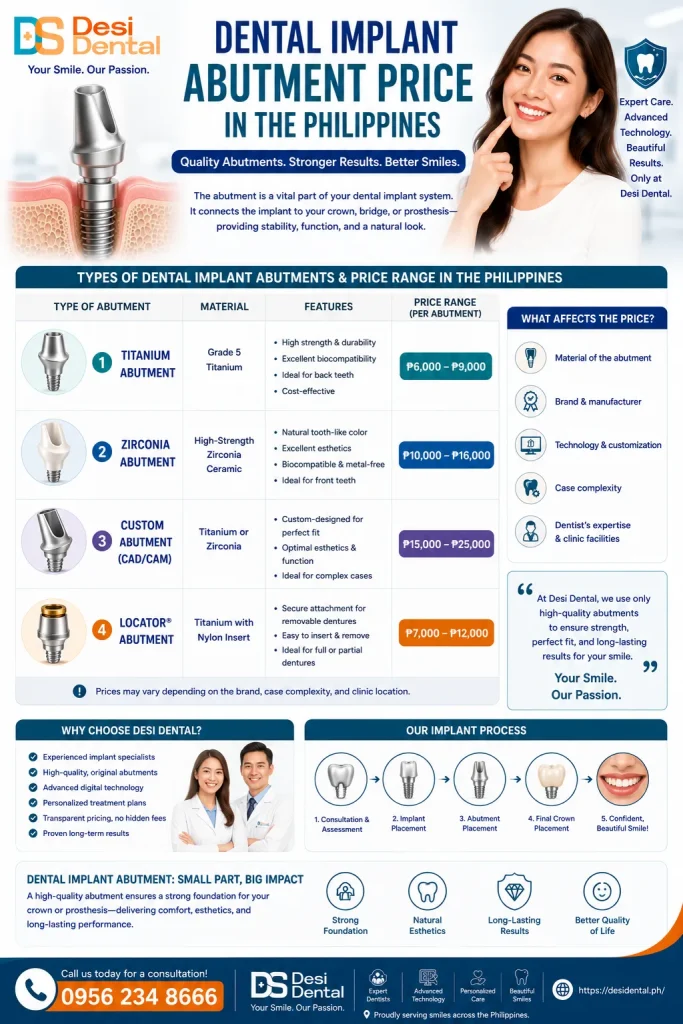
The price of a dental implant abutment typically ranges from $150 to $800+ per abutment, depending on type and material:
- Stock titanium: lower end
- Custom zirconia: higher end
This cost is separate from the implant fixture and final crown. Many clinics offer package pricing for the full implant restoration.
Frequently Asked Questions (FAQs)
How long does an abutment last? With proper care, abutments can last 15–20+ years or even a lifetime.
Can the abutment be replaced? Yes, if needed, without disturbing the implant itself in most cases.
Is the abutment placement painful? Most patients report little to no pain — similar to a routine dental visit.
What is the difference between stock and custom abutments? Stock are pre-made and cheaper; custom are patient-specific for superior fit and aesthetics.
The dental implant abutment may be the smallest visible part of your implant restoration, but it plays one of the most important roles in long-term success, comfort, and natural appearance. Whether you need a simple stock abutment for a back tooth or a custom zirconia abutment for a front smile makeover, working with a qualified implant specialist ensures the best possible outcome.
If you are considering dental implants or have questions about your existing abutments, consult with an experienced implant dentist for a personalized evaluation. Modern abutment technology makes it possible to achieve beautiful, functional, and durable results that can last for decades.


