

Titanium dental implants represent the gold standard in modern tooth replacement, offering a permanent, natural-looking, and highly functional solution for missing teeth. With success rates consistently above 95%, these implants have transformed the lives of millions by restoring chewing ability, preserving jawbone health, and boosting confidence. Whether you’re missing a single tooth or considering full-arch restoration, understanding titanium dental implants is essential for making an informed choice about your oral health.
What Are Titanium Dental Implants and How Do They Work?
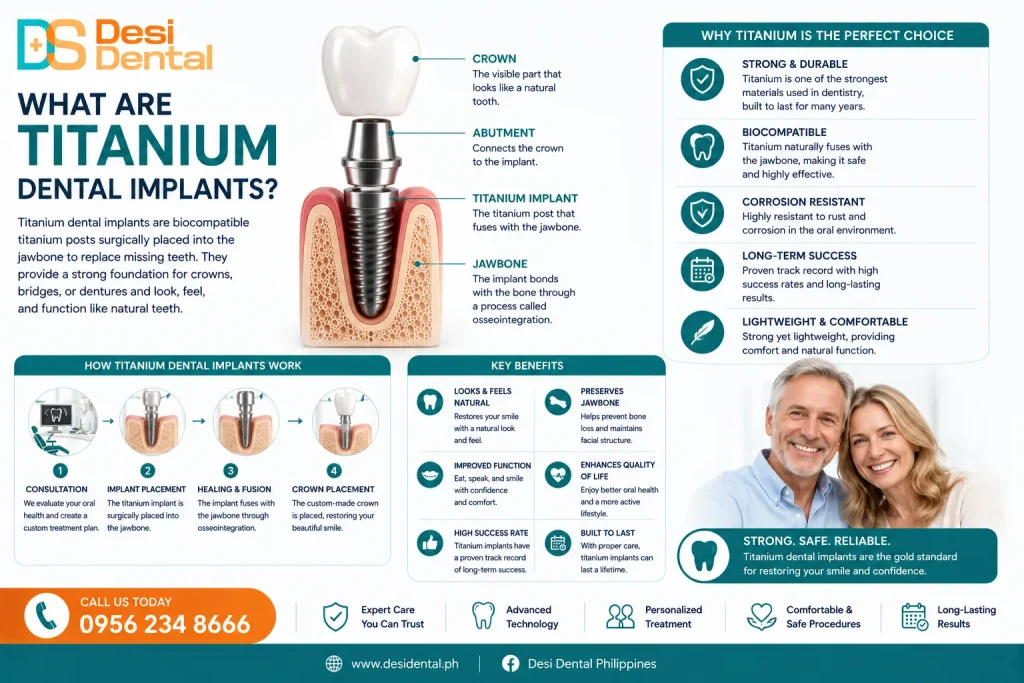
A titanium dental implant consists of three main parts:
- Implant Fixture (Post): A small, screw-like titanium root placed into the jawbone.
- Abutment: A connector that links the implant to the prosthetic tooth.
- Crown, Bridge, or Denture: The visible restoration, typically made of porcelain, ceramic, or zirconia for a natural appearance.
Once placed, the implant undergoes osseointegration over 3–6 months (sometimes faster with modern protocols), during which bone cells grow tightly around the titanium surface. This creates a bond stronger than many natural tooth attachments.
Key Benefits of Titanium Dental Implants
Titanium implants offer numerous advantages over traditional bridges or dentures:
- Exceptional Durability and Longevity: With proper care, the titanium post can last 20–30+ years or even a lifetime. The attached crown may need replacement every 10–15 years due to normal wear.
- High Success Rates: Clinical studies report 95–99% success at 5–10 years, with many long-term studies showing strong performance even after two decades.
- Jawbone Preservation: Unlike bridges or dentures, implants stimulate the jawbone during chewing, preventing the bone resorption that leads to facial collapse and a prematurely aged appearance.
- Natural Function and Aesthetics: Implants restore full biting force, allowing you to eat your favorite foods comfortably. Custom restorations blend seamlessly with your natural teeth.
- No Impact on Adjacent Teeth: Unlike traditional bridges, implants do not require grinding down healthy neighboring teeth.
- Improved Oral Health and Quality of Life: Better speech, easier cleaning, reduced risk of gum disease compared to dentures, and enhanced self-esteem.
- Versatility: Suitable for single teeth, multiple teeth (implant-supported bridges), or full arches (All-on-4 or All-on-6 techniques).
The Titanium Dental Implant Procedure
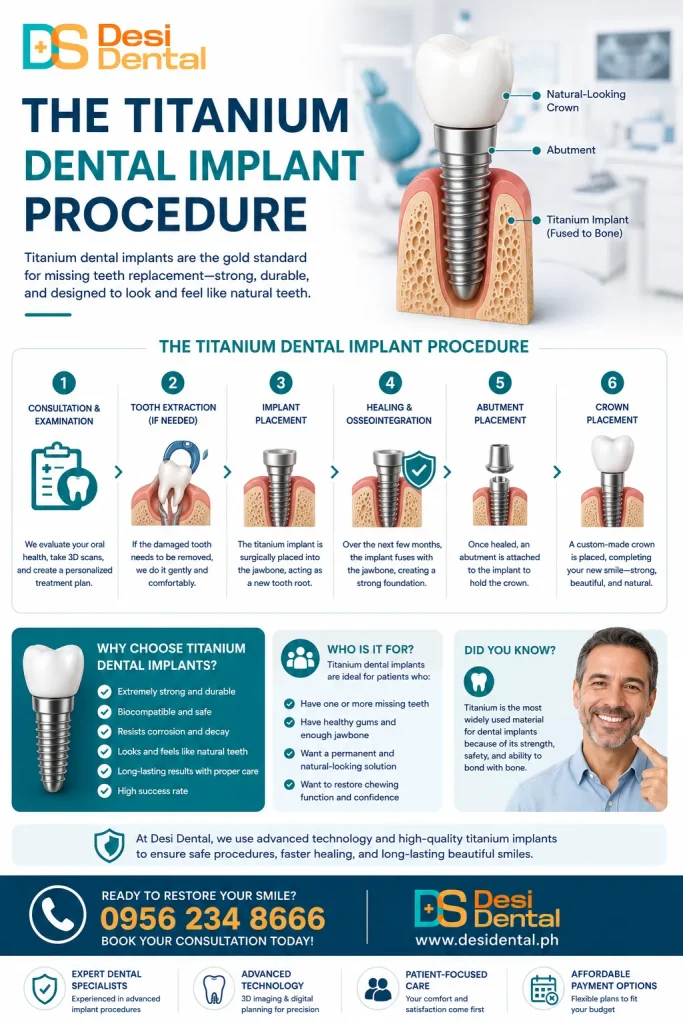
The process is highly personalized and typically spans 3–9 months:
- Comprehensive Consultation: Includes medical history review, 3D CBCT imaging, bone density assessment, and digital treatment planning. Your dentist evaluates suitability and discusses options.
- Preparatory Procedures (if needed): Bone grafting, sinus lifts, or tooth extractions to ensure adequate bone volume.
- Surgical Placement: Performed under local anesthesia or sedation. The titanium implant is precisely inserted into the jawbone. Many cases now use computer-guided surgery for minimal invasiveness.
- Healing and Osseointegration: A healing abutment or cover screw is placed. Patients follow a soft diet while the bone integrates (usually 3–6 months for the lower jaw, slightly longer for the upper).
- Abutment Placement: A minor procedure to attach the connector.
- Final Restoration: Impressions or digital scans create a custom crown, bridge, or denture. The final prosthesis is attached, completing your new smile.
Immediate-load or “same-day” implants are possible in suitable candidates, offering faster results. Recovery is generally quick, with most patients resuming normal activities within days.
Titanium Dental Implant vs. Zirconia Implants
While titanium dominates (over 93% market share), zirconia (ceramic) implants provide a metal-free alternative.
Titanium Advantages:
- Superior strength and fracture resistance, ideal for molars and high-load areas.
- Decades of long-term clinical data.
- More versatile designs and lower cost.
- Excellent osseointegration speed.
Zirconia Advantages:
- Tooth-colored aesthetics, especially beneficial for thin gums or front teeth.
- Potentially lower plaque accumulation and excellent soft-tissue response.
- No metal sensitivity or galvanic corrosion concerns.
Both materials show high success rates (94–98% at 10 years), but titanium remains preferred for complex cases or maximum durability. Your dentist will recommend based on oral anatomy, allergies, aesthetic needs, and budget.
Potential Risks of Titanium Dental Implants
Complications are uncommon (under 5–6% in well-selected patients) but can include:
- Infection or peri-implantitis (inflammation around the implant).
- Implant failure (failure to integrate).
- Nerve damage, sinus issues (upper jaw), or minor swelling.
- Mechanical issues like screw loosening or crown fracture.
Risk factors include smoking, uncontrolled diabetes, poor oral hygiene, osteoporosis, and bruxism (teeth grinding). Choosing an experienced implant specialist and following post-operative instructions dramatically reduces risks.
Titanium Dental Implant Aftercare and Maintenance Guide
Proper care ensures your implants last decades:
- Brush twice daily with a soft toothbrush and non-abrasive toothpaste.
- Floss daily or use interdental brushes/water flossers around implants.
- Use antimicrobial mouthwash as recommended.
- Attend regular dental check-ups (every 3–6 months initially).
- Wear a night guard if you grind your teeth.
- Maintain overall health: quit smoking, control chronic conditions, and eat a balanced diet rich in calcium and vitamin D.
Professional cleanings and periodic X-rays help detect issues early.
How Much Does a Titanium Dental Implant Cost?
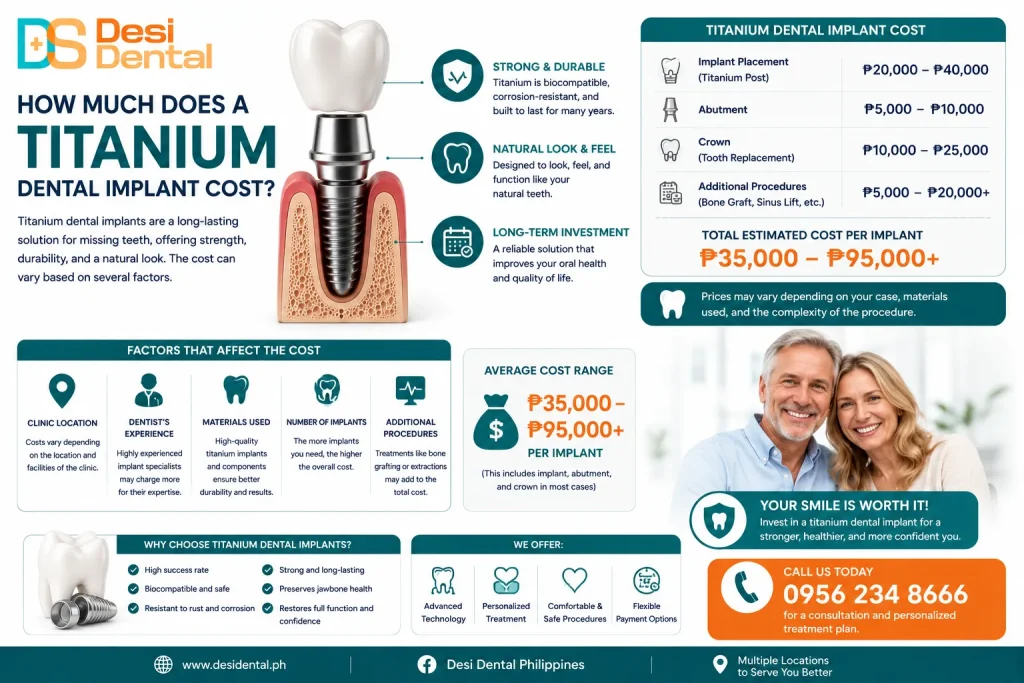
Titanium dental implants typically cost $3,000–$6,000 per tooth (including surgery and restoration), varying by location, complexity, and provider. While the upfront investment is higher than bridges or dentures, their longevity often makes them more cost-effective long-term, avoiding repeated replacements.
Many practices offer financing, and dental insurance may cover portions of the procedure.
Titanium dental implants deliver unmatched reliability, function, and aesthetics for tooth replacement. Backed by over 60 years of research and millions of successful cases worldwide, they offer a life-changing solution that preserves bone, restores confidence, and supports long-term oral health.
Schedule a consultation with a qualified implant dentist to assess your specific needs. With expert care and diligent maintenance, titanium implants can provide a beautiful, functional smile for decades to come.


