

What Are Dental Implants? Dental implants are widely considered the gold standard in modern restorative dentistry for replacing missing teeth. They are titanium or zirconia posts surgically inserted into the jawbone to serve as artificial tooth roots. Once healed, these posts support custom-made crowns, bridges, or dentures that look, feel, and function like natural teeth.
Unlike traditional dentures or bridges, dental implants integrate directly with your jawbone through a biological process called osseointegration. This fusion provides unmatched stability, helps preserve bone density, and prevents the facial sagging that often accompanies tooth loss. With success rates typically exceeding 95%, dental implants offer a long-term, durable solution that can last decades or even a lifetime with proper care.
Types of Dental Implants
There are several types of dental implants designed to suit different patient needs and bone conditions:
- Endosteal Implants: The most common type (over 90% of cases). These are screw-like titanium posts placed directly into the jawbone. Ideal for patients with sufficient bone density. They support single crowns, bridges, or full dentures.
- Subperiosteal Implants: Placed on top of the jawbone but beneath the gum tissue. A metal framework holds the prosthetic teeth. These are used when there is not enough jawbone for endosteal implants and bone grafting is not preferred.
- Zygomatic Implants: Longer implants anchored in the cheekbone (zygoma) rather than the upper jaw. They are a solution for patients with severe bone loss in the upper jaw, often avoiding the need for extensive bone grafting.
- Mini Implants: Smaller-diameter implants used for stabilizing dentures or in areas with limited space. They can sometimes be placed with less invasive surgery.
- All-on-4 or All-on-X Implants: A full-arch restoration technique using just four (or more) strategically angled implants to support an entire set of upper or lower teeth. This approach often allows for same-day teeth and is popular for full-mouth rehabilitation.
Your dentist or oral surgeon will recommend the best option based on bone quality, quantity, overall health, and aesthetic goals.
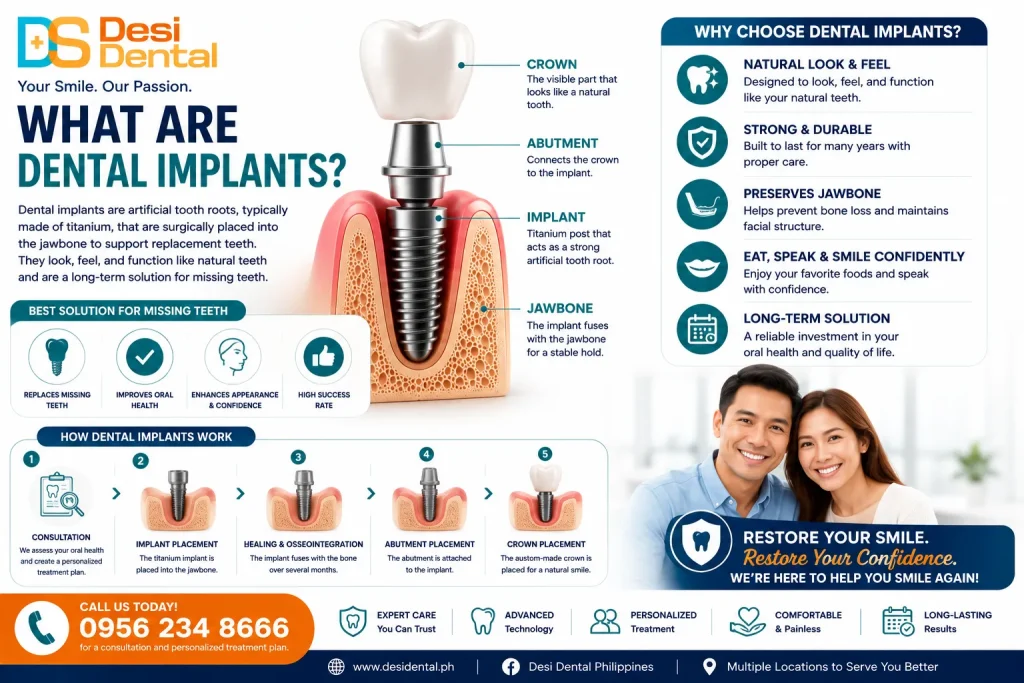
How Dental Implants Work
A typical dental implant system has three components:
- Implant Fixture (Post): A biocompatible titanium or zirconia screw that replaces the tooth root.
- Abutment: The connector that attaches to the implant and supports the visible restoration.
- Prosthetic Crown/Bridge/Denture: Custom-made from porcelain, ceramic, or zirconia to match your natural teeth in color, shape, and function.
During osseointegration, bone cells grow around the implant surface over 3–6 months (sometimes faster with modern surfaces), creating a rock-solid bond stronger than many natural tooth roots.
The Dental Implant Procedure
The full process usually spans 3–12 months, though timelines vary:
- Comprehensive Consultation: Includes medical history review, oral examination, 3D CBCT scans, and treatment planning. Digital smile design may be used for previewing results.
- Preparatory Procedures (if needed): Tooth extraction, bone grafting, sinus lifts, or gum treatments.
- Implant Placement Surgery: Performed under local anesthesia, sedation, or general anesthesia. The implant is precisely positioned, often using computer-guided technology for accuracy and minimal invasiveness.
- Healing and Osseointegration: A temporary restoration may be placed. Patients follow a soft diet and careful oral hygiene.
- Abutment Placement: A small second procedure exposes the implant and attaches the abutment.
- Final Restoration: Impressions or digital scans create the permanent crown or bridge, which is fitted and adjusted for bite and aesthetics.
Same-day or immediate-load implants are possible in select cases with good bone quality, allowing a temporary tooth on the same day as surgery.
Benefits of Dental Implants
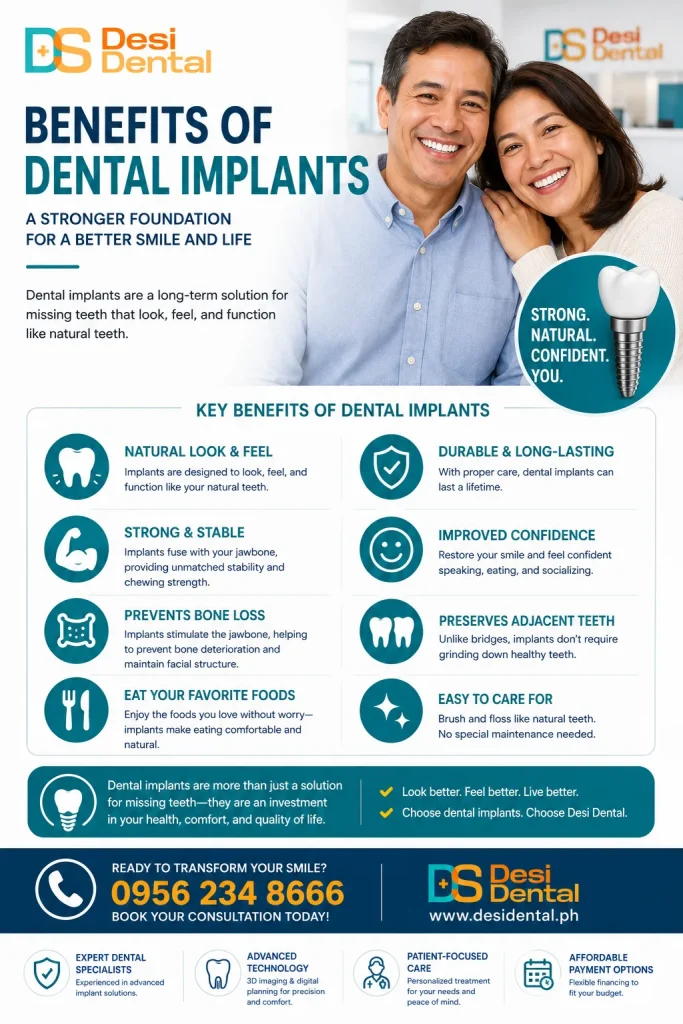
Dental implants provide numerous advantages over other tooth replacement options:
- Natural Appearance and Function: They look and feel like real teeth, restoring confidence in smiling, speaking, and eating.
- Jawbone Preservation: Stimulate bone like natural roots, preventing resorption and maintaining facial structure.
- Durability: With proper care, implants can last 20–30+ years or a lifetime. Success rates often reach 95–98%.
- Improved Oral Health: No grinding down adjacent teeth (unlike bridges). Easier cleaning than dentures.
- Better Nutrition and Quality of Life: Restore full chewing power for a varied diet.
- No Daily Removal: Fixed in place, unlike removable dentures that can slip or cause sore spots.
Who Is a Good Candidate for Dental Implants?
Ideal candidates have:
- One or more missing teeth
- Sufficient jawbone density (or willingness to undergo grafting)
- Good overall and oral health
- Healthy gums
- Commitment to oral hygiene and regular dental visits
Contraindications or higher risks include uncontrolled diabetes, active cancer treatment, heavy smoking, certain autoimmune diseases, or pregnancy. Age is not usually a barrier as long as jaw growth is complete (typically late teens).
Potential Risks and Complications
While highly safe, risks include:
- Infection at the implant site
- Nerve damage or sinus problems
- Implant failure (early or late)
- Peri-implantitis (inflammation around the implant, similar to gum disease)
Failure rates are low (2–5%), and many issues are manageable with prompt care. Choosing an experienced implant dentist significantly reduces risks.
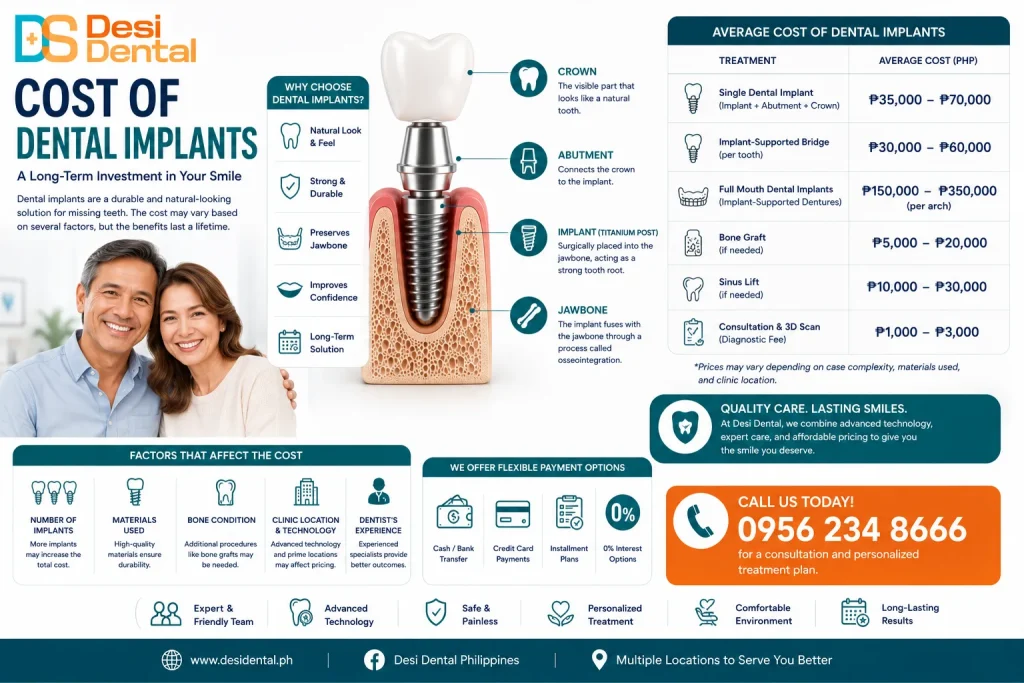
Cost of Dental Implants in 2026
Costs vary widely by location, materials, and complexity:
- Single Tooth Implant (including crown): $3,000–$7,000 USD
- All-on-4 Full Arch: $20,000–$30,000+ per arch
- Additional procedures like bone grafts add $500–$3,000+
Many insurance plans offer limited coverage. Financing, dental discount plans, and medical tourism are common options. While the upfront cost is higher than bridges or dentures, implants often prove more cost-effective long-term due to their longevity.
Aftercare and Long-Term Maintenance
Proper care is essential for success:
- Follow post-surgery instructions: soft foods, ice, prescribed medications, and avoid smoking.
- Maintain excellent oral hygiene: Brush twice daily with a soft toothbrush, floss (or use water flossers), and use antimicrobial rinses.
- Schedule regular dental check-ups and professional cleanings (every 3–6 months).
- Avoid hard foods, ice-chewing, or using teeth as tools.
- Quit smoking, as it dramatically increases failure risk.
With diligent care, implants can remain problem-free for decades.
Dental Implants vs. Alternatives
- Bridges: Cheaper initially but damage adjacent teeth and last 5–15 years.
- Dentures: Removable, less stable, and can accelerate bone loss.
- Implants: Superior in function, aesthetics, and bone preservation, though more invasive and expensive upfront.
Frequently Asked Questions About Dental Implants
Does the procedure hurt? Most patients report minimal discomfort, managed with anesthesia and over-the-counter pain relief. The surgery itself is often easier than expected.
How long do dental implants last? Many last a lifetime; the prosthetic crown may need replacement after 10–15 years.
Can I get implants if I have bone loss? Yes — bone grafting, zygomatic implants, or All-on-4 techniques make it possible for most patients.
Are dental implants safe? Yes, they are FDA-cleared medical devices with decades of proven safety and high success rates.
Dental implants have transformed millions of smiles by restoring not just teeth, but confidence, function, and quality of life. If you’re missing teeth, consult a qualified implant dentist or oral surgeon for a personalized evaluation. They can determine if dental implants are the right solution for your unique situation.


