

Understanding these potential side effects is crucial for setting realistic expectations, making informed decisions, and taking proactive steps to minimize risks. This comprehensive 2026 guide covers every aspect of dental implant side effects in detail — including causes, symptoms, timelines, treatment options, and prevention strategies — to help patients achieve the best possible outcomes.
Common Dental Implant Side Effects After Surgery
The majority of patients experience mild to moderate short-term dental implant side effects as part of the normal healing process. These typically appear immediately after surgery and resolve within days to a few weeks.
- Pain and Soreness: Most patients report mild to moderate discomfort peaking within the first 48–72 hours. This is caused by tissue trauma and inflammation. Pain is usually well-controlled with prescribed medications (such as opioids for the first few days) or over-the-counter anti-inflammatories like ibuprofen. By day 5–7, most patients need only minimal pain relief.
- Swelling and Bruising: Facial swelling often reaches its maximum on day 2–3 and may affect the cheeks, chin, or under the eyes. Bruising can appear as purple, blue, or yellowish discoloration. Applying ice packs (20 minutes on / 20 minutes off) during the first 48 hours is highly effective. Full resolution generally occurs within 10–14 days.
- Minor Bleeding: Light oozing or pink saliva is normal for the first 24–48 hours. Patients are advised to bite on gauze and avoid vigorous rinsing or spitting. Heavy or persistent bleeding beyond 48 hours is uncommon and requires immediate contact with the surgeon.
- Temporary Numbness or Tingling: This results from local anesthesia, swelling, or minor nerve irritation. It most commonly affects the lip, chin, or tongue and usually resolves within a few days to 2–4 weeks. Permanent numbness is very rare when modern 3D imaging and guided surgery are used.
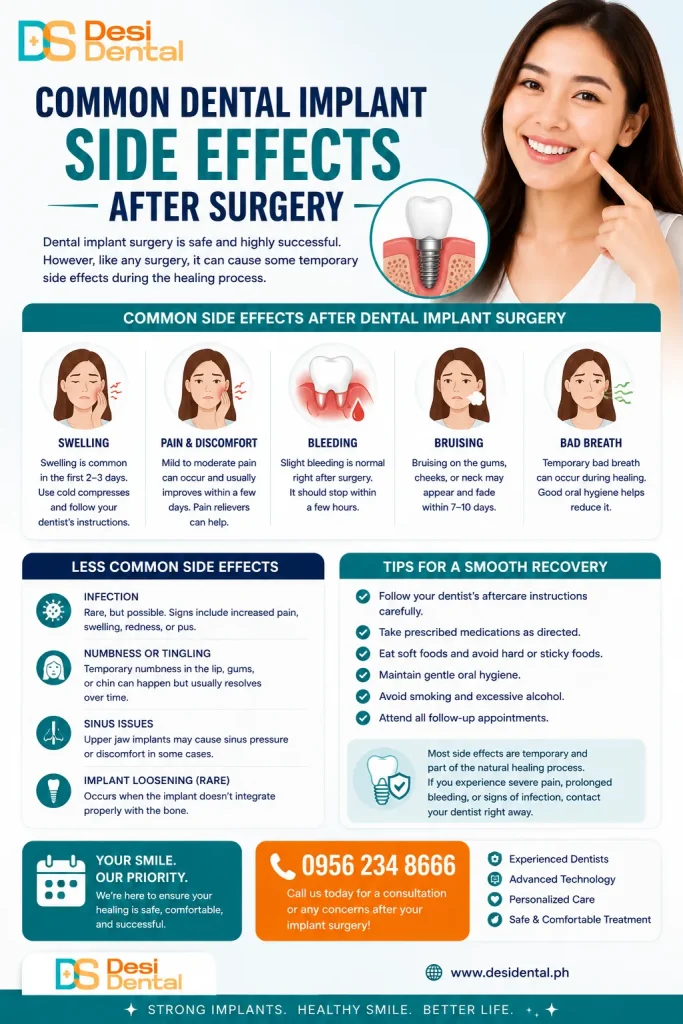
Other short-term dental implant side effects may include limited mouth opening (trismus), a metallic taste, or a feeling of tightness. Adhering to a soft diet, avoiding smoking, and resting adequately can significantly reduce the intensity and duration of these symptoms.
Serious Dental Implant Side Effects and Complications
Although uncommon, some dental implant side effects can be more serious and may require additional intervention.
1. Infection at the Implant Site Post-surgical infection occurs in approximately 1–2% of cases when proper protocols are followed. Warning signs include increasing pain after day 3–4, worsening swelling, pus discharge, fever, or a persistent bad taste. Early infections often respond well to antibiotics, improved hygiene, and professional cleaning. Advanced infections may necessitate surgical drainage or temporary implant removal.
2. Peri-implantitis This is one of the most significant long-term dental implant side effects, affecting roughly 10–20% of implants over time. It is an inflammatory condition similar to advanced gum disease that leads to progressive bone loss around the implant.
Early symptoms: Redness, swelling, bleeding on brushing, bad breath, and deeper probing pockets. Advanced symptoms: Pus, pain, gum recession exposing the implant threads, and implant mobility.
Treatment options range from non-surgical deep cleaning and laser therapy to surgical interventions (flap surgery, bone grafting, or regenerative procedures). Success rates for treatment vary from 50–80% depending on early detection and severity. Long-term maintenance is critical to prevent recurrence.
3. Nerve Damage More common with implants in the lower jaw near the inferior alveolar nerve. Patients may experience prolonged numbness, tingling, burning sensations (neuropathy), or pain. Thanks to CBCT 3D imaging and computer-guided surgery, the risk of permanent nerve injury is now very low (under 1% in most experienced practices). Most temporary cases improve within weeks to months, but severe cases may require medication or microsurgical repair.
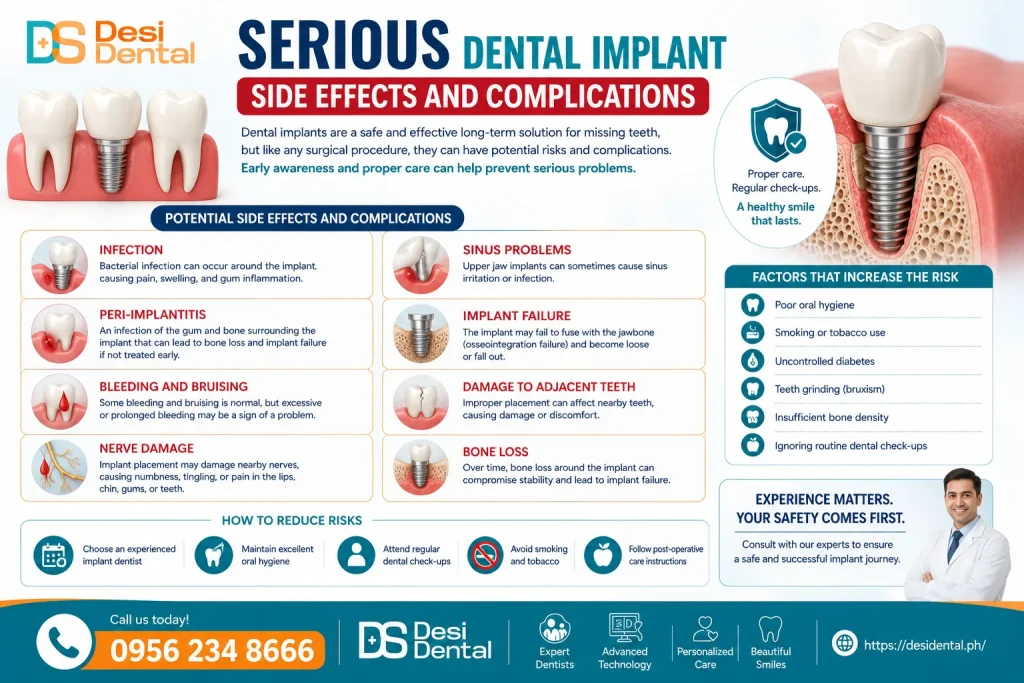
4. Sinus Problems (Upper Jaw Implants) When implants are placed in the posterior upper jaw, there is a small risk (1–3%) of sinus membrane perforation or irritation. This can lead to sinus pressure, congestion, headaches, or sinusitis-like symptoms. Preventive techniques such as sinus lift bone grafting are often used in high-risk cases. Most minor perforations heal without long-term issues.
5. Implant Failure
- Early failure (before final restoration): 1–2% — failure to osseointegrate with bone.
- Late failure (after loading): Can reach 5–10% over 10+ years.
Risk factors include smoking, uncontrolled diabetes, poor bone quality, and excessive biting forces. Failed implants can often be replaced after a healing period.
6. Gum Recession and Aesthetic Issues Over years, gums may recede, exposing the metal collar of the implant. This can affect smile aesthetics and increase sensitivity. Soft tissue grafting can often improve appearance.
7. Mechanical Complications These include loose abutment screws, fractured crowns/bridges, or wear on prosthetic teeth. Regular check-ups allow early detection and repair.
8. Allergic Reactions Extremely rare reactions to titanium. Metal-free zirconia implants serve as an excellent alternative for patients with known sensitivities.
Risk Factors That Increase Dental Implant Side Effects
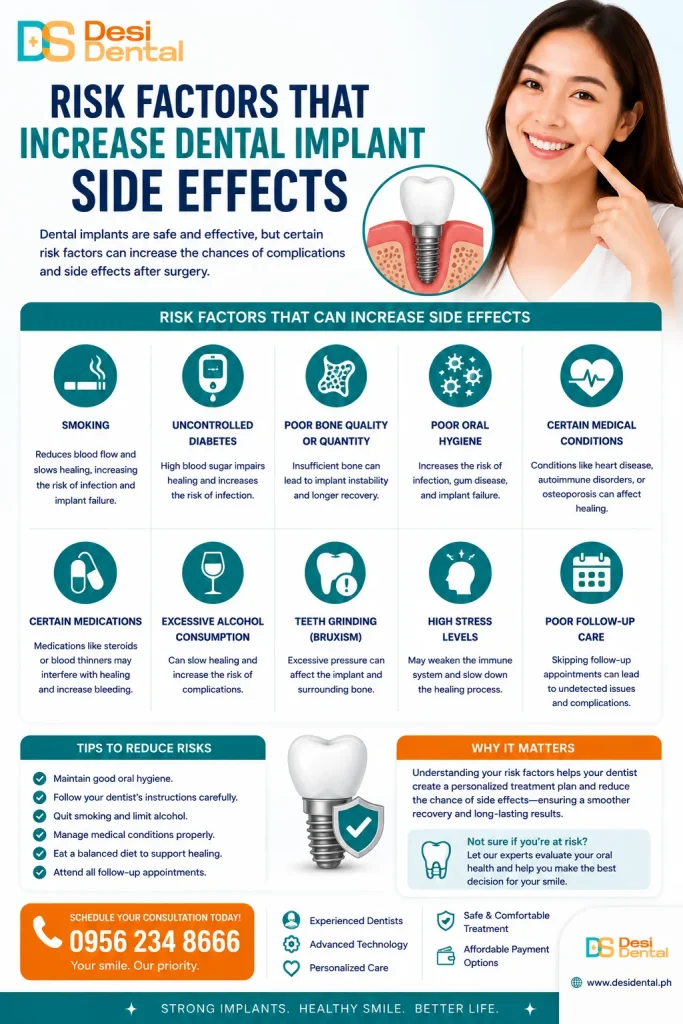
Several patient-related and procedural factors can elevate the likelihood of complications:
- Smoking or tobacco use (can double failure risk)
- Uncontrolled diabetes or autoimmune conditions
- History of periodontal disease
- Bruxism (teeth grinding or clenching)
- Insufficient bone volume or poor bone density
- Advanced age or certain medications (e.g., bisphosphonates)
- Choosing an inexperienced provider
How to Prevent Dental Implant Side Effects
Most dental implant side effects are highly preventable through careful planning and responsible care:
- Select a highly experienced oral surgeon or periodontist who routinely uses 3D CBCT scans, surgical guides, and has documented high success rates.
- Optimize systemic health before surgery (e.g., quit smoking 4+ weeks prior, stabilize blood sugar).
- Follow all post-operative instructions meticulously, including medications, diet restrictions, and activity limitations.
- Commit to superior oral hygiene: brush twice daily, use water flossers, interdental brushes, and antimicrobial rinses as recommended.
- Attend professional maintenance visits every 3–6 months for implant-specific cleanings and radiographic monitoring.
When to Seek Help for Dental Implant Side Effects
Contact your dentist or surgeon immediately if you notice:
- Severe pain or swelling that worsens after day 4
- Pus, fever, or foul-smelling discharge
- Loose feeling implant or crown
- Numbness persisting beyond 2 weeks
- Difficulty breathing, swallowing, or opening your mouth
Frequently Asked Questions About Dental Implant Side Effects
How common are dental implant side effects? Mild short-term effects are common, but serious complications are relatively rare (under 5–10% in well-planned cases).
Can dental implant side effects be permanent? Most are temporary. Permanent issues like nerve damage or implant loss are uncommon with experienced providers.
Do smokers have higher risks? Yes. Smoking significantly increases infection, peri-implantitis, and failure rates.
Is peri-implantitis curable? It can often be managed or arrested, especially when caught early, though advanced cases may result in implant removal.
Dental implants continue to transform lives by restoring function, confidence, and oral health. While dental implant side effects exist, they are generally manageable and far outweighed by the benefits for the vast majority of patients. Thorough preparation, choosing a skilled implant team, and committing to lifelong maintenance are the keys to minimizing risks and enjoying long-term success.
If you are considering dental implants, schedule a detailed consultation with 3D imaging. A qualified professional can evaluate your individual risk factors and develop a personalized treatment plan tailored to your needs.


