

Front dental implants provide one of the most advanced and aesthetically pleasing solutions for replacing missing or severely damaged front teeth. Also known as anterior dental implants, they restore both the natural appearance and full functionality of your smile while protecting long-term oral health.
If you have lost a front tooth due to injury, decay, gum disease, or other reasons, you understand how it can impact self-confidence, speech, and even facial structure. Unlike temporary fixes, front dental implants replace the entire tooth — root and crown — delivering results that look, feel, and function like your natural teeth.
What Are Front Dental Implants?
Front dental implants consist of three main components:
- Titanium implant post: A biocompatible screw surgically placed into the jawbone to act as an artificial root.
- Abutment: A connector that links the implant to the crown.
- Custom crown: Usually made from porcelain, zirconia, or ceramic to perfectly match the shape, color, and translucency of your surrounding teeth.
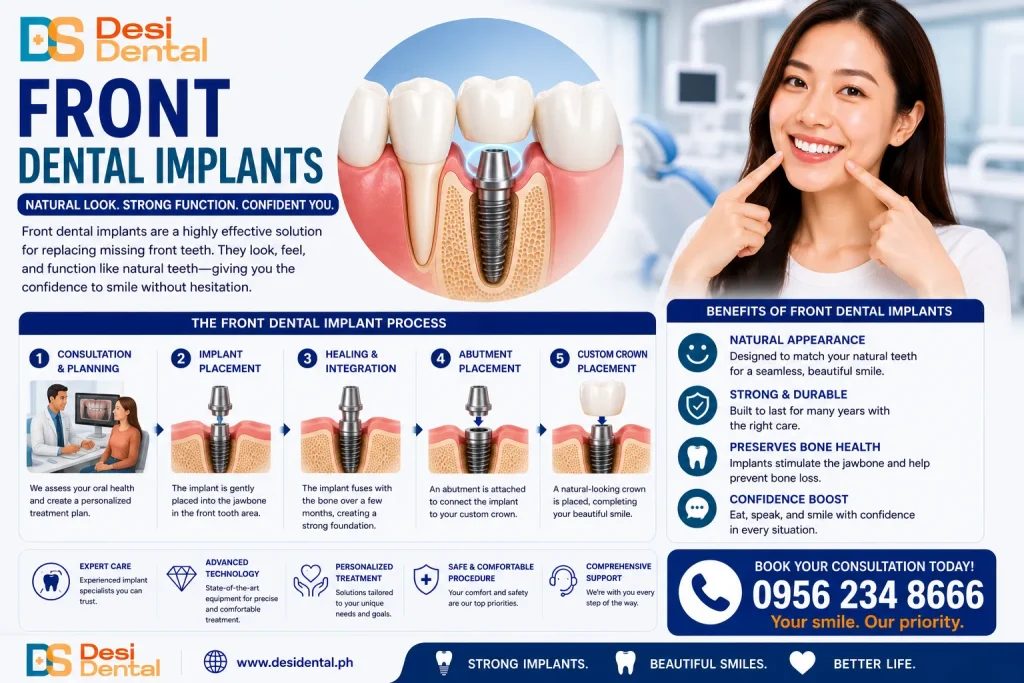
The “front” or anterior region (incisors and canines) demands exceptional precision because these teeth are highly visible. Dentists focus on gum contouring, emergence profile, and perfect alignment to ensure the implant blends seamlessly with your natural smile.
Key Benefits of Front Dental Implants
Front tooth implants offer numerous advantages over traditional options:
- Superior Aesthetics: Custom-designed crowns create a natural-looking smile that boosts confidence in social and professional settings.
- Jawbone Preservation: The implant stimulates the bone through osseointegration, preventing the bone resorption that commonly occurs after tooth loss and helps maintain facial structure.
- Improved Function: Enjoy normal biting, chewing, and speaking without the slipping or discomfort associated with dentures.
- Longevity: With proper care, implants often last 15–20 years or a lifetime, making them a cost-effective long-term solution.
- No Damage to Adjacent Teeth: Unlike dental bridges, implants do not require grinding down healthy neighboring teeth.
- Better Oral Health: Easier to clean than bridges, reducing the risk of decay in adjacent teeth.
Patients frequently report significant improvements in self-esteem and quality of life after receiving front dental implants.
The Front Dental Implant Procedure
The process typically spans 3–9 months, depending on individual healing and whether additional procedures like bone grafting are needed.
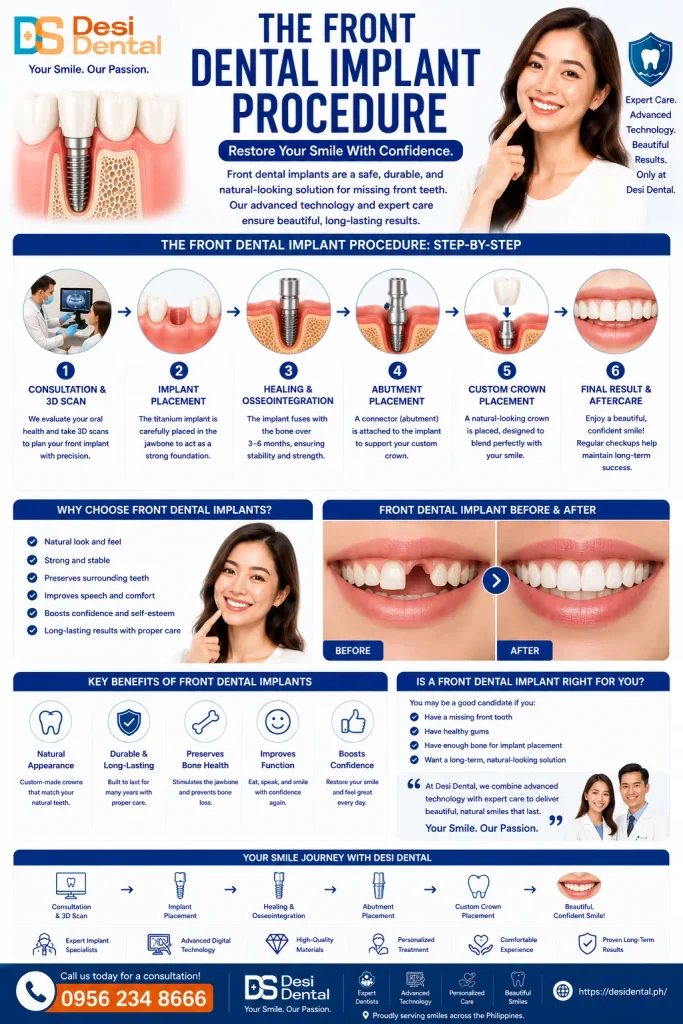
- Comprehensive Consultation and Planning Your dentist or oral surgeon conducts a thorough evaluation, including medical history, 3D CBCT scans, and digital impressions. They assess bone density and gum health. If bone volume is insufficient (common in the front upper jaw), bone grafting or a sinus lift may be recommended.
- Tooth Extraction (If Needed) Any remaining damaged tooth is carefully removed, often with immediate implant placement possible in ideal cases.
- Implant Placement Surgery Performed under local anesthesia or sedation, the surgeon inserts the titanium post. For front teeth, great care is taken to preserve or enhance soft tissue aesthetics. Many patients receive a temporary crown or flipper for appearance during healing.
- Osseointegration (Healing Phase) Over 8–16 weeks (sometimes longer), the implant fuses with the jawbone. This biological process is critical for long-term stability.
- Abutment Placement and Final Restoration Once integrated, the abutment is attached, and a custom crown is fabricated and placed. Final adjustments ensure perfect bite and aesthetics.
Modern techniques like guided surgery and same-day options (in select cases) can streamline the process while maintaining high precision for the visible front zone.
Who Is a Good Candidate for Front Dental Implants?
Ideal candidates are generally in good health, have sufficient bone density (or are willing to undergo grafting), and maintain healthy gums. Non-smokers or those willing to quit have higher success rates. Conditions like uncontrolled diabetes, severe osteoporosis, or active gum disease may require management first. A thorough evaluation by a qualified specialist determines suitability.
Recovery and Aftercare
Immediate Post-Surgery (First 48–72 Hours): Mild swelling, bruising, and discomfort are normal. Use ice packs, prescribed pain medication, and rest. Stick to a soft or liquid diet.
First 1–2 Weeks: Most patients return to work within a few days. Avoid strenuous activity, smoking, and hard/spicy foods. Gentle oral hygiene is essential.
Weeks 2–12+: Swelling subsides, and the implant begins integrating. Temporary restorations help maintain appearance and function.
Long-Term Care: Brush twice daily, floss regularly (including around the implant), and attend follow-up visits. Professional cleanings every 3–6 months help prevent peri-implantitis.
Full recovery to the final crown usually takes 3–6 months, though you’ll feel comfortable much earlier.
Potential Risks and Complications
While front dental implants have high success rates (typically 95–98% for anterior placements when performed by experienced professionals), risks include:
- Infection at the implant site
- Implant failure (rare, often linked to poor bone quality, smoking, or medical conditions)
- Gum recession or aesthetic issues
- Nerve damage or sinus problems (less common in front areas)
- Peri-implantitis (inflammation around the implant)
Choosing a skilled implant dentist significantly minimizes these risks.
Cost of Front Dental Implants
In the United States, a single front dental implant (including post, abutment, and crown) typically costs between $3,000 and $6,500. Factors affecting price include:
- Geographic location
- Specialist expertise
- Need for bone grafting or other procedures
- Material choices for the crown
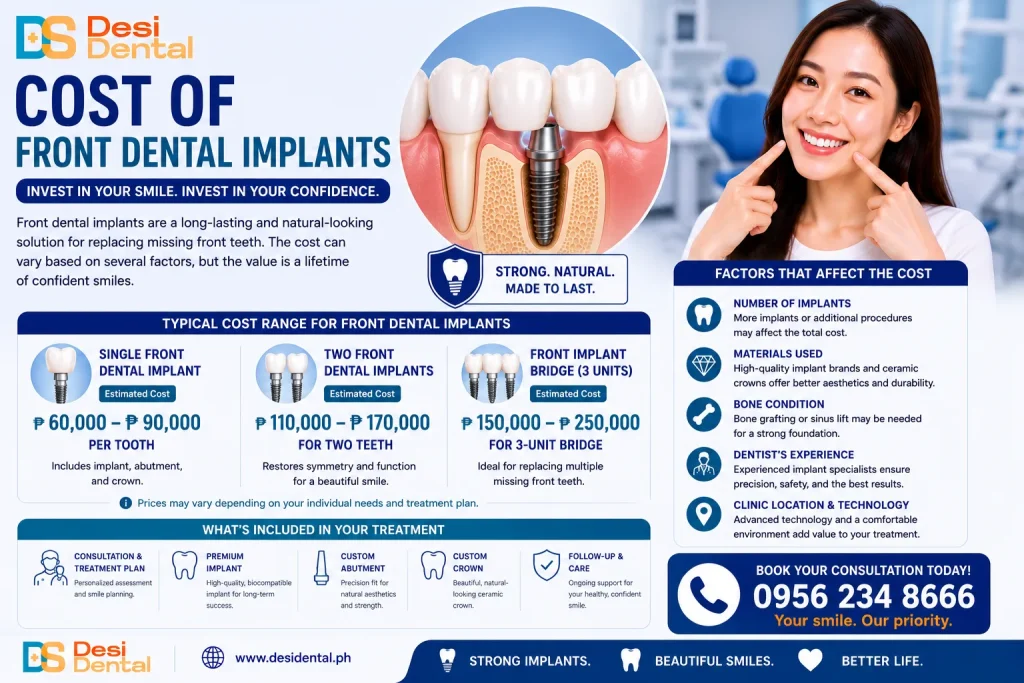
Insurance may cover part of the procedure (often the surgical component), and financing or payment plans are commonly available. Though the upfront cost is higher than bridges or dentures, implants often prove more economical over time due to their durability.
Front Dental Implants vs. Bridges and Dentures
Dental Bridges: Quicker and often cheaper initially, but they require altering healthy adjacent teeth and do not prevent bone loss. Bridges typically last 5–15 years.
Dentures (Partial or Full): Removable and more affordable, but less stable, can affect speech and eating, and accelerate bone resorption.
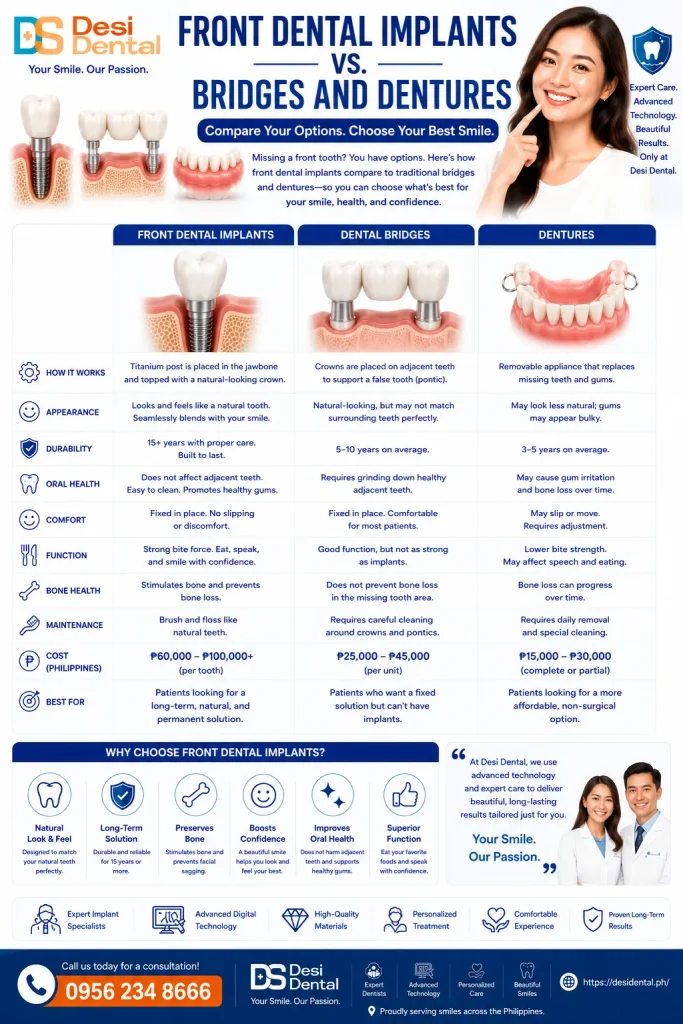
Implants: The gold standard for single or multiple front tooth replacement — preserving bone, offering superior comfort and aesthetics, and providing the longest-lasting results.
Frequently Asked Questions (FAQs)
How long do front dental implants last? With proper care, many last a lifetime.
Is the procedure painful? Most patients report minimal discomfort, well-managed with anesthesia and pain relief.
Can I get a front tooth implant immediately after extraction? In suitable cases, immediate placement is possible, but healing time is still required before the final crown.
Will my implant look natural? Yes — skilled dentists achieve highly natural results through custom shading and shaping.
Front dental implants represent a transformative solution for anyone missing one or more front teeth. They deliver unmatched aesthetics, functionality, and oral health benefits that other restorations simply cannot match.
If you’re considering front dental implants, schedule a consultation with a qualified specialist. A personalized evaluation will determine the best path forward for your unique situation.


