
A dental implant bridge represents one of the most advanced and reliable solutions in modern restorative dentistry for replacing multiple consecutive missing teeth. By anchoring a prosthetic bridge to titanium dental implants fused with the jawbone, this option delivers unmatched stability, natural aesthetics, and long-term oral health benefits compared to traditional bridges or dentures.
Understanding Dental Implant Bridges
A dental implant bridge (also called an implant-supported bridge) replaces two or more missing teeth in a row using dental implants as artificial roots. Unlike conventional bridges that depend on adjacent natural teeth for support, implant bridges stand independently on surgically placed implants.
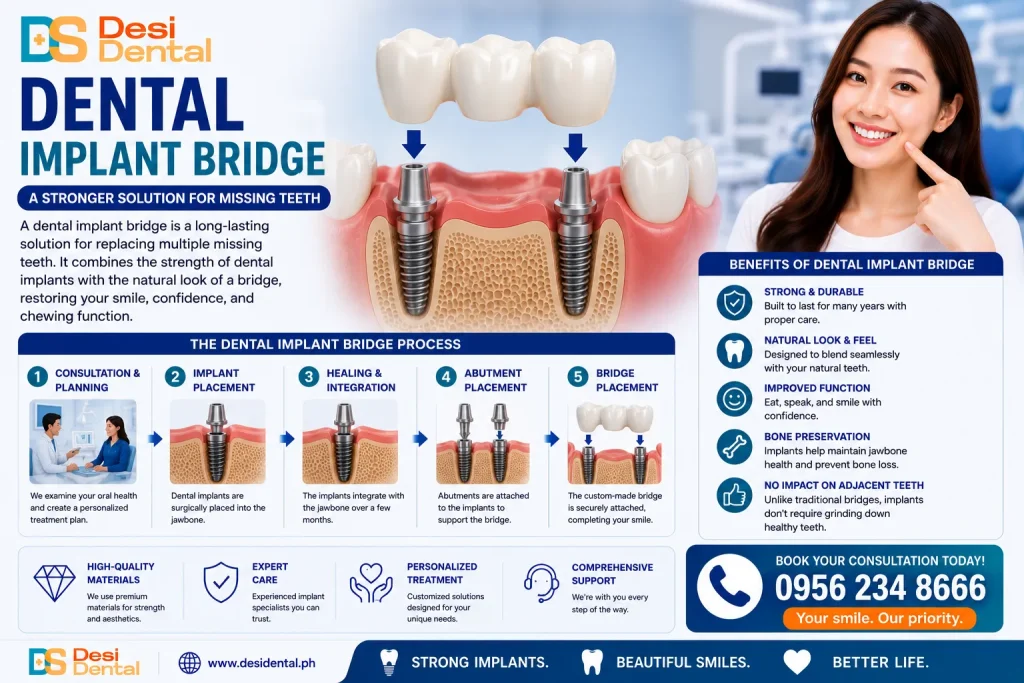
Key components include:
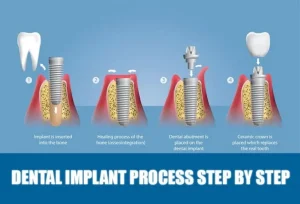
- Titanium implants — Biocompatible posts that integrate with the jawbone through osseointegration.
- Abutments — Connectors that link implants to the bridge.
- Pontics — Artificial teeth that fill the gaps, crafted from high-quality materials to match your natural smile.
This design is particularly effective for spans of three or more missing teeth, as it evenly distributes biting forces and prevents bone resorption.
Types of Dental Implant Bridges
- Fixed implant-supported bridges: Permanently attached and non-removable, ideal for most patients.
- Implant-supported cantilever bridges: Used when implants are placed on one side only (less common).
- Full-arch implant bridges (e.g., All-on-4 or All-on-6): For extensive tooth loss, replacing an entire upper or lower arch with fewer implants.
The number of implants required depends on the span length, bone quality, and bite force. Typically, two to six implants support a bridge replacing three to six teeth.
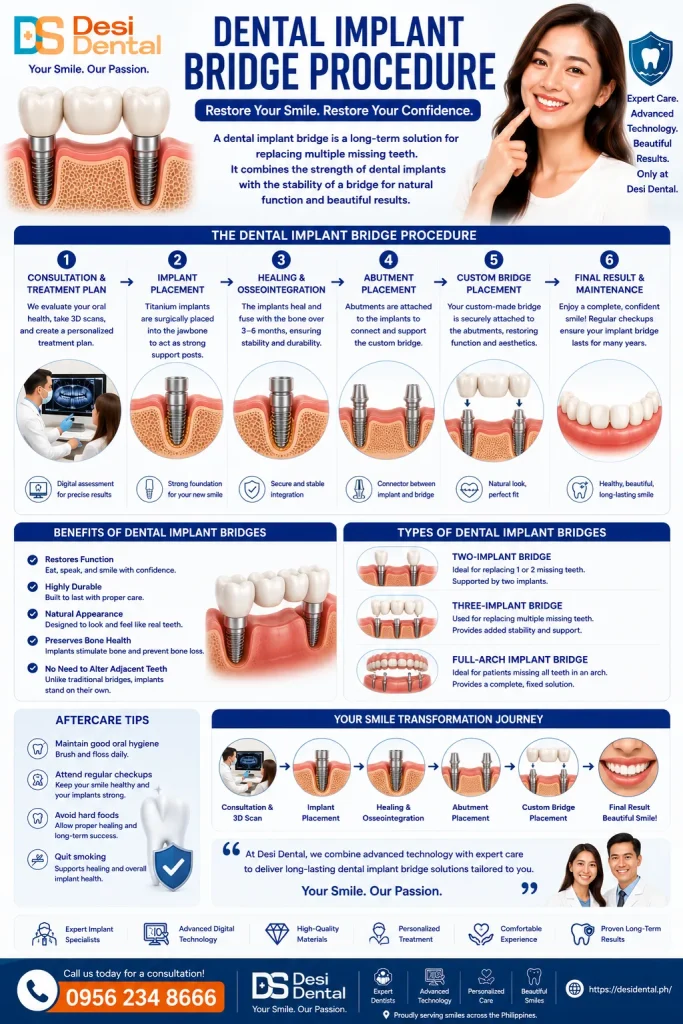
Step-by-Step Dental Implant Bridge Procedure
The process is meticulous and phased for optimal success:
- Comprehensive Consultation and Planning Your dentist or oral surgeon conducts a thorough exam, including 3D CBCT scans, medical history review, and digital impressions. They assess bone density, gum health, and overall suitability.
- Preparatory Procedures (if needed) Bone grafting or sinus lifts may be required if jawbone volume is insufficient. This adds 3–6 months to the timeline.
- Implant Surgery Under local anesthesia or sedation, implants are precisely placed into the jawbone. Healing caps are attached, and temporary restorations may be provided.
- Osseointegration Healing Phase The critical period (usually 3–6 months) where bone grows around the implants for rock-solid stability. Success rates exceed 95–98% with proper care.
- Abutment Placement Minor surgery exposes the implants and attaches abutments.
- Bridge Fabrication and Fitting Impressions or digital scans guide the creation of a custom bridge in a dental lab. Materials are chosen for durability and aesthetics. The bridge is tried in, adjusted, and permanently fixed.
The full journey typically spans 4–9 months, though same-day or immediate-load options exist in select cases with excellent bone quality.
Materials Used in Implant Bridges
Modern bridges use premium materials:
- Zirconia — Highly durable, metal-free, excellent aesthetics and biocompatibility. Resistant to chipping and plaque.
- Porcelain-fused-to-metal (PFM) — Strong with good aesthetics.
- All-ceramic or lithium disilicate — Natural translucency for front teeth.
- Titanium frameworks (for the substructure) combined with aesthetic overlays.
Zirconia is often preferred for its strength, longevity, and natural appearance.
Major Benefits of Choosing a Dental Implant Bridge
- Jawbone Preservation — Implants stimulate bone like natural roots, preventing atrophy and facial sagging.
- No Damage to Healthy Teeth — Adjacent teeth remain untouched, unlike traditional bridges.
- Superior Function and Comfort — Restore nearly 90% of natural chewing power; no slipping or clicking.
- Aesthetic Excellence — Custom shade, shape, and contour for a seamless smile.
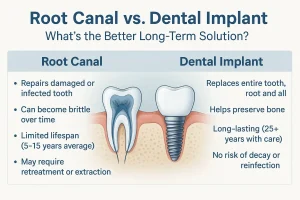
- Longevity — With good care, implants and bridges can last 15–30+ years or a lifetime. Traditional bridges average 5–15 years.
- Improved Overall Health — Better nutrition from efficient chewing, clearer speech, boosted confidence, and reduced risk of gum disease or shifting teeth.
- High Success Rate — Over 95–98% long-term success when performed by experienced professionals.
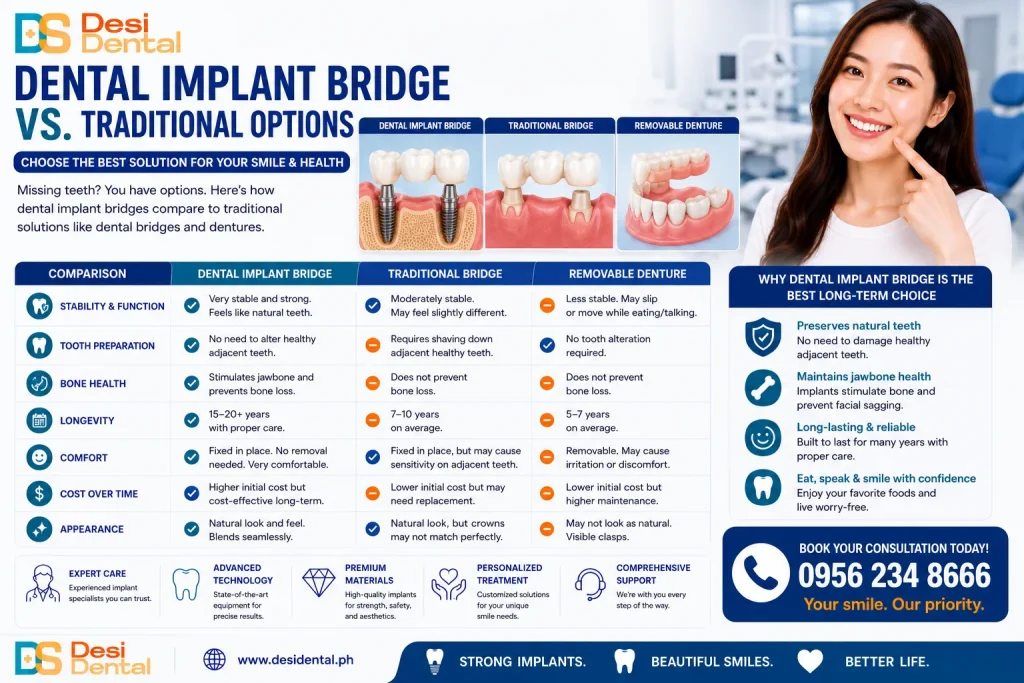
Dental Implant Bridge vs. Traditional Options
| Feature | Implant Bridge | Traditional Bridge | Removable Partial Denture |
|---|---|---|---|
| Support | Jawbone implants | Adjacent teeth | Gums and clasps |
| Bone Preservation | Excellent | None | Minimal |
| Longevity | 15–30+ years | 5–15 years | 5–10 years |
| Impact on Natural Teeth | None | Grinding required | Possible wear |
| Stability & Function | Fixed, high chewing force | Good | Lower, may slip |
| Upfront Cost | Higher | Moderate | Lowest |
| Procedure | Surgical + healing | Non-surgical | Non-invasive |
Implant bridges shine for durability and health preservation, especially with multiple missing teeth.
Who Is an Ideal Candidate?
Good candidates typically have:
- Adequate jawbone density (or willingness for grafting).
- Good general and oral health (controlled diabetes, no heavy smoking).
- Commitment to oral hygiene and follow-up care.
- Multiple consecutive missing teeth causing functional or aesthetic issues.
Contraindications may include severe uncontrolled systemic diseases, insufficient bone without grafting feasibility, or heavy bruxism (teeth grinding) that requires management first. A personalized evaluation is essential.
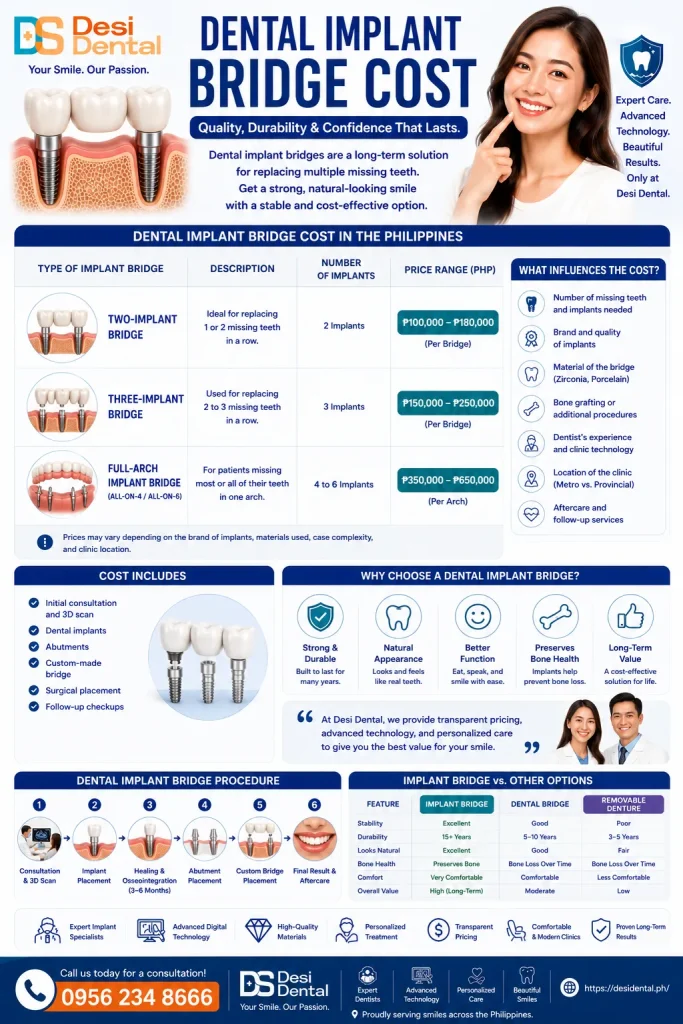
Dental Implant Bridge Cost
Costs for a dental implant bridge vary widely:
- Typical range: $4,000–$16,000+ depending on the number of implants, materials, location, and preparatory work.
- Single implant + crown: $3,000–$6,000.
- 3–4 unit implant bridge: Often $8,000–$15,000.
Factors influencing price include surgeon expertise, technology (e.g., guided surgery), and geographic location. Many practices offer financing, payment plans, or dental savings plans. Insurance may cover portions of the bridge but rarely the full implant cost. Long-term value often makes implants more economical due to fewer replacements.
Recovery, Aftercare, and Potential Risks
Initial Recovery: Mild swelling, bruising, and discomfort for 3–7 days post-surgery. Most patients return to work within 1–3 days. Full osseointegration takes months.
Long-Term Aftercare:
- Brush twice daily with a soft toothbrush and non-abrasive toothpaste.
- Floss daily (use water flossers or implant-specific tools under the bridge).
- Regular professional cleanings every 3–6 months.
- Avoid extremely hard or sticky foods.
- Wear a nightguard if you grind your teeth.
- Quit smoking to maximize success.
Potential Complications (rare with experienced providers):
- Infection, implant failure (<5%), nerve damage, sinus issues (upper jaw), or prosthetic fracture.
- Most are manageable with prompt care. Choose a credentialed implant dentist to minimize risks.
Latest Advancements
Digital planning, 3D printing, and immediate-load protocols have shortened timelines and improved precision. Newer zirconia materials and bioactive surfaces enhance integration.
A dental implant bridge offers a transformative, permanent solution that closely mimics natural teeth in look, feel, and function. It excels in preserving bone, protecting adjacent teeth, and delivering decades of reliable service.
Schedule a consultation with a qualified restorative dentist or prosthodontist. They will use advanced imaging to create a tailored treatment plan addressing your unique needs, budget, and goals.