

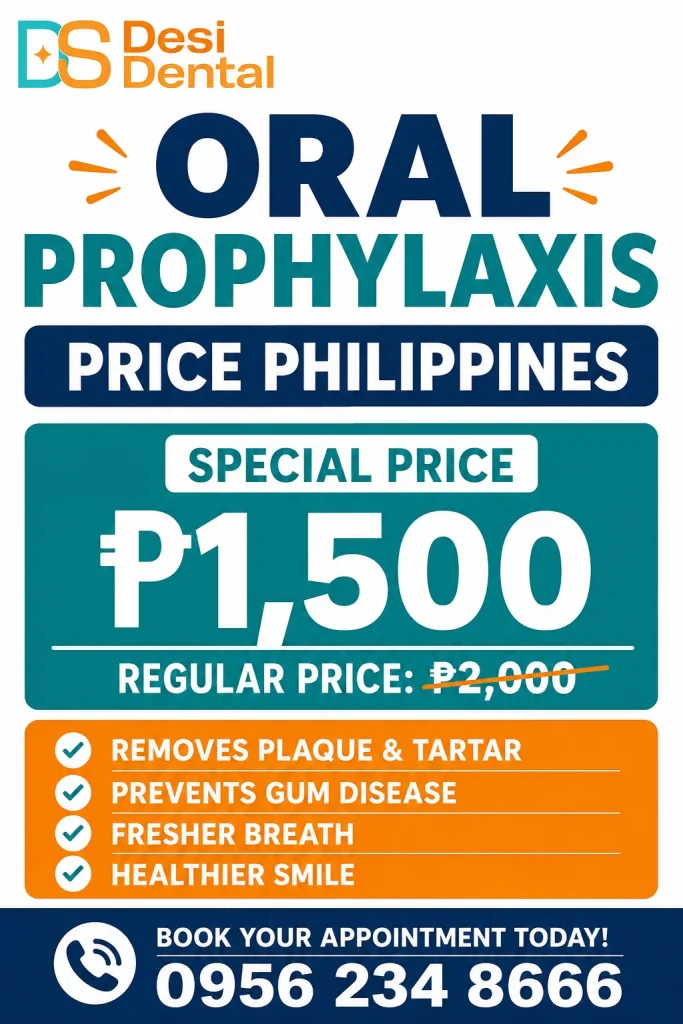
Oral prophylaxis, the professional dental cleaning most Filipinos simply call “teeth cleaning,” remains one of the most accessible and valuable preventive treatments available in the country. In 2026, Oral prophylaxis price ranges from ₱500 to ₱3,000 for a standard session, with the majority of patients in major cities paying between ₱800 and ₱1,500. Premium clinics in Makati or Bonifacio Global City may charge ₱2,000–₱3,500 or higher, while budget clinics and provincial practices can go as low as ₱300–₱700.
What Is Oral Prophylaxis?
Oral prophylaxis is a thorough professional cleaning performed by a dentist or licensed dental hygienist. It removes plaque (the sticky bacterial film that forms daily), tartar or calculus (hardened plaque that cannot be removed by brushing), and surface stains caused by coffee, tea, tobacco, or certain foods.
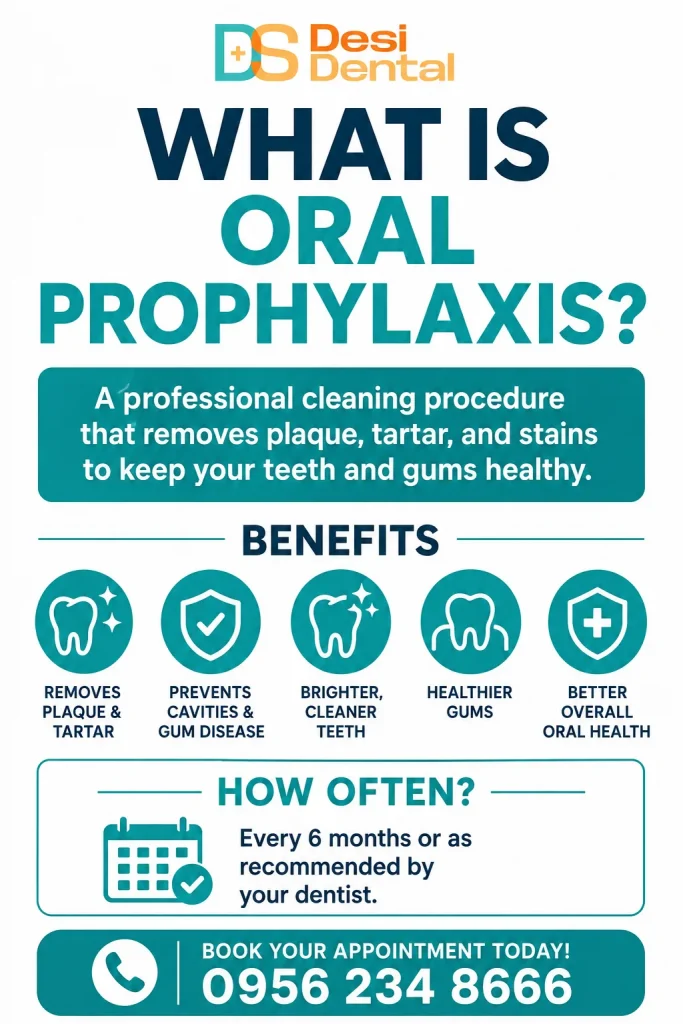
Unlike a simple at-home brushing session, prophylaxis reaches areas that toothbrushes and floss miss, especially along the gumline and between teeth. It is a preventive procedure, not a treatment for advanced disease. When gum disease has already progressed, dentists often recommend a separate service called scaling and root planing (deep cleaning), which is more extensive and costs more.
Oral Prophylaxis Procedure
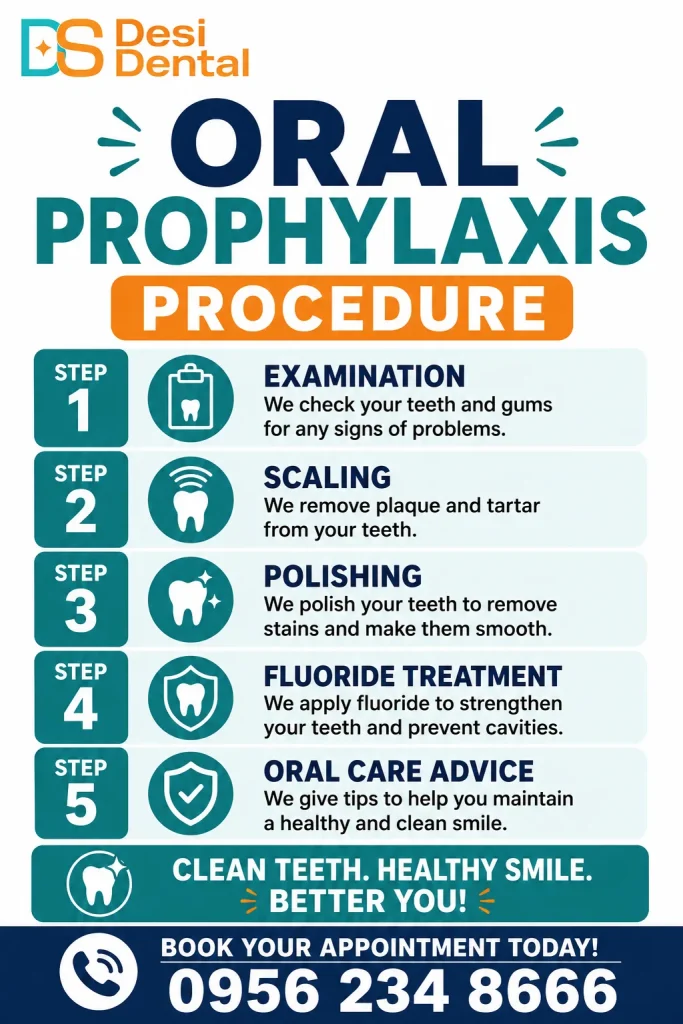
A standard oral prophylaxis usually takes 30 to 60 minutes, depending on the amount of buildup. Here is what most patients experience:
- Initial examination – The dentist or hygienist checks your teeth, gums, and overall oral health. They note the level of plaque and tartar (often classified as mild, moderate, or severe) and look for early signs of cavities or gum inflammation.
- Scaling – Using manual scalers or an ultrasonic instrument that vibrates at high frequency, the provider carefully removes tartar from tooth surfaces and slightly below the gumline.
- Polishing – A rotating rubber cup and mild abrasive paste smooth the tooth surfaces, removing remaining stains and making it harder for new plaque to stick.
- Flossing and rinsing – Thorough interdental cleaning and a final rinse complete the session.
- Optional fluoride application – Many clinics apply a fluoride gel or varnish to strengthen enamel, especially for patients at higher risk of decay. This may add ₱300–₱1,500 to the total.
- Home-care advice – The dentist usually gives personalized tips on brushing technique, flossing, and any recommended products.
For patients with heavy stains or those seeking a gentler experience, some modern clinics offer airflow prophylaxis (also called air polishing). This uses a stream of air, water, and fine powder to remove plaque and stains. It is generally more expensive (₱3,500–₱6,000+) but can feel more comfortable and is effective on certain types of discoloration.
Why Regular Oral Prophylaxis Matters
Professional cleaning does more than make teeth look brighter. Consistent prophylaxis helps:
- Prevent cavities by removing the bacteria that produce acid.
- Reduce the risk of gingivitis and periodontitis (gum disease).
- Lower the chance of bad breath caused by bacterial buildup.
- Allow early detection of problems that are still inexpensive to treat.
- Support overall health — research links untreated gum disease to higher risks of heart disease, diabetes complications, and other systemic issues.
- Maintain the longevity of existing dental work such as fillings, crowns, or implants.
Most dental associations recommend a cleaning every six months for healthy adults. People with braces, diabetes, dry mouth, pregnancy, or a history of gum disease often benefit from visits every three to four months.
Oral Prophylaxis Price
Prices are not fixed nationwide. They depend heavily on location, clinic positioning, severity of deposits, and whether additional services are included. Below is a realistic breakdown based on current clinic rates and market observations:
- Budget category (₱300–₱700) Common in provincial cities, some dental chains, community clinics, and dental school facilities. Examples include certain SmileCare or Dental World branches and supervised student clinics at institutions such as UP Manila College of Dentistry (often under ₱500).
- Mid-range private clinics (₱800–₱1,500) This is the most common price band in Metro Manila, Cebu, and Davao for a standard cleaning on mild-to-moderate cases. Many neighborhood and mall-based clinics fall here.
- Premium and high-end clinics (₱1,500–₱3,500+) Found in business districts such as Makati, BGC, Ortigas, and upscale parts of Quezon City. These practices often use advanced equipment, longer appointment times, and more experienced clinicians. Some list oral prophylaxis at ₱2,500 as a starting point.
- Airflow or advanced prophylaxis Typically ₱3,500–₱6,000 or higher, depending on severity.
- Deep cleaning (scaling and root planing) When gum disease is present, the fee is usually quoted per quadrant (one-fourth of the mouth) and ranges from ₱1,500–₱3,500+ per quadrant. A full-mouth deep cleaning can therefore reach ₱6,000–₱14,000 or more.
Additional costs that may appear on the final bill:
- Consultation or oral examination: ₱300–₱1,000 (sometimes waived if treatment proceeds)
- Fluoride varnish: ₱300–₱1,500
- Dental X-rays (if needed): ₱500–₱2,000 depending on type
- Stain removal or polishing upgrades: ₱500–₱1,500
Oral Prophylaxis Price Comparison by Location
| Area | Budget Range (₱) | Mid-Range (₱) | Premium (₱) |
|---|---|---|---|
| Metro Manila | 300–700 | 800–1,500 | 1,500–3,500+ |
| Cebu City | 300–600 | 500–1,200 | 1,000–2,000 |
| Davao City | 300–600 | 500–1,200 | 1,000–2,000 |
| Other provincial cities | 200–500 | 500–1,000 | 1,000–1,800 |
Within Metro Manila, prices in Makati and BGC tend to sit at the higher end, while Quezon City, Manila proper, and suburban areas often offer more mid-range options.
Factors That Influence the Oral Prophylaxis Price
Several variables determine what you will actually pay:
- Amount and hardness of tartar and stains
- Presence of gum inflammation or early disease
- Clinic location and overhead costs
- Dentist’s experience and reputation
- Technology used (traditional scaling vs. ultrasonic vs. airflow)
- Whether fluoride, X-rays, or other services are added
- Current promotions or package deals (especially common in mall clinics)
Aftercare Oral Prophylaxis
After prophylaxis, teeth often feel smoother and cleaner. Mild sensitivity can occur for a day or two, especially if heavy tartar was removed. Follow these simple steps:
- Avoid very hot, cold, or hard foods for a few hours if sensitivity is present.
- Resume normal brushing and flossing the same day.
- Use a soft-bristled toothbrush and fluoride toothpaste.
- Consider an antiseptic mouthwash if recommended by your dentist.
- Schedule your next cleaning before leaving the clinic so you stay on track.
Consistent home care is the single best way to keep future prophylaxis sessions shorter, more comfortable, and less expensive.
Frequently Asked Questions
- Is oral prophylaxis painful? Most patients feel only mild pressure or vibration. Local anesthesia is rarely needed for standard cleaning. Deep cleaning may require numbing.
- Can I claim PhilHealth for every cleaning? Coverage is limited to the annual benefit amount and the two-visit structure described earlier. Additional cleanings are out-of-pocket or covered by HMO if available.
- How is this different from teeth whitening? Prophylaxis removes external stains and deposits but does not change the natural color of the tooth. Whitening is a separate cosmetic procedure that uses bleaching agents.
- Are prices the same for children? Many clinics offer slightly lower rates for pediatric cleanings, and some include fluoride as standard.
- What if I have braces or implants? Cleaning around orthodontic appliances or implants often takes longer and may cost more because of the extra care required.
Oral prophylaxis in the Philippines remains relatively affordable compared with many countries in the region, and the recent addition of PhilHealth coverage has improved access for more Filipinos. Whether you choose a budget neighborhood clinic or a premium practice in a business district, the key is consistency. Regular professional cleaning combined with good daily habits is still one of the simplest and most cost-effective investments you can make in your long-term oral — and overall — health.


