

Dental prices are based on market data from private clinics, dental chains, government facilities, and dental tourism networks across Metro Manila, Cebu, Davao, and provincial areas. Prices are estimates only. Final costs depend on the diagnosis, materials used, clinic location, and case complexity. Always obtain a written treatment plan and an itemized quotation after a proper dental examination.
Dental Prices in the Philippines
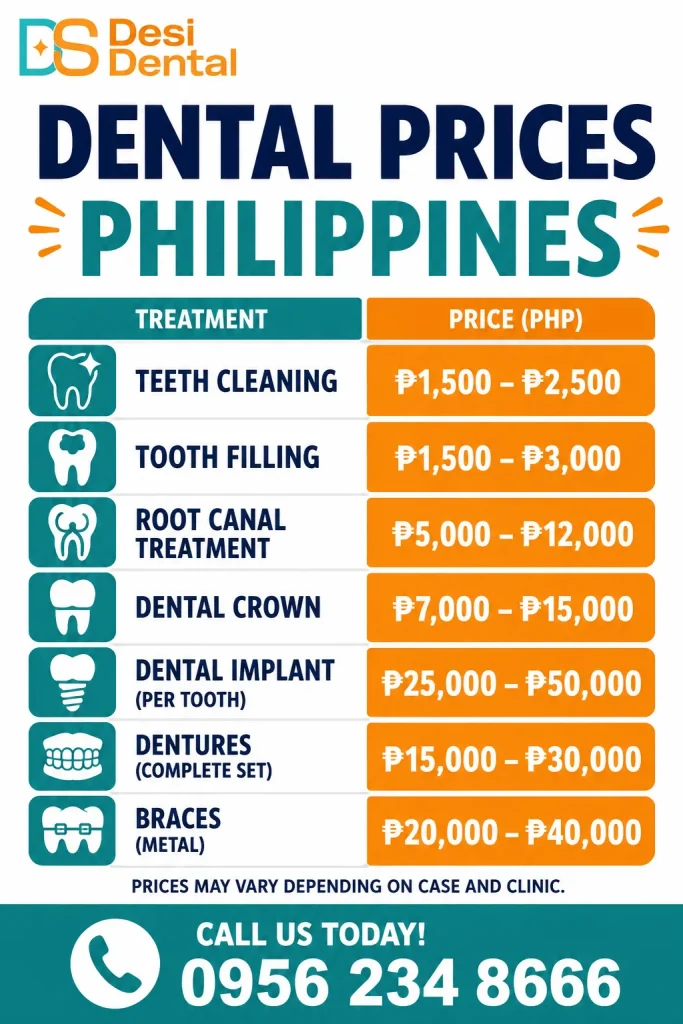
Prices below reflect typical private-clinic ranges in Philippine pesos (₱). Budget figures are more common in provincial areas or basic clinics; premium figures apply mainly to upscale Metro Manila practices using higher-end materials and specialists.
Preventive and Basic Care
- Consultation / oral examination: ₱300–700 (general dentist, often waived with treatment); ₱1,000–2,500 (specialist or premium clinic).
- Oral prophylaxis (standard cleaning): ₱300–800 (budget), ₱800–1,800 (mid-range), ₱1,500–3,500+ (premium or heavy staining).
- Deep cleaning / scaling and root planing: ₱1,500–3,500 per quadrant; full-mouth cases can reach ₱6,000–12,000.
- Fluoride varnish or sealants: ₱300–800 per application or tooth.
- X-rays: Periapical ₱150–400; panoramic (OPG) ₱500–1,500; CBCT ₱3,000–8,000.
Restorative Treatments
- Amalgam (silver) filling: ₱600–1,500 per surface.
- Composite (tooth-colored) filling: ₱1,000–2,500 (single surface, provincial/mid-range); ₱1,800–4,500+ (multi-surface or aesthetic front teeth in premium clinics).
- Glass ionomer filling: ₱800–2,500 (often used for children or near the gumline).
- Inlay / onlay (ceramic): ₱8,000–25,000+ depending on material and size.
Extractions and Oral Surgery
- Simple extraction: ₱500–1,500 (budget/provincial), ₱1,000–3,000 (urban mid-range), up to ₱4,000 in premium settings.
- Surgical extraction (non-wisdom): ₱1,500–5,000.
- Wisdom tooth extraction:
- Fully erupted / simple: ₱2,000–6,000
- Soft-tissue impaction: ₱5,000–10,000
- Partial or full bony impaction: ₱8,000–20,000+ per tooth
- All four wisdom teeth packages: commonly ₱30,000–70,000 depending on difficulty.
Endodontics (Root Canal Treatment)
- Front tooth (1 canal): ₱6,000–15,000
- Premolar (1–2 canals): ₱8,000–18,000
- Molar (3–4 canals): ₱10,000–30,000+ Specialist endodontists or complex retreatments add 20–50%. A crown is almost always recommended afterward to protect the tooth.
Crowns, Bridges, and Veneers
- Porcelain-fused-to-metal (PFM) crown: ₱8,000–20,000
- Full porcelain or e.max crown: ₱12,000–30,000
- Zirconia crown: ₱15,000–45,000 (higher in premium clinics with imported materials)
- Porcelain veneer: ₱12,000–35,000 per tooth
- Composite veneer / bonding: ₱3,000–10,000 per tooth
- Bridges are priced roughly per unit, similar to individual crowns.
Dental Implants
- Single implant (Korean/Osstem/Dentium systems, complete with abutment and crown): ₱40,000–80,000
- Mid-range international brands: ₱65,000–120,000
- Premium Swiss/German systems (Straumann, Nobel Biocare, etc.): ₱100,000–220,000+
- Additional procedures: bone graft ₱15,000–50,000; sinus lift ₱20,000–60,000; temporary restoration extra.
- All-on-4 (full arch): ₱350,000–800,000 depending on materials and clinic
- All-on-6 or higher: correspondingly higher
Orthodontics
- Traditional metal braces (full treatment): ₱30,000–60,000 (budget/mid), ₱60,000–100,000+ (premium)
- Ceramic / clear braces: higher by 20–40%
- Invisalign or clear aligner systems: ₱150,000–380,000 depending on complexity and provider package
Dentures and Removable Options
- Acrylic partial denture: ₱5,000–15,000
- Flexible (Valplast-type) partial: ₱8,000–25,000
- Cast metal framework partial: ₱12,000–30,000
- Complete denture (per arch): ₱10,000–30,000 (economy to premium)
- Implant-supported overdenture (per arch): ₱50,000–150,000+
Cosmetic and Other Procedures
- In-office teeth whitening (LED/Zoom-type): ₱8,000–20,000; laser systems higher
- Soft-tissue procedures (gingivoplasty, frenectomy, etc.): ₱2,000–8,000 depending on extent
Dental Price Differences by Location
Metro Manila (Makati, BGC, Ortigas, Quezon City) generally commands the highest fees because of rent, staffing, and demand. Cebu City and Davao City sit 15–25% lower on average for comparable quality. Provincial cities and towns, government hospitals, and dental-school clinics offer the lowest rates—sometimes 40–60% below premium Manila prices—for basic procedures. Quality and equipment can still be excellent in many provincial practices, especially those serving medical or dental tourism corridors.
Factors That Influence the Dental Price
- Clinic overhead and positioning — Location, technology (digital scanners, CBCT, CAD/CAM), and branding raise or lower prices.
- Dentist experience and specialization — General practitioners handle routine work more affordably; specialists (endodontists, periodontists, implantologists, orthodontists) charge higher fees.
- Materials and laboratory work — Imported ceramics, premium implant systems, and high-quality lab fabrication increase cost but often improve longevity and aesthetics.
- Case complexity — Bone loss, infection, multiple canals, or previous failed treatment add procedures and time.
- Anesthesia and sedation — Local anesthesia is usually included; IV sedation or general anesthesia (rare for routine work) adds substantial cost.
- Follow-up and warranty — Some clinics include adjustments or short-term warranties; others charge for each visit.
PhilHealth, HMO Coverage, and Senior Citizen Benefits
PhilHealth’s Preventive Oral Health Services Package (rolled out in 2025) provides limited annual benefits—up to roughly ₱1,000 per member—for oral screening, professional cleaning, fluoride application, sealants, and emergency extractions at accredited facilities. Most restorative, cosmetic, orthodontic, and implant work remains out-of-pocket.
Many private HMOs include one free or discounted cleaning per year and partial coverage for fillings or extractions at partner clinics. Coverage details vary widely by plan; always verify before treatment.
Filipino senior citizens aged 60 and above are entitled to a 20% discount and VAT exemption on dental services under the Expanded Senior Citizens Act (R.A. 9994) at participating private clinics. Bring valid senior ID.
Dental Tourism Considerations
The Philippines ranks among Southeast Asia’s more accessible English-speaking dental tourism destinations. Patients from the US, Australia, Canada, the Middle East, and the Filipino diaspora frequently combine treatment with travel. Typical savings remain substantial even after flights and accommodation, especially for multi-unit work.
Practical advice for visitors:
- Schedule a virtual or in-person consultation first.
- Request digital X-rays or CBCT in advance if possible.
- Confirm sterilization protocols, implant brand warranties, and post-treatment support.
- Allow buffer days for adjustments or unexpected findings.
- Check visa requirements and travel insurance that covers medical/dental care abroad.
How to Choose a Clinic and Protect Yourself
- Verify the dentist’s PRC license and any specialty credentials.
- Read recent patient reviews focusing on communication, hygiene, and aftercare rather than only price.
- Ask specifically about the materials and brands that will be used.
- Obtain a written treatment plan with itemized costs and timeline.
- Prefer clinics that provide clear post-operative instructions and reasonable warranty terms.
- For major work, consider a second opinion.
- Dental schools offer lower-cost supervised care that can be excellent for straightforward procedures.
Frequently Asked Questions
How accurate are online price lists? They provide useful ballpark figures but cannot replace an in-person examination. Soft-tissue condition, bone levels, bite, and existing restorations all affect the final plan and cost.
Is cheaper always riskier? Not automatically. Many competent general dentists and well-run mid-range clinics deliver excellent results. Risk rises when corners are cut on sterilization, materials, or proper diagnosis. Focus on credentials, hygiene standards, and transparent communication.
How long do common treatments last? Composite fillings typically 5–10+ years; good crowns and implants can last 15–25 years or more with proper care; dentures usually need replacement or relining every 5–10 years. Longevity depends heavily on oral hygiene, diet, grinding habits, and regular maintenance.
What should I expect on the first visit? Medical and dental history review, clinical examination, necessary X-rays, discussion of findings, and a proposed treatment plan with costs. Many clinics can start simple procedures the same day.
Are payment plans available? Some larger clinics and chains offer installment options or partner with financing providers, especially for higher-cost treatments such as implants or orthodontics. Ask in advance.
Do prices include everything? Clarify whether the quoted fee covers temporary restorations, laboratory fees, follow-up visits, and any necessary medications. Hidden extras are a common source of frustration.
Dental prices in the Philippines in 2026 remain competitive and accessible across a wide quality spectrum. Use the ranges in this guide as a realistic starting point for budgeting, then move quickly to personalized consultations. Combine careful clinic selection with preventive habits, and most patients can achieve good oral health outcomes at a fraction of the cost found in many Western countries.
Disclaimer: All figures are approximate market ranges compiled from publicly available 2025–2026 clinic data and industry reports. They are not guarantees or official quotes. Individual treatment costs can differ substantially. Consult licensed dental professionals for diagnosis and personalized pricing. This article is for informational purposes only and does not constitute medical or dental advice.


