

Malocclusion, or misalignment of the teeth and jaws, affects millions of people worldwide. Two of the most common types are underbite and overbite. While both involve improper alignment between the upper and lower teeth, they present differently, cause unique challenges, and require tailored approaches for correction.
If you’re researching “underbite vs overbite,” you’re likely wondering how they differ, what causes them, their impact on health and appearance, and available treatments. This comprehensive guide breaks it all down in simple, clear terms so you can make informed decisions about your smile and oral health.
What Is an Overbite?
An overbite (also called a deep bite or Class II malocclusion) occurs when the upper front teeth overlap the lower front teeth excessively when the mouth is closed. A small vertical overlap of about 2-3 mm is normal and helps with biting and chewing. However, when the overlap exceeds 30-50% of the lower teeth or the upper teeth protrude significantly forward (sometimes called overjet), it becomes a problem.
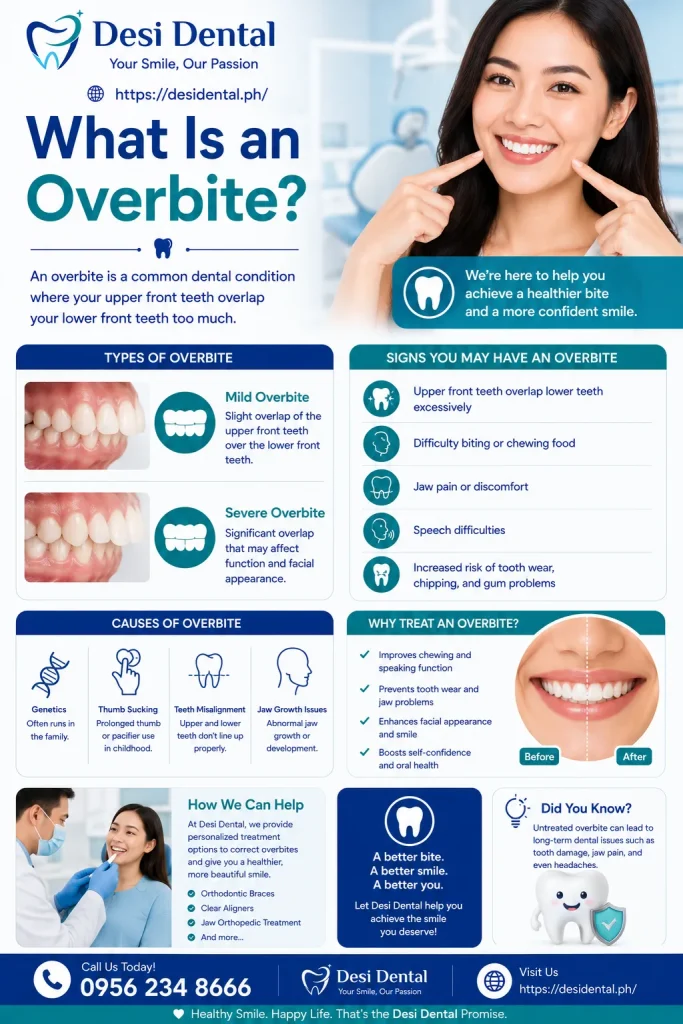
Common signs of an overbite include:
- Upper teeth covering a large portion of the lower teeth
- “Buck teeth” appearance where front teeth stick out
- Lower teeth possibly touching the roof of the mouth
- Wear on the back of upper teeth or front of lower teeth
- Jaw pain or clicking (TMJ issues in severe cases)
Overbites are among the most common bite issues and often give the face a more recessed chin appearance.
What Is an Underbite?
An underbite (Class III malocclusion) is essentially the opposite: the lower front teeth sit in front of the upper front teeth when biting down. This happens because the lower jaw protrudes forward relative to the upper jaw.
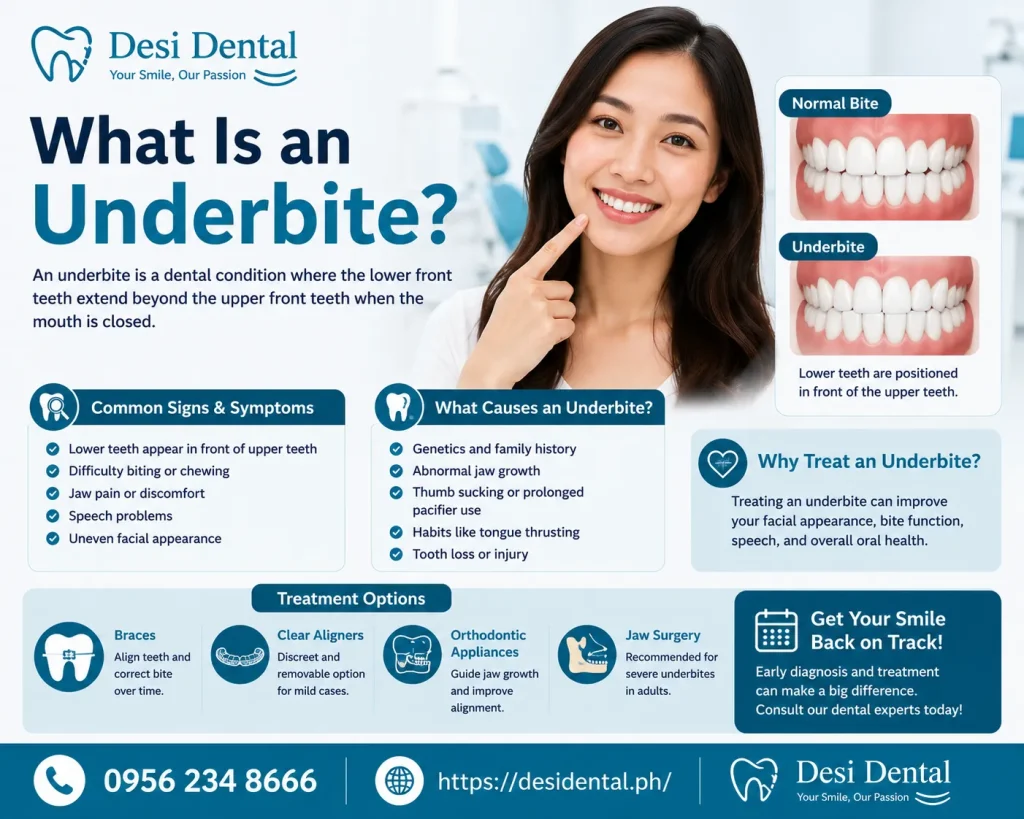
Common signs of an underbite include:
- Lower teeth and jaw jutting out noticeably
- “Bulldog” or prominent chin appearance
- Difficulty biting into food with front teeth
- Uneven tooth wear, especially on lower teeth
- Speech challenges like lisping in moderate to severe cases
Underbites are less common than overbites but often more noticeable and can involve greater skeletal discrepancies.
Underbite vs Overbite: Side-by-Side Comparison
| Aspect | Overbite | Underbite |
|---|---|---|
| Jaw Position | Upper jaw/teeth dominate; lower jaw recessed | Lower jaw protrudes; upper jaw may be smaller |
| Tooth Relationship | Upper teeth overlap lower teeth vertically/horizontally | Lower teeth sit in front of upper teeth |
| Common Name | Deep bite, buck teeth | Prognathism, Class III malocclusion |
| Prevalence | More common | Less common |
| Facial Appearance | Recessed chin, gummy smile possible | Prominent chin/jaw |
| Typical Problems | Tooth wear on lowers, TMJ pain, speech issues | Chewing difficulty, jaw strain, underbite wear |
Both conditions fall under malocclusion (“bad bite”) and can range from mild (barely noticeable) to severe (affecting function and self-esteem).
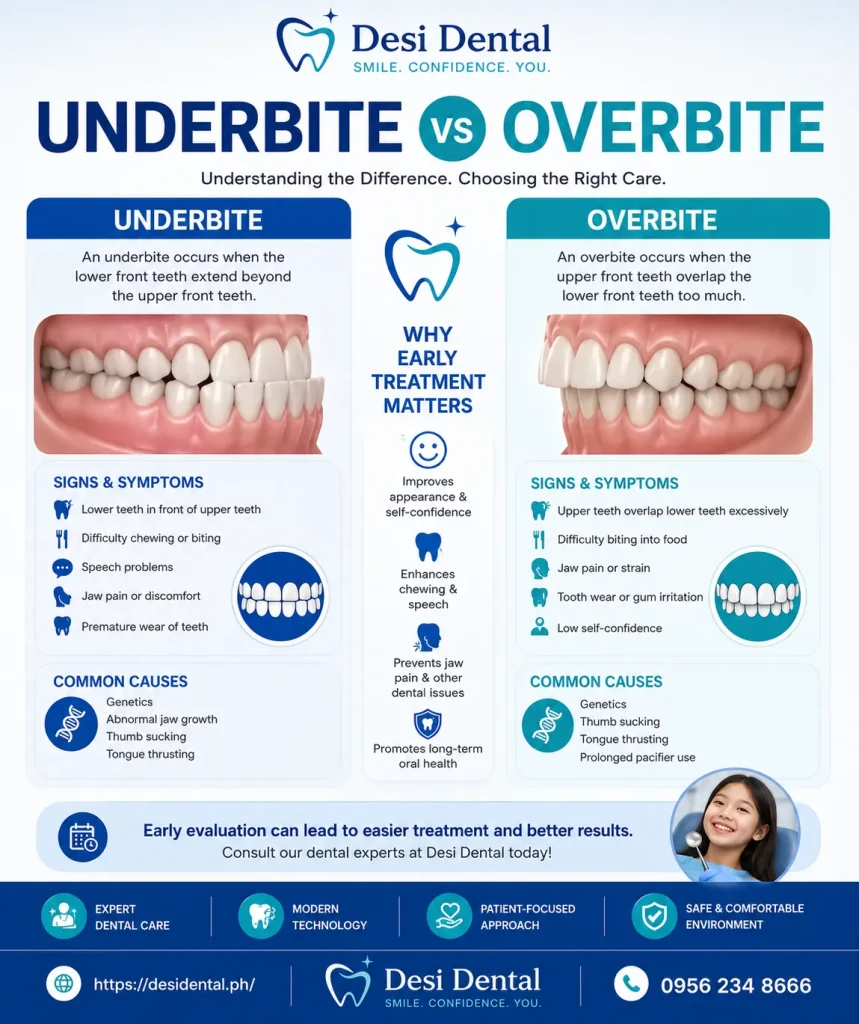
Causes of Underbites and Overbites
Genetics play the biggest role. Jaw size, tooth size, and growth patterns often run in families. If parents have bite issues, children have a higher risk.
Other contributing factors include:
- Childhood habits — Prolonged thumb sucking, pacifier use beyond age 3, or tongue thrusting can push teeth and jaws out of alignment.
- Injuries or trauma — Fractures to the jaw or face can alter bite.
- Tumors or medical conditions — Rare, but can affect jaw growth.
- Poor oral habits — Mouth breathing due to allergies or enlarged tonsils can influence jaw development.
Overbites are more often dental (teeth positioning), while underbites tend to be skeletal (jaw bone mismatch).
Health Impacts and Why Treatment Matters
Untreated bite problems aren’t just cosmetic. They can lead to:
- Tooth damage — Excessive wear, chipping, or increased risk of decay and gum disease due to uneven pressure.
- Jaw and muscle pain — Chronic TMJ disorders, headaches, and facial muscle strain.
- Chewing and digestion issues — Difficulty breaking down food properly.
- Speech difficulties — Especially with “s” and “th” sounds.
- Self-esteem — Many people feel self-conscious about their smile or profile.
- Breathing problems — Severe cases may contribute to sleep apnea.
Early intervention in children often yields better results because jaws are still growing.
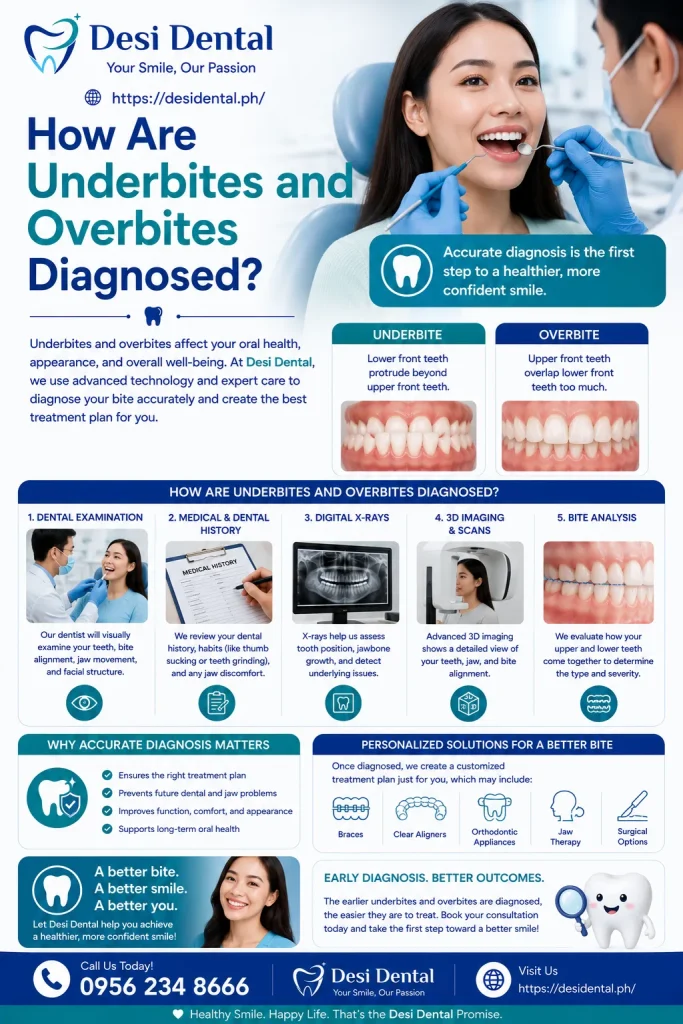
How Are Underbites and Overbites Diagnosed?
A dentist or orthodontist will:
- Perform a visual exam and take bite impressions.
- Use X-rays, panoramic films, or 3D scans (CBCT) to assess jaw alignment and tooth roots.
- Measure the severity (e.g., millimeters of overlap or protrusion).
They may classify it as dental (teeth only) or skeletal (jaw bones) to determine the best treatment path.
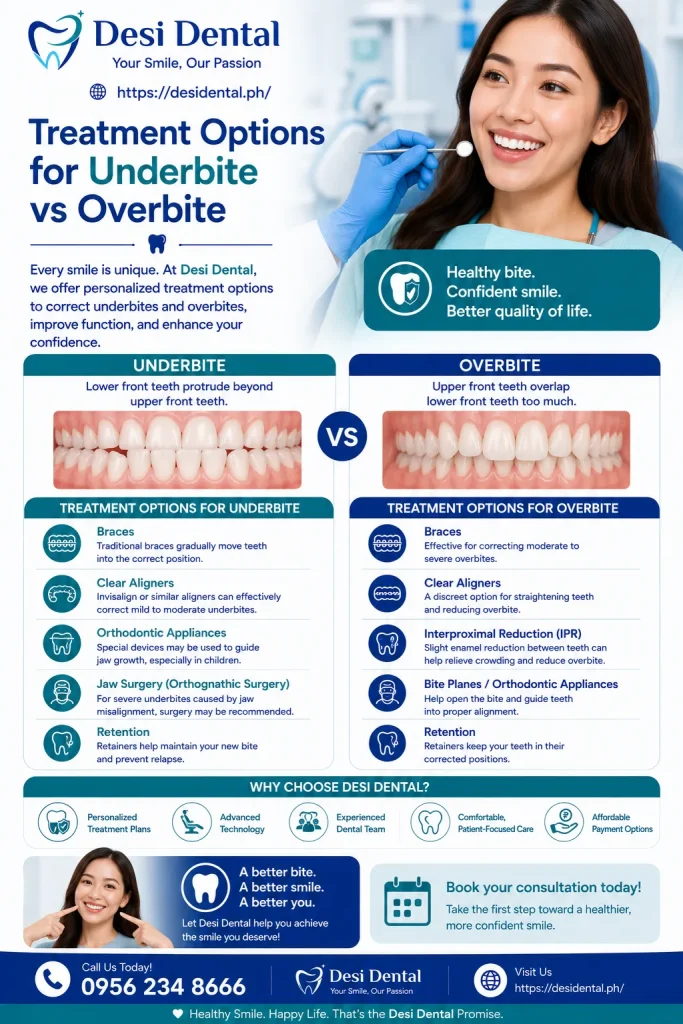
Treatment Options for Underbite vs Overbite
Treatment depends on age, severity, and whether the issue is primarily dental or skeletal.
For Children and Teens (Growing Patients):
- Braces or clear aligners (like Invisalign) — Gradually move teeth into position.
- Growth modification appliances — Headgear, expanders, or functional appliances (e.g., Herbst for overbites, reverse pull headgear for underbites) to guide jaw growth.
- Early intervention — Phase 1 treatment around ages 7-10 can prevent worsening.
For Adults:
- Braces or clear aligners — Effective for dental issues and mild skeletal problems.
- Orthognathic (jaw) surgery — For severe skeletal underbites or overbites, combined with orthodontics. This repositions the jaws for proper alignment.
- Tooth reshaping or veneers — For very mild cosmetic cases (not a full solution).
Additional Therapies:
- Elastics (rubber bands) with braces to adjust bite.
- Retainers after treatment to maintain results.
- Myofunctional therapy to correct tongue habits.
Treatment duration varies: 12-24 months for many orthodontic cases, longer if surgery is involved. Costs range widely depending on location and complexity—consult an orthodontist for personalized estimates.
Prevention and Early Tips
While genetics can’t be changed, you can reduce risks:
- Discourage prolonged thumb sucking or pacifier use in young children.
- Treat allergies or breathing issues early to promote nasal breathing.
- Schedule a first orthodontic evaluation by age 7, as recommended by the American Association of Orthodontists.
- Maintain excellent oral hygiene to avoid complications from misalignment.
When to Consult a Professional
See a dentist or orthodontist if you notice:
- Difficulty chewing or biting
- Jaw pain or popping
- Visible protrusion or deep overlap
- Speech changes or self-consciousness about your smile
Even mild cases benefit from evaluation, as problems can worsen over time.
Underbite and overbite are distinct but treatable conditions. An overbite typically involves upper teeth dominance, while an underbite features a forward lower jaw. Both can affect function, appearance, and long-term oral health, but modern orthodontics offers excellent solutions for people of all ages.


