

Dental implant crowns are the final, visible component of a dental implant system. They replace the natural tooth crown after the titanium post integrates with the jawbone and an abutment connects them. Choosing the right type significantly impacts aesthetics, durability, comfort, and long-term success. This comprehensive guide explores the main types of dental implant crowns, their materials, attachment methods, pros and cons, and key decision factors.
Why the Material of Your Implant Crown Matters
Implant crowns endure daily chewing forces (up to 200+ pounds in molars), must match surrounding teeth in color and translucency, and promote healthy gum tissue integration. Unlike crowns on natural teeth, implant crowns attach to an abutment, requiring precise fit and biocompatibility to prevent issues like peri-implantitis.
Modern materials use CAD/CAM technology for custom, precise designs. Lifespan typically ranges from 10–20+ years with excellent oral hygiene. Factors influencing choice include tooth location (anterior vs. posterior), bite strength, allergies, budget, and aesthetic goals.
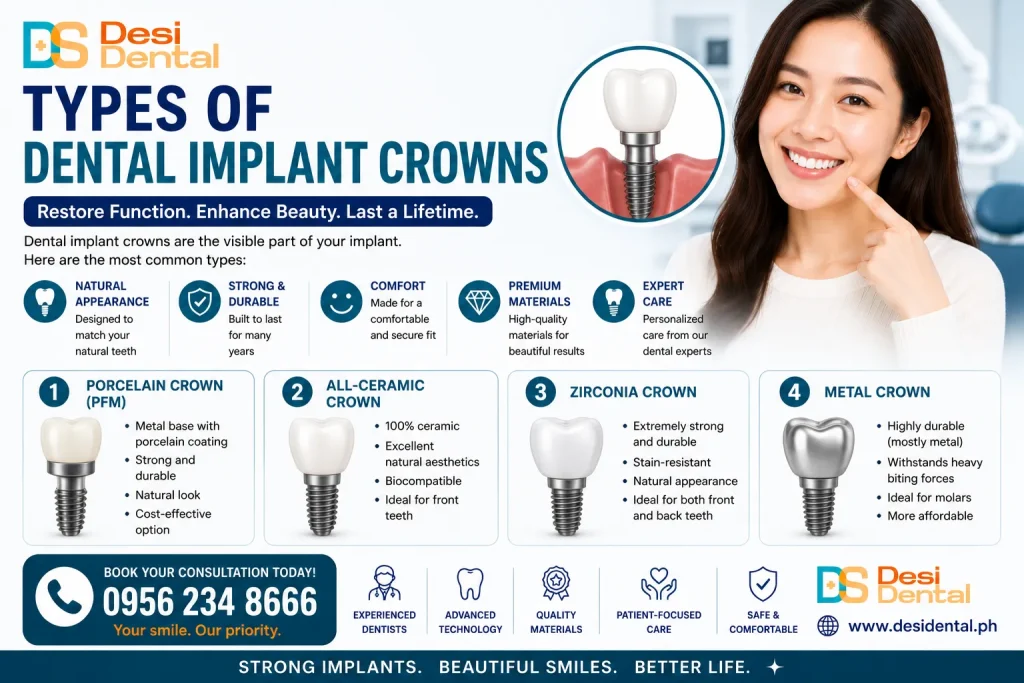
5 Types of Dental Implant Crowns
1. All-Porcelain / All-Ceramic Crowns (Including Lithium Disilicate)
These fully ceramic options, such as lithium disilicate (e.g., IPS e.max), provide exceptional lifelike qualities. They transmit light similarly to natural enamel.
Pros:
- Superior aesthetics and color-matching for front teeth
- Metal-free, ideal for patients with metal allergies
- Excellent biocompatibility and low plaque retention
- Stain-resistant
Cons:
- More prone to chipping or fracture under heavy bite forces
- Best for low-stress anterior teeth rather than molars
- Higher cost than some alternatives
2. Zirconia Crowns
Zirconia (zirconium dioxide) crowns have become one of the most popular choices in recent years due to their strength-to-aesthetics balance. Available as monolithic (solid) zirconia or layered with porcelain for enhanced translucency.
Pros:
- Exceptional durability and fracture resistance
- Suitable for both front and back teeth, including bruxism patients
- Biocompatible with minimal wear on opposing teeth
- Precise CAD/CAM milling for excellent fit
- Translucent versions closely mimic natural teeth
Cons:
- Can appear slightly more opaque in some older formulations (newer high-translucent versions solve this)
- Generally more expensive upfront
- Difficult to adjust chairside if minor modifications needed
3. Porcelain-Fused-to-Metal (PFM) Crowns
PFM crowns feature a strong metal substructure (often noble alloys) layered with tooth-colored porcelain.
Pros:
- Excellent combination of strength and aesthetics
- Cost-effective and proven longevity
- Versatile for most tooth positions
- Good for patients needing durability on a budget
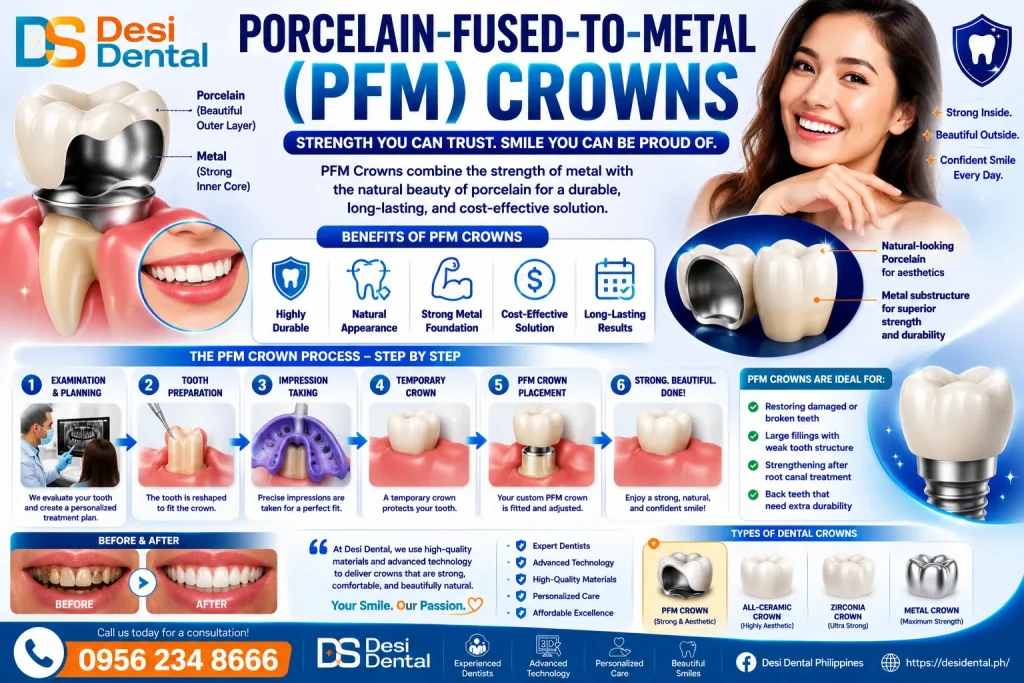
Cons:
- Risk of dark metal line showing at gum margin if recession occurs
- Less light transmission than all-ceramic options
- Potential porcelain chipping over time
4. Full Metal Crowns (Gold Alloys or Base Metals)
Traditional full-metal crowns prioritize function. Gold alloys remain a premium choice for posterior restorations.
Pros:
- Highest durability and longest lifespan (often 15–20+ years)
- Gentle on opposing natural teeth
- Excellent for molars and heavy chewers
- Resistant to fracture and wear
Cons:
- Poor aesthetics (metallic appearance)
- Not suitable for visible areas
- Potential metal sensitivity in rare cases
5. Composite Resin or Hybrid Crowns
These use resin materials, sometimes reinforced or combined with other elements. They serve as temporary or budget options.
Pros:
- Affordable
- Quick to fabricate and repair
- Good initial color matching
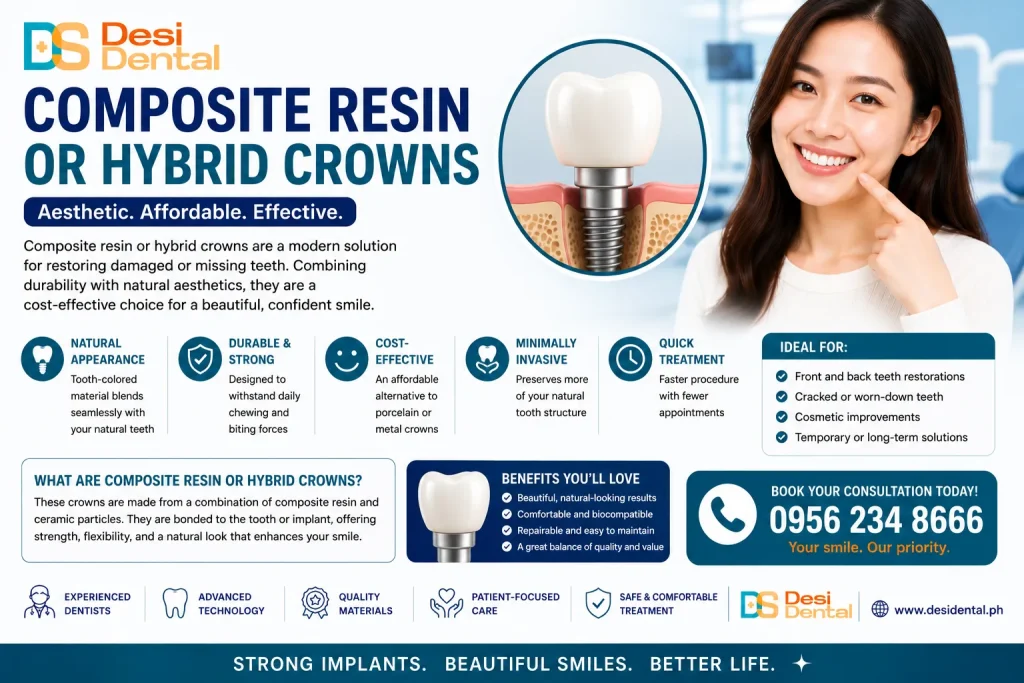
Cons:
- Least durable; wear faster and stain over time
- Not ideal for long-term implant restorations
- Lower strength for high-load areas
Screw-Retained vs. Cement-Retained Implant Crowns
Attachment method is as important as material:
- Screw-Retained Crowns: Secured directly with a screw through the crown into the abutment.
- Advantages: Easy retrieval for maintenance/repairs, no excess cement risk (reduces peri-implantitis), better for limited space.
- Disadvantages: Visible screw access hole (can be filled with composite), potentially less aesthetic in front teeth.
- Cement-Retained Crowns: Cemented onto a custom or stock abutment.
- Advantages: Superior aesthetics (no screw hole), more natural occlusal surface.
- Disadvantages: Harder to remove, risk of residual cement causing inflammation.
Hybrid “screwmentable” options combine benefits of both. Many modern practices prefer screw-retained for predictability.
Comparison Table of Dental Implant Crown Types
| Type | Aesthetics | Durability | Best For | Cost Level | Lifespan |
|---|---|---|---|---|---|
| All-Ceramic/Porcelain | Excellent | Moderate | Front teeth | High | 10–15 years |
| Zirconia | Very Good | Excellent | All positions | High | 15+ years |
| PFM | Good | Very Good | Most positions | Medium | 10–15 years |
| Full Metal (Gold) | Poor | Superior | Molars | Medium-High | 15–20+ years |
| Composite | Fair | Low | Temporary/Budget | Low | 5–10 years |
Factors to Consider When Choosing Types of Dental Implant Crowns
- Tooth Location: Anterior — prioritize aesthetics (ceramic/zirconia). Posterior — prioritize strength (zirconia/metal).
- Bruxism or Strong Bite: Zirconia or metal.
- Aesthetics & Allergies: All-ceramic or zirconia.
- Budget: PFM or composite for affordability; premium for longevity.
- Gum Health & Bone Quality: Discuss with your dentist.
- Maintenance: All require good hygiene, but screw-retained simplifies professional cleanings.
Why Choose Desi Dental for Your Implant Crown?
Desi Dental is committed to providing personalized, high-quality implant restorations using the latest materials and digital workflows. Our clinic offers:
- Comprehensive consultations with 3D CBCT imaging
- Experienced implant specialists and prosthodontists
- Wide selection of premium crown materials
- Flexible financing options
- Focus on both function and natural-looking aesthetics
We take pride in helping patients regain confidence through beautiful, long-lasting dental implant solutions.
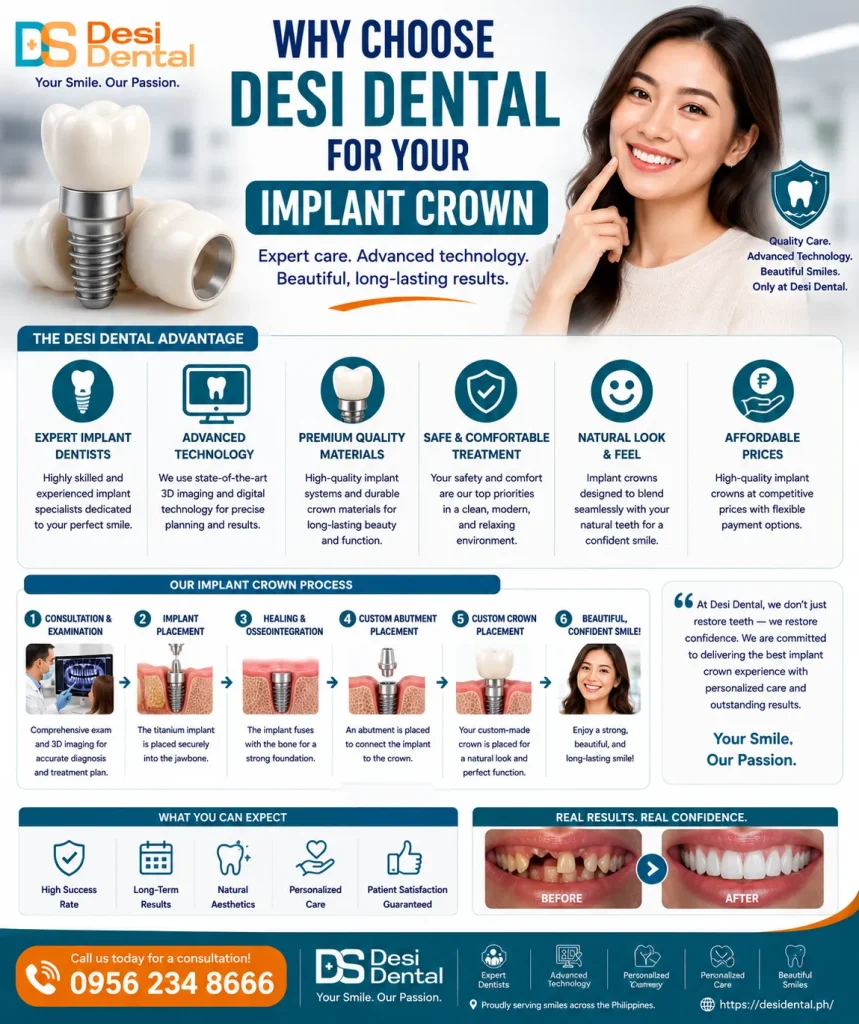
The Dental Implant Crown Procedure
After osseointegration (3–6 months), impressions or digital scans create the custom crown. Placement involves attaching the abutment and crown, with adjustments for bite and aesthetics. Same-day options exist in some cases with advanced technology.
- Brush twice daily with a soft toothbrush and non-abrasive toothpaste.
- Floss daily (water flossers helpful around implants).
- Use antimicrobial mouthwash.
- Wear a nightguard if you grind teeth.
- Schedule regular dental visits (every 3–6 months).
- Avoid extremely hard foods (ice, nuts) on restorations.
Frequently Asked Questions (FAQs)
How long do dental implant crowns last? With proper care, 10–20+ years. Zirconia and gold often last longest.
Are zirconia crowns better than porcelain? Zirconia excels in strength; porcelain in pure aesthetics. Many prefer high-translucent zirconia for balance.
Is the crown replacement covered by insurance? Coverage varies; many plans help with portions of implants/crowns. Check specifics.
Can I get a crown on the same day? Possible with same-day milling technology for certain cases.
What’s the most popular type in 2026? Zirconia continues to dominate due to its versatility and performance.
Selecting the right types of dental implant crowns restores not only function and confidence but also supports long-term oral health. Consult an experienced implant dentist for a personalized evaluation, including 3D imaging and material recommendations tailored to your needs. This guide provides educational information and is not a substitute for professional medical advice.
Investing in quality materials and expert care yields the best outcomes for your smile and well-being. If you’re considering dental implants, schedule a consultation to explore which crown option best suits your unique situation.


