

Dental implants are often considered the gold standard for tooth replacement due to their high success rates and natural feel. However, they are not ideal for everyone. There are several legitimate reasons not to get dental implants, ranging from financial constraints and health concerns to lifestyle factors and personal preferences.
This comprehensive 2026 guide provides an honest, balanced look at the potential downsides of dental implants. Understanding these reasons will help you make a well-informed decision that aligns with your health, budget, timeline, and long-term goals.
9 Reasons Not to Get Dental Implants
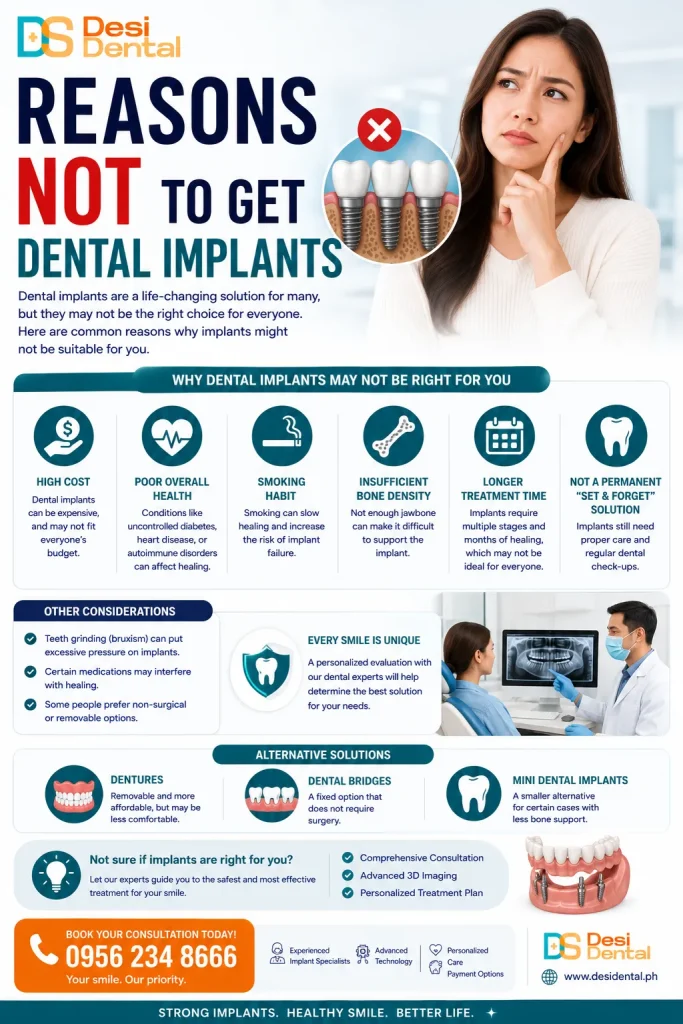
1. Extremely High Cost and Poor Insurance Coverage
One of the most common reasons not to get dental implants is the substantial financial investment required.
Current Cost Breakdown (2026):
- Single tooth implant: $3,500 – $7,000
- Multiple teeth (implant bridge): $8,000 – $18,000
- Full mouth (one arch): $18,000 – $35,000
- Full mouth (both arches): $40,000 – $75,000+
Most dental insurance plans still classify implants as cosmetic or elective, offering minimal or zero coverage. Even with financing options like CareCredit or in-house payment plans, monthly payments can range from $300 to $1,200+, creating long-term financial pressure.
For patients on fixed incomes, with limited savings, or facing other major life expenses, the high upfront and potential maintenance costs are a major reason not to get dental implants.
2. Surgical Risks and Recovery Challenges
Dental implants require oral surgery, which carries inherent risks. Common post-surgical side effects include:
- Significant swelling and bruising lasting 7–14 days
- Moderate to severe pain for the first 3–7 days
- Risk of infection, bleeding complications, or dry socket
- Temporary or (rarely) permanent nerve damage
- Sinus complications in upper jaw cases
The recovery period can be physically and emotionally demanding. Patients must follow a strict soft diet for weeks and may need time off work. For individuals with low pain tolerance, busy careers, or caregiving responsibilities, the surgical demands are valid reasons not to get dental implants.
3. Medical Conditions That Increase Failure Risk
Certain health conditions significantly raise the chances of implant failure or complications:
- Uncontrolled diabetes: Impairs healing and increases infection risk
- Heavy smoking or tobacco use: Can double or triple failure rates
- Osteoporosis and bisphosphonate medications: Affect bone healing
- Autoimmune diseases (e.g., rheumatoid arthritis, lupus)
- Cancer treatments (radiation to the head/neck area)
- Severe bruxism (teeth grinding): Places excessive force on implants
If you have any of these conditions and cannot effectively manage them, the elevated risk becomes a strong reason not to get dental implants at this time.
4. Insufficient Jawbone Density
Successful implants require adequate bone volume and quality. Patients with severe bone loss may need additional procedures such as:
- Bone grafting
- Sinus lifts
- Ridge augmentation
These extra surgeries increase cost, treatment time (often adding 6+ months), and overall risk. For those unwilling or unable to undergo bone grafting, insufficient bone is one of the clearest reasons not to get dental implants.
5. Long Treatment Timeline
Unlike traditional bridges or dentures that can be completed in 2–6 weeks, dental implants typically require:
- 4 to 12 months from start to finish
- Multiple surgical and prosthetic stages
- Several healing periods
If you need a fast solution for an upcoming wedding, job, or vacation, or simply prefer quicker results, the extended timeline is a practical reason not to get dental implants.
6. Need for Strict Long-Term Maintenance
Implants are not “set it and forget it.” They require:
- Excellent daily oral hygiene (water flosser, special brushes)
- Professional cleanings every 3–6 months
- Lifelong commitment to care
Peri-implantitis (inflammation and bone loss around implants) affects 10–20% of patients over time and is often caused by poor hygiene. If you know you struggle with dental maintenance habits, this is an important reason not to get dental implants.
7. Age-Related Considerations
- Young patients (under 18–25): Jawbones are still growing, making early implant placement problematic.
- Elderly patients with frailty or multiple comorbidities: The surgical stress and healing demands may outweigh benefits.
In both cases, less invasive alternatives are often recommended.
8. Psychological and Emotional Factors
Dental anxiety, needle phobia, or past traumatic dental experiences can make the multi-stage implant process overwhelming. For some people, the mental burden and stress involved represent legitimate reasons not to get dental implants.
9. Potential for Long-Term Complications
Although rare, possible long-term issues include:
- Peri-implantitis leading to implant loss
- Mechanical failure (screw loosening, crown fracture)
- Gum recession exposing metal components
- Need for costly repairs or replacement after 10–15 years
These possibilities make some patients hesitant.
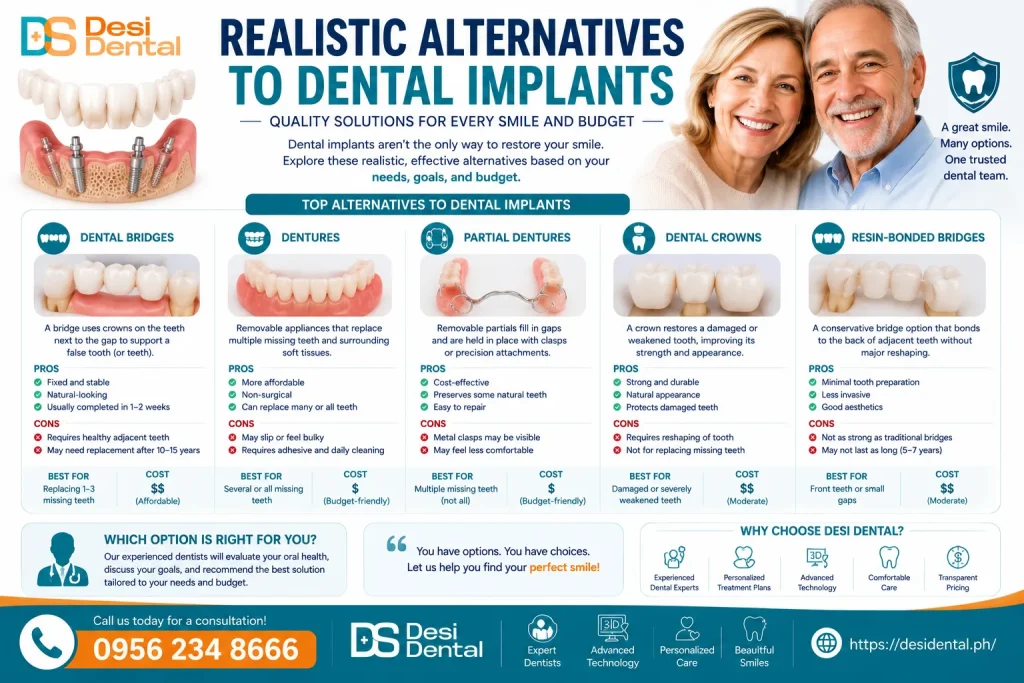
Realistic Alternatives to Dental Implants
If dental implants aren’t suitable, consider these options:
- Implant-Supported Overdentures: More affordable and stable than regular dentures
- Traditional Fixed Bridges: Excellent for 1–3 missing teeth
- Removable Partial or Full Dentures: Quick, lower cost solution
- Maryland (Resin-Bonded) Bridges: Minimally invasive for front teeth
- Dental Flippers or Temporary Partials: Short-term aesthetic fixes
Comparison: Dental Implants vs Alternatives
| Factor | Dental Implants | Bridges | Dentures |
|---|---|---|---|
| Cost | Very High | Medium | Low |
| Treatment Time | 4–12 months | 2–6 weeks | 2–8 weeks |
| Surgical Requirement | Yes | Minimal | No |
| Longevity | 15–25+ years | 7–12 years | 5–10 years |
| Bone Preservation | Excellent | Poor | Poor |
| Maintenance | High | Medium | High |
When Dental Implants May Still Be Worth It
Despite the many reasons not to get dental implants, they remain an outstanding choice for patients who:
- Have good general health and sufficient bone
- Can afford the investment
- Are committed to long-term oral care
- Want the most natural and durable solution
There are many valid reasons not to get dental implants — financial, medical, practical, and personal. The decision should never be rushed or based solely on marketing pressure.
The best approach is to consult with an experienced, ethical implant dentist or oral surgeon who will honestly discuss both the benefits and the reasons not to get dental implants in your specific situation. A comprehensive evaluation with 3D CBCT imaging is essential.
Ultimately, the right tooth replacement option is the one that best fits your health, lifestyle, and financial reality.