

Understanding the single tooth implant price Philippines helps many people make a confident decision about replacing a missing tooth. In 2026, the typical cost for a complete single dental implant—covering the titanium post, abutment, and final crown—ranges from ₱40,000 to ₱150,000 (about $700 to $2,500 USD). Most patients pay between ₱70,000 and ₱120,000 for a solid mid-range option.
These figures can shift depending on the clinic, materials, and any extra procedures required. This guide breaks everything down in simple terms so you know exactly what to expect, why prices differ, and how to get good value without surprises.
Why Choose a Single Tooth Implant?
A single tooth implant is the closest thing to a natural tooth. A small titanium (or sometimes zirconia) post is placed into the jawbone where the missing tooth used to be. Over time, the bone grows around the post and locks it in place. Then a custom crown is attached on top. Unlike a dental bridge, the implant does not need to grind down the healthy teeth next to the gap. It also helps prevent the jawbone from shrinking, which often happens after a tooth is lost.
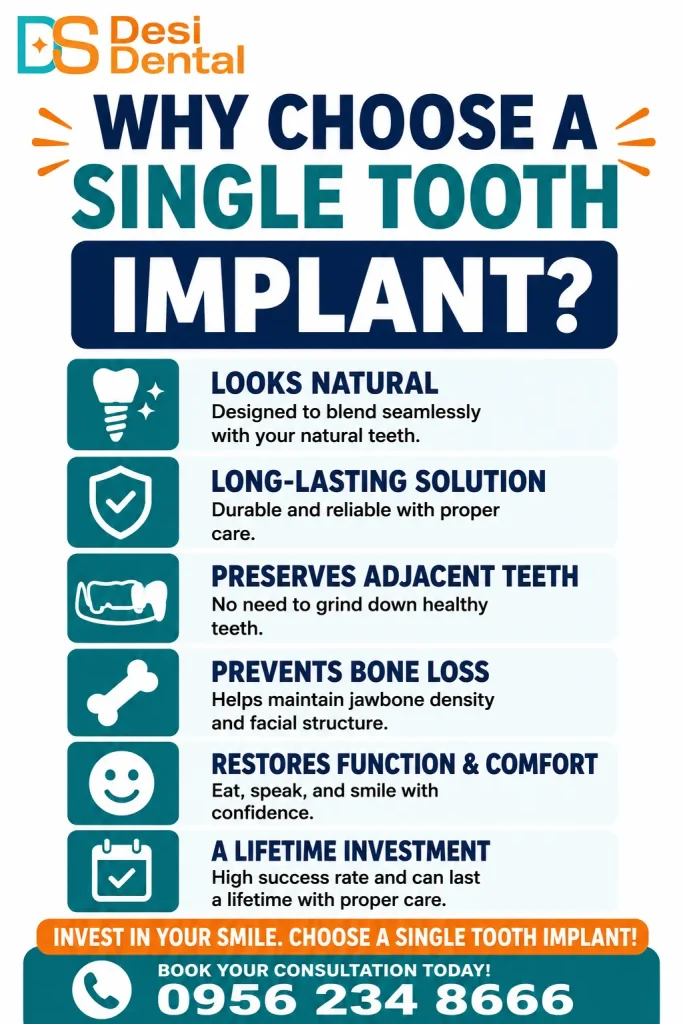
People choose implants because they look natural, feel secure when chewing, and can last 15–25 years or longer with proper care. In the Philippines, the combination of skilled dentists and significantly lower prices compared with Western countries makes this option especially attractive for both locals and dental tourists.
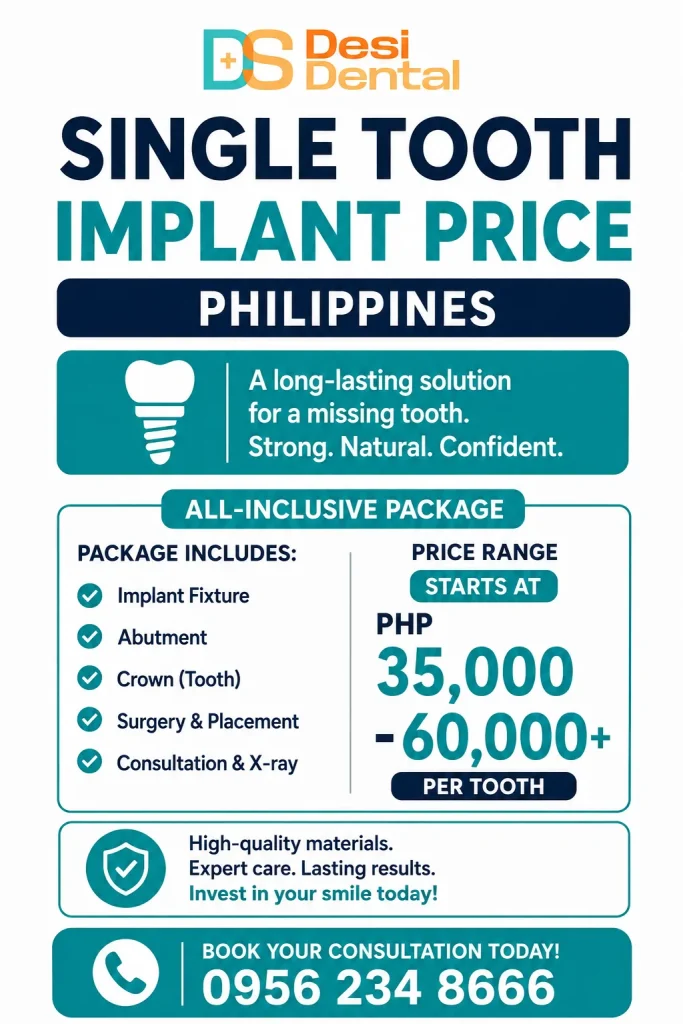
Single Tooth Implant Price Philippines
Here is a realistic look at current market prices:
- Budget / entry-level packages: ₱40,000 – ₱70,000 Usually Korean brands such as Osstem or Dentium with a standard porcelain or basic zirconia crown. Common in provincial clinics or training centers.
- Most popular mid-range packages: ₱70,000 – ₱120,000 Well-known international systems with better surface technology and a higher-quality crown. This is the range most patients choose for a good balance of quality and cost.
- Premium packages: ₱100,000 – ₱150,000+ Top brands such as Straumann, Nobel Biocare, or Zimmer Biomet, often paired with full zirconia crowns and advanced 3D planning. These are more common in high-end clinics in Metro Manila.
These prices normally include:
- The implant fixture (the screw that goes into the bone)
- The abutment (the connector piece)
- The permanent crown
- Basic surgical fees and simple follow-up visits
They usually do not include:
- Initial consultation and X-rays or CBCT scan (₱2,000 – ₱8,000)
- Tooth extraction if the damaged tooth is still present (₱1,000 – ₱5,000)
- Bone grafting when the jawbone is too thin or soft (₱15,000 – ₱50,000 per site)
- Sinus lift for upper back teeth (₱20,000 – ₱90,000)
- Temporary teeth during the healing period
- Sedation if you prefer to be more relaxed during surgery
Always ask the clinic for a written itemized quote so you can see exactly what is covered.
What Influences the Price of a Single Tooth Implant
Several clear factors influence the final bill:
1. Implant brand and quality Korean systems are widely used and reliable for most cases. Premium European and American brands have more long-term research data and often come with longer warranties, which raises the cost.
2. Crown material
- Porcelain-fused-to-metal: more affordable, strong for back teeth
- Full zirconia or all-ceramic: more natural-looking and biocompatible, higher price
3. Location of the clinic Metro Manila (Makati, BGC, Quezon City, Ortigas) tends to be more expensive because of higher rent, staff salaries, and advanced equipment. Cebu, Davao, and other cities outside the capital often offer lower prices for similar quality.
4. Dentist’s experience and technology An experienced implantologist who uses digital planning, CBCT scans, and computer-guided surgery will charge more, but the procedure is usually more precise and the risk of complications is lower.
5. Your individual situation If you have enough healthy bone, the process is straightforward and cheaper. If bone has already been lost, grafting or other preparatory work becomes necessary and adds to the total.
The Single Tooth Implant Process
Understanding the process removes a lot of anxiety. Here is the typical journey:
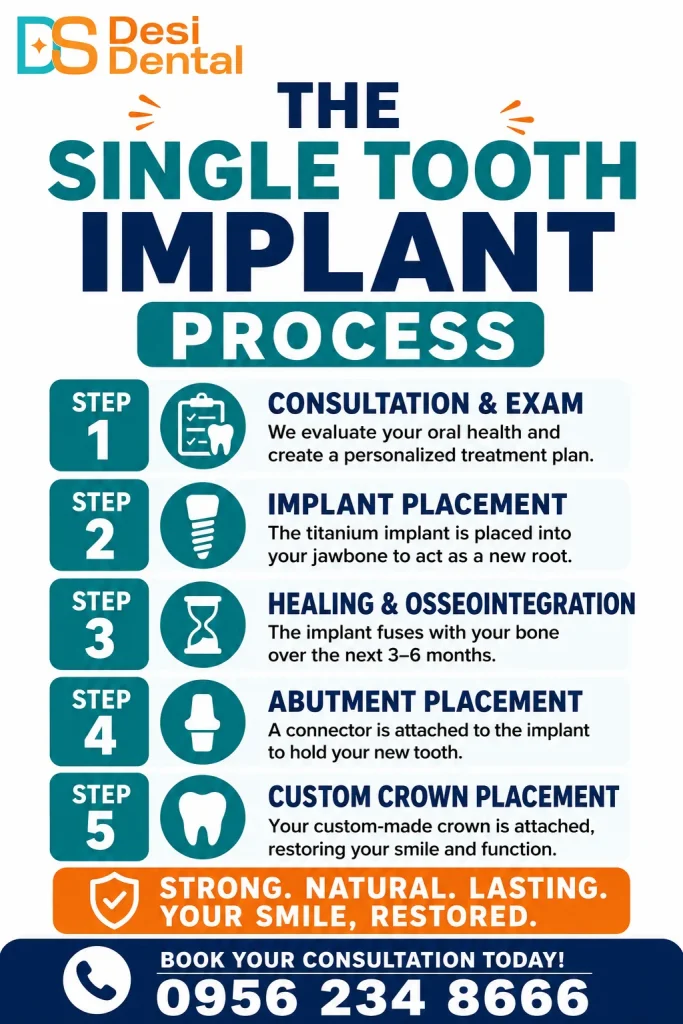
- Consultation and planning The dentist examines your mouth, takes X-rays or a 3D CBCT scan, and discusses your medical history. You receive a clear treatment plan and cost estimate.
- Tooth extraction (if needed) If the damaged tooth is still there, it is removed. Sometimes the implant can be placed on the same day; other times a few weeks of healing are needed.
- Implant placement surgery Under local anesthesia (you stay awake but feel no pain), the dentist makes a small opening in the gum and gently places the implant into the bone. The visit usually lasts 30–90 minutes. Most people return to light activities the next day.
- Healing and osseointegration Over the next 2–6 months the bone grows tightly around the implant. During this time you may wear a temporary tooth so the gap is not visible.
- Abutment and final crown Once the implant is stable, the dentist attaches the abutment and takes impressions (or digital scans) for the custom crown. The finished crown is then fixed in place. You leave with a tooth that looks and functions like a natural one.
Modern clinics often use digital impressions and same-day temporary crowns, which makes the experience more comfortable.
Frequently Asked Questions
- Is a cheaper implant less safe? Not necessarily. Many Korean and mid-range systems have strong clinical track records. The skill of the dentist and proper planning matter more than the brand alone. Extremely low prices, however, should prompt extra questions about materials and experience.
- How long does a single tooth implant last? With good care, most implants last 15–25 years or longer. Some patients keep them for life.
- Does the procedure hurt? You will feel pressure during surgery but no sharp pain because of local anesthesia. Mild soreness for a few days afterward is normal and managed with ordinary pain relief.
- Can anyone get an implant? Most healthy adults can. Conditions such as uncontrolled diabetes, heavy smoking, or severe bone loss may require extra preparation or make implants less suitable. A proper examination will give a clear answer.
- What if I need bone grafting? Bone grafting is common and successful. It adds cost and may extend the overall treatment time by a few months, but it creates a stable foundation for the implant.
A single tooth implant is a long-term investment in your smile, chewing ability, and overall oral health. In the Philippines you can access quality care at prices that are realistic for many people. The key is to choose an experienced dentist, understand exactly what is included in the price, and follow the after-care advice carefully.


