

If you are searching for the current composite filling price Philippines, you will find that tooth-colored composite resin fillings generally cost between ₱1,000 and ₱4,500 per tooth or per surface in 2026. The exact amount depends on the size of the cavity, the location of the clinic, the quality of the material, and the dentist’s experience.
This guide explains everything in simple terms so you can understand the costs, what affects them, what the procedure involves, and how to get good value for your money.
What Is a Composite Filling?
A composite filling (also called a tooth-colored or white filling) is made from a mixture of plastic resin and fine glass particles. Dentists carefully match the shade to your natural tooth color so the filling blends in almost invisibly.
Unlike older silver amalgam fillings, composite bonds chemically to the tooth. This means the dentist usually removes less healthy tooth structure. The material is placed in layers and hardened with a special blue light. Once polished, it looks and feels very close to a real tooth.
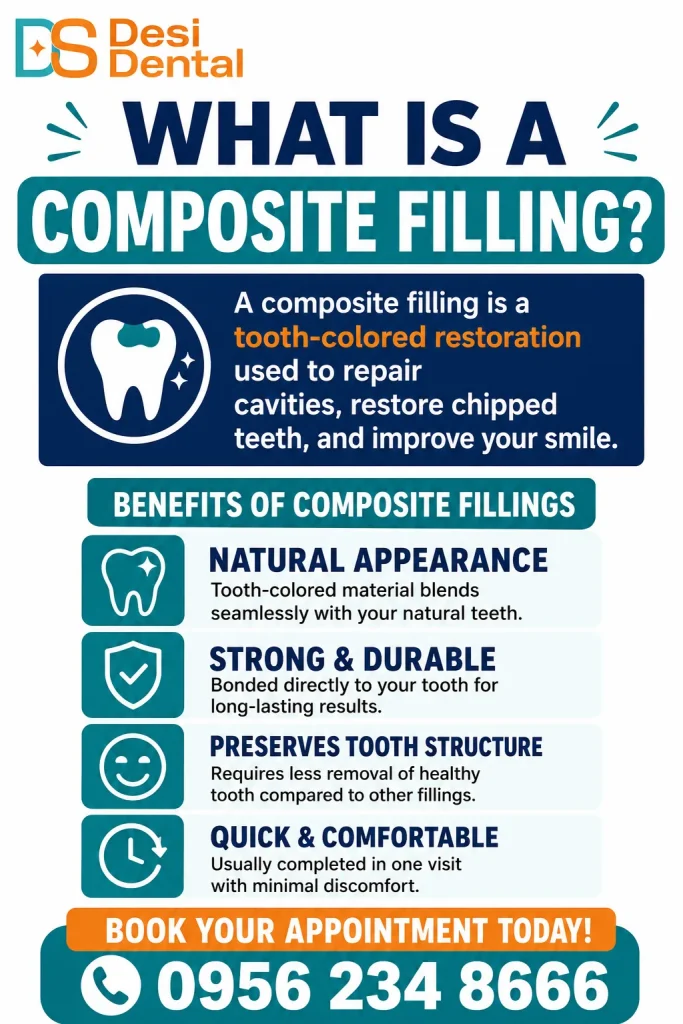
Composite fillings are commonly used for:
- Small to medium cavities
- Front teeth or any visible area
- Repairing chipped or worn teeth
- Closing small gaps in some cases
Composite Filling Prices in the Philippines
Here is a realistic breakdown based on current market rates across the country:
| Location | Typical Price Range (per tooth/surface) | Notes |
|---|---|---|
| Metro Manila (Makati, BGC, Quezon City, Ortigas) | ₱1,500 – ₱3,800 | Highest range; premium clinics can go up to ₱4,500 |
| Cebu City | ₱1,200 – ₱3,000 | Competitive pricing |
| Davao City | ₱1,000 – ₱2,800 | Generally 10–20% lower than Manila |
| Provincial areas (Laguna, Bulacan, Iloilo, Bacolod, etc.) | ₱900 – ₱2,300 | Most affordable options |
| Government or basic clinics | ₱800 – ₱1,800 | Limited materials and longer waiting times |
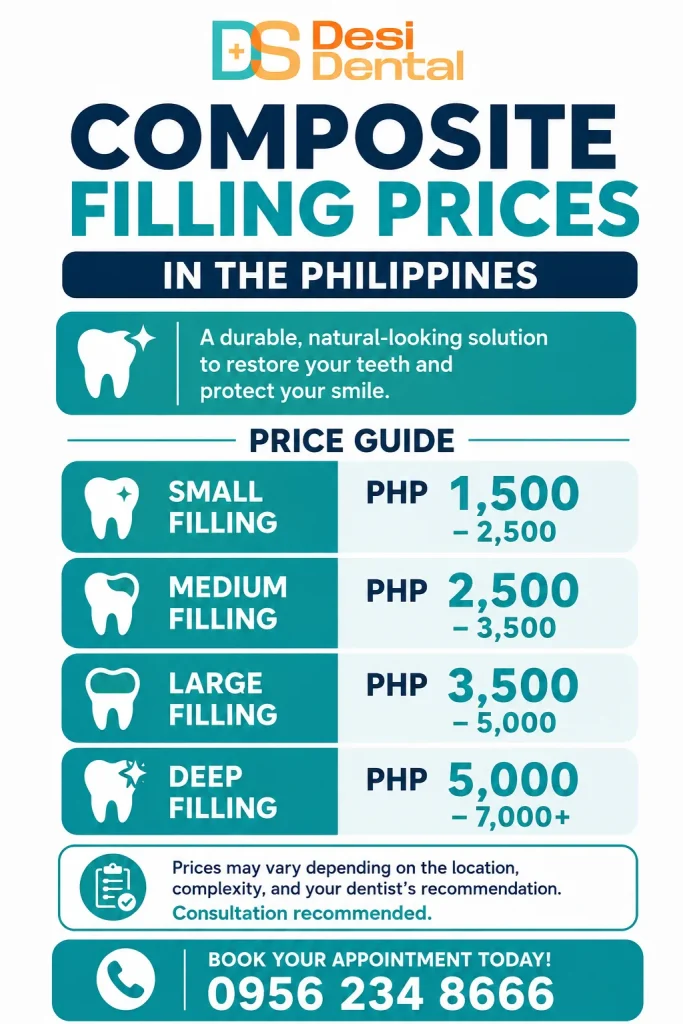
Price by cavity size:
- Small (one surface): ₱1,000 – ₱1,800
- Medium (two surfaces): ₱1,500 – ₱2,800
- Large (three or more surfaces): ₱2,000 – ₱4,500
Front teeth often cost 20–50% more because the dentist spends extra time on shade matching and shaping for a perfect appearance. Higher-quality nanohybrid or microhybrid composites may also add a small premium.
Additional Costs You Should Expect
The filling itself is only part of the total bill. Common extras include:
- Consultation and oral examination: ₱300 – ₱900
- Dental X-ray (periapical or bitewing): ₱250 – ₱600
- Local anesthesia (if not included): ₱300 – ₱500
- Temporary filling (rare cases): ₱500 – ₱1,000
Many clinics offer package deals. You may see promotions for a basic composite filling starting at ₱999 – ₱1,699 when combined with teeth cleaning.
Factors That Affect Composite Filling Price
Several practical reasons explain why quotes can differ widely:
- Size and location of the cavity – Larger or harder-to-reach cavities take more time and material.
- Clinic location and overhead – Rent and operating costs in BGC or Makati are much higher than in provincial towns.
- Dentist’s experience and specialization – Cosmetic or highly experienced dentists usually charge more.
- Material quality – Standard composite is cheaper than premium brands with better strength and polish.
- Technology used – Clinics with digital X-rays, intraoral cameras, or isolation systems (rubber dam) may charge slightly higher but often deliver better results.
- Number of surfaces – A filling that covers only the chewing surface costs less than one that wraps around the sides of the tooth.
Composite Filling Price vs Other Types of Fillings
| Type of Filling | Average Price (₱) | Appearance | Durability | Best For |
|---|---|---|---|---|
| Composite (tooth-colored) | ₱1,000 – ₱4,500 | Excellent | 5–10 years | Front & visible teeth |
| Amalgam (silver) | ₱600 – ₱2,500 | Poor (silver) | 10–15+ years | Back teeth only |
| Glass ionomer | ₱800 – ₱3,000 | Fair | 3–7 years | Children, small cavities |
| Ceramic inlay/onlay | ₱16,000 – ₱45,000+ | Excellent | 10–15+ years | Large restorations |
Composite offers the best balance of looks, strength, and affordability for most people.
Composite Filling Procedure
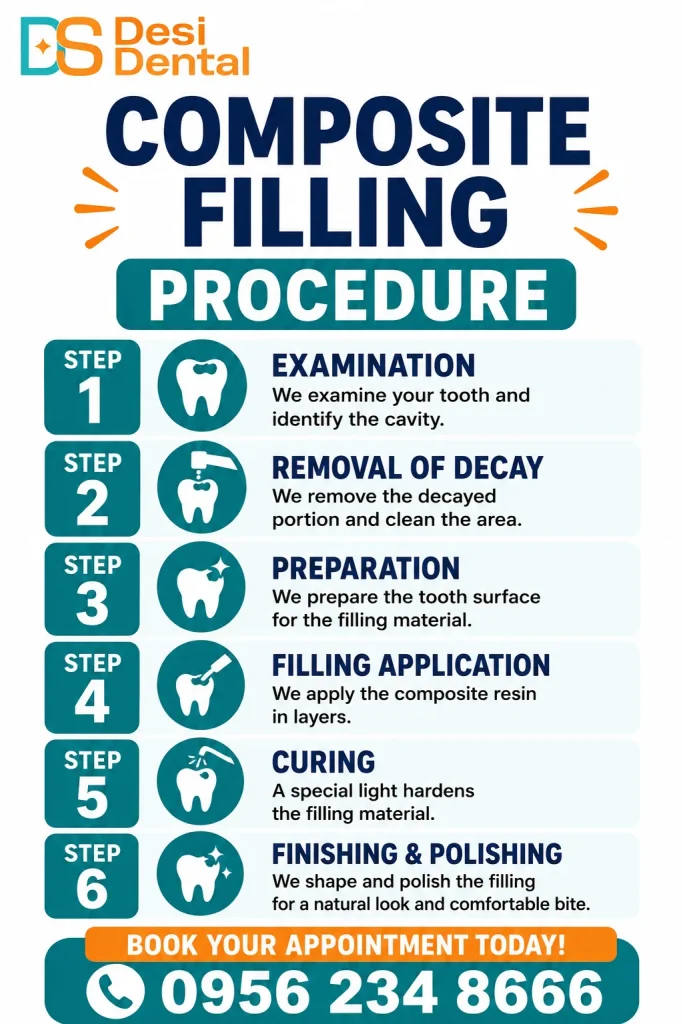
A typical composite filling appointment lasts 30 to 60 minutes per tooth. Here is what usually happens:
- The dentist examines the tooth and may take an X-ray.
- Local anesthesia is given so you feel little or no pain.
- The decayed part of the tooth is carefully removed.
- The area is cleaned and prepared.
- The composite material is placed in thin layers. Each layer is hardened with a curing light.
- The dentist shapes the filling to match your natural bite.
- The surface is polished so it feels smooth and looks natural.
You can usually eat and drink right after the numbness wears off (1–3 hours). Mild sensitivity to cold or pressure is normal for a few days and usually disappears.
Aftercare Composite Filling
- Avoid very hard or sticky foods for the first 24 hours if possible.
- Brush gently twice a day and floss carefully around the filled tooth.
- Do not chew ice or use your teeth to open packages.
- Visit your dentist for regular check-ups (every 6 months).
- If you grind your teeth at night, ask about a night guard to protect the filling.
With good care, a well-placed composite filling can last 7–10 years or longer.
Frequently Asked Questions
- Is composite filling painful? Most patients feel only mild pressure. Local anesthesia makes the procedure comfortable.
- How long does a composite filling last? Typically 5–10 years. Longevity depends on oral hygiene, diet, and whether you grind your teeth.
- Can I get composite fillings on back teeth? Yes. Modern composites are strong enough for molars, although very large cavities may still benefit from ceramic or other options.
- Is the price the same for children? Children’s fillings are often similar or slightly lower, especially glass ionomer options that release fluoride.
- Do prices include the consultation? Not always. Always confirm what is included in the quoted price.
The composite filling price Philippines remains very reasonable in 2026 compared with many other countries. For most people, the cost falls between ₱1,000 and ₱4,500 per tooth, with clear differences between Metro Manila and provincial areas.


