

If you’ve searched for “what is pasta in teeth”, you’re not alone. Many people, especially in the Philippines, Vietnam, and other Southeast Asian countries, use the word “pasta” when talking about dental fillings. It’s a common colloquial term that often confuses patients searching for accurate dental information.
In dentistry, “pasta” simply means a dental filling or tooth restoration. It is the material dentists use to repair teeth damaged by decay, cracks, chips, or wear. This comprehensive guide will explain everything you need to know about pasta in teeth — from what it is and why you need it, to the different types available, the procedure, aftercare, costs, and long-term considerations.
By the end of this article, you will have a clear, detailed understanding to help you make informed decisions about your oral health.
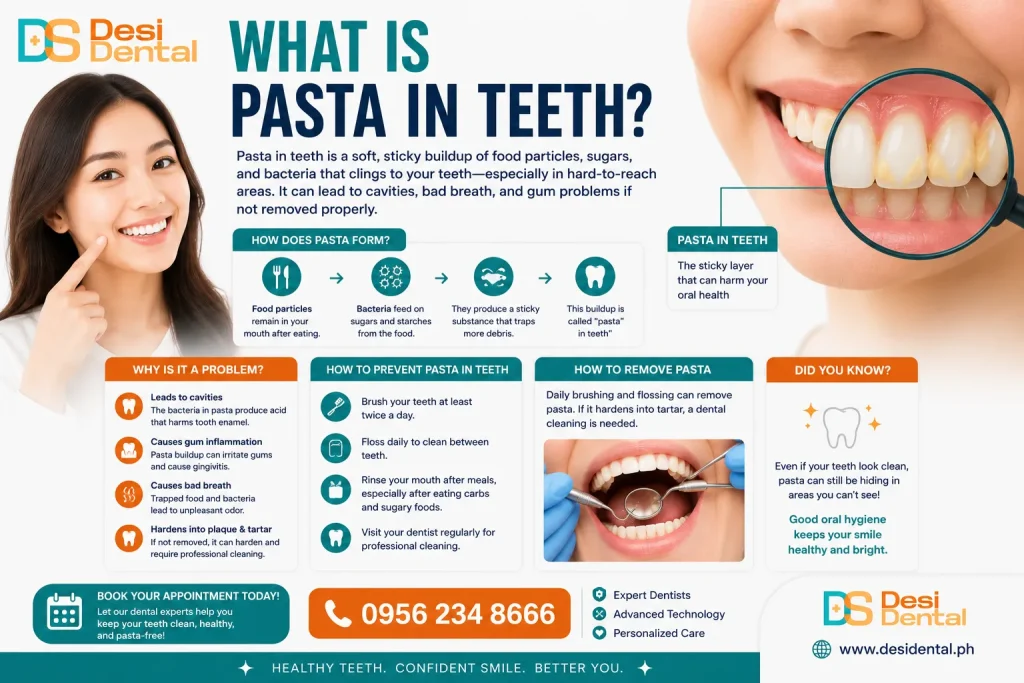
What Does “Pasta in Teeth” Actually Mean?
The term “pasta” originates from the paste-like texture of the filling material when it is first placed into the tooth cavity. Before it hardens, many restorative materials have a soft, pliable consistency similar to dental “paste.” Over time, this informal name became widely used in everyday conversation.
A dental filling (pasta) is a restorative procedure where a dentist removes decayed or damaged tooth structure and replaces it with a durable material. The goal is to restore the tooth’s original shape, strength, function, and appearance while preventing further decay or infection.
Dental fillings have been used for over 100 years. Early versions used materials like gold or amalgam. Today, modern dentistry offers advanced, tooth-colored options that blend seamlessly with natural teeth.
Why Do People Need Pasta (Dental Fillings)?
Teeth are strong, but they are constantly exposed to acids, bacteria, sugar, and mechanical stress. When the protective outer layer of enamel is compromised, decay can begin. Common reasons for needing pasta include:
- Cavities (Dental Caries): The most common reason. Bacteria produce acids that dissolve tooth minerals.
- Chipped or Fractured Teeth: From accidents, biting hard objects, or trauma.
- Worn Tooth Surfaces: Caused by teeth grinding (bruxism), aggressive brushing, or acidic foods/drinks.
- Cracked Teeth: Often due to large old fillings or temperature changes.
- Replacement of Old Fillings: When previous pasta has worn out, cracked, or leaked.
Without timely treatment, decay can progress deeper into the dentin and pulp, causing severe pain, infection, and potentially requiring a root canal or tooth extraction.
The Science Behind Tooth Decay
To understand why pasta is necessary, it helps to know how decay develops:
- Plaque Formation: Bacteria in your mouth combine with food particles to form a sticky film called plaque.
- Acid Attack: These bacteria feed on sugars and starches, producing acids that demineralize enamel.
- Cavity Formation: Over time, small holes (cavities) form in the enamel.
- Dentin Involvement: Once decay reaches the softer dentin layer, it spreads faster.
- Pulp Infection: If untreated, bacteria reach the nerve, causing inflammation and pain.
Regular dental check-ups can detect early decay before it requires extensive treatment.
Types of Dental Fillings (Pasta) – Detailed Comparison
Modern dentistry offers several filling materials. Here is an in-depth look at each:
1. Composite Resin Fillings (Tooth-Colored Pasta) Composite fillings are made of a mixture of plastic resin and fine glass particles. They are the most popular choice today because they match the natural color of your teeth.
- Advantages: Excellent aesthetics, bond directly to tooth structure, conservative preparation, can be repaired easily.
- Disadvantages: Can stain over time (especially with coffee, tea, or smoking), slightly less durable than amalgam under heavy chewing force.
- Best For: Front teeth, visible areas, and moderate-sized cavities.
- Lifespan: 7–12 years with good care.
2. Amalgam (Silver) Fillings Made from a mixture of silver, tin, copper, and mercury. Despite mercury concerns, dental amalgam is considered safe by major health organizations when properly placed.
- Advantages: Extremely strong, long-lasting, inexpensive, quick to place.
- Disadvantages: Metallic appearance, requires more tooth removal, can cause temporary sensitivity.
- Best For: Back molars under high biting pressure.
- Lifespan: 10–15+ years.
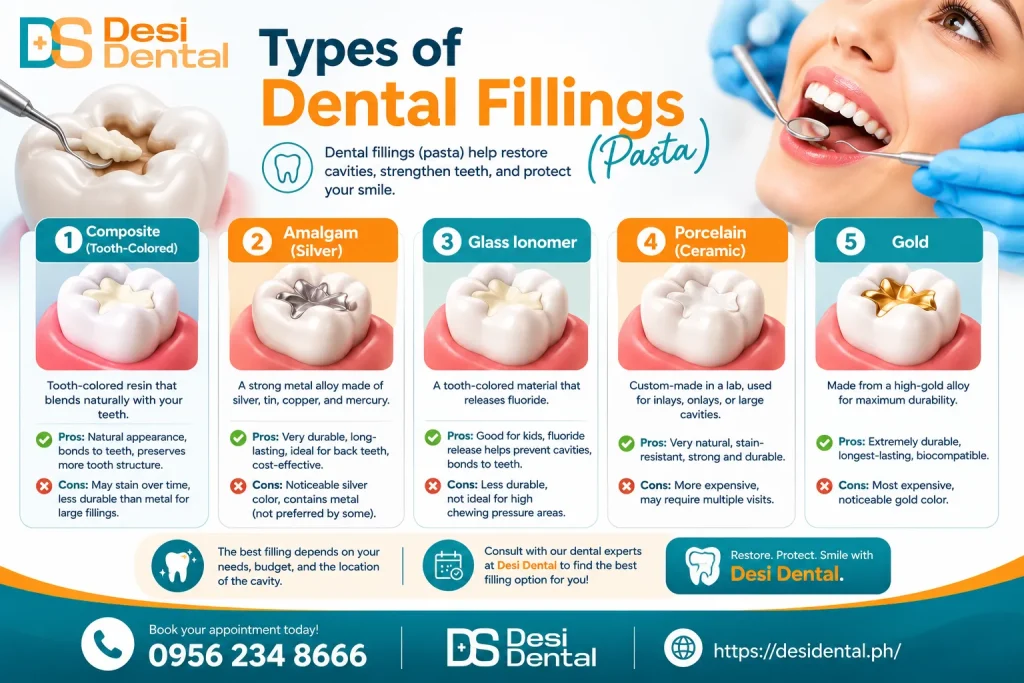
3. Glass Ionomer Fillings These release fluoride over time, which helps prevent new decay.
- Advantages: Fluoride release, good for children and root surfaces, bonds well in moist environments.
- Disadvantages: Less strong and wear-resistant.
- Best For: Baby teeth, non-load-bearing areas, and patients at high risk of decay.
- Lifespan: 5–8 years.
4. Ceramic/Porcelain Fillings (Inlays & Onlays) Custom-made in a laboratory for larger cavities.
- Advantages: Highly aesthetic, very durable, excellent stain resistance.
- Disadvantages: More expensive, requires two visits.
- Lifespan: 10–15+ years.
5. Gold Fillings Still considered one of the most durable options.
- Advantages: Extremely long-lasting, biocompatible.
- Disadvantages: High cost, visible metallic color, requires multiple visits.
- Lifespan: 15–30 years.
The Dental Filling Procedure – Step by Step
A typical pasta procedure is straightforward and usually painless:
- Initial Assessment Your dentist examines the tooth, takes X-rays if needed, and discusses treatment options.
- Local Anesthesia Numbing gel and injection ensure you feel no pain during the procedure.
- Decay Removal Using a dental drill or laser, the dentist carefully removes all decayed tissue.
- Tooth Preparation The cavity is cleaned, shaped, and disinfected.
- Filling Placement
- For composite: Placed in layers and hardened with UV light.
- For amalgam: Packed into the cavity and carved to shape.
- Bite Adjustment The dentist checks your bite and makes adjustments.
- Polishing Final polishing creates a smooth, comfortable surface.
The entire process for one tooth usually takes 20 to 60 minutes.
Pain, Discomfort, and Modern Techniques
Thanks to advancements in dentistry, most patients experience little to no pain. Modern anesthetics are very effective. Some clinics now offer laser dentistry, which can reduce the need for drilling and minimize discomfort.
Mild sensitivity after the procedure is normal and usually disappears within a few days to weeks.
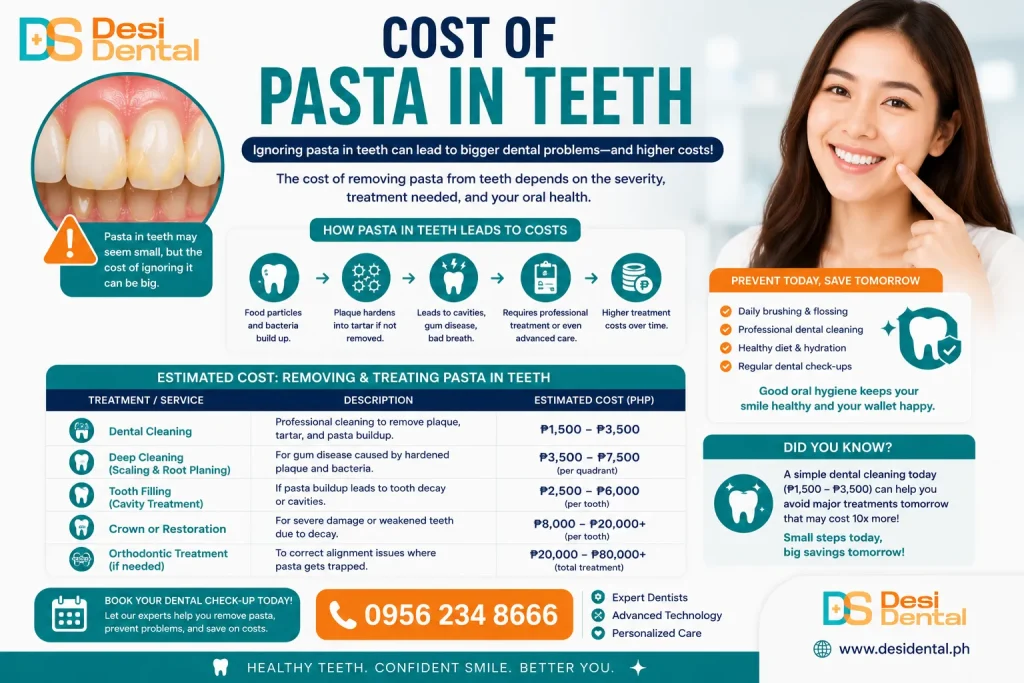
Cost of Pasta in Teeth
Costs vary widely depending on location, material, and tooth size:
- Composite filling: $100 – $400 per tooth
- Amalgam filling: $80 – $250 per tooth
- Ceramic inlay/onlay: $400 – $1,200+
- Gold: $600 – $2,000+
Many dental insurance plans partially cover fillings as they are considered basic restorative care.
Aftercare and Longevity of Dental Fillings
Proper care significantly extends the life of your pasta:
- First 24 Hours: Avoid very hot or cold foods. Do not chew hard items on the new filling.
- Daily Hygiene: Brush twice daily with fluoride toothpaste, floss daily, and use mouthwash.
- Diet: Limit sugary and acidic foods. Rinse with water after consuming them.
- Habits: Wear a nightguard if you grind your teeth. Avoid using teeth to open packages or bite nails.
- Regular Check-ups: Visit your dentist every 6 months.
When to Replace Pasta Fillings
Signs that your filling needs replacement include:
- Pain or sensitivity when biting
- Visible cracks or holes in the filling
- Food trapping around the restoration
- Dark spots or discoloration
- The filling feels loose or has fallen out
Prevention: How to Avoid Needing Pasta
Prevention is always better than treatment:
- Brush properly for two minutes twice a day
- Floss daily
- Use fluoride toothpaste and mouthwash
- Eat a balanced diet low in sugar
- Drink plenty of water
- Schedule professional cleanings twice a year
- Consider dental sealants for children
Frequently Asked Questions (FAQs)
Is pasta in teeth safe? Yes. All approved dental filling materials are considered safe by major health authorities.
Does the procedure hurt? With proper anesthesia, most patients feel little to no pain.
Can I eat immediately after getting pasta? Wait until the numbness wears off to avoid accidentally biting your cheek or tongue.
How long does pasta last? It depends on the material and your habits — typically 7 to 15+ years.
Is composite better than amalgam? Composite offers better aesthetics, while amalgam is often stronger for back teeth.
Pasta in teeth is a simple, everyday term for dental fillings — one of the most common and effective ways to restore damaged teeth and maintain oral health. Whether you need a small cavity filled or a larger restoration, modern materials and techniques can provide strong, natural-looking, and long-lasting results.
Taking care of your teeth today prevents bigger problems tomorrow. If you suspect you have a cavity or an old filling that needs attention, don’t wait. Schedule a dental consultation soon.
A healthy, confident smile is one of the best investments you can make in yourself. Understanding what pasta in teeth means is the first step toward better dental health.


