

Choosing between metal braces vs ceramic braces is a common decision for anyone starting orthodontic treatment. Both types effectively straighten teeth and correct bites, but they differ significantly in appearance, durability, cost, comfort, and maintenance. This detailed guide breaks down the key differences to help you make an informed choice based on your lifestyle, budget, and priorities.
What Are Metal Braces?
Metal braces, also known as traditional braces, consist of stainless steel brackets and wires. They have been the standard in orthodontics for decades and remain highly popular due to their proven reliability.
Key features:
- Silver-colored brackets and wires that are very noticeable.
- Extremely strong and durable.
- Suitable for all types of orthodontic issues, including complex cases.
Who Should Choose Metal Braces?
- Teens and younger patients who don’t mind the look.
- Patients with severe orthodontic issues.
- Those on a tighter budget.
- Anyone prioritizing maximum durability and efficiency.
What Are Ceramic Braces?
Ceramic braces (also called clear or aesthetic braces) use tooth-colored or translucent ceramic brackets with wires that can be white or clear. They blend in with your natural teeth for a much less noticeable appearance.
Key features:
- Discreet and aesthetic appeal.
- Similar working mechanism to metal braces.
- Slightly larger brackets in some designs.
Who Should Choose Ceramic Braces?
- Adults and professionals who want a discreet smile during treatment.
- Patients concerned about appearance and self-confidence.
- Those willing to invest more for aesthetics.
- Mild to moderate cases where strength is not the primary concern.
Many orthodontists also offer hybrid options — ceramic brackets on upper teeth (more visible) and metal on lower teeth (less visible) to balance cost and appearance.
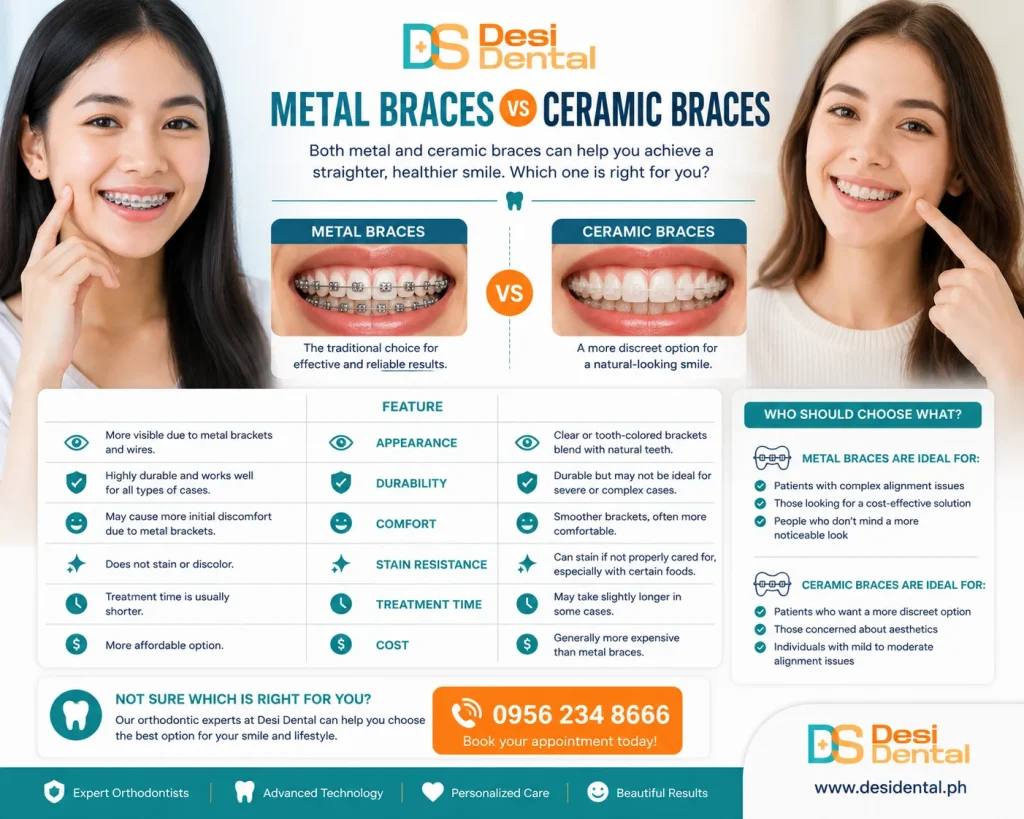
Head-to-Head Comparison: Metal Braces vs Ceramic Braces
| Aspect | Metal Braces | Ceramic Braces |
|---|---|---|
| Appearance | Highly visible (silver) | Less noticeable (tooth-colored/clear) |
| Durability | Extremely strong, rarely break | More fragile, can chip or crack |
| Cost | More affordable ($3,000–$7,000) | 20-30% more expensive ($4,000–$8,000) |
| Treatment Time | Often slightly faster for complex cases | Similar, sometimes slightly longer |
| Comfort | May irritate cheeks/lips initially | Smoother edges, often more comfortable |
| Staining | No staining issues | Elastic ties can stain easily |
| Maintenance | Easy to clean | Requires more careful hygiene |
| Best For | Severe misalignments, budget-conscious patients, teens | Adults, professionals, image-conscious individuals |
Pros and Cons Metal Braces vs Ceramic Braces
Metal Braces – Pros:
- Superior strength and durability — ideal for tough cases like severe crowding or bite corrections.
- Generally faster treatment in complex situations because they can apply stronger forces reliably.
- Lower overall cost, making them budget-friendly.
- No risk of staining on the brackets themselves.
- Proven long-term track record with predictable results.
Metal Braces – Cons:
- Very noticeable appearance, which can affect self-confidence, especially for adults.
- Can cause more initial irritation to cheeks and lips.
- May interfere with MRI scans (need removal in some cases).
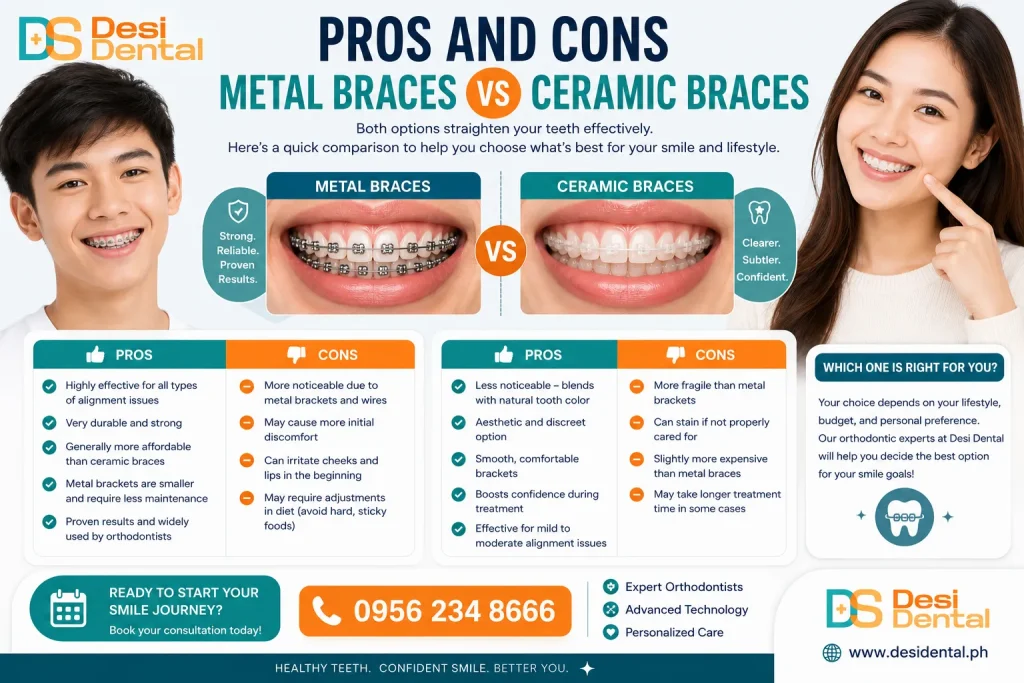
Ceramic Braces – Pros:
- Much less visible — blend with teeth for greater confidence during treatment.
- Smoother bracket surfaces often result in less cheek and gum irritation.
- Aesthetic appeal makes them popular among adults and professionals.
- Equally effective for mild to moderate alignment issues.
Ceramic Braces – Cons:
- Higher cost due to premium materials.
- Brackets are more prone to chipping or breaking, potentially requiring extra visits.
- Clear or white elastic ties can stain from coffee, tea, wine, or colored foods.
- Slightly bulkier in some designs and may not suit very severe cases as well as metal.
Cost Metal Braces vs Ceramic Braces
Metal braces are typically the more economical choice. Ceramic braces usually cost $1,000–$2,000 more on average. Insurance coverage is often similar for both, but out-of-pocket expenses will be higher with ceramic. Always check with your orthodontist and insurance provider for exact pricing in your area.
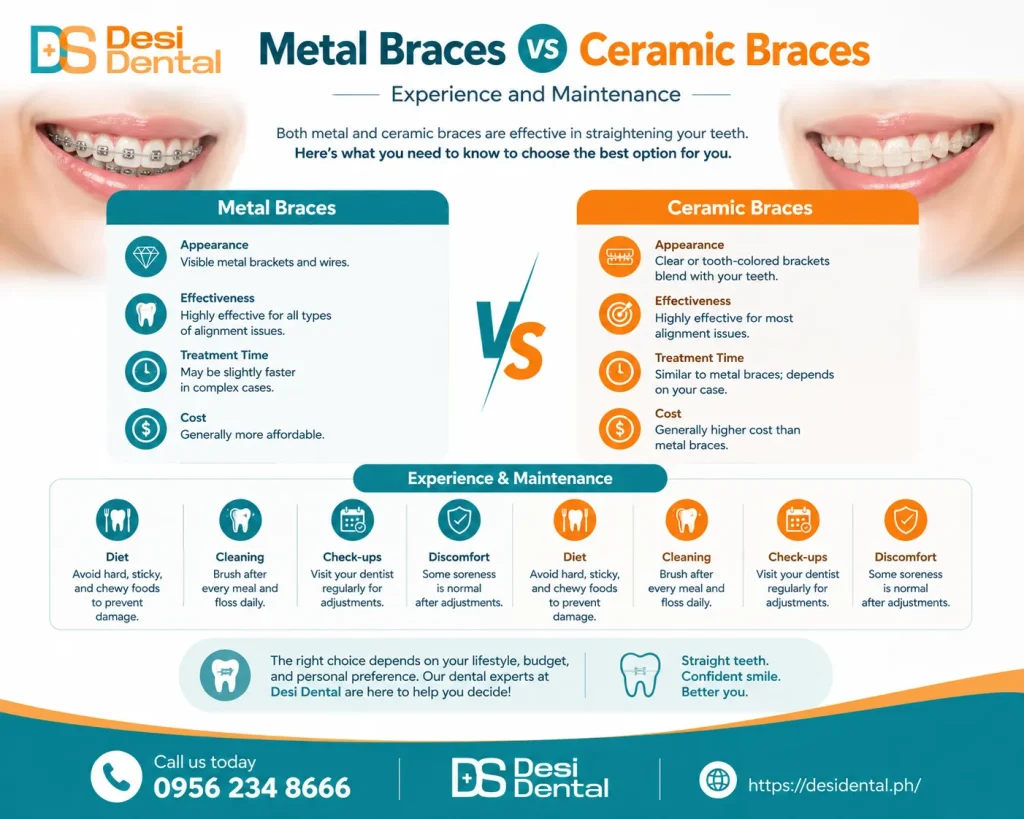
Metal Braces vs Ceramic Braces Experience and Maintenance
Both types require regular adjustments every 4–8 weeks. However:
- Hygiene: Ceramic braces demand extra attention to prevent staining. Use a soft toothbrush, floss threaders, and consider a water flosser.
- Diet: Avoid hard, sticky, or sugary foods with both, but be especially gentle with ceramic to prevent bracket damage.
- Duration: Average treatment time is 18–36 months for both, though metal may finish slightly faster in complicated cases.
Common Myths About Metal vs Ceramic Braces
- Myth: Ceramic braces work slower. Fact: Both deliver similar results; differences are minor and case-dependent.
- Myth: Metal braces are uncomfortable. Fact: Modern designs with smaller brackets and better wires have greatly improved comfort for both types.
- Myth: Ceramic braces never stain. Fact: The brackets resist staining better than elastics, but poor hygiene can still cause discoloration.
There is no universal “winner” in the metal braces vs ceramic braces debate. The best choice depends on your personal priorities:
- Prioritize appearance and confidence → Ceramic braces.
- Prioritize durability, speed, and cost → Metal braces.
Consult an experienced orthodontist for a personalized evaluation. They will assess your bite, teeth alignment, lifestyle, and goals to recommend the most suitable option.
Both metal and ceramic braces are highly effective tools that can transform your smile and oral health. Metal braces remain the reliable, affordable workhorse of orthodontics, while ceramic braces offer a modern aesthetic alternative for those seeking discretion. With proper care and professional guidance, either choice can lead to a beautiful, healthy smile that lasts a lifetime.
Schedule a consultation with your orthodontist to discuss metal braces vs ceramic braces in detail for your specific needs. Investing in the right braces is an investment in your confidence and long-term dental wellness.


