

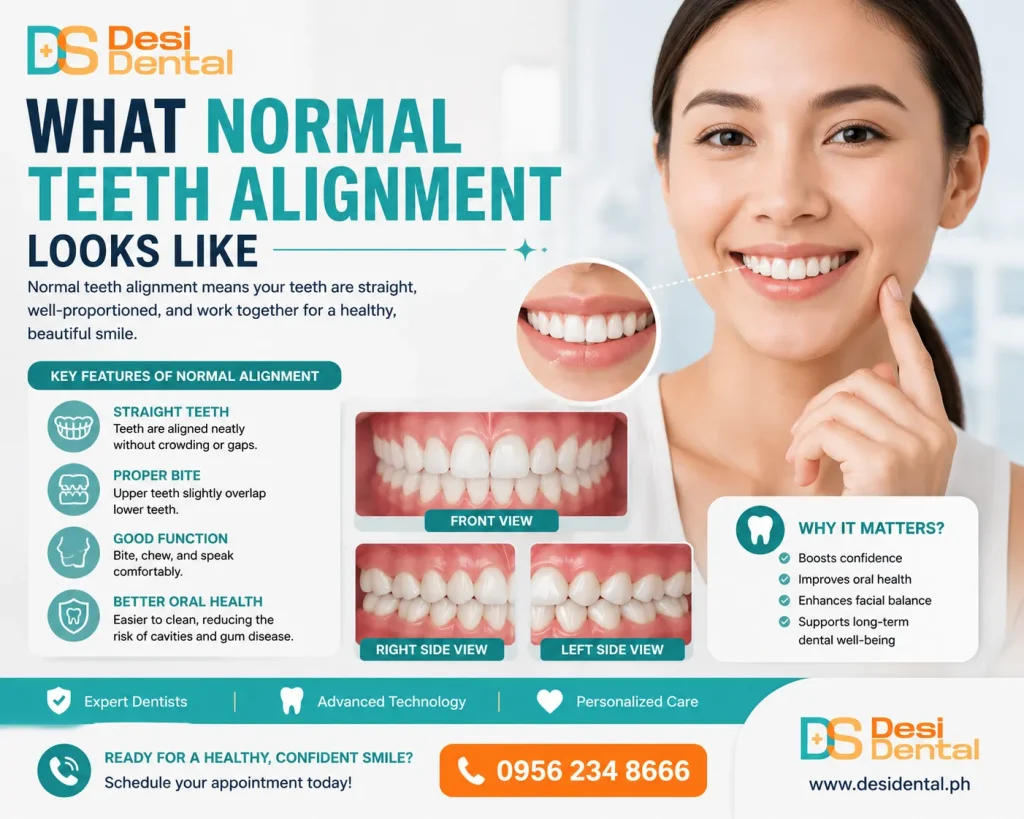
Normal teeth alignment, often called ideal occlusion or Class I bite, is the natural way your upper and lower teeth fit together when your mouth is closed. This proper positioning supports efficient chewing, clear speech, easy cleaning, and long-term dental health. While perfectly straight teeth are rare, a functional normal alignment is both healthy and attractive.
What Normal Teeth Alignment Looks Like
In a healthy, normal teeth alignment:
- The upper front teeth slightly overlap the lower front teeth by 10-20% vertically.
- There is a small horizontal overlap (overjet) of 1-3 mm.
- The upper molars’ cusps fit perfectly into the grooves of the lower molars, like interlocking gears.
- The dental midlines (center lines of upper and lower teeth) align with each other and with the center of your face.
- Teeth form smooth, U-shaped arches with light contact between neighboring teeth and no major gaps, crowding, or rotations.
This relationship is often described as a “scissors bite” because the upper teeth gently cover the edges of the lower teeth, allowing effective cutting and grinding of food.
Why Normal Teeth Alignment Is Important
Proper alignment delivers many real benefits:
- Easier Cleaning – Well-aligned teeth are much simpler to brush and floss, reducing plaque buildup, cavities, and gum disease.
- Even Tooth Wear – Bite forces spread evenly, preventing premature wear, chips, cracks, or fractures on specific teeth.
- Jaw and TMJ Health – Reduces strain on the temporomandibular joint, lowering the risk of jaw pain, headaches, and clicking sounds.
- Better Digestion – Food is chewed more thoroughly, aiding digestion and nutrient absorption.
- Clear Speech – Supports correct tongue placement for sounds like “s”, “th”, and “f”.
- Improved Confidence – A balanced smile enhances facial appearance and self-esteem.
- Long-term Savings – Fewer dental problems mean lower costs over time.
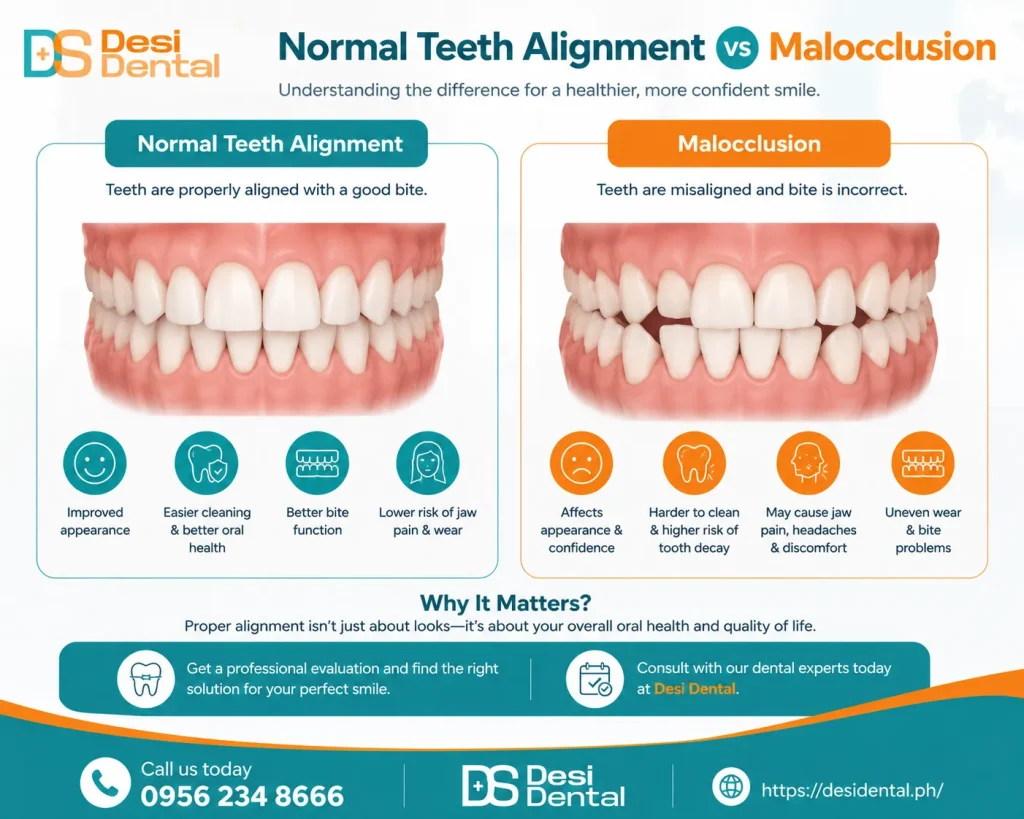
Normal Teeth Alignment vs Malocclusion
Dentists classify bites using Angle’s system:
- Class I (Normal): Correct molar relationship with minor imperfections possible. This is the ideal and most functional bite.
- Class II: Upper teeth or jaw protrude too far (overbite/overjet).
- Class III: Lower teeth or jaw protrude (underbite).
Other common issues include crossbite, open bite, deep bite, crowding, and spacing. Even mild deviations from normal alignment can cause problems if left untreated.
Factors That Affect Teeth Alignment
- Genetics (jaw size vs tooth size)
- Childhood habits (thumb sucking, tongue thrusting, pacifier use)
- Early loss of baby or permanent teeth
- Wisdom teeth pressure
- Teeth grinding (bruxism)
- Mouth breathing
- Trauma or injury
Early orthodontic evaluation around age 7 can often prevent major alignment issues.
How to Check Your Teeth Alignment
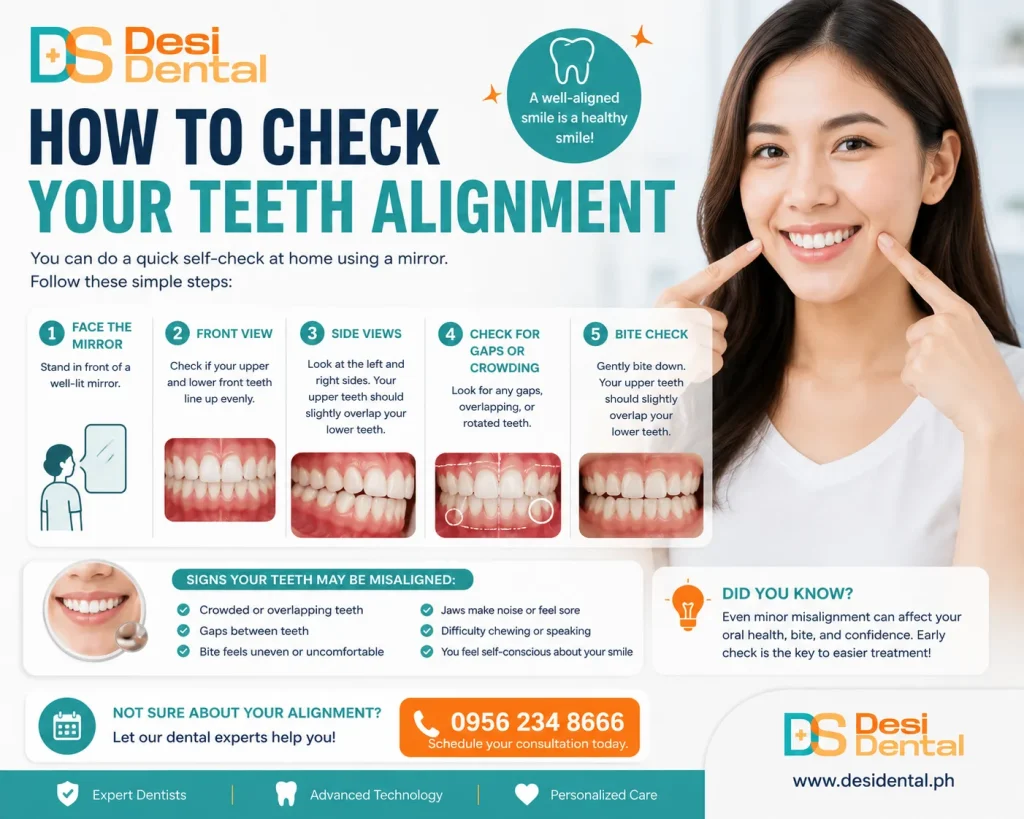
You can do a quick self-check at home:
- Smile in the mirror: Do your upper teeth slightly cover the lowers?
- Bite down gently: Do your teeth meet evenly without sliding?
- Check the center line: Does it match the middle of your face?
- Look for gaps, overlaps, or tilted teeth.
For accurate assessment, visit a dentist or orthodontist. They use X-rays, photos, and dental models for precise diagnosis.
How to Achieve or Maintain Normal Teeth Alignment
Modern solutions include:
- Clear aligners (e.g., Invisalign)
- Traditional braces
- Retainers after treatment
- Specialized appliances for jaw development in children
Adults can also achieve excellent results. Treatment time varies from a few months to 2 years depending on the case.
Maintenance tips:
- Wear retainers as instructed
- Practice excellent oral hygiene
- Use a nightguard if you grind your teeth
- Schedule regular dental check-ups
Common Myths About Normal Teeth Alignment
- Myth: Only perfectly straight teeth are normal. Reality: Slight natural variations are common and perfectly healthy if the bite functions well.
- Myth: Alignment is only about appearance. Reality: It strongly affects chewing, jaw health, and overall wellness.
- Myth: Adults cannot fix their bite. Reality: Orthodontic treatment works effectively at any age.
Normal teeth alignment is the foundation of a healthy, functional, and confident smile. It goes far beyond aesthetics — it protects your teeth, supports your jaw, improves digestion, and enhances quality of life.
If you’re concerned about your bite, consult an orthodontist for a professional evaluation. Understanding and maintaining proper teeth alignment is one of the best investments you can make for your long-term oral health and well-being.
This guide provides clear, practical information to help you better understand normal teeth alignment and take positive steps toward a healthier smile.


