

When a tooth is badly infected or seriously damaged, many people wonder what the best solution is: Dental Implant vs Root Canal: Which is Better?. Both treatments can stop pain and help you chew normally again, but they work in very different ways. They also differ in recovery time, cost, and how long the results may last.
What Is a Root Canal?
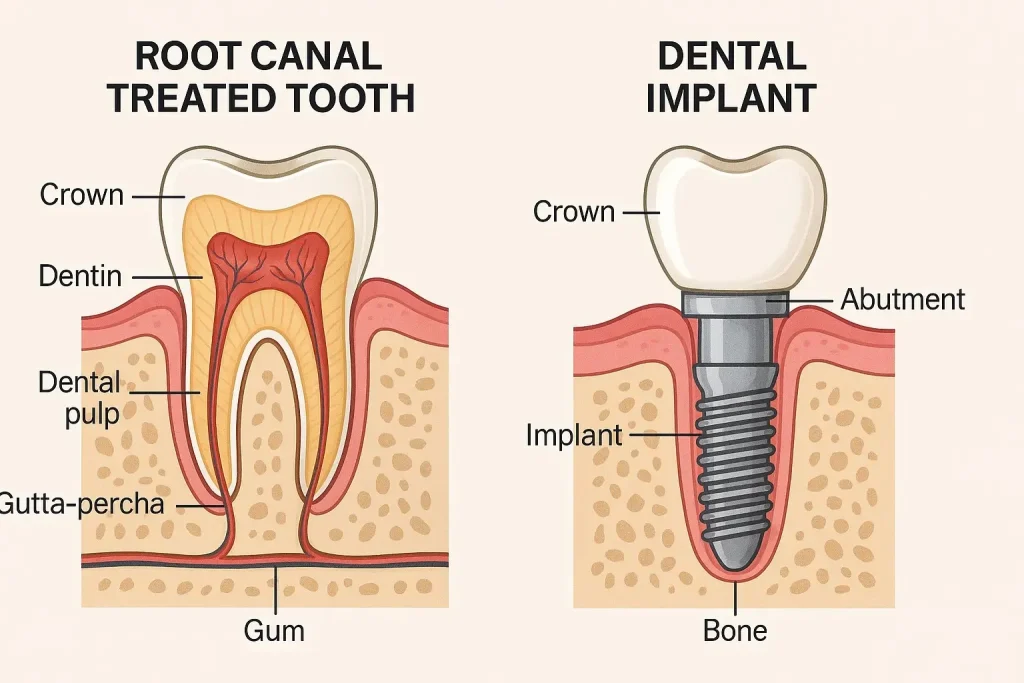
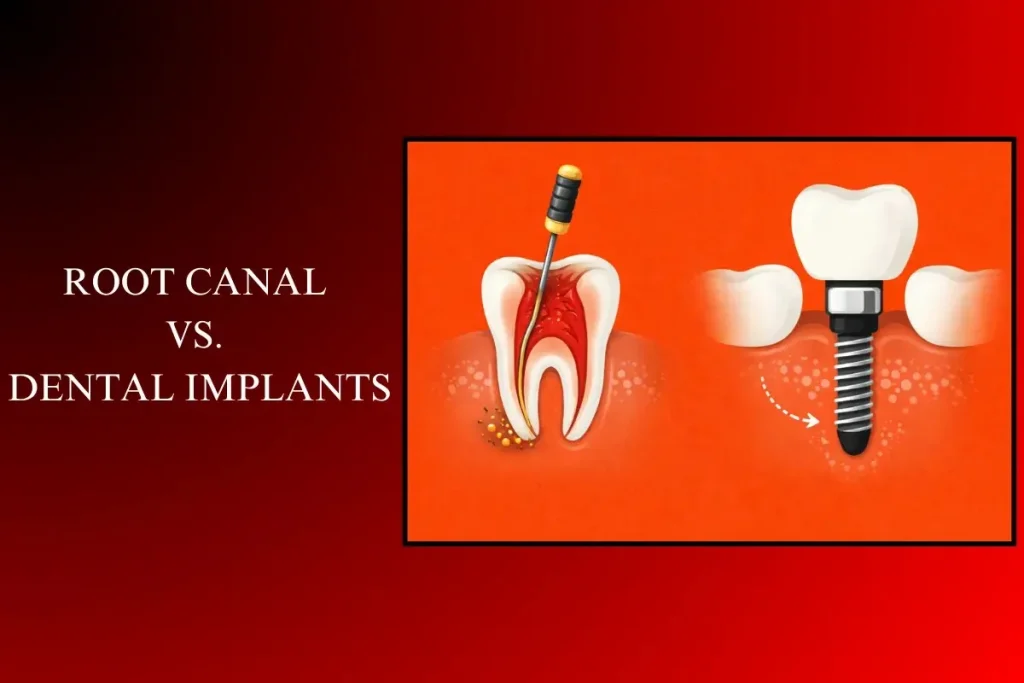
A root canal treatment is designed to save a natural tooth that has become infected or severely inflamed inside. The problem usually occurs in the pulp, the soft tissue at the center of the tooth that contains nerves and blood vessels. This infection can develop because of deep cavities, cracks in the tooth, injury, or repeated dental procedures on the same tooth.
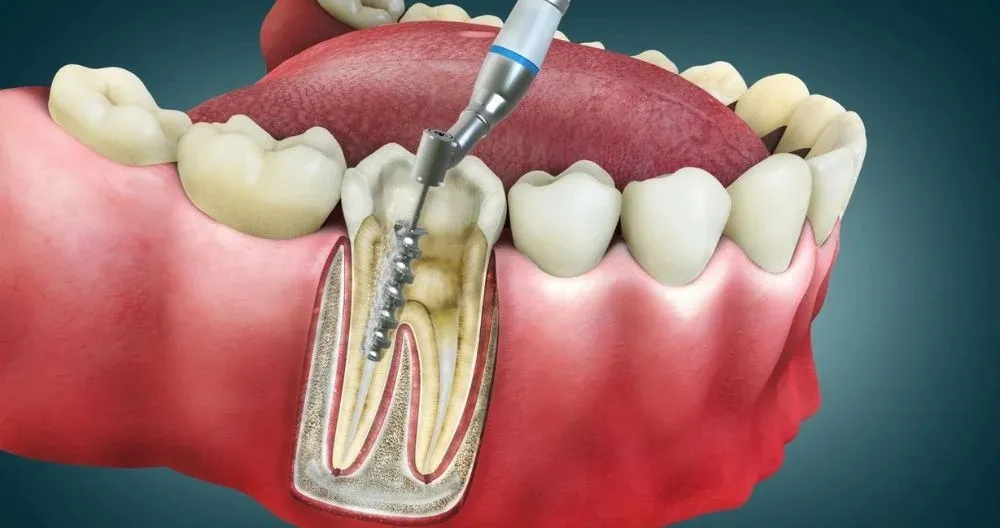
Typical steps involved (usually completed in one or two appointments):
- Dental imaging such as X-rays is taken to evaluate the extent of infection and the shape of the root canals.
- Local anesthesia is applied to numb the area so the procedure is comfortable.
- A dental dam is placed around the tooth to keep it clean and dry during treatment.
- The dentist removes damaged or decayed tooth material and creates a small opening to reach the inner pulp chamber.
- The infected or dead pulp is carefully removed, and the canals are cleaned, shaped, and disinfected. In some cases, medication may be placed inside if the infection is significant.
- The cleaned canals are then sealed with a biocompatible filling material along with a special dental sealer.
- A temporary filling is placed to protect the tooth until a permanent crown is fitted in a later visit.
Thanks to modern dental technology and improved anesthesia, root canal treatment is typically much more comfortable than many people expect. Most patients experience minimal discomfort during the procedure.
Key advantage: The treatment keeps your natural tooth in place, maintaining proper bite alignment and normal chewing function. When followed by a well-fitted crown and good oral care, the treated tooth can remain functional for many years—often even a lifetime.
What Is a Dental Implant?
A dental implant is a modern solution used when a tooth is too damaged to be saved. Instead of repairing the natural tooth, the procedure replaces it with an artificial tooth root that is anchored into the jawbone. This artificial root helps support a replacement tooth and can also reduce the bone loss that often happens after a tooth is removed.
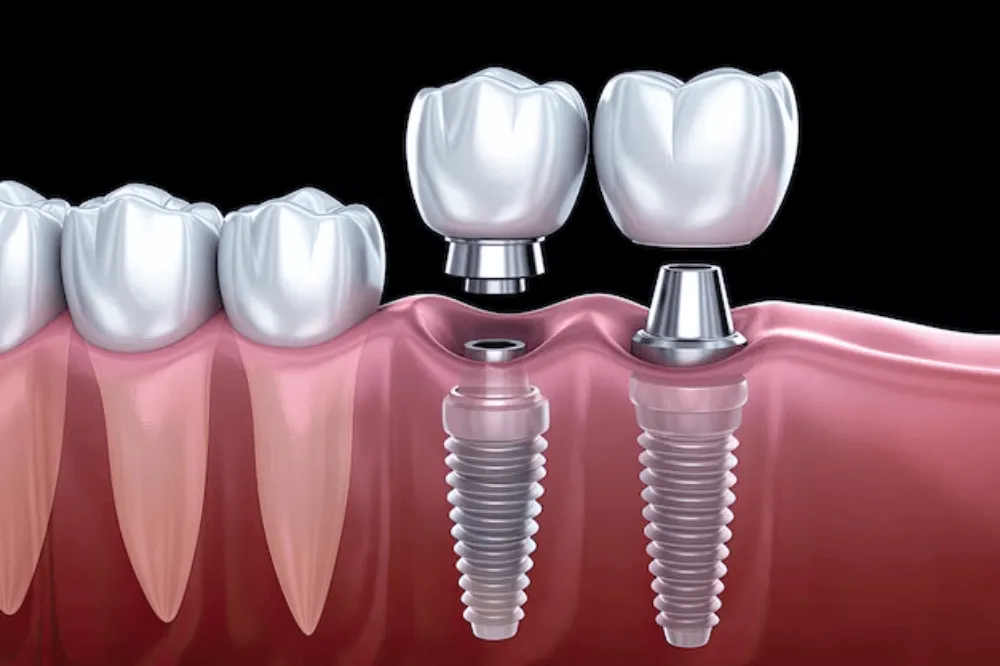
Typical stages of the implant process (usually completed over several months):
- Tooth removal – If the damaged tooth is still present, it is carefully extracted.
- Jawbone preparation – The dentist evaluates the bone where the implant will be placed. If the bone is too thin or weak, a bone graft may be recommended to strengthen the area.
- Implant placement – A small titanium post is surgically inserted into the jawbone, where it will act as the new tooth root.
- Healing and integration – Over the next 3–6 months, the bone gradually grows around the implant in a process called osseointegration, creating a strong and stable foundation.
- Abutment attachment – After healing, a connector piece (called an abutment) is secured to the implant.
- Final crown placement – A custom-made dental crown is attached to the abutment, restoring the appearance and function of the missing tooth.
Once completed, dental implants are designed to look, feel, and function similarly to natural teeth. Unlike natural teeth, the artificial crown attached to an implant cannot develop cavities, although proper oral hygiene is still essential to maintain healthy gums and surrounding bone.
Root Canal vs. Dental Implant
If you’re deciding between a root canal and a dental implant, it helps to understand how these two treatments differ in purpose, procedure, recovery, and long-term outcomes. While both options can restore comfort and function, they are used in different situations and involve different treatment paths.
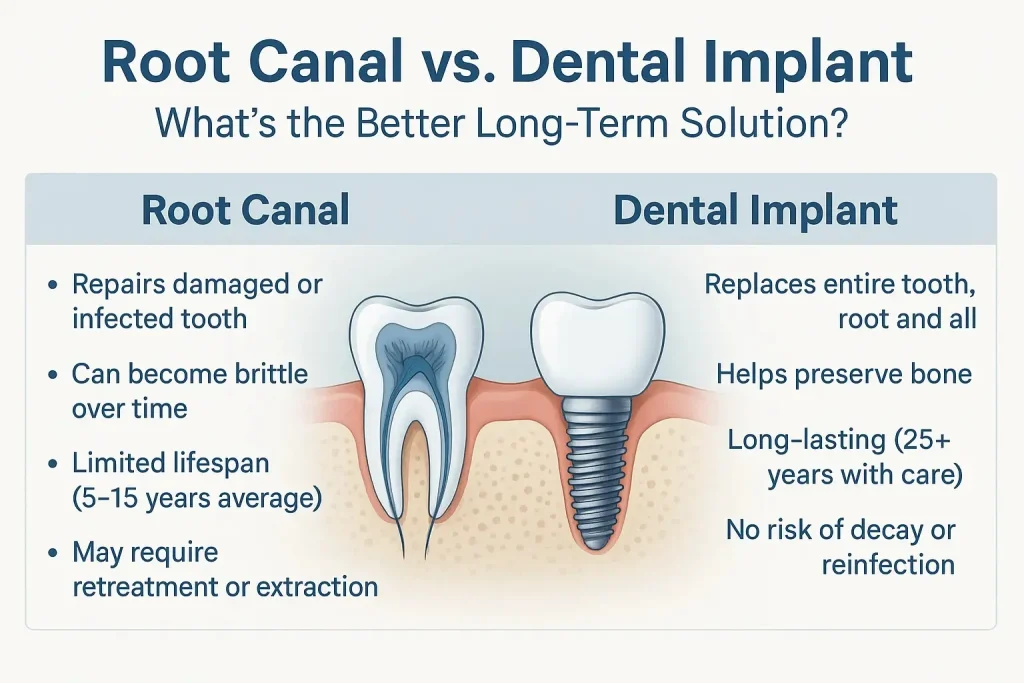
Below is a simplified comparison to help you evaluate the two approaches.
| Category | Root Canal Treatment | Dental Implant |
|---|---|---|
| Main purpose | Preserves and repairs your existing natural tooth | Replaces a tooth that cannot be saved |
| Type of procedure | Non-surgical endodontic treatment | Minor oral surgery |
| Treatment timeline | Usually completed in 1–2 appointments | Several stages over roughly 3–9 months |
| Healing experience | Mild soreness or sensitivity for a few days | Possible swelling or bruising for about a week; full bone healing takes months |
| Long-term success | Studies report about 85–98% success over 10 years | Around 95–98% long-term success with proper care |
| Durability | Can last many years; retreatment may occasionally be needed | Often designed to last decades or longer |
| Typical cost (U.S., 2025–2026) | About $700–$2,000 for the procedure plus $500–$3,000 for a crown | Usually $3,000–$6,500 including implant, abutment, and crown |
| Effect on jawbone | Maintains the natural tooth and surrounding bone | The implant stimulates the jawbone and helps reduce bone loss |
| Most suitable for | Teeth that still have a stable root and enough structure to restore | Teeth that are severely damaged or already extracted |
Important Factors When Choosing Between Dental Implant vs Root Canal
Deciding between a root canal treatment and a dental implant depends on several clinical and personal factors. Your dentist will evaluate your specific situation, but understanding the key considerations can help you make a more informed decision.
1. Condition of the tooth
If the tooth still has a stable root and enough remaining structure, dentists often recommend a root canal to preserve the natural tooth. However, when the tooth is severely cracked, structurally compromised, or associated with major bone damage, replacing it with a dental implant may be the more reliable option.
2. Overall health and medical history
Certain health conditions can influence treatment outcomes. Factors such as smoking, uncontrolled diabetes, or osteoporosis may slow the healing process required for implants. In many cases, root canal therapy carries fewer systemic considerations because it focuses on treating the existing tooth rather than placing a surgical implant.
3. Treatment timeline and lifestyle needs
If you are looking for a faster treatment with shorter recovery, a root canal is usually completed in one or two visits. Dental implants, on the other hand, involve several stages and require healing time over several months, though they may offer a more permanent restoration in the long run.
4. Jawbone preservation
After a tooth is removed, the surrounding jawbone can gradually shrink due to lack of stimulation. Dental implants help address this issue because the implant post acts similarly to a natural tooth root and stimulates the bone. A root canal preserves the existing tooth but does not actively influence bone remodeling in the same way.
5. Cost and insurance considerations
Root canal treatment generally has a lower upfront cost and is more commonly covered by dental insurance plans. Dental implants tend to involve a higher initial investment, but they may reduce the need for additional treatments over time in some cases.
Recent clinical analyses suggest that both procedures have similar overall failure rates—typically around 6–8%. However, implants can sometimes require additional follow-up procedures, particularly if complications occur during healing or integration with the bone.
Dental Implant vs Root Canal Aftercare
- Root canal treatment: Most people can resume normal daily activities shortly after the procedure, often on the same day. Some mild tenderness around the treated tooth is possible, but it is usually manageable with common over-the-counter pain medication. Dentists typically recommend avoiding chewing on that tooth until a permanent crown or final restoration is placed.
- Dental implants: After implant surgery, it’s common to experience minor swelling or tenderness for several days. During the first week, patients are often advised to follow a soft-food diet while the surgical site begins to heal. The full bonding process between the implant and jawbone takes several months. Once healing is complete, caring for an implant is similar to caring for natural teeth—regular brushing, flossing, and routine dental visits remain essential.
Dental Implant vs Root Canal: Which is Better for You?
- A root canal treatment is usually recommended when the tooth can still be preserved. If the root structure remains stable and there is enough healthy tooth material to restore, keeping the natural tooth is often the preferred approach. Many patients also choose this option because it allows them to maintain their original tooth rather than replacing it.
- A dental implant may be considered when the tooth is no longer restorable—for example, if it is severely fractured, extensively decayed, or if a previous root canal treatment has failed. Some patients also prefer implants because they provide a durable replacement that functions like a natural tooth and helps support the surrounding jawbone.
In certain situations, dentists may suggest removing the damaged tooth and placing an implant soon after extraction. This approach can shorten the overall treatment timeline and help preserve the bone in the area.
Frequently Asked Questions
Which procedure is more painful?
Both treatments are performed with modern anesthesia, so discomfort during the procedure is usually minimal. In fact, most patients find that either option is far less painful than the tooth infection that required treatment in the first place. Many people report that root canal therapy feels similar to having a routine filling.
How long do the results typically last?
A well-performed root canal followed by a proper crown can function for many years and sometimes even decades. Dental implants are designed to be a long-term solution and, with consistent oral care, can remain stable for a lifetime.
Does dental insurance cover these treatments?
Coverage varies by provider and policy. Root canal procedures are commonly included in dental insurance plans. Implants may be only partially covered in some cases, and patients may need to explore payment plans or financing options.
Can an implant be placed after a root canal fails?
Yes. If a previously treated tooth cannot be saved through retreatment or other restorative procedures, the tooth may be extracted and replaced with a dental implant. This is a common pathway for many patients.
Making an informed choice is important for protecting your smile and maintaining long-term oral health. If you’re uncertain about the best path forward, scheduling a consultation with a qualified dental professional is the best place to start.


