

In this guide, you’ll learn how the dental implant process works step by step. We explain what happens during the procedure, how long healing usually takes, and what you can expect at each stage of treatment. You’ll also find simple tips that can help make recovery easier.
What Is a Dental Implant?
A dental implant is a small medical device designed to replace the root of a missing tooth. It is usually made from titanium or advanced ceramic materials that are safe for the body and highly durable. During treatment, the implant is surgically placed into the jawbone, where it gradually fuses with the bone in a natural healing process known as osseointegration.
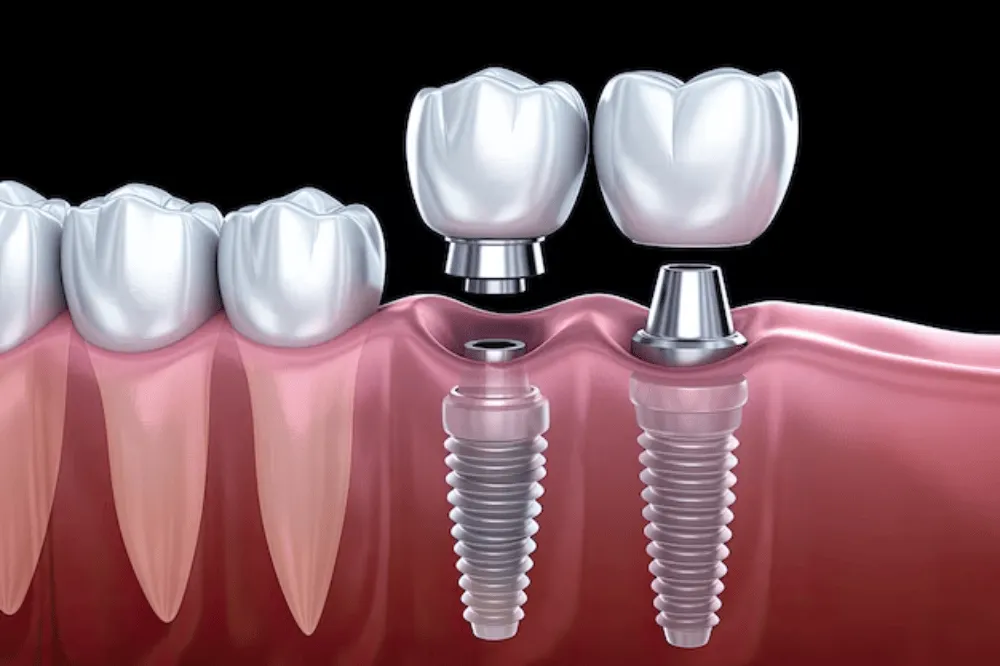
Once the implant has securely integrated with the bone, a small connector called an abutment is attached. This connector holds the final restoration, which may be a custom crown, bridge, or implant-supported denture. Together, these components create a replacement tooth that is stable, functional, and designed to closely match the appearance and feel of natural teeth.
Who Can Benefit From Dental Implants?
Many adults in good general health can be suitable candidates for dental implants, especially if their jawbone is strong enough to support the implant. You may be a good candidate if you:
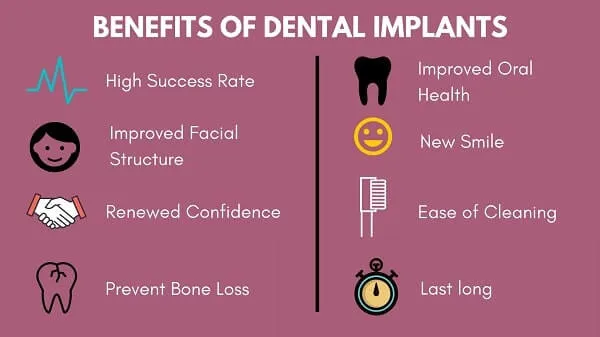
- Are missing one or several teeth, or have teeth that need to be replaced
- Have a fully developed jawbone
- Keep your teeth and gums healthy with regular oral care
- Do not have unmanaged medical conditions that could interfere with healing
Even if your jawbone has weakened over time, you may still have options. Procedures such as bone grafting or the use of specially designed implants can often help create a stable foundation. During your consultation, your dentist will typically use digital scans or 3D imaging to carefully assess your bone structure and determine the best treatment plan for your situation.
Preparing for the Dental Implant Procedure
Proper preparation plays an important role in the success of dental implant treatment. Before the procedure, your dentist will carefully review your medical history and perform a detailed examination. This usually includes digital X-rays and 3D imaging to evaluate your jawbone and plan the exact placement of the implant.

Depending on your health and lifestyle, your dentist may recommend a few steps before surgery, such as:
- Quitting smoking several weeks in advance, since smoking can slow down healing
- Adjusting certain medications if they could affect the procedure or recovery
- Planning for someone to drive you home if sedation will be used during treatment
Many modern dental clinics also use computer-guided implant technology. This approach helps dentists place implants with greater accuracy and can often make the procedure more efficient while supporting a smoother recovery.
The Dental Implant Procedure
Dental implant treatment is usually completed in several stages rather than in a single appointment. This step-by-step approach allows the jawbone and surrounding tissues to heal properly and ensures the implant becomes stable. Below is an overview of how the process commonly unfolds.
Consultation and Treatment Planning
The first step is a detailed examination. Your dentist will review your dental and medical history and take digital X-rays or 3D scans of your jaw. These images help determine the best position for the implant and allow the dental team to design a treatment plan that fits your specific needs, including timing and restoration options.
Tooth Removal (When Necessary)
If the implant is replacing a damaged or failing tooth, that tooth may need to be extracted first. In some cases, the implant can be placed immediately after the extraction, depending on the condition of the surrounding bone and gum tissue.
Bone Grafting for Additional Support
When the jawbone is not thick or strong enough to support an implant, a bone graft may be recommended. This procedure adds bone material to strengthen the area and create a solid base for the implant. The healing period after grafting typically takes a few months before the implant can be placed.
Implant Placement
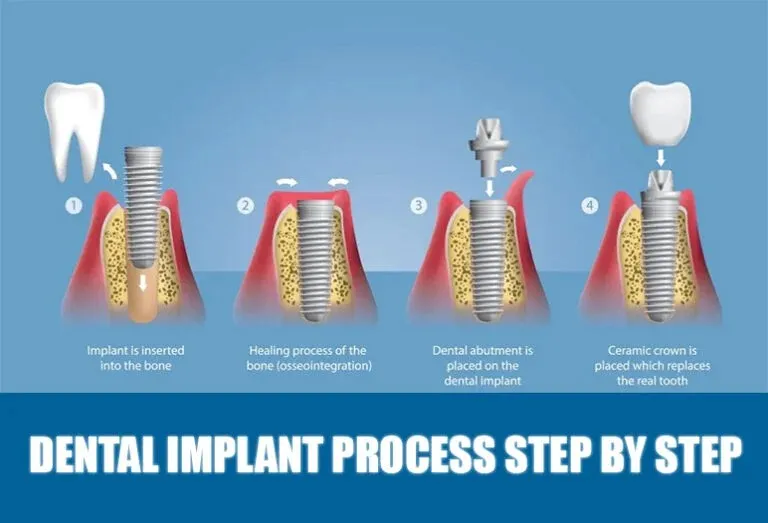
During the surgical phase, the dentist or oral surgeon places the implant into the jawbone. The procedure is usually performed with local anesthesia, and sedation may also be available for comfort. A small opening is made in the gum, and the implant is carefully positioned in the bone. After placement, the gum tissue is stitched closed. The surgery itself is often completed within about an hour for a single implant.
Healing and Bone Integration
Following surgery, the jawbone gradually grows around the implant in a process called osseointegration. This phase is essential because it allows the implant to become firmly anchored in the bone. Healing usually takes several months. During this time, some patients may receive a temporary tooth to maintain appearance and function.
Attaching the Abutment
Once the implant has fully integrated with the bone, a small connector called an abutment is placed on top of the implant. This component will support the final restoration. The gum tissue usually heals around the abutment within a couple of weeks.
Placement of the Final Tooth
The final step is creating and attaching the permanent restoration. Your dentist will take impressions or digital scans to design a custom crown, bridge, or denture that matches your natural teeth. After it is secured to the abutment, the implant restoration is ready to function like a natural tooth.
Recovery process after the Dental Implant Procedure
Healing after a dental implant procedure is often smoother than many people anticipate. While everyone heals at a slightly different pace, most patients experience only mild discomfort and can return to normal activities fairly quickly.
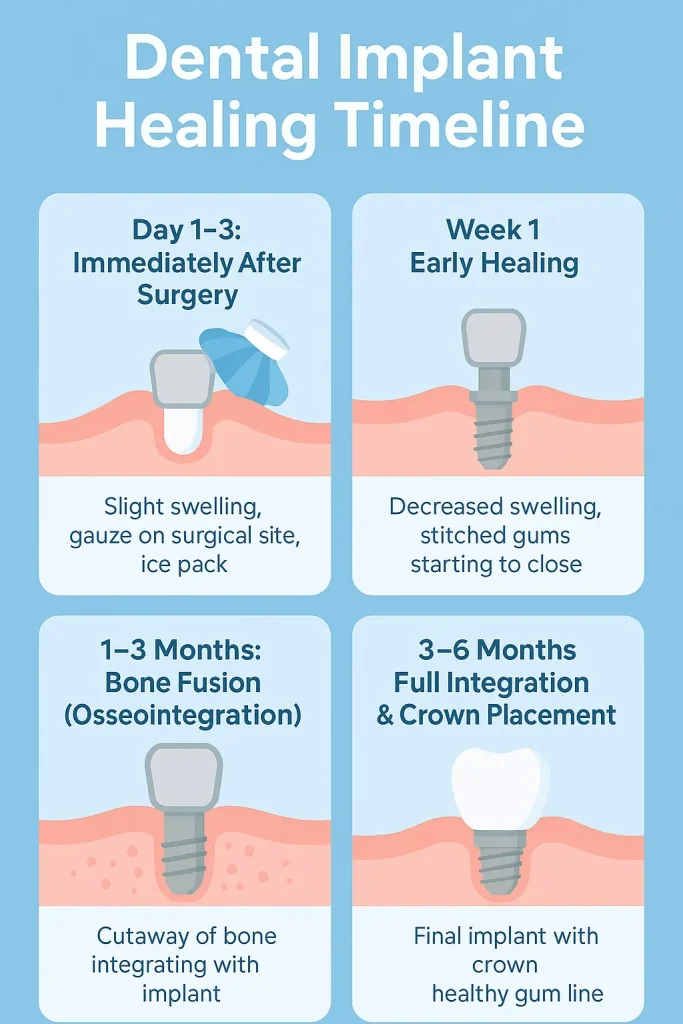
- First 24–72 hours: It’s normal to notice some swelling, tenderness, or minor discomfort around the treated area. Using ice packs, resting, and taking recommended pain medication can help manage these symptoms. During this time, it’s best to eat soft and cool foods that won’t irritate the surgical site.
- First week: Many patients feel well enough to resume work or daily activities within a few days. However, it’s important to avoid habits that may slow healing, such as smoking, drinking through a straw, or eating hard or crunchy foods.
- Weeks 2–6: By this stage, the gum tissue typically heals and becomes more comfortable. You can slowly return to your usual eating habits while continuing to protect the implant area.
- Three to six months: During the following months, the implant bonds firmly with the jawbone. This natural process allows the implant to function as a strong and stable replacement for a tooth root.
Following your dentist’s aftercare instructions is key to successful healing. Gentle brushing around the area, rinsing with salt water or a recommended mouthwash, and attending follow-up appointments will help ensure the implant heals properly and remains healthy.
Possible Risks dental implant procedure
Dental implants are considered a safe and predictable treatment, but like any surgical procedure, there are some potential risks. In uncommon cases, complications may include infection around the implant site, temporary nerve sensitivity, or problems with the implant integrating properly with the bone.
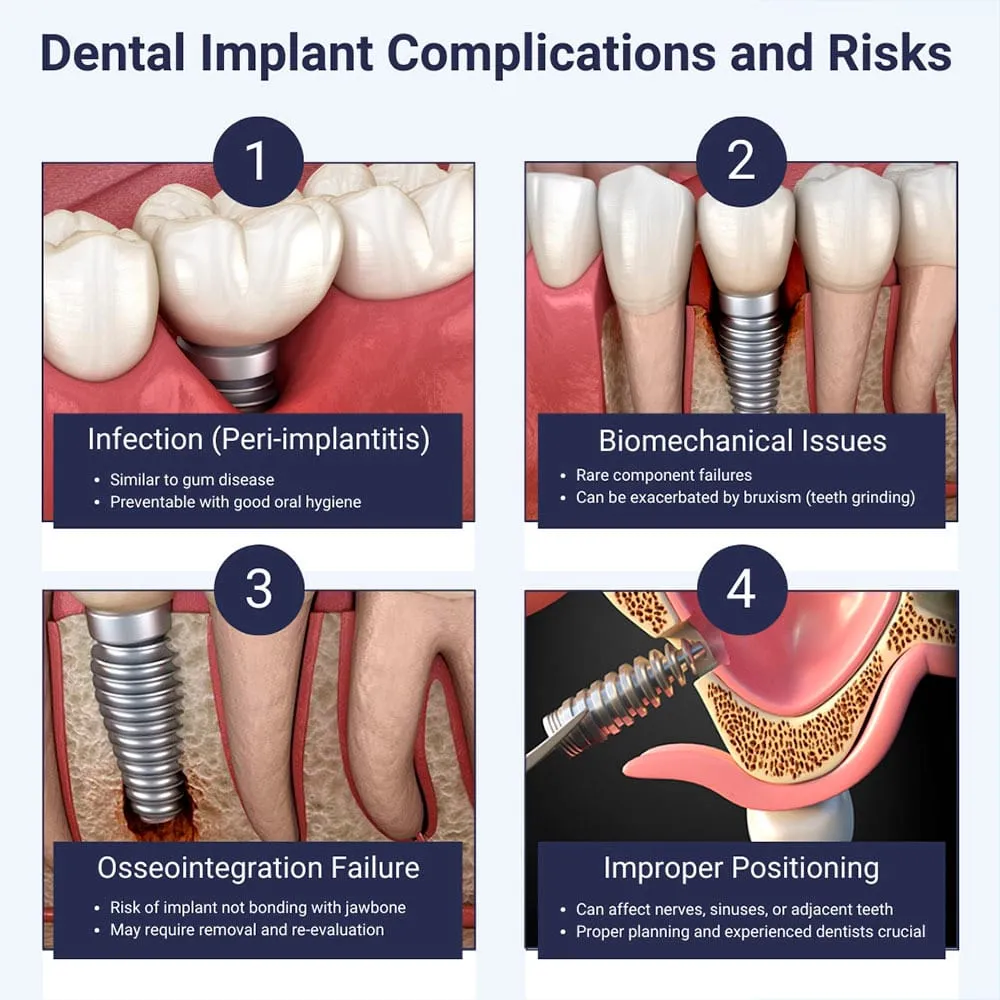
The likelihood of these issues can be greatly reduced by choosing a skilled and experienced dental professional and carefully following all post-treatment instructions. Maintaining good oral hygiene, attending scheduled check-ups, and keeping the implant area clean are important for long-term success.
Common Questions About Dental Implants Procedure
Does getting a dental implant hurt?
Most patients are surprised by how manageable the procedure feels. Local anesthesia keeps the area numb during surgery, so you shouldn’t feel pain while the implant is placed. Afterward, any mild soreness or swelling can usually be controlled with prescribed or over-the-counter medication.
How long does the entire treatment take?
The complete process typically takes between three and nine months. The timeline depends on factors such as healing speed and whether additional procedures, like bone grafting, are required before the implant can be placed.
Will I be able to eat normally after treatment?
Yes. Once the implant has fully healed and the final restoration is attached, most people can return to eating their regular foods. Implants are designed to provide stability similar to natural teeth.
How long do dental implants last?
With good oral hygiene and routine dental care, the implant itself can last for many years—often a lifetime. The crown attached to the implant may need to be replaced after about 10 to 15 years, depending on wear and maintenance.
If you are considering this option, the most helpful next step is to speak with an experienced implant dentist or oral surgeon. A professional evaluation will allow them to examine your oral health, discuss suitable treatment options, and provide personalized guidance based on your individual needs.


