

Understanding dental tourism prices Philippines is the first step for anyone considering affordable, high-quality dental care abroad. In 2026, thousands of patients from the United States, Australia, Canada, the United Kingdom, and other countries travel to the Philippines every year for treatments that cost 50–75% less than at home. The combination of lower living costs, English-speaking dentists (many trained to international standards), modern clinics, and the chance to recover in a tropical setting makes the country one of Southeast Asia’s most practical dental tourism destinations.
Why Patients Choose the Philippines for Dental Work
Several practical reasons keep the Philippines popular:
- Significant savings on complex procedures such as implants, full-arch restorations, veneers, and crowns.
- English is widely spoken in clinics and is the language of dental education, so communication is usually smooth.
- Many dentists have trained or completed postgraduate studies in the US, Australia, or Europe.
- Clinics in major cities use digital imaging (CBCT), modern sterilization protocols, and internationally recognized implant brands (Osstem, Dentium, Straumann, Nobel Biocare, etc.).
- No special medical visa is required for most nationalities for stays under 30 days. A longer tourist visa can be arranged if needed.
- You can combine treatment with a vacation on beaches in Cebu, Boracay, or Palawan, or explore cities like Manila and Davao.
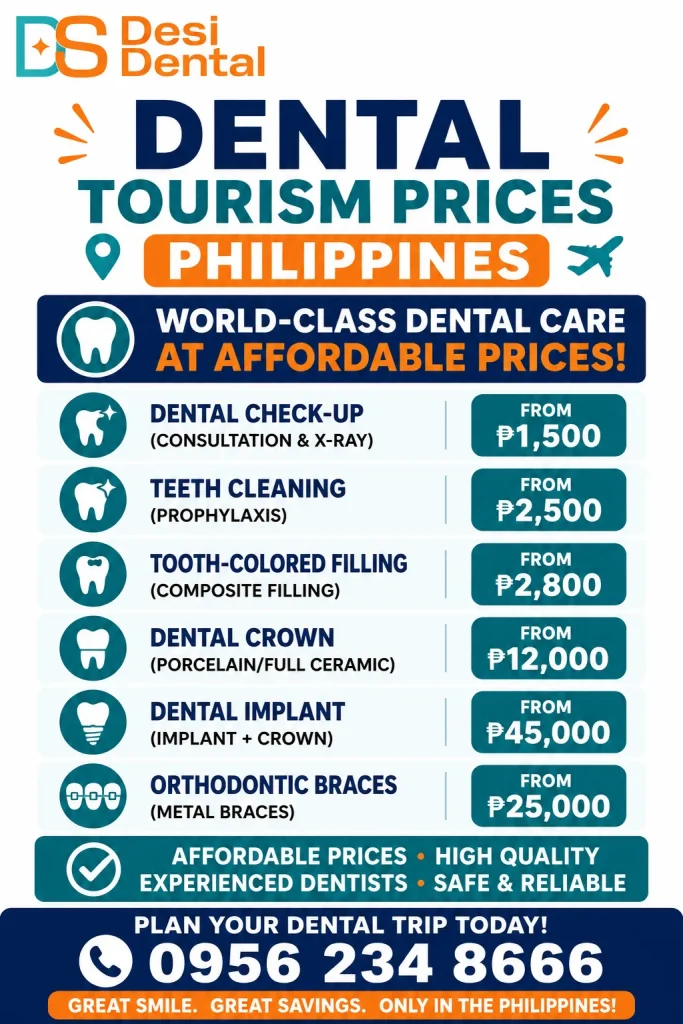
Dental Tourism Prices Philippines (USD)
Prices below are typical ranges at private clinics that regularly treat international patients. They usually include the main procedure but may exclude diagnostics, bone grafts, or temporary restorations. Always confirm a written quote after examination.
| Procedure | Philippines (USD) | Typical US Price | Typical Australia Price | Typical Savings |
|---|---|---|---|---|
| Consultation + basic exam | $5 – $25 | $50 – $150 | $50 – $120 | 70–90% |
| Professional cleaning | $20 – $60 | $100 – $250 | $100 – $200 | 70–80% |
| Composite filling (per tooth) | $40 – $100 | $150 – $400 | $150 – $300 | 60–75% |
| Simple tooth extraction | $30 – $100 | $150 – $400 | $150 – $300 | 60–80% |
| Surgical / wisdom tooth extraction | $80 – $300 | $300 – $800+ | $300 – $700 | 50–70% |
| Root canal (front tooth) | $150 – $300 | $700 – $1,200 | $800 – $1,500 | 70–80% |
| Root canal (molar) | $250 – $600 | $1,000 – $1,800 | $1,200 – $2,000 | 60–75% |
| Porcelain-fused-to-metal crown | $150 – $350 | $800 – $1,500 | $1,000 – $1,800 | 70–80% |
| Zirconia / all-ceramic crown | $250 – $500 | $1,200 – $2,500 | $1,500 – $2,800 | 70–80% |
| Porcelain veneer (per tooth) | $250 – $600 | $1,000 – $2,500 | $1,500 – $2,500 | 70–80% |
| Composite veneer (per tooth) | $80 – $200 | $400 – $800 | $400 – $700 | 60–75% |
| Single dental implant + crown | $1,000 – $2,500 | $3,500 – $6,500 | $4,200 – $6,500 | 55–75% |
| All-on-4 (per arch) | $6,000 – $14,000 | $20,000 – $35,000 | $25,000 – $35,000 | 55–70% |
| All-on-6 (per arch) | $8,000 – $16,000 | $25,000 – $40,000 | $28,000 – $40,000 | 55–70% |
| In-clinic teeth whitening | $150 – $400 | $500 – $1,000 | $400 – $800 | 50–70% |
| Full smile makeover (8–10 veneers) | $2,000 – $5,500 | $10,000 – $25,000 | $12,000 – $25,000 | 70–80% |
Notes on implants:
- Lower end usually uses Korean systems (Osstem, Dentium).
- Higher end uses premium Swiss/German/American systems (Straumann, Nobel Biocare).
- Bone grafting or sinus lift, if needed, typically adds $250–$800 per site.
What Affects the Dental Tourism Prices Philippines
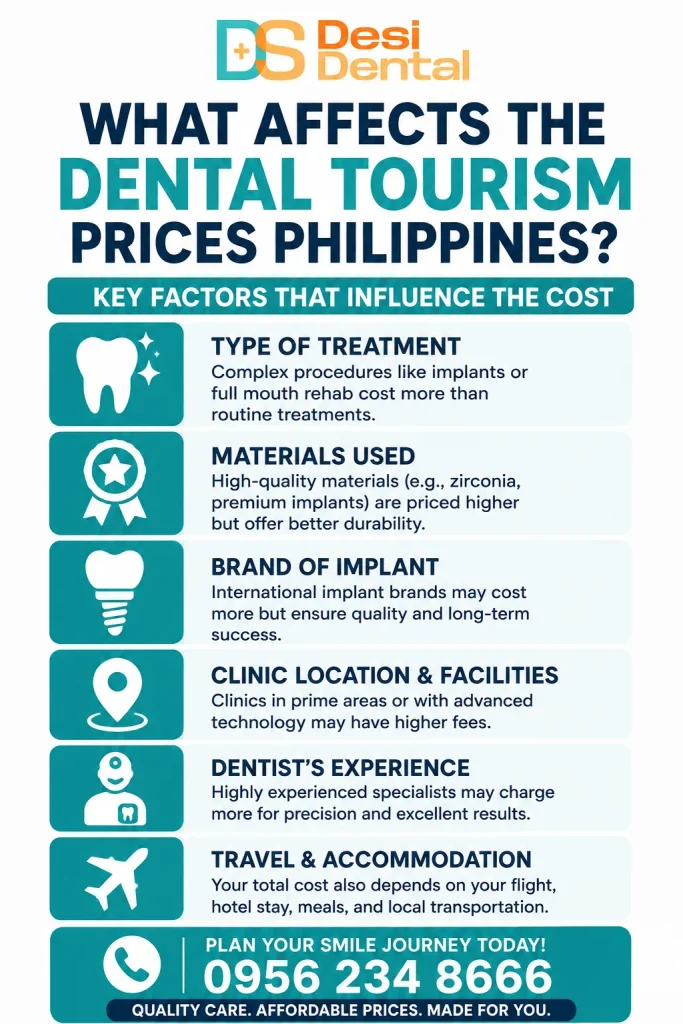
Not every clinic charges the same amount. These factors create the range you see:
- City and location — Metro Manila (especially Makati and BGC) is the most expensive. Cebu is usually 10–25% cheaper. Davao and provincial cities are often the most affordable.
- Clinic type — Premium international-patient clinics charge more than neighborhood or mall-based clinics.
- Materials — Zirconia and e.max cost more than porcelain-fused-to-metal. Premium implant brands cost more than standard titanium systems.
- Dentist experience — Specialists (implantologists, endodontists, cosmetic dentists) charge higher fees than general dentists.
- Complexity — Bone loss, infection, or the need for temporary teeth increase the total.
- Package deals — Many clinics offer discounts for multiple implants, full-arch cases, or smile makeovers.
Best Cities for Dental Tourism
Manila (Makati, BGC, Quezon City) Largest selection of high-end clinics, hospital-affiliated options, and experienced specialists. Best for complex or full-mouth cases. Higher prices and more traffic, but excellent infrastructure and flight connections.
Cebu Excellent balance of quality and cost. Slightly lower prices than Manila, good English proficiency, and easy access to beaches for recovery. Popular with patients who want to combine treatment with a holiday.
Davao Quieter, generally more affordable, and growing in reputation. Suitable for simpler or moderate cases. Good safety record and cleaner environment according to many visitors.
Realistic Total Trip Cost Examples
Example 1: Simple cosmetic trip (whitening + 4–6 veneers)
- Treatment: $1,500 – $3,500
- Flights (round-trip from US West Coast or Australia): $800 – $1,800
- Hotel (7 nights): $350 – $700
- Food & transport: $200 – $350 Total: roughly $3,000 – $6,500 (often still cheaper than veneers alone at home)
Example 2: Moderate implant case (2–3 single implants)
- Treatment: $3,000 – $7,000
- Flights + 10–12 nights stay: $1,500 – $3,000 Total: $5,000 – $10,500 (compared with $10,000–$18,000+ at home)
Example 3: Full-arch All-on-4 (one jaw)
- Treatment: $7,000 – $13,000
- Two trips (placement + final restoration 4–6 months later) or one longer stay: $2,500 – $5,000 Total: $10,000 – $18,000 (versus $25,000–$40,000+ in the US or Australia)
Always add a 15–25% contingency fund for unexpected needs such as bone grafts or extra visits.
How to Plan Your Dental Trip
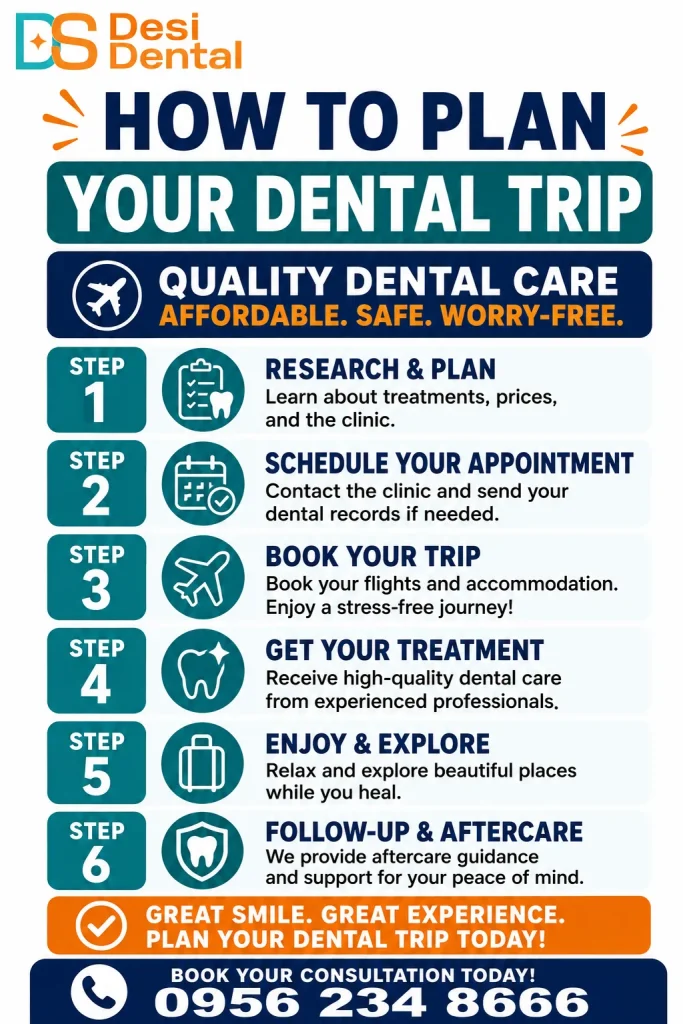
- Get a full examination and treatment plan from your home dentist (including X-rays or CBCT if possible).
- Contact 3–5 clinics in the Philippines. Send photos and radiographs for a preliminary quote.
- Ask for a detailed written plan that lists every item, materials, brands, and number of visits required.
- Check dentist credentials, clinic reviews, and sterilization practices.
- Confirm whether a second trip is needed (common for implants).
- Book refundable or flexible flights and accommodation near the clinic.
- Arrange travel insurance that covers medical emergencies (elective dental work is usually not covered, but accidents or illness are).
- Complete the Philippine eTravel declaration online before departure.
- Plan soft foods and rest days after surgery.
- Schedule a follow-up visit with your home dentist after returning.
How to Choose a Reliable Clinic
Look for these signs of quality:
- Clear information about the dentist’s education and experience.
- Use of recognized implant and material brands.
- Written treatment plans and transparent pricing.
- Positive recent reviews from international patients that mention communication and aftercare.
- Modern digital equipment (CBCT, intraoral scanners).
- Willingness to answer questions before you book.
Avoid clinics that pressure you to decide immediately or offer prices that seem unrealistically low.
Pros, Cons, and Realistic Expectations
Advantages
- Large cost savings on major work.
- English communication is usually easy.
- Opportunity to combine treatment with a holiday.
- Good availability of modern materials and techniques.
Limitations
- Quality varies between clinics — research is essential.
- Complex cases may require two trips.
- Travel and recovery time must be factored in.
- Follow-up care is harder if problems arise after returning home.
- Extremely low prices can mean lower-quality materials or less experienced dentists.
Frequently Asked Questions
Is dental work in the Philippines safe? At reputable clinics that follow proper sterilization and use quality materials, success rates for implants and other procedures are comparable to Western countries. The key is careful clinic selection.
Do I need a visa? Most nationalities (including US, Australian, Canadian, and UK citizens) receive 30 days visa-free on arrival. Longer stays require a visa extension or pre-arranged tourist visa.
Will my insurance cover treatment abroad? Most domestic dental insurance does not cover elective treatment overseas. Some international or travel insurance policies may help with complications. Check carefully before traveling.
How long should I stay?
- Whitening or simple fillings: 2–4 days
- Veneers or crowns: 5–10 days
- Implants (placement only): 5–10 days + return trip later
- Full-arch cases: 10–14 days for the first stage
Can I pay in USD or other currencies? Most clinics quote and accept payment in Philippine pesos. Some accept USD, credit cards, or bank transfers. Confirm payment methods in advance.
Dental tourism prices in the Philippines remain among the most competitive in Asia for patients seeking quality care at a lower cost. When planned carefully — with proper research, realistic expectations, and a reputable clinic — many people achieve excellent results and significant savings.


