

When it comes to improving the appearance of your teeth, composite veneers vs porcelain veneers is one of the most common comparisons patients make. Both types of veneers are designed to enhance your smile by covering imperfections such as discoloration, chips, cracks, gaps, or slightly misaligned teeth. However, they differ greatly in terms of materials, application techniques, durability, cost, and long-term results.
Choosing between composite and porcelain veneers is not just about aesthetics — it involves understanding your lifestyle, budget, time availability, and how permanent you want the change to be. This comprehensive guide will walk you through every important detail so you can make a confident, informed decision.
What Are Composite Veneers?
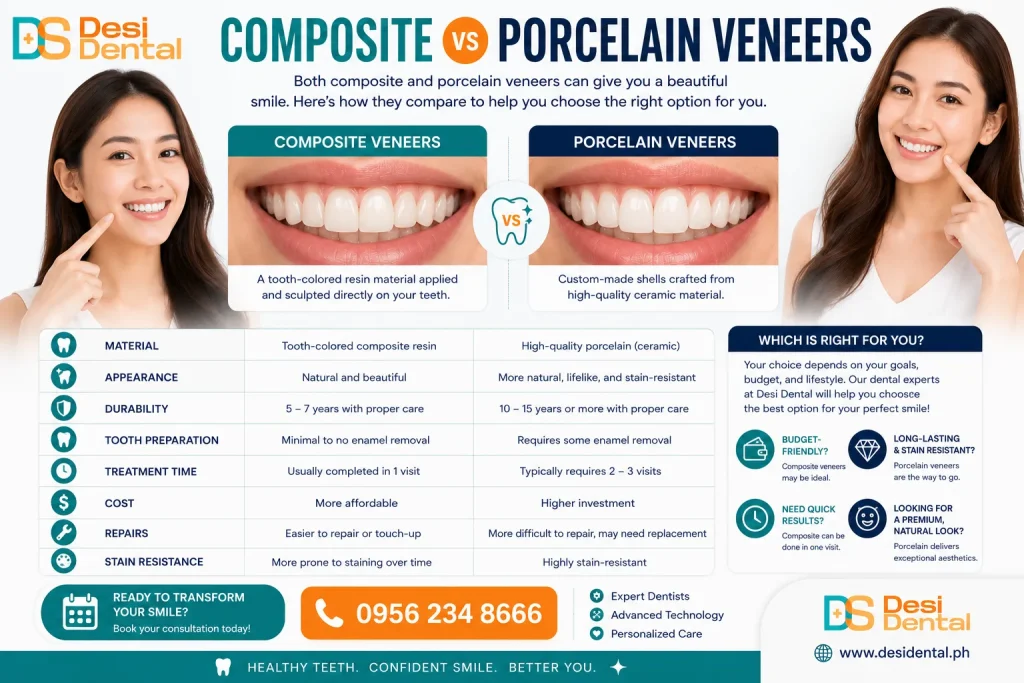
Composite veneers, also known as direct veneers, are created using a high-quality tooth-colored composite resin material. This resin is applied directly onto the surface of your natural teeth in the dental chair. The dentist carefully sculpts, shapes, and polishes the material to achieve the desired look before hardening it with a special curing light.
Because the entire process happens in one appointment, composite veneers are often called “same-day veneers.” They require very little tooth preparation — usually just slight roughening of the enamel surface rather than significant removal. This makes them a more conservative and often reversible option compared to other cosmetic treatments.
Key benefits of composite veneers include their affordability, speed, and ability to be repaired easily if damaged. They are particularly popular among younger patients or those who want to test a new smile without making a major long-term commitment.
What Are Porcelain Veneers?
Porcelain veneers are thin, custom-made shells crafted from high-grade dental ceramic (porcelain) in a professional dental laboratory. The process is more involved: your dentist first prepares your teeth by removing a small amount of enamel (typically 0.3mm to 0.7mm) to create space for the veneers. Impressions or digital scans are taken and sent to the lab, where technicians design and fabricate the veneers for a precise, natural fit.
You usually wear temporary veneers while waiting for the permanent ones. Once ready, the porcelain veneers are permanently bonded to your teeth using a strong dental adhesive.
Porcelain veneers are renowned for their exceptional strength, lifelike translucency, and ability to mimic the natural appearance of real teeth. They reflect light in a similar way to natural enamel, giving them a superior aesthetic quality.
Detailed Head-to-Head Comparison: Composite Veneers vs Porcelain Veneers
Here is a thorough breakdown of how the two options compare across multiple important factors:
| Aspect | Composite Veneers | Porcelain Veneers |
|---|---|---|
| Material | Tooth-colored composite resin | High-quality dental porcelain/ceramic |
| Durability | Average lifespan of 5–8 years | Can last 10–20 years or longer with proper care |
| Aesthetic Quality | Good natural look, but may appear slightly opaque | Superior translucency and light reflection |
| Stain Resistance | Moderate — can stain from coffee, tea, red wine | Excellent — highly resistant to discoloration |
| Cost per Tooth | $250 – $800 | $900 – $2,500+ |
| Number of Visits | Usually 1 visit | 2–3 visits |
| Tooth Preparation | Minimal enamel removal | Moderate enamel reduction required |
| Repairability | Easy and inexpensive to repair or modify | Difficult — usually requires complete replacement |
| Reversibility | Highly reversible | Mostly irreversible |
| Strength | More prone to chipping and wear | Very strong and resistant to fracture |
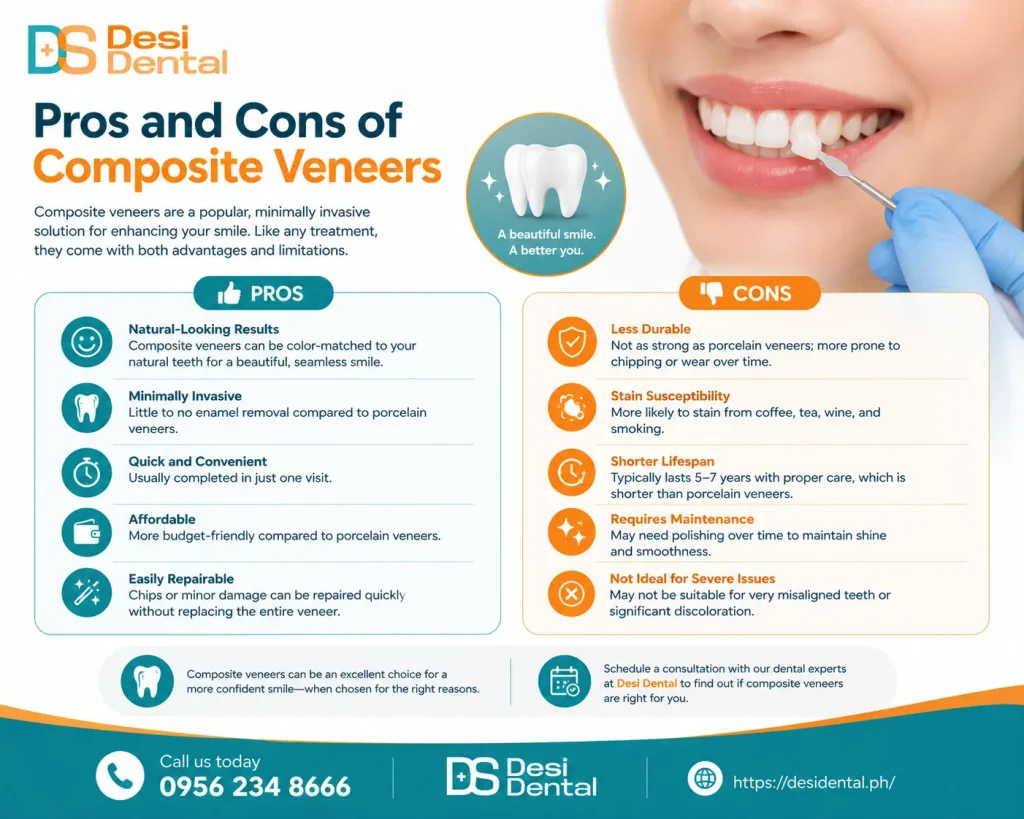
Pros and Cons of Composite Veneers
Advantages:
- Significantly lower cost, making them accessible for more people
- Completed in just one dental appointment — perfect for busy individuals
- Minimal tooth structure removal, preserving more of your natural teeth
- Easily adjustable or repairable during future visits
- Reversible in many cases if you change your mind
Disadvantages:
- Shorter lifespan compared to porcelain
- More susceptible to staining, chipping, and surface wear over time
- May require more frequent maintenance or replacement
- Slightly less natural-looking under close inspection or strong lighting
- Can lose their polish and shine faster than porcelain
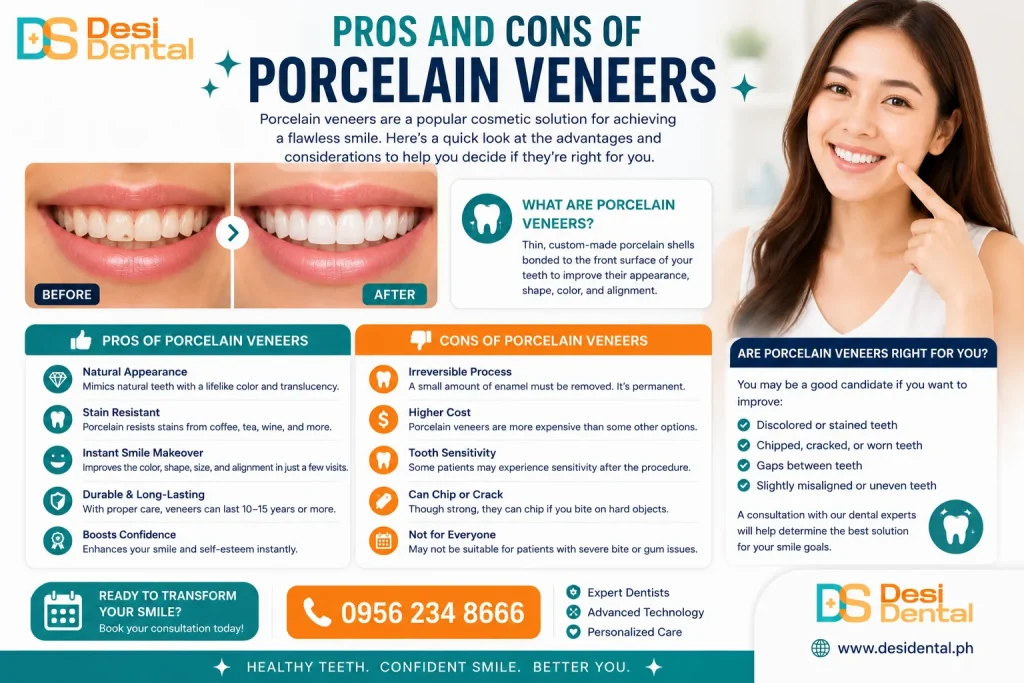
Pros and Cons of Porcelain Veneers
Advantages:
- Exceptional long-term durability and strength
- Highly resistant to stains, making them ideal for people who enjoy coffee, tea, or red wine
- Beautiful, natural translucency that closely resembles real teeth
- Excellent color stability and resistance to wear
- A premium, long-lasting investment in your smile
Disadvantages:
- Much higher upfront cost
- Requires multiple dental visits and a longer treatment timeline
- Involves permanent removal of some tooth enamel
- More difficult and expensive to repair if damaged
- Not suitable for patients with very minimal dental concerns
Which Should You Choose? Decision Guide
Choose Composite Veneers if:
- You have a limited budget
- You need fast results (e.g., for an upcoming event)
- You prefer a less invasive, more conservative approach
- Your cosmetic issues are relatively minor
- You want the flexibility to change or reverse the treatment later
- You are younger and may want different options in the future
Choose Porcelain Veneers if:
- You want the most beautiful and natural-looking results possible
- Longevity and low maintenance are your top priorities
- You are willing to invest in a premium solution
- You drink staining beverages regularly
- You desire a dramatic, life-changing smile transformation
- You are looking for a solution that will last 15+ years
Maintenance and Aftercare for Both Types
Proper care is essential regardless of your choice. Maintain excellent oral hygiene by brushing twice daily, flossing, and using an antiseptic mouthwash. Avoid biting on hard foods, ice, or using your teeth to open packages. Patients who grind their teeth should wear a custom nightguard. Regular dental check-ups every six months are crucial for monitoring the veneers and overall oral health.
Composite veneers may need polishing or touch-ups more frequently, while porcelain veneers mainly require good daily habits to maximize their lifespan.
The decision between composite veneers vs porcelain veneers ultimately depends on your personal priorities — whether you value speed and affordability or superior aesthetics and longevity. Both options can deliver beautiful smiles when performed by a skilled and experienced cosmetic dentist.
The best next step is to schedule a consultation with a qualified professional. They can examine your teeth, discuss your goals, and recommend the most suitable treatment based on your unique situation.
Would you like a stunning, confident smile? Understanding the detailed differences between composite and porcelain veneers is the first important step toward achieving it.


