

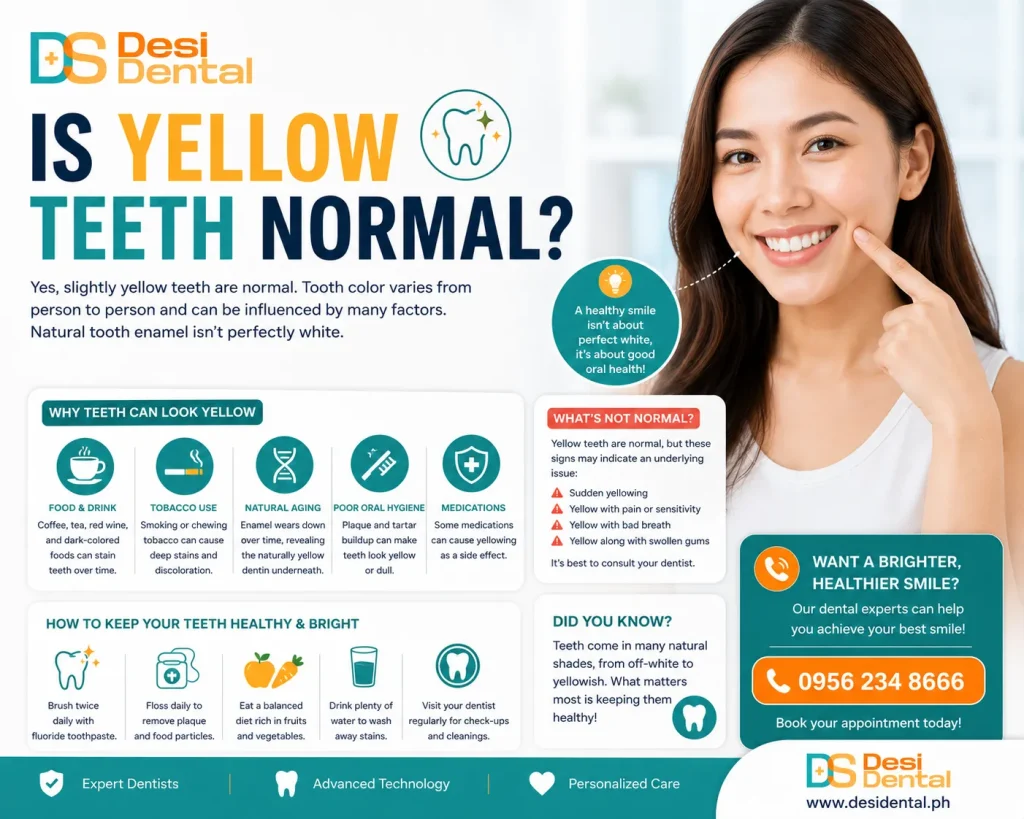
Is Yellow Teeth Normal?. The short answer is: yes, yellow teeth can be completely normal in many cases. Natural tooth color varies widely, and a slight yellowish tint is typical for healthy teeth. However, sudden or excessive yellowing may signal lifestyle factors, aging, or other issues worth addressing.
This comprehensive guide explains why teeth turn yellow, when it’s harmless, and practical steps to maintain a brighter, healthier smile.
Understanding Tooth Color: Enamel, Dentin, and Natural Variation
Teeth aren’t naturally pure white. The outer layer, called enamel, is semi-translucent and acts like a protective shell. Beneath it lies dentin, which has a natural yellowish or light brown hue.
When enamel is thick and healthy, teeth appear brighter. As enamel thins or becomes more transparent over time, more yellow dentin shows through. This is why:
- Children often have whiter teeth (thicker enamel).
- Adults gradually notice more yellowing as they age.
- Genetics play a major role — some people inherit thinner enamel or naturally yellower dentin.
Mild yellowing is normal and doesn’t always mean poor hygiene or health problems. In fact, perfectly bright white teeth are rare without whitening treatments or digital editing.
Common Causes of Yellow Teeth
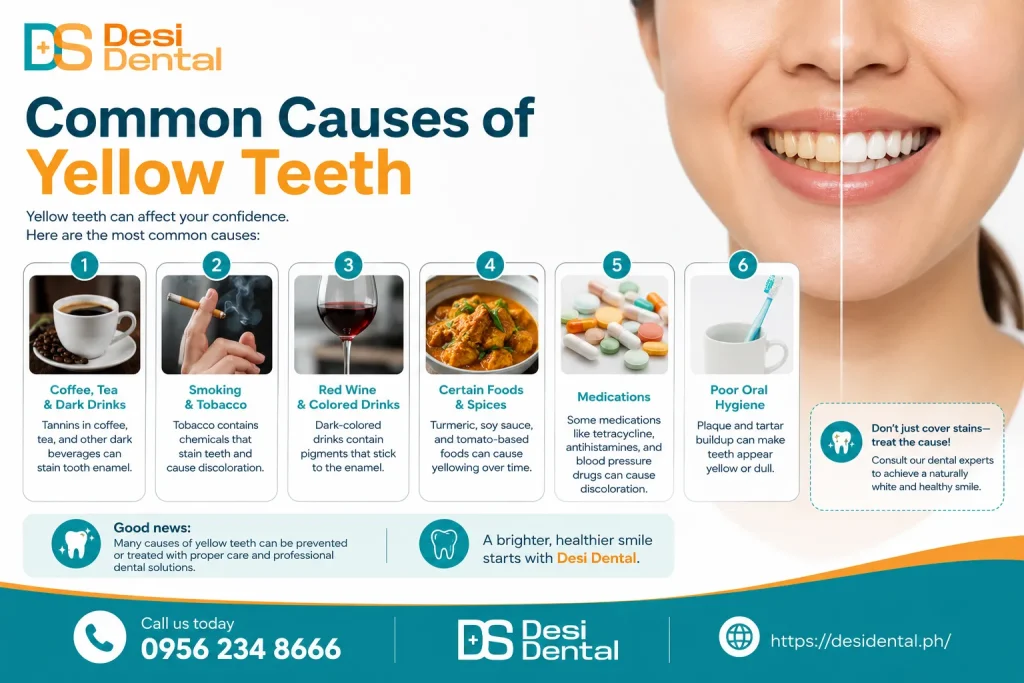
Several factors contribute to yellow or discolored teeth. Here’s a detailed breakdown:
- Aging and Enamel Wear As you get older, enamel naturally erodes from chewing, acidic foods, and daily use. This process accelerates after age 30, exposing more dentin. Yellowing due to aging is gradual and very common.
- Diet and Beverages Foods and drinks with strong pigments (chromogens) stain teeth over time:
- Coffee and tea (tannins)
- Red wine
- Cola and dark sodas
- Berries, soy sauce, curry, and tomato-based foods Acidic items also soften enamel, making stains easier to set in.
- Smoking and Tobacco Use Nicotine and tar create stubborn yellow-brown stains that penetrate enamel. Smoking also reduces saliva flow, which normally helps wash away debris.
- Poor Oral Hygiene Plaque and tartar buildup can appear yellowish. Inadequate brushing and flossing allow stains to accumulate.
- Medications and Medical Conditions Certain antibiotics (like tetracycline in childhood), antihistamines, blood pressure drugs, and chemotherapy can cause intrinsic discoloration. Conditions like high fever in childhood or trauma may also affect tooth color.
- Genetics and Thin Enamel Some people naturally have thinner enamel or dentin that shows through more easily.
- Excessive Fluoride or Trauma High fluoride exposure during tooth development (fluorosis) can cause white or yellow-brown spots. Injury to baby or adult teeth may lead to discoloration.
When Is Yellow Teeth a Concern?
Mild, even yellowing is usually harmless. However, see a dentist if you notice:
- Sudden darkening or one tooth turning yellow (possible nerve issue or decay).
- Yellow accompanied by pain, sensitivity, or bad breath.
- Brown/black spots (potential cavities).
- White streaks with yellowing (possible fluorosis).
Healthy yellow teeth differ from stained or neglected ones. A dentist can distinguish surface stains (extrinsic) from deeper changes (intrinsic).
Prevention: Keep Your Teeth Naturally Brighter
Prevention is easier than treatment. Follow these habits:
- Brush twice daily with a soft-bristled toothbrush and fluoride toothpaste. Consider whitening toothpaste with mild abrasives for surface stains.
- Floss daily and use an antimicrobial mouthwash.
- Rinse after staining foods/drinks — water helps neutralize acids.
- Limit coffee, tea, wine, and soda — use a straw when possible.
- Quit smoking or tobacco — one of the most effective changes.
- Stay hydrated — saliva naturally cleans teeth.
- Visit your dentist every 6 months for cleanings and check-ups.
Treatment Options for Yellow Teeth
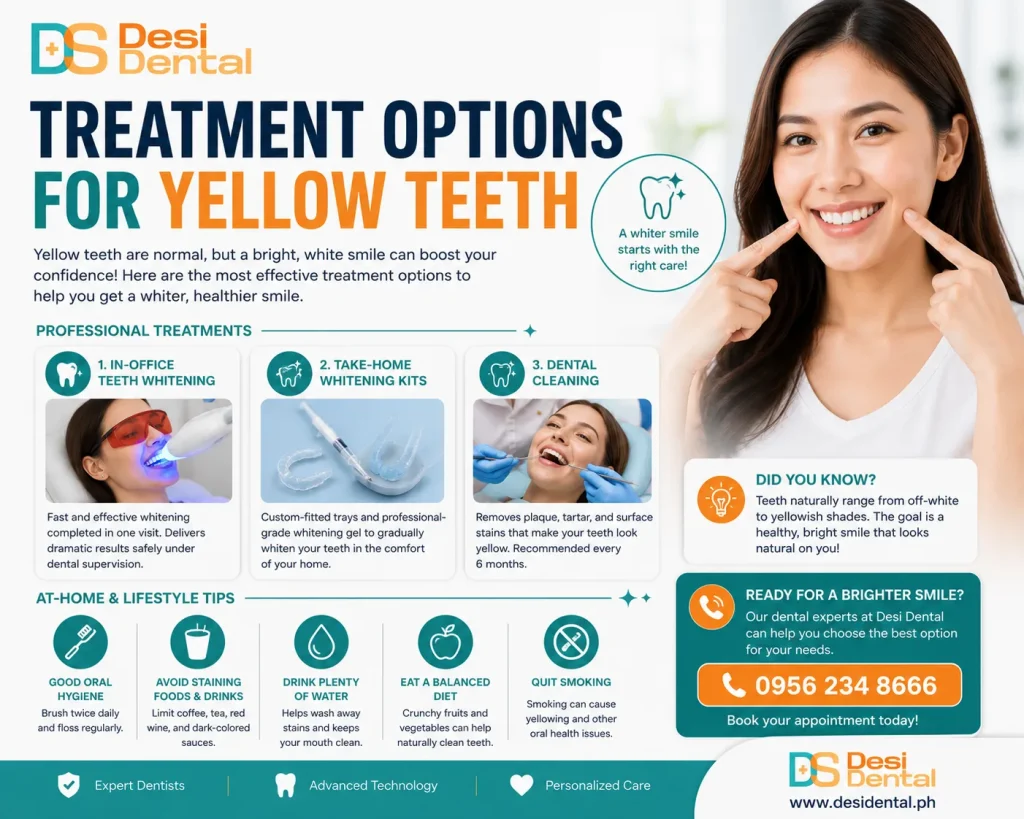
If you want a whiter smile, several safe options exist:
- Professional In-Office Whitening — Fast, powerful results using high-concentration gels and light activation.
- At-Home Whitening Trays or Strips — Custom trays from your dentist or over-the-counter options.
- Whitening Toothpastes and Rinses — Good for maintenance.
- Veneers or Bonding — For severe intrinsic discoloration.
- Improved Hygiene Routine — Often enough for mild surface stains.
Results vary depending on the cause. Surface stains respond well to whitening; deeper or genetic yellowing may need ongoing maintenance.
Important Note: Over-the-counter whitening products can cause sensitivity. Always follow instructions and consult a dentist first, especially if you have thin enamel or gum issues.
Common Myths About Yellow Teeth
- Myth: Yellow teeth always mean poor hygiene. Fact: Many people with excellent oral care have naturally yellower teeth due to genetics or aging.
- Myth: Teeth should be bright white. Fact: Natural healthy teeth range from off-white to light yellow.
- Myth: Whitening damages enamel. Fact: Professional treatments are safe when used correctly; overuse of harsh products can cause issues.
Is yellow teeth normal? In moderation — absolutely. A slight yellow tint is part of natural tooth anatomy and aging. The goal isn’t unrealistic Hollywood whiteness but healthy, clean teeth that function well and make you confident.
Focus on prevention, good daily habits, and regular dental visits. If yellowing bothers you, modern whitening options can safely brighten your smile.
Schedule a dental check-up to rule out underlying issues and get personalized advice. A brighter, healthier smile is achievable at any age with the right care.
This article is for informational purposes only. Consult your dentist for individual concerns about tooth discoloration.


