

Pericoronitis is a painful and common dental emergency that occurs when the gum tissue surrounding a partially erupted tooth — most often a wisdom tooth — becomes infected and inflamed. If you’re suffering from intense pain, swelling, or difficulty opening your mouth, finding effective pericoronitis treatment quickly is crucial to relieve discomfort and prevent the infection from spreading.
This in-depth guide provides comprehensive, up-to-date information on pericoronitis treatment, including professional options, supportive home care, recovery timelines, and prevention strategies to help you make informed decisions about your oral health.
What Is Pericoronitis?
Pericoronitis develops when a flap of gum tissue, known as the operculum, partially covers an erupting tooth. This creates a hidden pocket where food particles, plaque, and bacteria accumulate, leading to infection and inflammation. It most commonly affects the lower wisdom teeth in young adults between 17 and 25 years old, though it can occur with any partially impacted tooth.
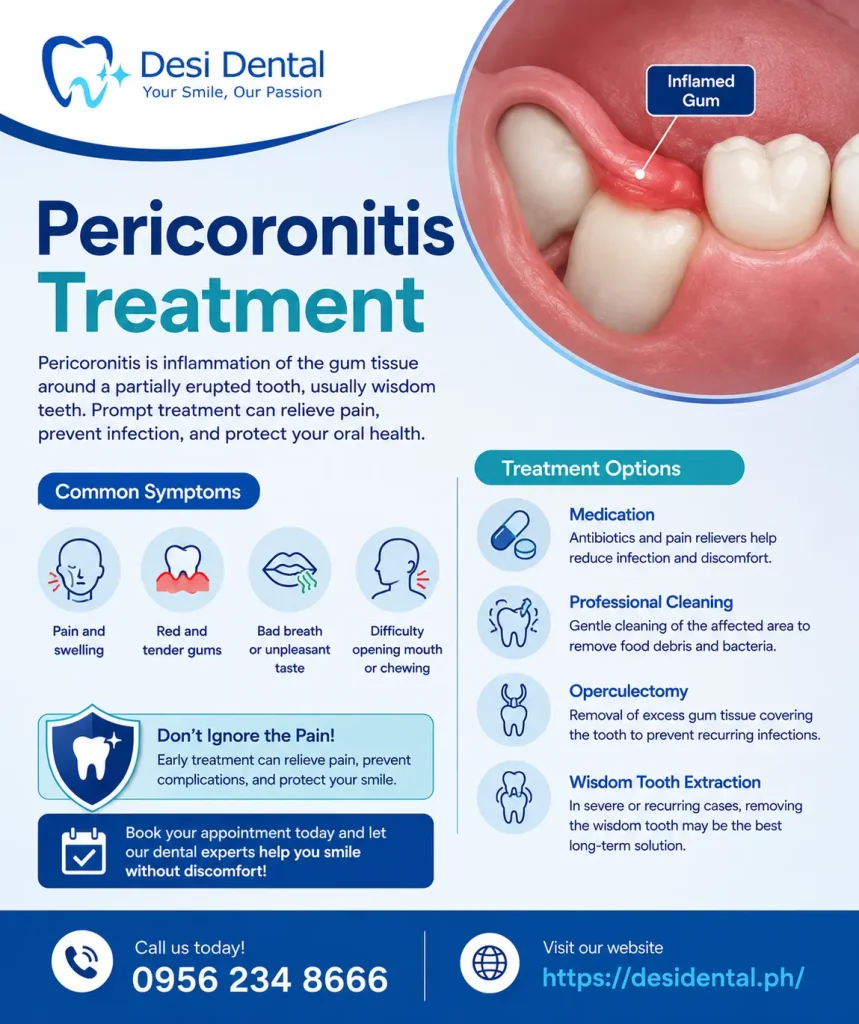
There are two main forms:
- Acute pericoronitis: Sudden, severe symptoms with intense pain and possible systemic signs.
- Chronic pericoronitis: Recurring milder episodes that come and go over weeks or months.
Common Symptoms of Pericoronitis
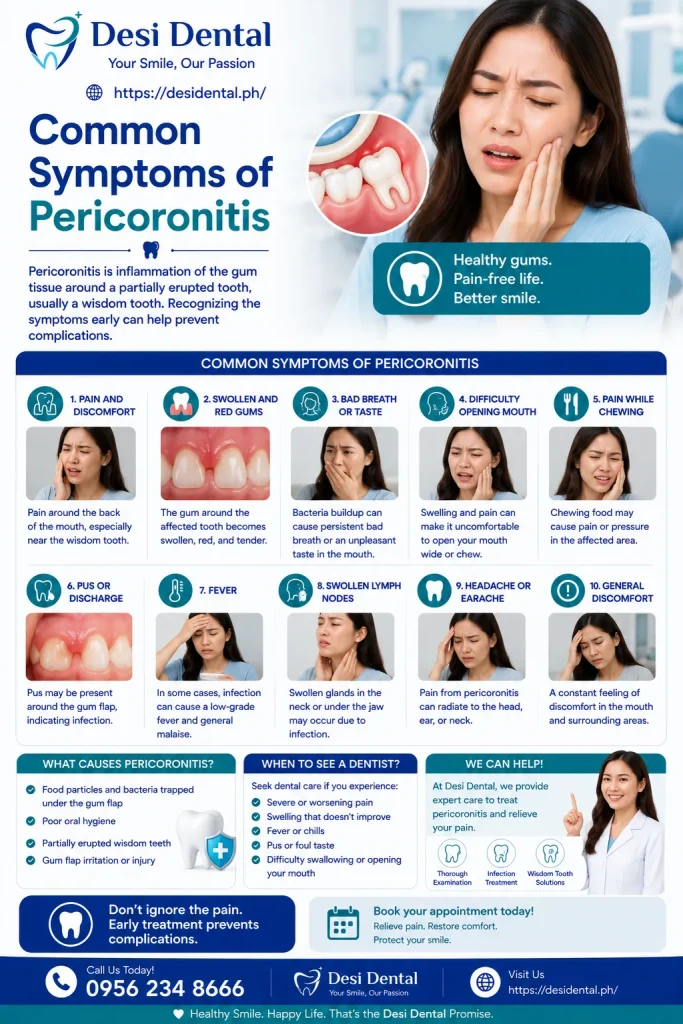
Early recognition allows for faster pericoronitis treatment. Typical symptoms include:
- Severe, throbbing pain around the back teeth that may radiate to the ear, throat, or neck
- Red, swollen, and tender gums around the affected tooth
- Pus discharge or a foul taste in the mouth
- Persistent bad breath (halitosis)
- Difficulty opening the mouth fully (trismus or “lockjaw”)
- Pain when chewing, swallowing, or touching the area
- Swollen lymph nodes under the jaw or in the neck
- Mild fever, facial swelling, or general malaise in more severe cases
Chronic cases may present with milder but recurring discomfort, bad taste, and occasional swelling.
Main Causes and Risk Factors
The primary cause is bacterial accumulation under the operculum. Contributing factors include:
- Partially impacted wisdom teeth with insufficient space to erupt fully
- Poor oral hygiene allowing plaque buildup
- Stress, hormonal fluctuations (e.g., during pregnancy), or upper respiratory infections
- Large amounts of gum tissue covering the tooth
- Chewing on hard foods that irritate the area
Without proper pericoronitis treatment, the infection can spread to nearby teeth, bone, or soft tissues, potentially leading to abscesses or cellulitis.
Professional Pericoronitis Treatment Options
The goal of pericoronitis treatment is to eliminate infection, reduce inflammation, and prevent recurrence. Treatment is tailored to severity and frequency of episodes.
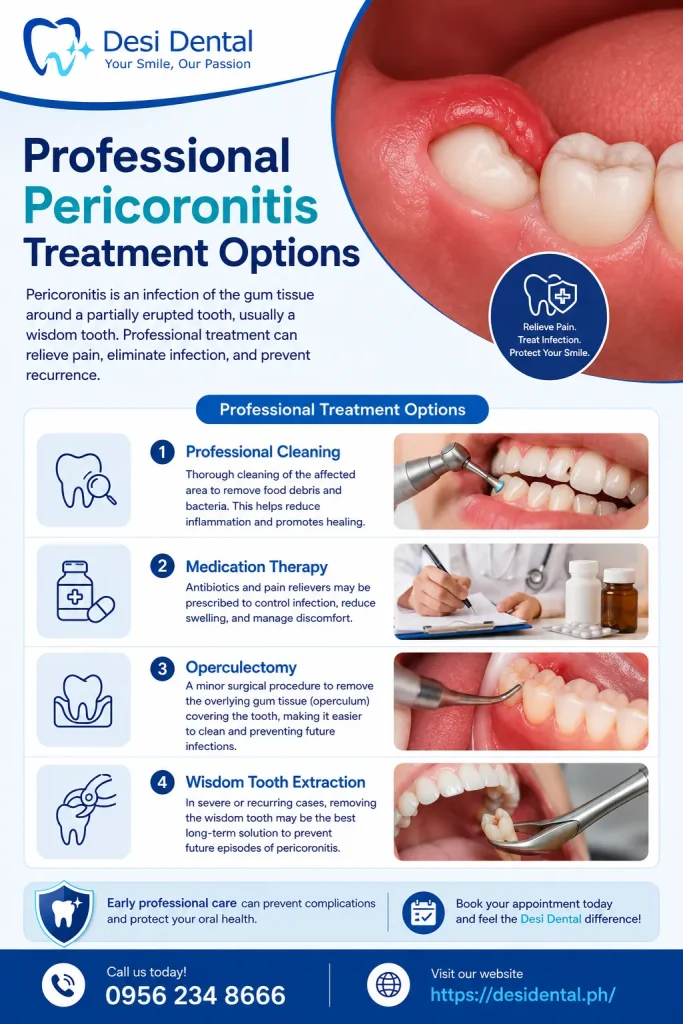
1. Immediate In-Office Professional Cleaning Dentists or oral surgeons perform thorough irrigation and debridement using sterile saline, chlorhexidine, or hydrogen peroxide to flush out debris and bacteria from under the gum flap. This is often the first-line and most effective initial step.
2. Medications for Symptom Control and Infection Management
- Pain and Inflammation Relief: Over-the-counter or prescribed NSAIDs such as ibuprofen are highly recommended as the primary pain management method.
- Antibiotics: Reserved for cases with spreading infection, fever, facial swelling, or systemic symptoms. Common prescriptions include amoxicillin (500 mg every 8 hours for 5 days) or metronidazole. Antibiotics are not routinely needed for mild, localized cases.
- Antiseptic Mouthwash: Chlorhexidine rinse is frequently prescribed to control bacterial growth at home.
3. Surgical Pericoronitis Treatment For recurrent or persistent cases:
- Operculectomy: Minor surgery to remove the excess gum flap. This allows better cleaning and can be a good solution when the tooth has space to erupt properly.
- Wisdom Tooth Extraction: The most definitive long-term pericoronitis treatment. Extraction is strongly recommended for repeatedly infected, impacted, or poorly positioned wisdom teeth. It eliminates the problem permanently for most patients.
Healing time varies: Mild cases often improve within 2–7 days with proper care, while surgical procedures may require 1–2 weeks for full recovery.
Home Remedies to Support Pericoronitis Treatment
Home care provides excellent temporary relief while you arrange a dental visit:
- Warm Saltwater Rinses — The most effective and recommended home remedy. Dissolve ½–1 teaspoon of salt in a glass of warm water and gently swish for 30 seconds, 3–4 times daily. It reduces bacteria, draws out fluid, and soothes inflamed tissue.
- Cold Compress — Apply an ice pack wrapped in a cloth to the outside of the cheek for 10–15 minutes several times a day to reduce swelling and numb pain.
- Gentle Oral Hygiene — Brush carefully with a soft-bristled toothbrush. Use a low-pressure water flosser or syringe (if advised) to clean under the flap without causing further irritation.
- Soft, Cool Diet — Stick to soft foods like yogurt, soup, mashed potatoes, and smoothies. Avoid spicy, acidic, crunchy, or hot foods that can aggravate the area. Stay well hydrated.
- Diluted Hydrogen Peroxide Rinse — Mix equal parts 3% hydrogen peroxide and water for occasional use as an antibacterial rinse (do not swallow).
- Over-the-Counter Pain Relievers — Ibuprofen or acetaminophen as directed for pain and fever.
Important Note: These remedies manage symptoms but do not replace professional pericoronitis treatment. See a dentist if symptoms last longer than 2–3 days or worsen.
When to Seek Urgent Pericoronitis Treatment
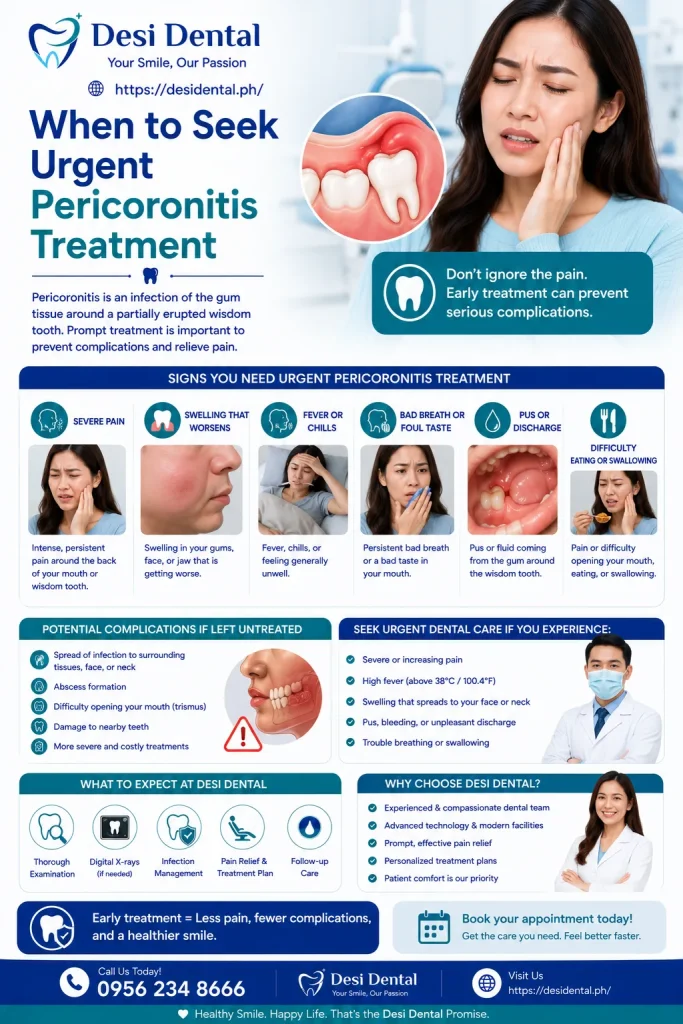
Contact a dentist or oral surgeon immediately if you experience:
- Severe facial swelling that affects breathing or swallowing
- High fever or chills
- Significant pus drainage with intense pain
- Inability to open your mouth enough to eat or drink
- Symptoms spreading to the neck or other areas
How to Prevent Future Episodes of Pericoronitis
Prevention focuses on reducing bacterial buildup and addressing the underlying cause:
- Maintain excellent oral hygiene: Brush twice daily, floss daily, and use an antibacterial mouthwash.
- Schedule regular dental check-ups, especially if wisdom teeth are erupting.
- Consider proactive evaluation and removal of wisdom teeth if they are impacted or at high risk.
- Stay hydrated and manage stress levels to support immune function.
- Avoid tobacco products, which impair healing and increase infection risk.
Effective pericoronitis treatment is highly successful when started early. Most patients experience significant relief within days through professional cleaning and supportive care, while those with recurrent issues benefit greatly from surgical solutions like operculectomy or wisdom tooth extraction.
Don’t endure ongoing pain or risk complications — consult a qualified dentist or oral surgeon promptly for personalized diagnosis and care. With the right approach, you can achieve lasting relief and protect your long-term oral health.


