

Swollen gums are a common oral health issue that can range from mild discomfort to a sign of more serious problems. If your gums feel puffy, tender, red, or bleed easily, you’re not alone—millions of people experience this at some point. Understanding the causes and taking prompt action can prevent complications like gum disease or tooth loss. This comprehensive guide explains everything you need to know in simple, practical terms.
What Do Swollen Gums Look and Feel Like?
Swollen gums often appear enlarged, puffy, or protruding around the teeth. They may look bright red, dark red, or even purplish. Common accompanying symptoms include:
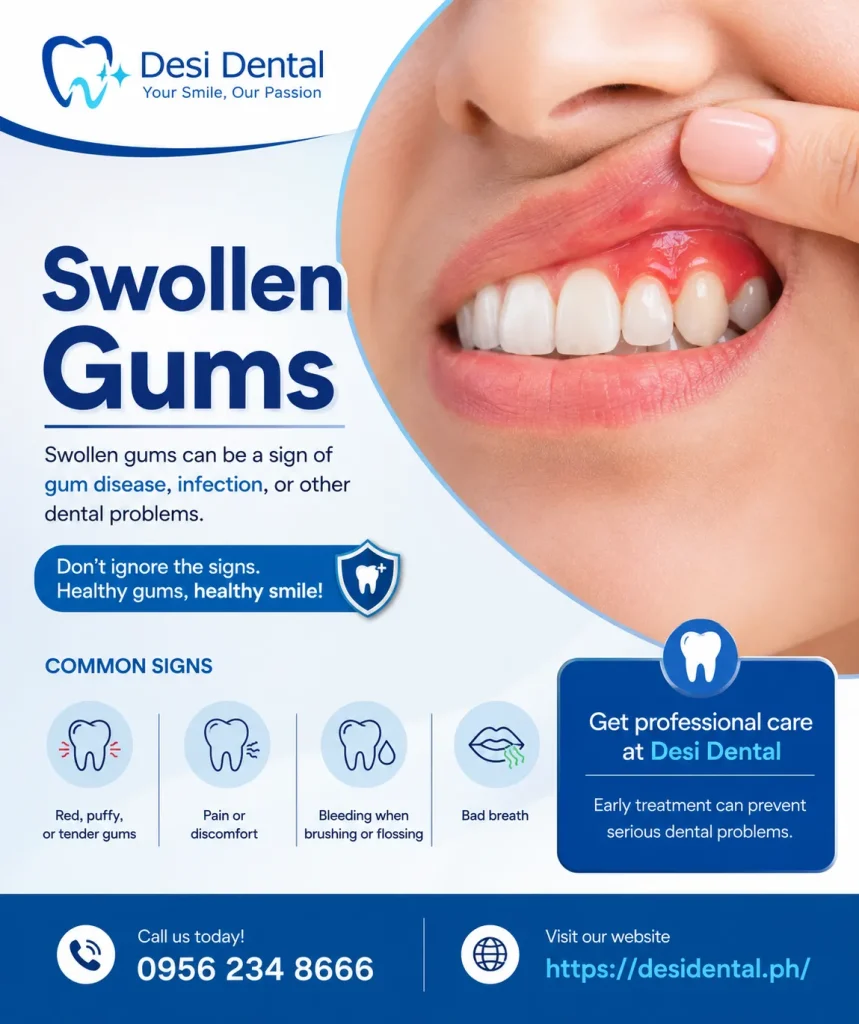
- Tenderness or pain when chewing, brushing, or flossing
- Bleeding gums, especially during cleaning
- Bad breath (halitosis) or a metallic/foul taste in the mouth
- Sensitivity to hot or cold foods
- In severe cases, pus, ulcers, or swelling that spreads to the face or jaw
Early-stage swelling is usually reversible with good care, but ignoring it can allow bacteria to spread deeper into tissues and bone.
Common Causes of Swollen Gums
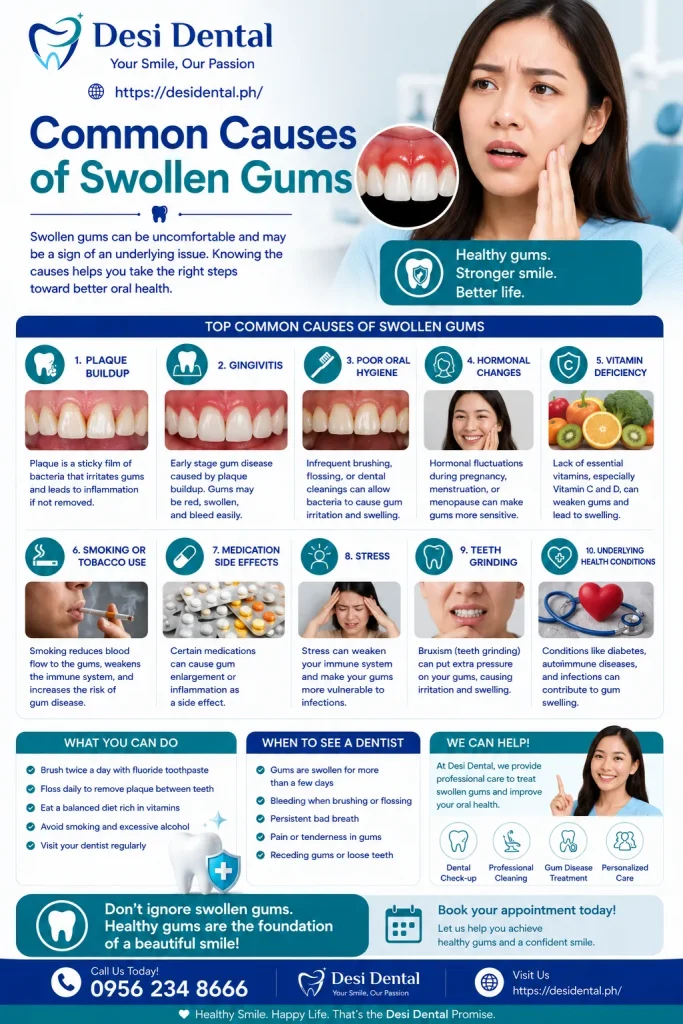
The leading culprit is almost always plaque buildup from inadequate oral hygiene. Plaque is a sticky film of bacteria that forms on teeth. If not removed, it irritates the gums and triggers inflammation.
Other frequent causes include:
- Gingivitis: The mildest form of gum disease. Plaque causes gums to become inflamed and bleed. It’s reversible but can progress if untreated.
- Periodontitis: Advanced gum disease where inflammation damages the bone and tissues holding teeth in place.
- Food particles or debris: A popcorn kernel or piece of meat trapped between teeth and gums can cause localized swelling.
- Dental abscess or infection: A pus-filled pocket from a tooth infection that spreads to the gums.
- Hormonal changes: Pregnancy (“pregnancy gingivitis”), puberty, menstruation, or menopause can make gums more sensitive to plaque.
- Vitamin deficiencies: Low levels of Vitamin C (scurvy in extreme cases) or Vitamin D can weaken gum tissue.
- Medications and medical conditions: Some drugs (e.g., for seizures or high blood pressure) cause gum overgrowth. Conditions like diabetes, stress, or weakened immunity increase risk.
- Irritants: Aggressive brushing with hard bristles, ill-fitting dentures/braces, tobacco use, or spicy/acidic foods.
- Allergies or sensitivities: Reactions to toothpaste, mouthwash, or certain foods.
When Should You See a Dentist?
Mild swelling that improves within a few days with better hygiene is often harmless. However, contact a dental professional right away if you notice:
- Swelling that lasts more than a week or worsens
- Severe pain, fever, or facial swelling (possible abscess)
- Loose teeth, receding gums, or pus
- Swelling around just one tooth
- Persistent bad breath despite brushing
Early intervention can prevent expensive treatments like deep cleanings, surgery, or tooth loss. Dentists may perform scaling, root planing, or prescribe antibiotics/antimicrobial rinses.
Effective Home Remedies for Relief
While home care isn’t a substitute for professional treatment, these evidence-based remedies can soothe symptoms quickly:
- Warm Saltwater Rinse — Dissolve ½ teaspoon of salt in a glass of warm water. Swish gently for 30 seconds, 2–3 times daily. Salt reduces bacteria, draws out fluid, and calms inflammation.
- Cold Compress — Apply an ice pack wrapped in cloth to the outside of your cheek for 10–15 minutes. This numbs pain and reduces swelling.
- Gentle Oral Hygiene — Brush twice daily with a soft-bristled toothbrush at a 45-degree angle. Floss daily (or use a water flosser) to remove plaque. Avoid aggressive scrubbing.
- Aloe Vera Gel — Apply pure aloe vera gel directly to gums. Its anti-inflammatory and antibacterial properties promote healing.
- Turmeric Paste — Mix turmeric powder with water into a paste and apply briefly. Curcumin fights inflammation and bacteria.
- Hydrogen Peroxide Rinse (diluted) — Mix equal parts 3% hydrogen peroxide and water. Use sparingly as a rinse to kill bacteria (not for swallowing).
- Clove Oil or Tea Bags — Diluted clove oil has natural numbing effects. Cooled black or green tea bags (tannins reduce swelling) can be placed on gums.
- Stay Hydrated & Eat Well — Drink plenty of water and consume vitamin-rich foods (citrus for Vitamin C, dairy/leafy greens for Vitamin D and calcium).
Important: These remedies provide temporary relief. If symptoms persist, see a dentist.
Professional Treatments
Dentists address the root cause:
- Professional cleaning to remove tartar
- Antibiotics for infections
- Gum grafting or surgery in advanced periodontitis
- Adjustments to braces/dentures
For pregnancy-related swelling, symptoms often improve after delivery with consistent care.
How to Prevent Swollen Gums Long-Term
Prevention is straightforward and highly effective:
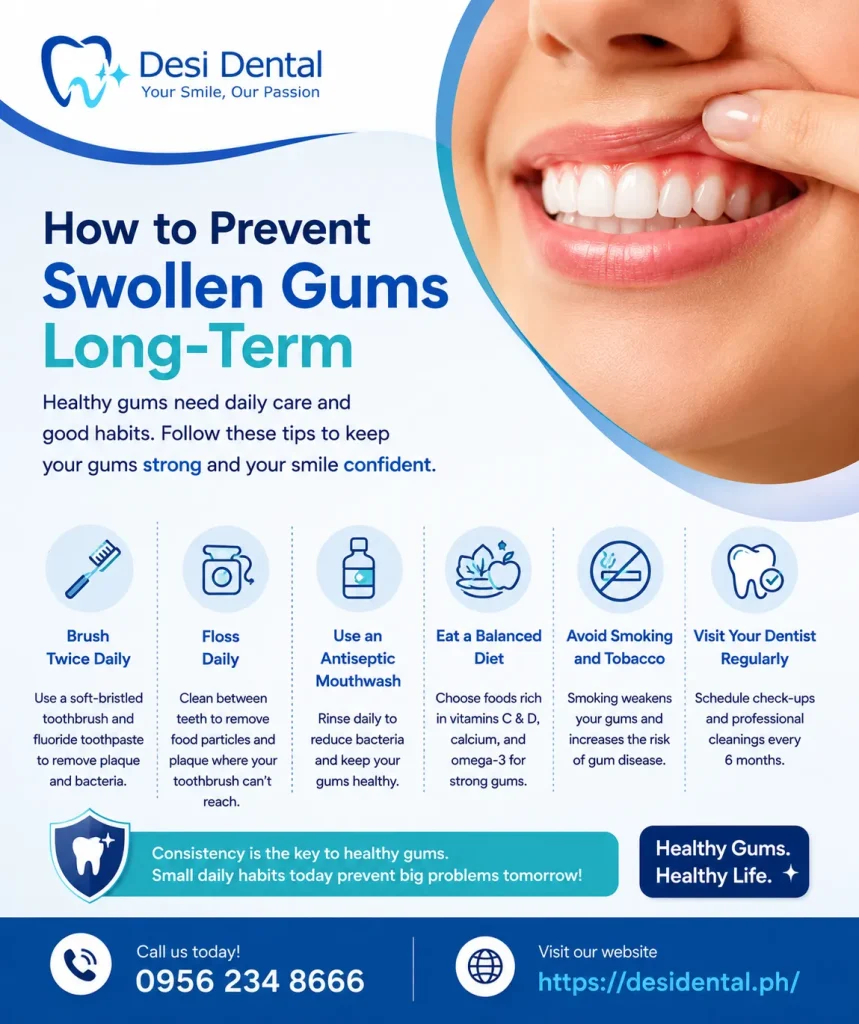
- Brush for two full minutes twice a day and floss once daily.
- Use an antimicrobial mouthwash.
- Visit your dentist every 6 months for cleanings and check-ups.
- Quit smoking or using tobacco products.
- Manage underlying conditions like diabetes.
- Eat a balanced diet and limit sugary/acidic snacks.
- Replace your toothbrush every 3 months.
Consistent habits keep plaque under control and gums healthy.
Swollen gums are your body’s way of signaling that something needs attention—usually better oral care or professional help. By acting early, most people resolve the issue without long-term damage. Listen to your mouth, maintain excellent hygiene, and don’t hesitate to consult a dentist for personalized advice.
If you’re dealing with swollen gums right now, start with a saltwater rinse and gentle cleaning today. Your smile will thank you. For severe or ongoing issues, schedule a dental appointment promptly—your oral health affects your overall well-being.


