

How much does a Dental Bridge cost in the Philippines?. In general, patients may pay around PHP 15,000 to PHP 80,000 or more per unit, while a standard 3-unit dental bridge often costs about PHP 45,000 to PHP 200,000 or more, depending on the case. Metal-based porcelain bridges are usually more affordable, while all-ceramic and zirconia bridges tend to cost more because they offer a more natural appearance, excellent durability, and long-term performance.
What is a Dental Bridge?
A dental bridge is a fixed tooth replacement used to close the gap left by one or several missing teeth. It is made up of one or more artificial teeth that are held in place by crowns attached to the natural teeth next to the space, or in some cases by dental implants. To prepare for the bridge, the supporting teeth are carefully reshaped so the restoration can fit securely and comfortably.
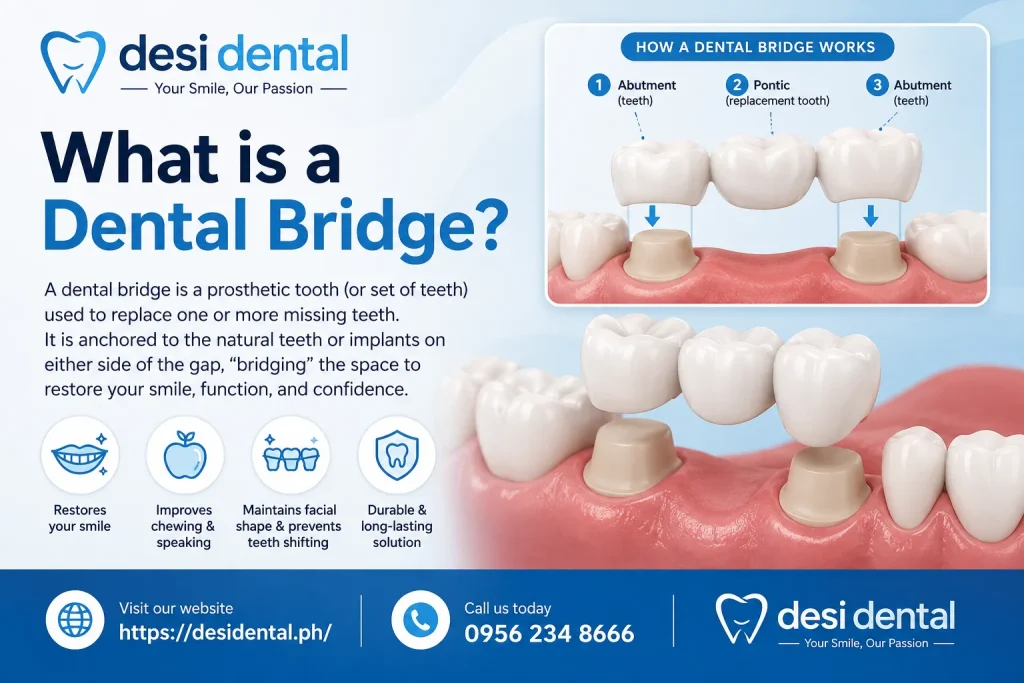
Once bonded into place, a dental bridge can improve chewing, support clearer speech, and make the smile look more complete and balanced. It also helps keep nearby teeth from drifting out of position and supports the overall shape of the face. In many cases, this treatment is recommended for patients missing one to three teeth in a row, and it is often completed over two to three dental visits.
How Much Does a Dental Bridge Cost?
The price of a dental bridge in the Philippines can vary depending on several factors, such as the material used, the number of teeth involved in the bridge, the length of the restoration, and the reputation or location of the dental clinic. Clinics located in large urban areas like Metro Manila often have slightly higher rates due to advanced technology and experienced specialists.

Below is a general overview of common dental bridge options available in the Philippines:
- Porcelain-Fused-to-Metal (PFM) Bridges:Around PHP 15,000 – PHP 35,000 per unit. This option is durable and cost-effective, making it a practical choice for back teeth that handle stronger chewing pressure.
- All-Ceramic or E.max Bridges: Usually PHP 25,000 – PHP 60,000 per unit. These restorations provide excellent aesthetics because they closely resemble natural tooth enamel, making them ideal for visible front teeth.
- Zirconia Bridges: Typically PHP 30,000 – PHP 80,000+ per unit. Zirconia is known for its exceptional strength and natural appearance, making it suitable for both front and back teeth.
- Implant-Supported Bridges: Around PHP 50,000 – PHP 150,000+ per unit. These bridges are anchored to dental implants instead of natural teeth, offering superior stability and helping maintain jawbone health.
Here are typical fixed bridge price Philippines ranges in 2026:
- Porcelain fixed bridge price and PFM dental bridge cost: ₱15,000 – ₱35,000 per unit (affordable and durable option).
- Zirconia fixed bridge price Philippines: ₱20,000 – ₱45,000 per tooth (premium aesthetics and strength; some clinics offer lower zirconia fix bridge price from ₱6,000+ per tooth).
- Maryland bridge price Philippines: Often more budget-friendly, starting from ₱2,500+ depending on the case.
- 3 tooth bridge cost Philippines / 4 tooth bridge cost Philippines / 5 tooth bridge cost Philippines: Total cost increases with more units.
- Fixed bridge price per tooth Philippines: Average ₱15,000 – ₱40,000+ per unit.
- How much is fixed bridge in Philippines: A standard 3-4 unit bridge typically ranges from ₱60,000 to ₱200,000+ PHP.
In most cases, the quoted price already includes essential steps such as tooth preparation, dental impressions or digital scans, laboratory fabrication of the bridge, temporary restorations, final placement, and necessary adjustments. However, additional procedures—such as X-rays, root canal treatment, or other preparatory dental work—may increase the total cost.
Common Types of Dental Bridges
Dentists can use several types of dental bridges depending on the patient’s oral condition, the number of missing teeth, and the strength of the surrounding teeth or implants. Each design has its own advantages and is selected based on stability, aesthetics, and long-term durability.
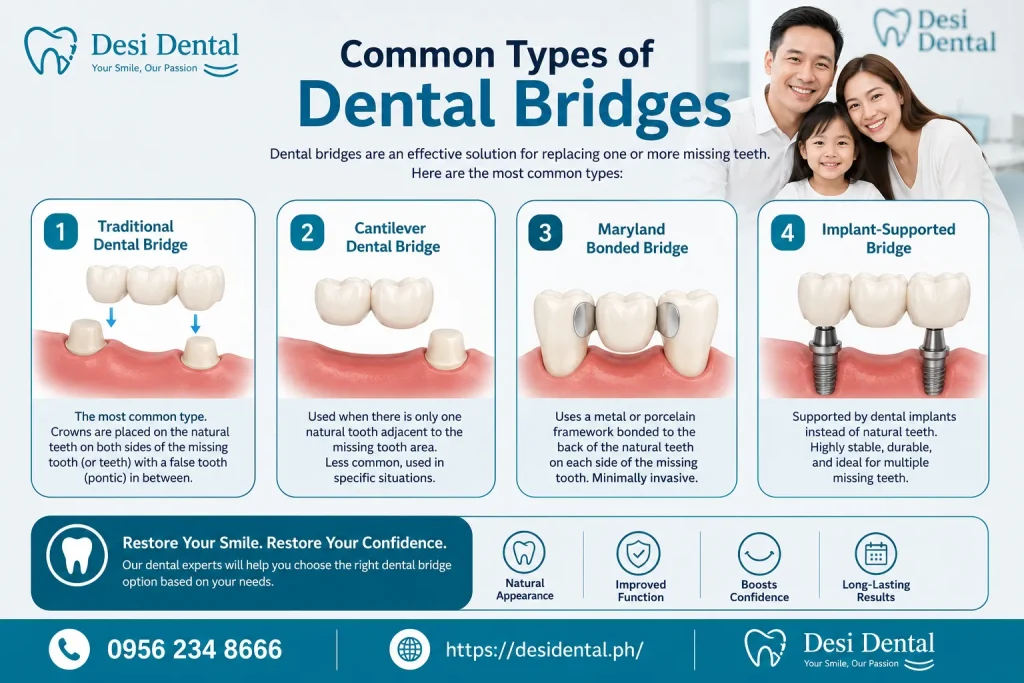
- Traditional Dental Bridge: This is the most widely used type. It replaces a missing tooth by attaching an artificial tooth to crowns placed on the natural teeth on both sides of the gap. These supporting teeth are reshaped to hold the bridge securely.
- Cantilever Bridge: A cantilever bridge is supported by only one adjacent tooth instead of two. It may be recommended when there is only one healthy tooth next to the missing space. However, dentists use this option carefully because the single support tooth carries more pressure.
- Maryland (Resin-Bonded) Bridge: This design uses thin metal or ceramic “wings” that bond to the back surfaces of nearby teeth. Since it requires little or no grinding of healthy teeth, it is considered a more conservative option, though it may not be as strong as traditional bridges.
- Implant-Supported Bridge: Instead of relying on natural teeth, this bridge is anchored to dental implants placed in the jawbone. It is often recommended when several teeth are missing or when the neighboring teeth are not strong enough to support a conventional bridge.
- Composite Bridge: This is a more economical option made with resin-based materials. While it can restore appearance and function temporarily, it generally does not last as long as other bridge types and is usually considered a short-term solution.
Materials Used for Dental Bridges
Dental bridges can also differ in the materials used to fabricate them:
- Porcelain-Fused-to-Metal (PFM): A strong metal base covered with porcelain for durability and moderate aesthetics.
- All-Ceramic (such as E.max): Provides a very natural appearance with excellent translucency, making it popular for front teeth.
- Zirconia: Known for its exceptional strength and biocompatibility, suitable for both front and back teeth.
Advantages and Disadvantages of Dental Bridges
Dental bridges are a widely used solution for replacing missing teeth. Like any dental treatment, they come with both benefits and limitations. Understanding these can help patients decide whether a bridge is the right option for their needs.
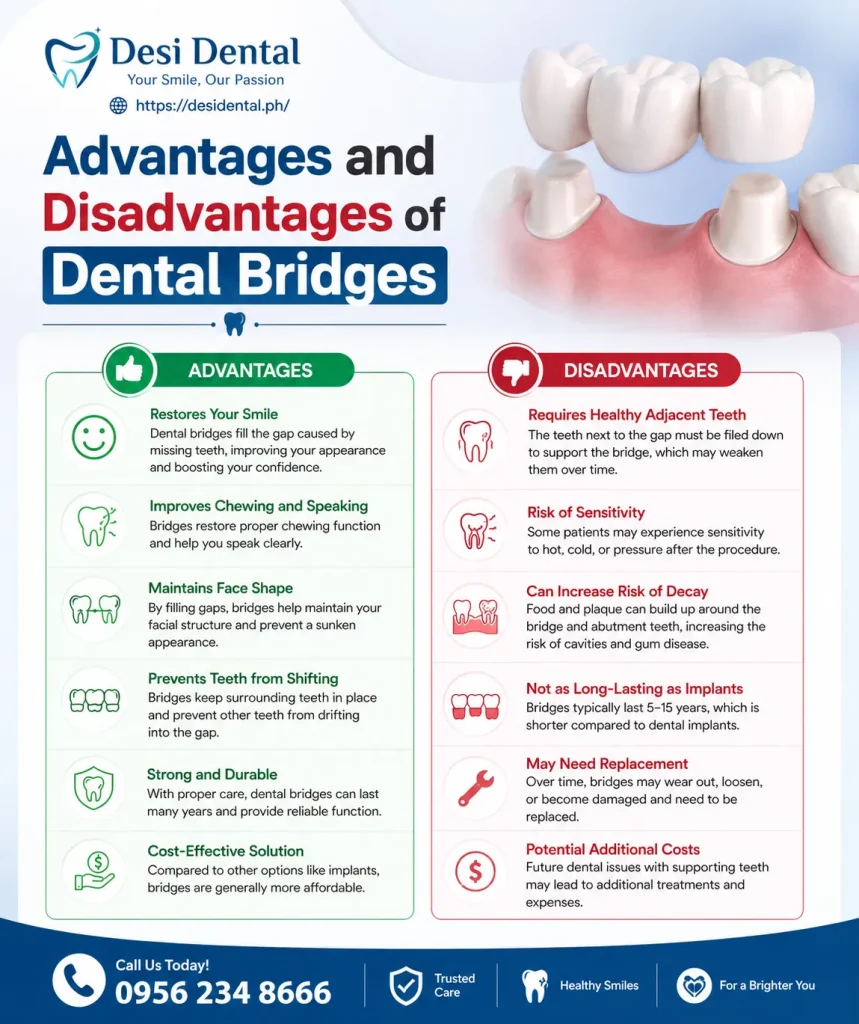
Advantages of Dental Bridges
- Improves chewing ability: A dental bridge helps restore much of the normal biting and chewing function—often allowing patients to regain a large portion of their natural chewing efficiency.
- Enhances smile appearance: Modern bridges are designed to match the color, shape, and size of surrounding teeth, creating a natural-looking result that improves overall smile aesthetics and confidence.
- Relatively fast treatment: Compared with other restorative options, dental bridges can usually be completed in just a few dental appointments. Most patients adapt quickly and can return to normal eating habits soon after placement.
- More affordable than implants: Bridges are typically less expensive than dental implants, making them a practical option for many people. They also help keep neighboring teeth from drifting into the empty space.
- Stable and fixed solution: Because a bridge is permanently cemented in place, it does not need to be removed like removable dentures. This provides a more secure and comfortable feeling during daily use.
Disadvantages of Dental Bridges
- Preparation of nearby teeth is required: To support the bridge, the natural teeth next to the gap must be reshaped. This process removes a small amount of healthy enamel and may sometimes lead to sensitivity.
- Does not prevent bone loss: Unlike dental implants, bridges do not replace the tooth root. As a result, the jawbone in the missing tooth area may gradually lose density over time.
- Long-term durability depends on supporting teeth: If the supporting teeth become weak or damaged, the bridge may lose stability or require replacement.
- Not suitable for all cases: Dental bridges work best for replacing one or a few missing teeth. They may not be ideal when many teeth are missing or when nearby teeth are not strong enough to support the restoration.
- Requires good oral hygiene: Food particles and bacteria can accumulate around the bridge if cleaning is not done properly. Poor oral hygiene may increase the risk of cavities or gum problems around the supporting teeth.
How Long Can a Dental Bridge Last?
The lifespan of a dental bridge can vary, but many bridges function well for about 7 to 15 years when properly maintained. In some cases, restorations made from high-quality materials—such as zirconia or advanced all-ceramic crowns—may remain in good condition for 15 to 20 years or even longer.

Several factors influence how long a dental bridge will last. The type of material plays an important role, since stronger materials like zirconia tend to resist wear and fractures better than some traditional metal-based options. The location of the bridge also matters, as teeth at the back of the mouth are exposed to stronger biting forces during chewing.
Other important elements include the accuracy of the dental procedure, the health of the supporting teeth, and the patient’s daily oral care habits. Brushing and flossing properly, avoiding very hard foods, and addressing habits like teeth grinding can all help extend the lifespan of the restoration.
How to Maintain a Dental Bridge for Long-Lasting Results
Proper care is essential to keep a dental bridge functioning well for many years. With consistent oral hygiene and regular dental visits, patients can significantly extend the lifespan of their restoration.
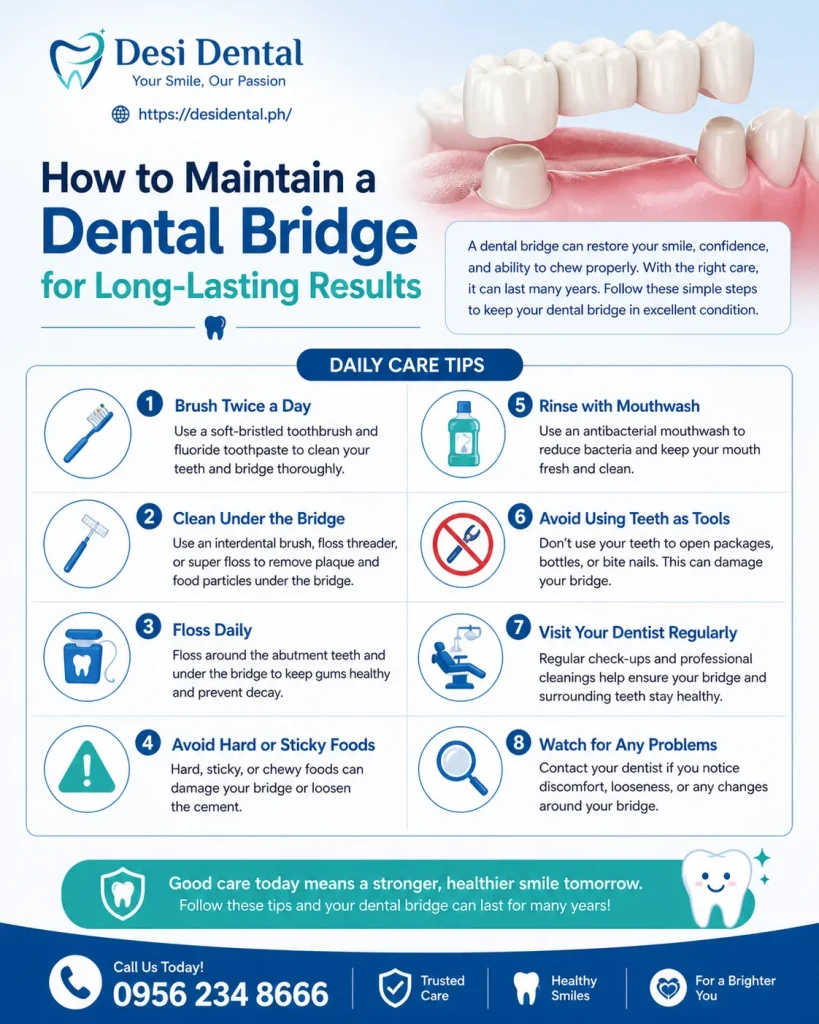
- Maintain daily oral hygiene: Brush your teeth at least twice a day using a soft-bristled toothbrush and fluoride toothpaste. It is also important to clean under the artificial tooth (pontic). Special tools such as floss threaders or interdental brushes can help remove food particles and plaque from areas that regular floss may not easily reach.
- Be mindful of what you eat: Try to avoid biting into very hard, sticky, or extremely hot and cold foods, as these can place extra stress on the bridge and potentially cause damage or loosening over time.
- Reduce staining and harmful habits: Limiting beverages and products that stain teeth—such as coffee, tea, or tobacco—can help preserve the appearance of the bridge. If you grind or clench your teeth at night, your dentist may recommend wearing a custom night guard to protect the restoration.
- Schedule routine dental checkups: Visiting your dentist every six months allows for professional cleaning, examinations, and minor adjustments if needed. These appointments help detect potential issues early and keep the bridge in optimal condition.
- Protect the supporting teeth and gums: Because a dental bridge relies on neighboring teeth for support, maintaining healthy gums and preventing tooth decay around these areas is essential. Good oral hygiene plays a key role in ensuring the bridge remains stable and durable over time.
Missing Teeth? Discover Life-Changing Dental Bridges at Desi Dental
At Desi Dental Clinic, we don’t just replace missing teeth — we restore beautiful, confident smiles that feel completely natural. With over 25,000 satisfied patients, Desi Dental has become one of the most trusted clinics in Quezon City and San Juan, Metro Manila for high-quality Dental Bridges.
Using advanced technology and premium materials such as zirconia, porcelain-fused-to-metal, and all-ceramic, our experienced dentists carefully design and craft bridges that blend seamlessly with your natural teeth. Whether you’re missing one tooth or several, our custom dental bridges deliver strong chewing function, clear speech, and a flawless, natural-looking smile that boosts your confidence every single day.
Frequently Asked Questions (FAQs)
1. How much does a dental bridge cost in the Philippines?
The price of a dental bridge can vary depending on the material used, the number of units required, and the clinic providing the treatment. For a typical three-unit bridge replacing one missing tooth, costs often range from PHP 45,000 to PHP 150,000 or more. Metal-based porcelain bridges are generally more affordable, while premium options such as zirconia may cost more due to their strength and aesthetics. At clinics like Desi Dental, patients can receive a clear and personalized estimate during a consultation.
2. Is a dental bridge a good option for replacing missing teeth?
A dental bridge can be an effective solution when one or two teeth are missing and the neighboring teeth are healthy enough to support the restoration. The procedure is relatively quick and can restore both appearance and chewing function. However, for patients who want to preserve jawbone structure or replace several missing teeth, dental implants may be another option worth discussing with a dentist. A professional evaluation is the best way to determine the right treatment.
3. Does getting a dental bridge hurt?
The procedure itself is generally comfortable because dentists use local anesthesia during tooth preparation and placement. After the treatment, some people may experience mild sensitivity or slight discomfort for a few days while the mouth adjusts to the new bridge. This usually improves quickly. Modern dental techniques and experienced professionals help ensure the process remains as comfortable as possible.
Dental bridges remain a reliable and practical way to restore missing teeth while improving chewing ability and smile appearance. In the Philippines, treatment costs are relatively accessible compared with many other countries. For accurate recommendations, material options, and exact pricing, it is best to consult a trusted dental clinic such as Desi Dental, where dentists can evaluate your condition and recommend the most suitable solution.


